Trucking reform is back on the agenda. Here’s how AI helps fleets, brokers, and shippers stay compliant, optimize routes, and handle rule changes fast.
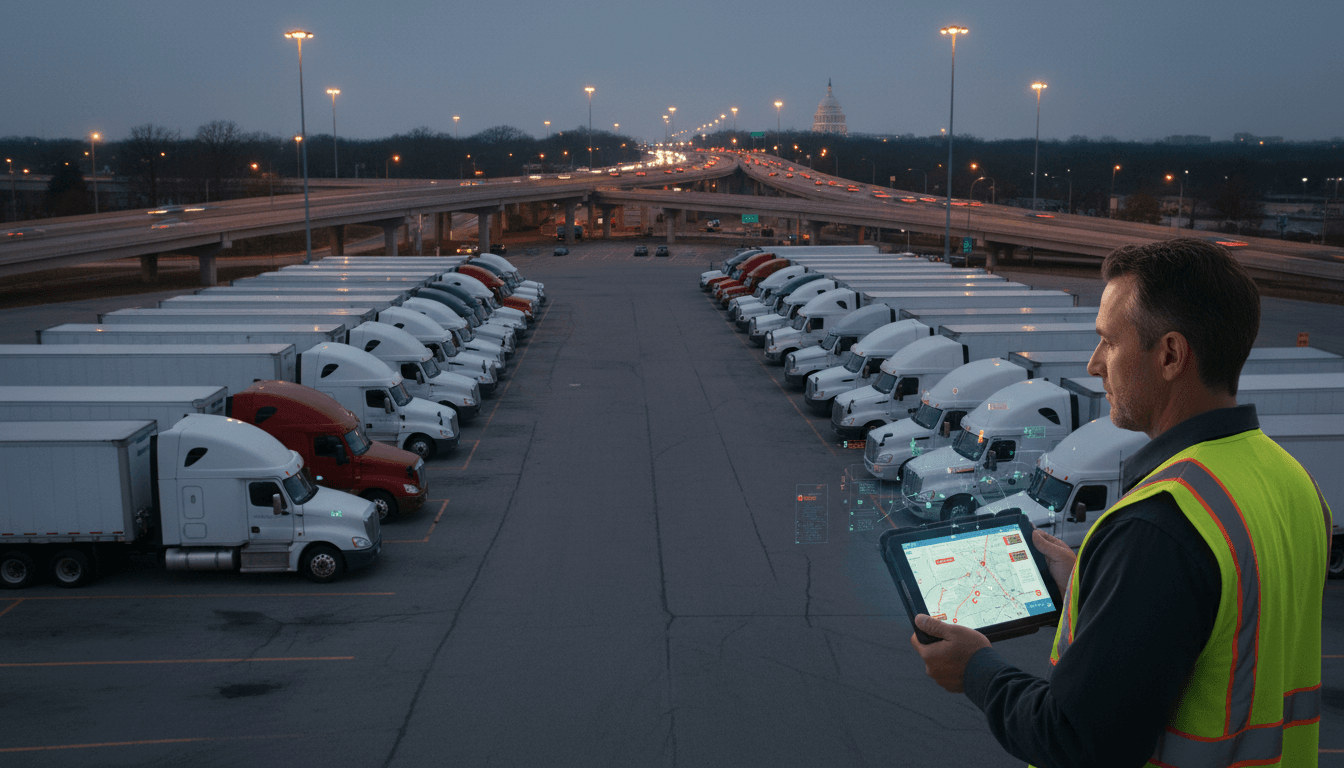
Trucking Reform Is Coming—AI Can Keep You Compliant
The U.S. trucking industry is a $906 billion machine that touches almost everything you buy. It also runs on tight margins, messy handoffs, and rules that change faster than most fleets can update a policy binder. That’s why the launch of the Congressional Trucking Caucus matters: it’s a clear signal that trucking regulation and enforcement are moving back to the center of the conversation.
The caucus—led by Rep. Dave Taylor (R-Ohio) with a mix of Republican and Democratic co-chairs—says it wants to raise standards around CDL integrity, push on infrastructure (highways and rest stops), and cut regulatory red tape impacting 8.4 million jobs tied to trucking. Whether you love the politics or hate them, the practical question for operators, brokers, and shippers is simpler:
If enforcement tightens and requirements change, how do you keep freight moving without turning compliance into a full-time fire drill?
In this installment of our AI in Transportation & Logistics series, I’m taking a stance: AI isn’t optional “tech nice-to-have” anymore. It’s the only realistic way to stay compliant at scale while protecting service levels and cost-per-mile.
What the new trucking caucus is actually signaling
The caucus announcement is less about one bill and more about a shift in posture: Congress is publicly framing trucking problems as safety + integrity + capacity issues, not just “industry complaints.” That framing shapes what regulators prioritize and what enforcement looks like on the ground.
Here are the three targets the caucus highlighted—and why they’re operationally expensive if you handle them manually.
CDL integrity and driver qualification will get louder (and stricter)
Lawmakers tied the caucus launch to recent tragedies involving drivers who reportedly couldn’t read road signs. That puts a spotlight on driver qualification, language proficiency enforcement, training standards, and credential validity.
Operational impact you can expect if this theme sticks:
- More audits and credential checks at onboarding and during roadside inspections
- Higher risk of out-of-service events if paperwork and qualification data is inconsistent
- More variance in capacity in certain lanes if enforcement squeezes marginal carriers
If you’re a shipper, this shows up as late pickups and tender rejections. If you’re a carrier, it shows up as downtime, claims exposure, and rising insurance scrutiny.
Infrastructure and truck parking are no longer “nice” issues
The caucus called out highways and rest stops that “actually work.” That’s not a throwaway line. Parking scarcity and congestion aren’t just driver quality-of-life issues—they’re compliance issues because they pressure Hours of Service decisions.
When drivers can’t reliably find parking, dispatch plans become fiction. And when plans become fiction, compliance risk rises.
Cutting red tape sounds pro-business—until rules change mid-quarter
Everyone likes the idea of “less red tape.” But reform efforts typically create transition periods: new forms, new thresholds, new audit focus areas. That transition is where mistakes happen.
Compliance is rarely hard because a rule exists. It’s hard because the rule changes, interpretations differ by region, and documentation lives across too many systems.
Why manual compliance breaks at scale (and costs you money)
A lot of fleets still run compliance like this:
- A hiring team checks documents in one portal
- Safety stores training certificates somewhere else
- Dispatch tracks HOS exceptions in yet another tool
- Claims, incidents, and CSA-related notes live in email threads
That setup “works” until it doesn’t—usually right when volume spikes (hello, holiday peak) or when enforcement tightens.
Here’s what I’ve seen work in practice: treat compliance like an operations workflow, not a filing cabinet. AI helps by turning scattered artifacts into an always-on, searchable, auditable system.
The moment trucking reform accelerates, the winners won’t be the companies with the most compliance staff. They’ll be the ones with the cleanest data and fastest feedback loops.
Where AI fits: compliance, routing, and regulatory change management
AI in transportation and logistics pays off fastest when it does three things: detect risk early, recommend actions, and document outcomes automatically.
1) AI-driven compliance monitoring: catch issues before the roadside does
The practical use case: continuous qualification monitoring.
Instead of checking driver and carrier credentials only at onboarding, AI systems can:
- Flag missing, expired, or inconsistent documents (medical cards, endorsements, training records)
- Detect anomalies in application data (addresses, repeated entities, mismatched IDs)
- Trigger workflows: request docs, schedule retraining, pause dispatch eligibility
A useful mental model is “credit scoring” for compliance: each driver, tractor, and carrier profile gets a dynamic risk score. Dispatch can still cover the load, but now it’s informed—and auditable.
Snippet-worthy truth: If you only check compliance at onboarding, you’re managing risk with a rearview mirror.
2) Policy-to-practice automation: translate new rules into dispatch decisions
Regulatory updates don’t hurt because they’re complex—they hurt because they’re operationally ambiguous. AI can help by converting policy text and internal SOP updates into:
- Checklists embedded in TMS workflows
- Training assignments based on role (driver vs. dispatcher vs. safety)
- Exception handling rules that require supervisor sign-off
For example, if new enforcement emphasis increases around driver qualification, your system should automatically:
- Require verification steps before a driver is eligible for certain loads
- Log proof of verification
- Provide an audit trail that’s readable without “explaining the spreadsheet”
This is where generative AI is especially useful: summarizing internal policies, drafting SOP updates, and powering “ask compliance” search for dispatch and safety teams.
3) Route optimization that respects real-world constraints (not ideal maps)
Reform conversations often circle back to safety. Safety in trucking is operational: parking, congestion, weather, dwell time, and HOS.
Modern route optimization should do more than pick the shortest path. AI-based routing can incorporate:
- Probability of delay by facility and time-of-day
- Rest-stop and truck-parking availability patterns
- Weather and incident risk forecasts
- Dwell time history and appointment feasibility
This matters because the “perfect” route that causes an HOS violation is not perfect. Compliance-aware routing is a cost control strategy.
4) AI for fraud and identity anomalies (yes, it’s part of the same story)
The forum discussion attached to the news story is heated, and some claims are anecdotal—but the underlying pain is real: fraud, shell entities, and bad actors drag down rates, raise insurance costs, and increase safety risk.
AI can help here too, especially for brokers and large shippers:
- Entity resolution: matching “almost the same” carrier records across systems
- Pattern detection: repeated addresses, phone numbers, bank accounts, or device fingerprints
- Load-level risk scoring: flagging suspicious combinations of lane, rate, and carrier history
A trucking caucus focused on integrity creates a tailwind for these tools. When enforcement and audits increase, documented, explainable screening becomes a competitive advantage.
What to do now: a practical 30-60-90 day plan
If you’re leading operations or compliance, you don’t need a moonshot. You need a sequence.
Days 0–30: build your compliance data spine
- Inventory where qualification, safety, and incident data lives today
- Standardize IDs (driver ID, tractor ID, carrier ID) across systems
- Define “minimum viable audit trail” for driver qualification and load assignment
Deliverable: one dashboard that answers, “Who is eligible to haul what today, and why?”
Days 31–60: implement risk scoring + automated workflows
- Add rules-based flags (expired docs, missing endorsements, training gaps)
- Layer in anomaly detection (duplicates, inconsistencies, unusual patterns)
- Automate actions: notify, request documents, restrict dispatch until resolved
Deliverable: a closed-loop workflow where every compliance alert has an owner and an outcome.
Days 61–90: make routing and planning compliance-aware
- Feed dwell times, appointment performance, and delay likelihood into planning
- Add parking/rest constraints for long-haul lanes
- Track exceptions and require reason codes (with coaching for repeat patterns)
Deliverable: fewer “hero runs,” fewer violations, and more predictable ETAs.
People also ask: what changes if trucking reform tightens enforcement?
Will this reduce capacity in certain markets?
Yes, at least temporarily. Stricter enforcement typically removes marginal capacity first, which can tighten certain lanes and raise spot volatility.
Does AI replace safety and compliance teams?
No. It reduces busywork and increases consistency. The best outcome is a smaller number of higher-quality interventions—coaching, retraining, corrective action—based on real signals.
What’s the fastest ROI use case?
For most fleets and brokers: automated document validation + exception workflows. It cuts rework, reduces out-of-service risk, and speeds onboarding without lowering standards.
Trucking reform is a forcing function—use it
The Congressional Trucking Caucus is a fresh political vehicle, but the operational theme is familiar: raise safety standards, improve infrastructure, and reduce compliance chaos. Even if legislation takes time, the attention alone changes behavior—from enforcement priorities to shipper expectations.
If you’re waiting for “final rules” before modernizing, you’ll spend 2026 reacting. If you build an AI-supported compliance and planning layer now, you can absorb regulatory change without derailing service.
I’ll leave you with a question that’s uncomfortable but useful: If an auditor asked you to prove—load by load—that your network assigns freight only to qualified, low-risk capacity… could you do it in one hour?