U.S. rail freight logged its 8th weekly decline. Here’s how AI forecasting and optimization help shippers stabilize service and costs during rail volatility.
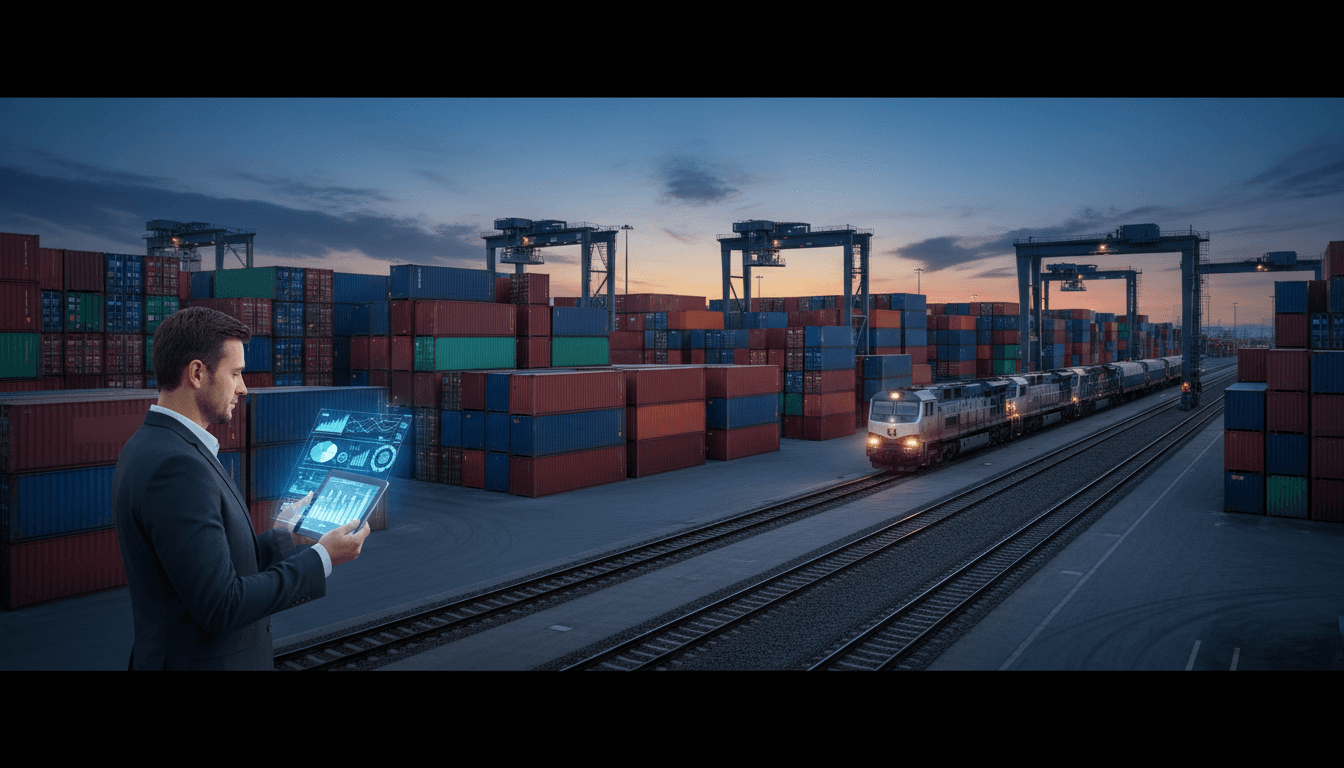
Rail Freight Slumps: How AI Keeps Networks Stable
U.S. rail traffic just logged its eighth consecutive weekly decline. For the week ending Dec. 13, 2025, total rail volume hit 518,904 carloads and intermodal units—down 1.4% year over year. Carloads fell 1.7% and intermodal dipped 1.2%.
Here’s the part most shippers miss: a weekly losing streak doesn’t automatically mean the system is “breaking.” It means planning assumptions are breaking—the ones built on stable seasonality, steady lane behavior, and predictable modal splits.
For leaders in transportation and logistics, this is where AI earns its keep. Not as a shiny analytics project, but as an operational tool to forecast volatility earlier, rebalance capacity faster, and reduce the cost of being wrong when rail volumes wobble. This post uses the latest rail numbers as a real-world case study for what AI in transportation and logistics should be doing right now.
What the latest rail numbers actually signal (and why it matters)
The direct signal is straightforward: weekly rail demand is soft. The more useful signal is how uneven the softness is across equipment types, regions, and cross-border flows.
The same dataset shows:
- Year-to-date U.S. rail volume is still up 1.7% through 50 weeks of 2025.
- North American totals mirror that: down 1.1% weekly, but up 1.6% year to date.
- Mexico stands out for the wrong reasons: weekly carloads down 11.6%, and year-to-date volume down 5.6%.
That mix—short-term declines inside a positive year-to-date trend—creates a specific planning problem: teams overreact to weekly drops (cut too deep, too fast) or underreact (assume the YTD number means “we’re fine”). Both approaches get expensive.
The operational risk: volatility tax
When volumes fall in streaks, the “volatility tax” shows up everywhere:
- Empty repositioning rises because equipment is staged for demand that doesn’t arrive.
- Terminal congestion can get worse, not better, because imbalanced flows create peaks in the wrong places.
- Service reliability degrades when networks throttle capacity without understanding where demand is resilient.
- Procurement costs increase when you scramble for trucks to cover disrupted intermodal plans.
A weekly decline is not just a rail headline. It’s a warning that your supply chain needs better sensing and faster decision cycles.
Why rail downturns are harder to manage than truck softness
Rail is efficient when flows are predictable and dense. It’s painful when flows become lumpy.
Truckload networks can flex with pricing and spot coverage. Rail networks depend on:
- fixed corridors and terminal throughput
- equipment pools (containers, chassis, railcars) that don’t teleport
- scheduled train starts and crew availability
So when demand drops, the best move isn’t always “run fewer trains.” Sometimes it’s “run differently”:
- consolidate low-density origin-destination pairs
- change cutoff times to reduce dwell
- reassign equipment pools to lanes that are still strong
Those are hard calls because they require cross-functional agreement: operations, commercial, intermodal partners, drayage carriers, and shipper commitments.
This is exactly the kind of messy optimization problem where AI helps—if you feed it the right inputs and let it drive decisions, not just dashboards.
How AI stabilizes freight planning when rail volumes fall
AI stabilizes declining rail freight networks by doing three things well: predicting, optimizing, and automating exceptions.
1) Predictive analytics that spot declines before they hit your plan
The most valuable forecasting is not “what will total volume be next month?” It’s:
- Which lanes are about to soften first?
- Which customers are pulling forward or delaying orders?
- Which commodities are showing early weakness?
- What does intermodal tender behavior imply about rail demand 2–4 weeks out?
A practical AI forecasting setup usually combines:
- shipment history (by lane, customer, SKU family)
- order signals (ERP/MRP, promotions, inventory positions)
- external leading indicators (port dwell, industrial production proxies, fuel spreads)
- carrier performance data (dwell, on-time, terminal turns)
Answer-first truth: If your rail plan is updated monthly, you’re flying blind. A modern setup recalibrates weekly or daily, then pushes recommendations to planners.
2) Network and route optimization that chooses the “least wrong” option
When volumes fall, optimization isn’t about finding the perfect plan. It’s about finding the least-cost plan under uncertainty.
AI-powered optimization can:
- re-rank mode decisions (rail vs truck) when service risk rises
- suggest alternate ramps/terminals to avoid dwell spikes
- re-time dray appointments using predicted terminal congestion
- consolidate shipments into fewer, better-balanced intermodal moves
One stance I’ll defend: mode selection should be treated like a dynamic policy, not a static rule. “We ship intermodal over 800 miles” is fine until the network shifts. AI can maintain a policy like:
“Use intermodal when predicted door-to-door variability stays below X and total landed cost beats truck by Y.”
That is how you keep service stable without paying truck premiums everywhere.
3) Exception management that reduces planner overload
During a downturn, exception volume rises: more reschedules, more missed cutoffs, more mismatched empties, more customer escalations. Human planners get buried.
AI can automate common exception flows:
- detect at-risk loads based on dwell and connection probability
- recommend interventions (rebook, reroute, hotshot dray, mode swap)
- draft customer ETAs and escalation notes using structured data
- prioritize exceptions by financial and service impact
The goal isn’t fewer people. It’s fewer “spreadsheet heroics” and fewer expensive decisions made too late.
A rail-volume downturn playbook for shippers and 3PLs (AI-first)
If you’re heading into 2026 with rail variability still on the table, here’s what works in practice.
Step 1: Build a “rail volatility dashboard” that drives action
Don’t build a pretty scorecard. Build a control panel.
Minimum set of signals:
- weekly carload/intermodal volume trend (internal + carrier-reported)
- terminal dwell and variance (by ramp)
- dray turn times and appointment availability
- service reliability by lane (on-time pickup, on-time delivery)
- mode shift thresholds (what triggers rail-to-truck swaps)
Then attach decisions to the signals. Example:
- If dwell variance exceeds threshold for 3 days, freeze new bookings to that ramp and route to alternates.
- If lane reliability drops below target, auto-approve mode swaps for priority SKUs.
Step 2: Treat forecasts as probabilities, not a single number
A single “December volume forecast” is less useful than a range.
Ask your data team (or vendor) for:
- P50 / P80 demand forecasts by lane
- confidence scores and the drivers behind them
- “what changed this week?” model explanations
When rail demand is choppy, probabilistic planning reduces overreactions.
Step 3: Pre-negotiate capacity and mode-swap rules
Waiting until the week falls apart is how you end up paying maximum truck rates.
Put structure in place:
- pre-approved mode swap rules (by customer, SKU, penalty exposure)
- dray surge capacity commitments on the lanes that matter most
- alternate ramp playbooks already mapped (including transit-time impact)
AI helps here by simulating outcomes: cost vs service vs carbon.
Step 4: Optimize equipment like it’s inventory
Containers, chassis, and railcars behave like inventory. When demand shifts, you can either reposition intelligently or bleed money.
AI models can forecast equipment imbalances and recommend repositioning moves based on:
- expected outbound demand
- reposition cost and cycle time
- terminal constraints
Even simple recommendations (move X empties from A to B by date) can pay back quickly.
What Mexico’s divergence tells us about cross-border planning
Mexican rail results were the outlier: carloads down 11.6% in the week, while intermodal units rose 15%. Year to date, Mexico’s total volume is still down 5.6%.
The operational lesson isn’t “Mexico is weak.” It’s that cross-border flows can shift shape fast:
- manufacturing mix changes (auto, appliances, industrial inputs)
- border processes and security constraints affect cycle times
- nearshoring lanes can swing between truck and intermodal depending on reliability
AI-driven logistics matters here because cross-border variability compounds:
- border wait times
- customs documentation exceptions
- multi-carrier handoffs
- inventory buffers on both sides
If you run US-Mexico freight, a good 2026 priority is an AI layer that predicts border delay risk and prescribes mode and routing alternatives before the handoff fails.
People also ask: “If year-to-date is up, why worry about weekly declines?”
Because weekly declines change the shape of the network faster than year-to-date averages reveal.
Year-to-date up 1.7% can coexist with:
- a specific region going soft
- a commodity drop that strands equipment
- terminal dwell rising even as total volume falls
Your customer doesn’t care that the year-to-date chart looks fine. They care whether their shipment shows up when promised.
Where this fits in the AI in Transportation & Logistics series
A lot of AI in transportation and logistics content focuses on big wins—automation, cost reduction, faster routing. This rail downturn is a better test: Can your AI help you operate calmly when demand turns messy?
The companies that win 2026 won’t be the ones with the most models. They’ll be the ones that:
- detect demand shifts early
- decide mode and routing with discipline
- automate the repetitive exception work
- keep service stable without overspending
If rail freight keeps posting uneven weeks, your next planning cycle should include one concrete project: an AI-driven volume-and-service risk forecast that triggers operational playbooks automatically. That’s where stability comes from.
If you’re trying to decide where to start, look at your last 60 days of rail or intermodal disruptions and ask: Which 20% of root causes drove 80% of the cost? That’s the best place to apply AI first—and it’s usually not where teams expect.