Telematics turns fleet data into safer driving, lower fuel costs, and predictive maintenance. See how AI builds on telematics to automate logistics decisions.
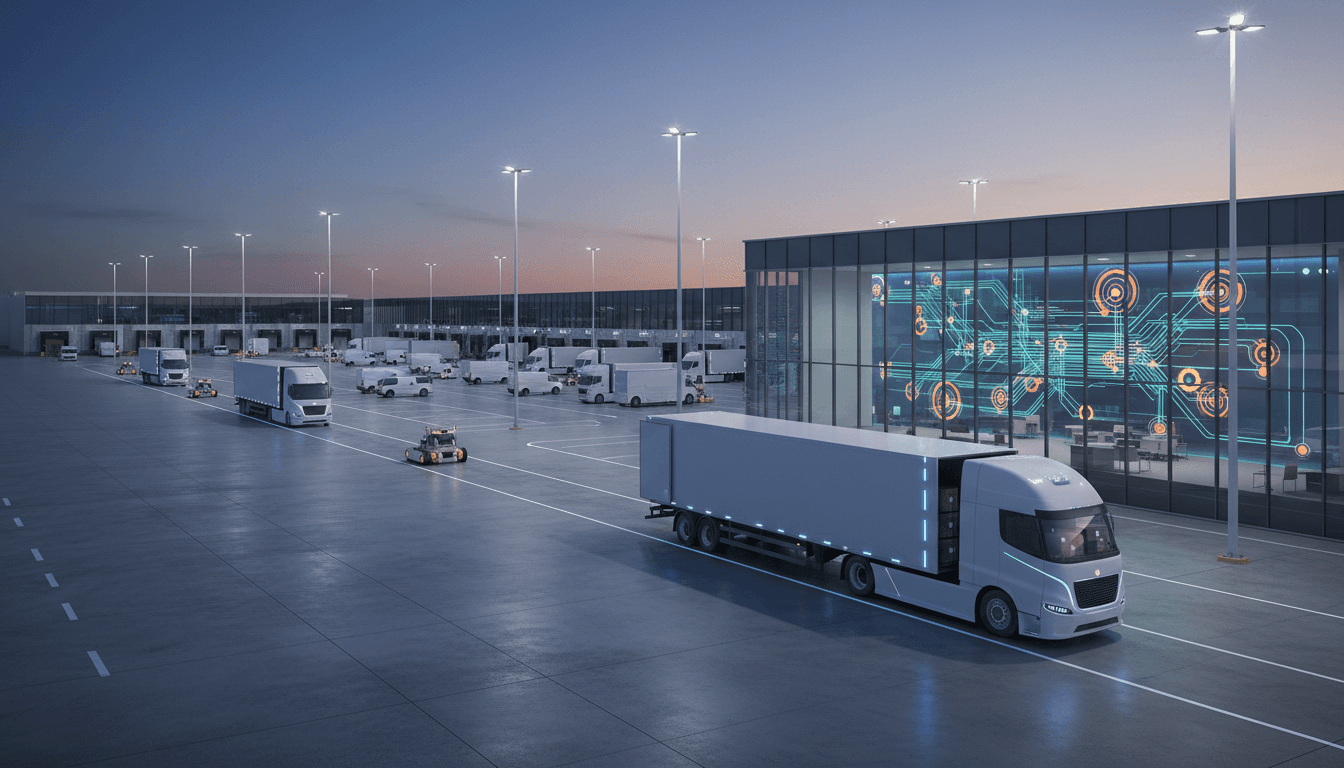
Fleet Telematics + AI: Turning Trucks Into Smart Fleets
A parked truck burning fuel for heat or “just waiting” isn’t a small problem. Across a fleet, it becomes a measurable tax on margins: extra gallons, extra engine wear, extra risk, and a constant sense that you’re reacting instead of running the operation.
That’s why fleet telematics in the USA has shifted from “nice dashboard” to “operating system.” And in 2025, the real story isn’t GPS dots on a map—it’s how telematics feeds AI-driven automation across transportation and logistics, from dispatch decisions to maintenance scheduling to safety coaching.
This post is part of our AI in Transportation & Logistics series, where we track the practical systems (not hype) that make logistics networks faster, safer, and more predictable. Telematics is one of the most practical on-ramps to that future.
Telematics is the data layer for logistics automation
Telematics is how you turn vehicles into measurable, optimizable assets. If you can’t reliably capture what happened (where the vehicle went, how it was driven, what the engine reported), you can’t automate decisions with confidence.
At a basic level, fleet telematics combines hardware and software to collect, transmit, and analyze vehicle and driver data. Modern platforms typically include:
- Location + trip history: real-time positions, route replay, stop durations
- Idling + fuel signals: idle reports, fuel consumption patterns, and fuel card reconciliation inputs
- Driver behavior data: speeding, harsh braking, harsh acceleration, cornering, seatbelt events (varies by system)
- Vehicle health signals: engine hours, odometer, fault codes (via OBD/J1939), battery voltage, temperature sensors
- Compliance workflows: ELD functionality, inspection workflows, automated logs (depending on vehicle class and requirements)
- Video telematics (in many fleets): forward/driver-facing cameras, event-based clips, coaching workflows
Here’s the stance I’ll take: telematics isn’t “AI” by itself, but it’s the foundation AI needs. AI routing, predictive maintenance, safety scoring, and automated dispatch all depend on consistent, high-quality telemetry.
Snippet-worthy truth: You can’t automate what you can’t measure—and telematics is the measurement system for fleets.
Why telematics adoption surged in US fleets (and why it stuck)
US fleets adopted telematics for cost and compliance, then kept it for safety and control. A commonly cited industry finding is that over 70% of fleets using GPS tracking and telematics for 3+ years rate safety as the top benefit. That’s a big tell: once fleets get past installation and early ROI, they start valuing risk reduction even more than fuel savings.
Let’s break down the real drivers.
Fuel waste is visible now—and that changes behavior
Telematics reduces fuel spend by making waste undeniable and fixable. When idle time, speeding, and route choices are tracked consistently, “fuel is expensive” becomes “this vehicle idled 92 minutes yesterday at these locations.” That specificity is what drives operational change.
Many fleets report fuel savings in the 10–20% range after implementing telematics and acting on the data. The savings usually come from four places:
- Idle reduction (policy + coaching + exceptions)
- Route adherence (fewer detours, fewer “I thought this was faster” miles)
- Speed management (fuel burn climbs fast at higher speeds)
- Stop optimization (less time circling, fewer missed delivery windows)
If you want a quick win in Q1 planning: set an “idle threshold” that matches your operation (for example, 3–5 minutes at a stop) and track improvement weekly. You’ll see fast movement—especially before and after the holiday surge, when schedules normalize.
Predictive maintenance beats calendar maintenance
Telematics moves maintenance from fixed schedules to condition-based action. Instead of “every 90 days,” you schedule service based on engine hours, fault codes, mileage patterns, and how the vehicle is actually used.
That’s the bridge into automation:
- Rule-based automation: “If DTC X triggers twice in 7 days, create a maintenance ticket.”
- AI-assisted forecasting: “Based on past failure patterns, this asset has a high probability of downtime in the next 30 days.”
Even without sophisticated modeling, fleets typically see fewer breakdowns when they use engine data proactively. Less roadside repair doesn’t just save money—it prevents missed delivery commitments and customer churn.
Safety is where the ROI compounds
Telematics improves safety because it creates coachable moments—not vague accusations. Driver risk used to be judged by anecdotes (“he drives too fast”) or lagging indicators (crashes). Now it’s measured continuously.
A practical safety stack in 2025 looks like:
- Driver behavior scoring (speeding, braking, acceleration)
- Video telematics for context (what actually happened)
- Coaching workflows (train, acknowledge, document)
- Recognition + incentives (keep top performers engaged)
When safety improves, costs drop in multiple places at once: fewer collisions, less downtime, lower litigation exposure, and often better insurance outcomes. I’m opinionated here: if you’re buying telematics and not using it for safety coaching, you’re leaving the biggest long-term benefit on the table.
Compliance and paperwork reduction are still major wins
Telematics reduces administrative load by automating logs, inspections, and audit trails. In US operations, ELD and hours-of-service requirements pushed many fleets to modern platforms. Once the system is in place, it becomes an “operations memory” that makes audits less painful and daily workflows less manual.
The underrated benefit: operational oversight at scale. A fleet manager can’t be everywhere, but exception-based reporting can. Instead of reading every record, you review what broke thresholds.
The “smart fleet” shift: what telematics enables when paired with AI
Telematics becomes truly powerful when it’s connected to decision-making systems. This is where the AI in robotics & automation angle shows up in everyday fleet work.
AI routing and dispatch: from static plans to living plans
AI-powered fleet optimization uses telematics as feedback. A route plan is only as good as its real-world performance.
When you feed actual trip time, stop durations, congestion patterns, and service times into optimization, you can:
- predict ETAs more accurately
- set realistic delivery windows
- reduce empty miles
- improve on-time performance
The best results come when dispatch changes from “every morning plan” to continuous replanning. That doesn’t mean chaos—it means controlled automation with human oversight.
Automated exception handling (the quiet ROI)
Automation is most valuable when it handles the boring stuff reliably. Telematics supports rules like:
- “If vehicle is stationary off-route for 15 minutes, alert dispatch.”
- “If temperature exceeds threshold, create an incident and notify the customer.”
- “If driver exceeds speed policy 3 times in a shift, queue a coaching task.”
These aren’t flashy. They’re profitable.
Predictive maintenance as a gateway to robotics-aware operations
Predictive maintenance doesn’t just keep trucks running—it coordinates the whole logistics chain. In modern distribution networks, vehicle uptime affects warehouse labor planning, dock scheduling, and even yard automation.
If you’re running facilities with automation (yard management systems, automated gates, autonomous yard vehicles, robotics-assisted loading), then unplanned truck downtime ripples into the entire site plan. Telematics is the early-warning system that keeps upstream and downstream automation stable.
A practical telematics rollout plan (that doesn’t backfire)
The fastest way to fail with telematics is to treat it like surveillance. The fastest way to win is to treat it like a safety-and-efficiency program with clear rules.
Step 1: Pick 3 metrics that matter and commit for 90 days
Start narrow to build trust and momentum. Choose metrics that connect directly to cost and safety:
- Idling minutes per vehicle per day
- Speeding events per 100 miles
- Preventable harsh braking rate
You can expand later, but if you start with 25 KPIs, you’ll get 25 arguments.
Step 2: Set policies that are specific and defensible
A policy should be easy to explain and consistent to apply. For example:
- “Idling over 5 minutes triggers a coaching note unless it’s at a known queue location.”
- “Speeding is measured vs posted limits + a 5 mph buffer.”
Specificity prevents resentment.
Step 3: Pair data with coaching, not punishment-first
Drivers need to believe the goal is fewer incidents and easier days—not ‘gotchas.’ What works well:
- monthly 10-minute coaching sessions for high-risk events
- recognition for top safety scores
- team-level goals (so it feels like operations improvement)
Step 4: Integrate, don’t isolate
Telematics should feed systems people already use. If dispatch lives in a TMS and maintenance lives in a CMMS, push alerts and tickets there. Otherwise the telematics platform becomes “another tab” that no one checks after the first month.
Step 5: Audit your data quality like you audit inventory
Bad data creates bad automation. Common issues:
- incorrect asset-to-device mapping
- inconsistent odometer readings
- driver identification problems (shared vehicles)
- GPS drift in dense urban areas
Fixing these early makes AI analytics far more reliable later.
What’s next for fleet telematics in 2026: video, sustainability, and liability
The trendline is clear: telematics is becoming more sensor-rich and more legally relevant. Three shifts are already shaping budgets heading into 2026.
Video telematics becomes standard, not optional
Video reduces ambiguity in incidents and accelerates coaching. Fleets are adopting event-based video because it lowers claims friction and shortens the “what happened?” cycle.
A simple operational rule: if you deploy video, define who can view what, how long clips are retained, and how privacy is handled. The tech is easy. Governance is the hard part.
Sustainability reporting gets operational (not just corporate)
Idle reduction and route efficiency are among the quickest emissions wins available. As customers apply more pressure on Scope 3 emissions transparency, telematics becomes the proof layer.
Even if you’re not publishing carbon reports, you’ll feel this through procurement: more shippers are asking carriers and service fleets to document efficiency practices.
Liability becomes a board-level conversation
Telematics creates a record—helpful when used well, harmful when ignored. If your system shows repeated risky behavior and nothing changes, that history can become a problem. The answer isn’t to avoid telematics; it’s to operate it like a safety program with documented actions.
Where this fits in the AI in Transportation & Logistics story
Telematics is one of those rare technologies that pays off quickly and sets you up for bigger automation wins later. It reduces fuel waste, improves fleet safety, tightens maintenance, and makes compliance less painful. More importantly, it supplies the clean operational data that AI needs to optimize routes, predict failures, and automate decisions responsibly.
If you’re planning your 2026 roadmap, here’s the forward-looking question I’d ask: Do you want your fleet to be managed by hindsight—or by real-time signals your team can act on immediately?
If you’re evaluating platforms, integrations, or an AI optimization layer on top of telematics, the best next step is to map your current workflows (dispatch, maintenance, safety) and identify the top three decisions you want data to improve. That’s where smart fleets actually start.