Amazon’s money-back air cargo guarantee highlights a shift toward SLA-driven freight. See how AI improves predictability, routing, and on-time performance.
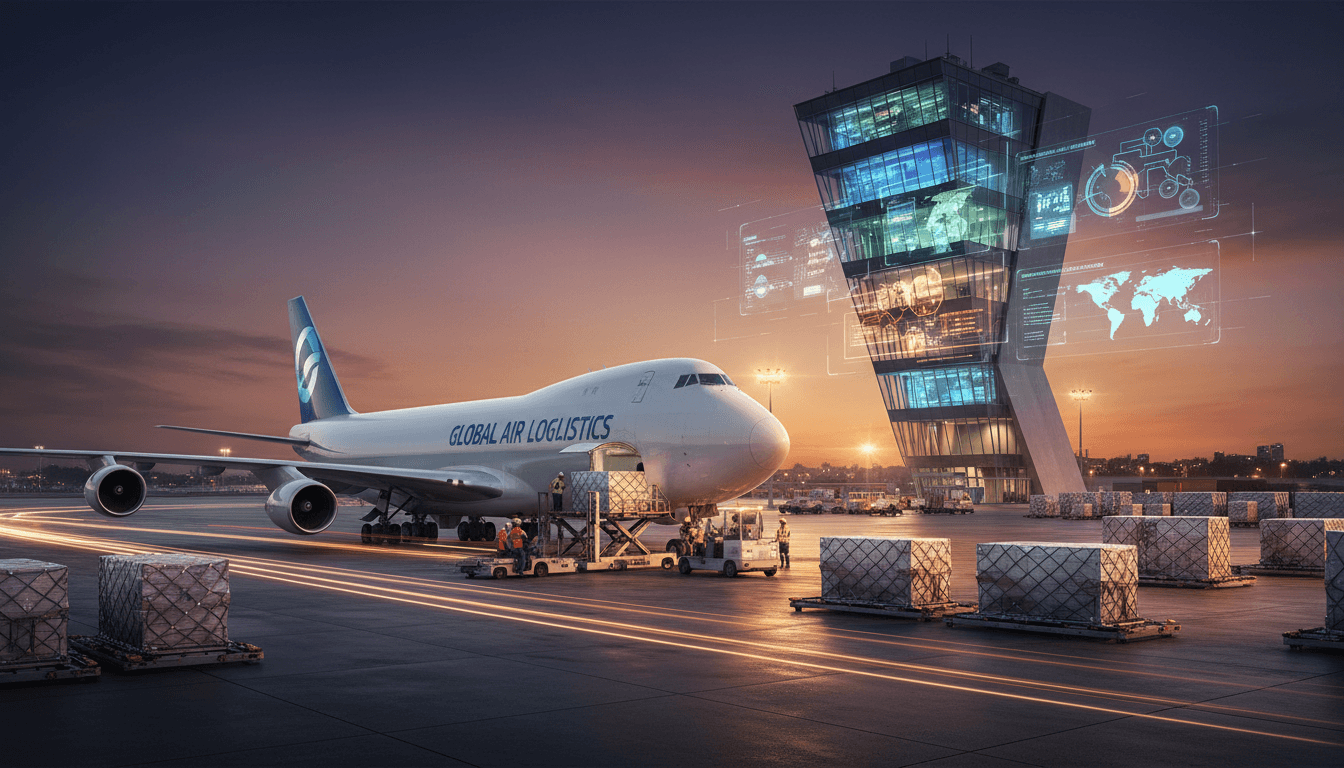
Money-Back Air Cargo Guarantees: AI Makes Them Work
A money-back guarantee in air cargo is basically a carrier saying, “If we miss the promised delivery window, we’ll pay for it.” That’s normal in parcel express. In wholesale air freight? It’s rare—because the system is messy, multi-party, and full of handoffs.
Amazon just pushed that idea into the mainstream of air cargo: a refund (up to $10,000 per flight) if a shipment arrives more than two hours late—as long as the delay is due to a service failure. This move matters far beyond Amazon. It’s a case study in how service guarantees are becoming a competitive weapon—and why AI in transportation and logistics is quickly turning “on-time” into something you can engineer, not just hope for.
I’m going to take a stance: performance guarantees will spread in air cargo, but only for networks that can measure, predict, and actively control risk. That’s an AI problem as much as it’s an operations problem.
Why a money-back guarantee is such a big deal in air cargo
A guarantee is really a bet on operational predictability. And traditional air cargo has never been built for predictability.
Here’s why guarantees are uncommon in standard air freight: the journey often includes multiple intermediaries—freight forwarders, airlines, ground handlers, warehouses, trucking partners, customs processes, airport constraints, and weather disruptions. Every handoff adds variability. Every variability point makes a guarantee expensive.
Amazon’s guarantee signals something specific:
- Amazon believes it has enough control over the network to price the risk.
- Amazon believes it can detect service failure vs. uncontrollable events fast enough to manage claims.
- Amazon believes customers will trade some volume for accountability and predictability.
That’s an integrator-style promise (think the express carriers), showing up in a market that historically worked differently.
And the timing isn’t an accident. December is peak season behavior in logistics: shippers are tired of “it’ll probably make it,” and procurement teams suddenly find religion around service-level agreements (SLAs).
Amazon’s “AWS playbook” for logistics—and why it changes the bar
Amazon is using a pattern it already proved with Amazon Web Services: build massive internal capability, then sell the surplus as a product.
Amazon Air started to support its own delivery commitments and now operates a network of 100+ cargo jets serving 65+ destinations. As Amazon’s e-commerce growth normalized and its fulfillment model shifted, excess air capacity became something to monetize.
The strategic move isn’t just selling space on airplanes. It’s selling a system:
- a digital portal for quoting, booking, monitoring, billing, and support
- guaranteed space (once booked) within a defined window
- operational control and re-routing options across a large network
That’s exactly how enterprise buyers think about cloud services: not “a server,” but reliability, visibility, controls, and outcomes.
The competitive shift isn’t price vs. price. It’s “can you commit to an outcome—and prove it?”
This is where AI in transportation and logistics becomes central. Outcome-selling requires prediction, fast decisions, and a tight feedback loop.
The AI layer that makes on-time guarantees realistic
A money-back guarantee forces a simple operational question: How do you avoid being wrong?
You can’t manage that with a weekly report and a few dashboards. You need systems that forecast risk at the shipment level and adapt in near real time.
1) Predictive ETA that’s actually useful
Many logistics teams already have ETAs. The problem is they’re often not decision-grade.
To support an on-time guarantee, the ETA system has to do more than show a timestamp. It must provide:
- probability of on-time arrival (not just “ETA 10:40”)
- confidence intervals (how fragile that ETA is)
- root-cause signals (weather, hub congestion, late tender, handling dwell)
In practice, this means machine learning models trained on historical lane performance, airport and hub constraints, connection buffers, tender timing, and exception codes.
Snippet-worthy truth: A guarantee is priced on probabilities, not promises.
2) Dynamic re-routing and capacity decisions
Amazon’s executives have pointed to “millions of route combinations” and real-time adjustments. That’s exactly the kind of decision space where AI helps.
AI-driven routing optimization in air cargo typically focuses on:
- choosing the best flight/hub combination given risk and cost
- protecting critical connections with buffer planning
- deciding when to rebook, relabel, or reposition freight
- balancing utilization so the network doesn’t create its own congestion
This is where “agentic AI” gets interesting: not because it’s trendy, but because it can coordinate multiple steps (re-plan → check capacity → trigger booking changes → notify stakeholders → update billing rules) under constraints.
3) Exception detection that prevents missed deliveries
Guarantees are won and lost in the ugly middle: freight sitting at a warehouse door, a missed cut time, a paperwork mismatch, a trailer arriving late to the ramp.
AI improves reliability by spotting patterns humans don’t see fast enough:
- dwell time anomalies by station, hour, customer, or commodity
- “soft failures” (a scan happened, but the handoff didn’t)
- recurring bottlenecks tied to specific partners or processes
A practical benchmark I’ve found helpful: if your exception alerts fire after the shipment is already late, you don’t have exception management—you have documentation.
4) Forecasting demand to protect SLA capacity
Service guarantees are easiest to keep when you’ve planned the network with demand in mind.
That means using AI forecasting to predict:
- peak-day volume by lane and customer segment
- commodity surges (perishables, apparel, electronics)
- disruption scenarios (weather systems, hub closures, cascading delays)
The goal isn’t perfect accuracy. It’s to reduce surprise enough that operations can reserve buffers and protect premium shipments.
What this means for shippers and freight forwarders
Amazon’s offer will spark debate: “Do we need a guarantee?” Some forwarders argue the network value is strong without it.
I think that misses the point. A guarantee is a forcing function. It changes procurement conversations from “rate and schedule” to “risk and accountability.”
Shippers: use guarantees to buy down uncertainty, not just speed
If you ship high-value, time-sensitive freight—pharma support supplies, critical spares, perishables, e-commerce replenishment—late delivery cost is often larger than the airfreight invoice.
A guarantee can be valuable if it comes with:
- clear rules on what counts as a service failure
- transparent tracking and milestones (tender, acceptance, departure, arrival)
- operational escalation paths when risk rises
But don’t get hypnotized by the refund number. The best outcome is still not being late.
Forwarders: the risk is disintermediation, the opportunity is orchestration
If Amazon’s network becomes the default domestic relay for more international belly cargo and forwarder moves, forwarders have two options:
- Compete on raw lift (hard)
- Compete on orchestration: planning, compliance, exception recovery, multi-carrier optimization, and customer experience (winnable)
Forwarders that adopt AI for shipment planning and exception control can actually benefit from networks like Amazon’s. You can treat lift as modular and differentiate on intelligence.
How to evaluate an air cargo provider’s “AI reliability” in 2026
If you’re a shipper or logistics provider considering time-definite air cargo services, use questions that force operational truth.
A practical reliability checklist
- Do you provide on-time probability, not just ETA?
- Can you show lane performance by day-of-week and airport pair?
- What percentage of exceptions are detected before a missed connection?
- How do you classify controllable vs. uncontrollable delays?
- What’s the recovery playbook when risk crosses a threshold?
- Can you prove “booked means protected” with capacity rules?
- Do you expose data via a portal/API so we can measure performance independently?
If a provider can’t answer those with specifics, a guarantee is marketing—not a capability.
The bigger trend: logistics is moving from “service” to “product”
Amazon’s portal-first booking experience is part of the real story here. Air cargo has historically been relationship-driven and manual. Amazon is pushing it toward software-like expectations: instant quotes, confirmed capacity, track-and-manage in one console.
That shift fits perfectly in the broader AI in Transportation & Logistics narrative:
- AI improves forecasting and planning
- AI improves real-time execution decisions
- AI improves post-mortems and continuous improvement
- software changes what customers expect to self-serve
The result is simple: logistics providers that can quantify reliability will win more of the premium freight wallet.
Where to start if you want “guarantee-grade” performance
Most teams don’t need a moonshot AI program. They need a reliability stack that’s tied to SLA outcomes.
Here’s a grounded starting sequence I recommend:
- Standardize milestone data (tender, acceptance, departure, arrival, delivery). No clean data, no reliable AI.
- Build an on-time performance baseline by lane, station, and partner.
- Deploy exception prediction focused on missed cut times and missed connections.
- Add decision workflows (who is alerted, what actions are allowed, what approvals are needed).
- Close the loop: every late shipment should train the system—root cause, fix, prevention.
One-line reality check: If you can’t explain why shipments are late, you can’t prevent it—and you definitely can’t guarantee it.
What happens next
Amazon’s money-back guarantee for air cargo shippers won’t stay a novelty. It’s a signal that the market is willing to pay for outcomes—and that some networks believe they can control enough variables to put money behind a promise.
If you’re a shipper, the opportunity is to turn reliability into a measurable procurement requirement instead of a vague expectation. If you’re a forwarder or carrier, the opportunity is to treat AI not as a side project, but as the mechanism that makes SLA performance dependable—and profitable.
Reliability is becoming a product feature. The next question is the one that will decide budgets in 2026: Which parts of your network are predictable enough to guarantee—and which parts need AI before you even try?