Amazon’s same-day grocery push is also a parcel play. See how AI in last-mile delivery enables route density, cold-chain speed, and scalable operations.
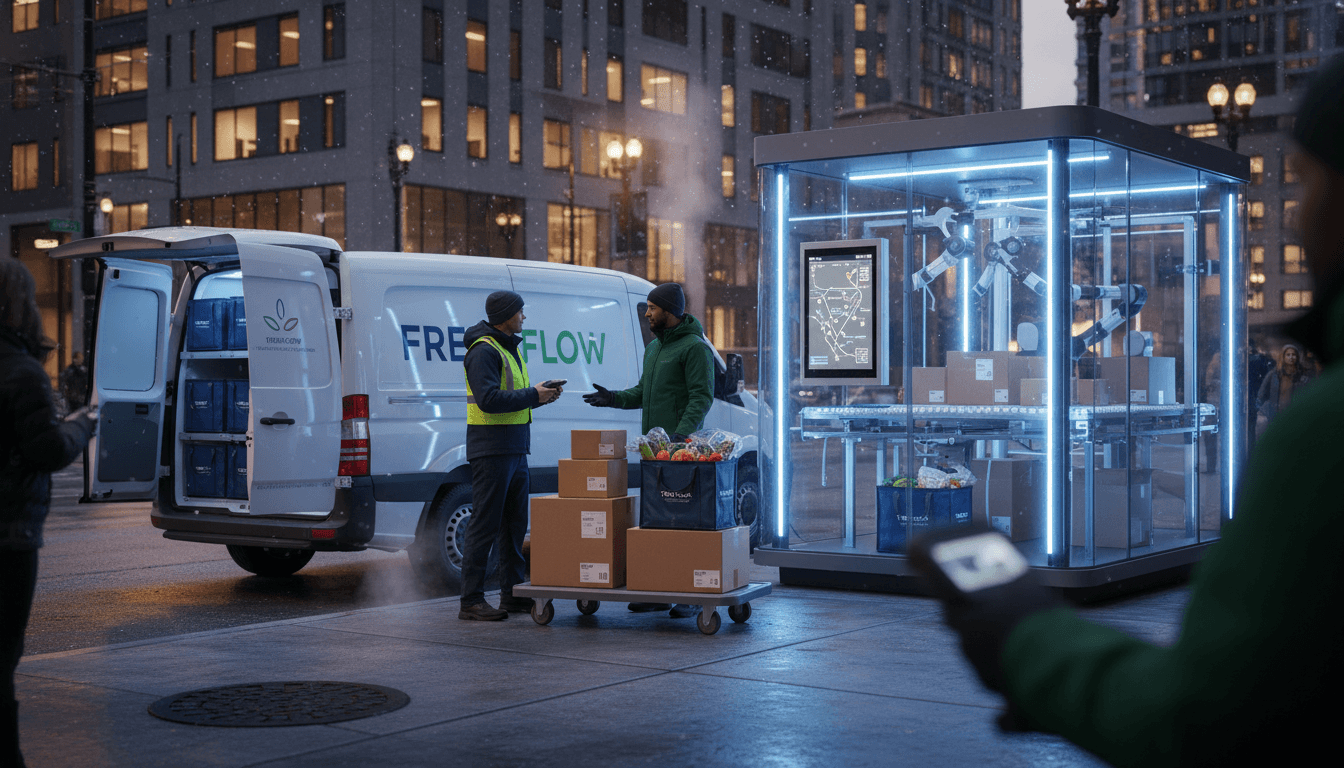
AI-Powered Same-Day Grocery Delivery: The Amazon Effect
Amazon didn’t just expand same-day grocery delivery this year—it more than doubled it, going from 1,000 to 2,300 cities and towns in four months. That’s the kind of scale most retail and logistics leaders only see in five-year plans.
The grocery headline is the easy part. The more interesting story is what rides along with the milk and produce: parcel volume. When customers can toss electronics, gifts, and household essentials into the same checkout as perishables—and get it all the same day—habit changes. And in last-mile delivery, habits become route density, and route density becomes profit.
This post sits in our AI in Transportation & Logistics series for a reason. Same-day grocery delivery is a stress test for modern logistics: tight time windows, variable demand, temperature constraints, high pick complexity, and expensive last-mile miles. If you can make that work at scale, you’re building an operating system for the rest of your delivery network.
Same-day grocery delivery is a parcel strategy in disguise
Same-day grocery delivery isn’t only about groceries; it’s a frequency engine for your entire delivery network.
Traditional e-commerce orders are “spiky”—holiday peaks, promotion-driven surges, and unpredictable category swings. Grocery is different. People buy food constantly, and they buy it on routines. When you add same-day to that routine, you create predictable demand that keeps your delivery network busy even when general merchandise slows.
Amazon’s own numbers make the point plain:
- Perishable grocery sales reportedly grew 30x since January as the service expanded.
- Customers who add fresh groceries to same-day orders shop about twice as often as those who don’t.
More orders per household means more stops per route, more opportunities to bundle items, and better utilization of drivers and local facilities. The result is the flywheel every logistics operator wants: higher stop density lowers cost per stop, which funds more capacity, which improves service, which drives more demand.
The “Trojan horse” effect is real
Analysts have called grocery delivery a “Trojan horse” into parcel share. I agree with the framing because grocery does something parcel alone struggles to do: it becomes sticky.
If a customer trusts you with perishables—and you consistently hit a same-day promise—they’re more likely to route other purchases through the same ecosystem. That’s not a branding win. It’s a network win.
And once your network runs frequent, dense same-day routes, you’re only a few product decisions away from acting like a broader parcel carrier:
- Offering same-day or next-day for third-party merchants
- Extending coverage to rural areas
- Monetizing capacity via delivery-as-a-service
Amazon has also announced a $4 billion investment to expand rural parcel delivery by end of 2026. If rural density improves and grocery routes expand outward, the cost curve changes again.
Why same-day grocery is an AI problem (not just an ops problem)
Same-day grocery delivery is a coordination problem with too many moving parts for manual planning at scale. AI isn’t optional once you push beyond a few dense metros.
At a minimum, you’re balancing five systems at once:
- Demand forecasting (what customers will order, and when)
- Inventory placement (which SKUs sit in which local nodes)
- Picking and batching (how orders are grouped for speed and accuracy)
- Routing and dispatch (how drivers hit tight windows efficiently)
- Cold-chain compliance (how temperature risk is managed end-to-end)
When these systems aren’t synchronized, you see the classic symptoms: missed time windows, substitutions, spoilage, driver overtime, failed deliveries, and customer churn.
The hidden constraint: perishables compress your decision time
General merchandise can tolerate a little slack. Perishables can’t.
If you promise same-day delivery for dairy, meat, and frozen foods, you’ve compressed the “decision cycle” across the operation:
- Forecast errors show up faster.
- Inventory mistakes are costlier.
- Route changes can break temperature compliance.
- Customer dissatisfaction is immediate.
This is exactly where AI excels: fast decisions with imperfect information, updated continuously as the world changes.
The AI capabilities that make same-day grocery scalable
AI in last-mile delivery isn’t one model; it’s a stack. Here are the capabilities that matter most for operators trying to match the expectations Amazon is setting.
Predictive demand that’s granular enough to act on
The goal isn’t a monthly forecast—it’s a neighborhood-by-neighborhood, hour-by-hour view of demand that can drive labor planning and inventory allocation.
Practical example: If your model predicts a surge in “holiday entertaining” items (cheese, deli trays, premium desserts) the weekend before Christmas, you can:
- Pre-position inventory at the right micro-fulfillment sites
- Schedule pickers earlier
- Add short-shift drivers to protect time windows
In December 2025, that matters even more because demand volatility is amplified by:
- Late-season promotions
- Weather disruptions
- Higher consumer sensitivity to delivery fees and minimum order thresholds
Real-time routing that treats time windows as a first-class constraint
Standard route optimization focuses on distance and driver hours. Same-day grocery requires multi-objective optimization:
- Minimize miles and time
- Hit promised windows
- Respect vehicle capacity (including cold/frozen compartments)
- Reduce left-at-door risk for temperature-sensitive items
If you’re still routing in large batches a few times per day, you’ll struggle. The operators winning same-day are continuously re-optimizing routes as new orders arrive and traffic conditions shift.
Picking optimization: the unglamorous bottleneck
Most teams obsess over the driver, but picking is often the first place same-day falls apart.
AI-driven batching and pick-path optimization can reduce:
- Picker travel time
- Congestion in aisles
- Order errors and missing items
A simple operational truth: if you cut pick time by 10–15 minutes per order batch, you can often protect a same-day promise without adding drivers.
Substitution intelligence that protects satisfaction and margin
Substitutions are where grocery delivery loyalty is won or lost.
A good AI approach doesn’t just pick “closest product.” It considers:
- Customer preferences (brand, dietary needs)
- Basket logic (what else is in the order)
- Margin impact
- Likelihood of acceptance
That reduces refunds and support tickets—and it prevents the silent killer: customers quitting the service because it feels unreliable.
What Amazon’s expansion signals for the rest of the market
Amazon expanding same-day perishables to 2,300 communities raises consumer expectations for everyone: grocers, 3PLs, parcel carriers, and regional couriers.
Here’s the strategic implication I’d bet on: the next parcel market share shift won’t come from price—it’ll come from convenience-driven bundling.
If Walmart, Target, and other large retailers keep improving the digital basket experience (grocery + general merchandise) and pair it with faster delivery, consumers will reallocate spending based on who makes life easiest.
Parcel carriers feel that indirectly. When retailers internalize more last-mile volume, carriers lose the densest, most profitable residential lanes. That pressure is already visible across the parcel ecosystem, and grocery-driven frequency accelerates it.
Temperature-controlled networks are becoming table stakes
Amazon attributed the expansion to improvements in its temperature-controlled delivery network and last-mile partnerships. That’s a hint about where the bar is going.
If you’re building a competitive last-mile network in 2026, you’ll need a clear plan for:
- Cold/frozen capacity management
- Packaging strategy and dwell-time limits
- Proof-of-delivery workflows that reduce porch time
- Exception management when a customer isn’t home
AI doesn’t replace these basics—but it makes them operational at scale.
A practical AI roadmap for grocery + parcel operators
If you’re a retailer, 3PL, or delivery operator trying to compete in same-day (or simply protect margin), here’s what works in practice.
1) Start with a single “high-density zone” pilot
Pick one metro or cluster where:
- Order density is already strong
- Store or MFC operations are stable
- You can measure outcomes cleanly
Your goal is to validate unit economics: cost per stop, on-time rate, substitution rate, spoilage, and repeat order frequency.
2) Build the data foundation you actually need
Most AI projects fail because the data is messy, not because the model is hard.
Minimum viable dataset:
- Historical orders with promised vs actual delivery time
- Item-level picks, substitutions, and cancellations
- Inventory snapshots (not just end-of-day)
- Driver GPS traces and stop durations
- Temperature events (if available)
If you can’t reliably answer “what happened and why?” you can’t train systems to improve it.
3) Automate exception handling before you chase 30-minute delivery
Amazon is testing 30-minute delivery in select cities. That’s impressive—but for most operators, the bigger win is reducing exceptions that eat margin.
Automate and optimize:
- Late order re-routing
- Address issues and access constraints
- Customer not available workflows
- Re-delivery and refund logic
Cleaner exception handling often produces faster delivery as a side effect.
4) Use AI to increase route density, not just to reduce miles
Many teams measure “miles saved” and call it success. The real KPI is profitable density.
Track:
- Stops per route hour
- Orders per household per month
- Basket attachment rate (grocery + general merchandise)
- Cost per delivered item (not just per order)
If you can increase attachment and frequency, you’re building the same flywheel Amazon is exploiting.
Snippet-worthy truth: Same-day grocery isn’t a delivery product; it’s a demand pattern that makes an entire last-mile network cheaper to run.
The real question going into 2026: who owns the customer’s basket?
Amazon’s same-day grocery expansion is a reminder that logistics strategy and product strategy are now the same conversation. The company isn’t only delivering faster—it’s training customers to place more frequent, more varied orders through a single channel.
For leaders in transportation and logistics, the takeaway is straightforward: AI-driven logistics is becoming the price of entry for time-definite, high-mix last-mile delivery. If you want to compete on convenience, you need forecasting, routing, picking, and exception systems that learn and adjust continuously.
If you’re planning for 2026, ask yourself one hard question: when customers can bundle groceries and parcels for same-day delivery, what would make them choose your network instead?