Amazon’s same-day grocery expansion shows how AI routing, forecasting, and cold-chain optimization can drive parcel growth and last-mile efficiency.
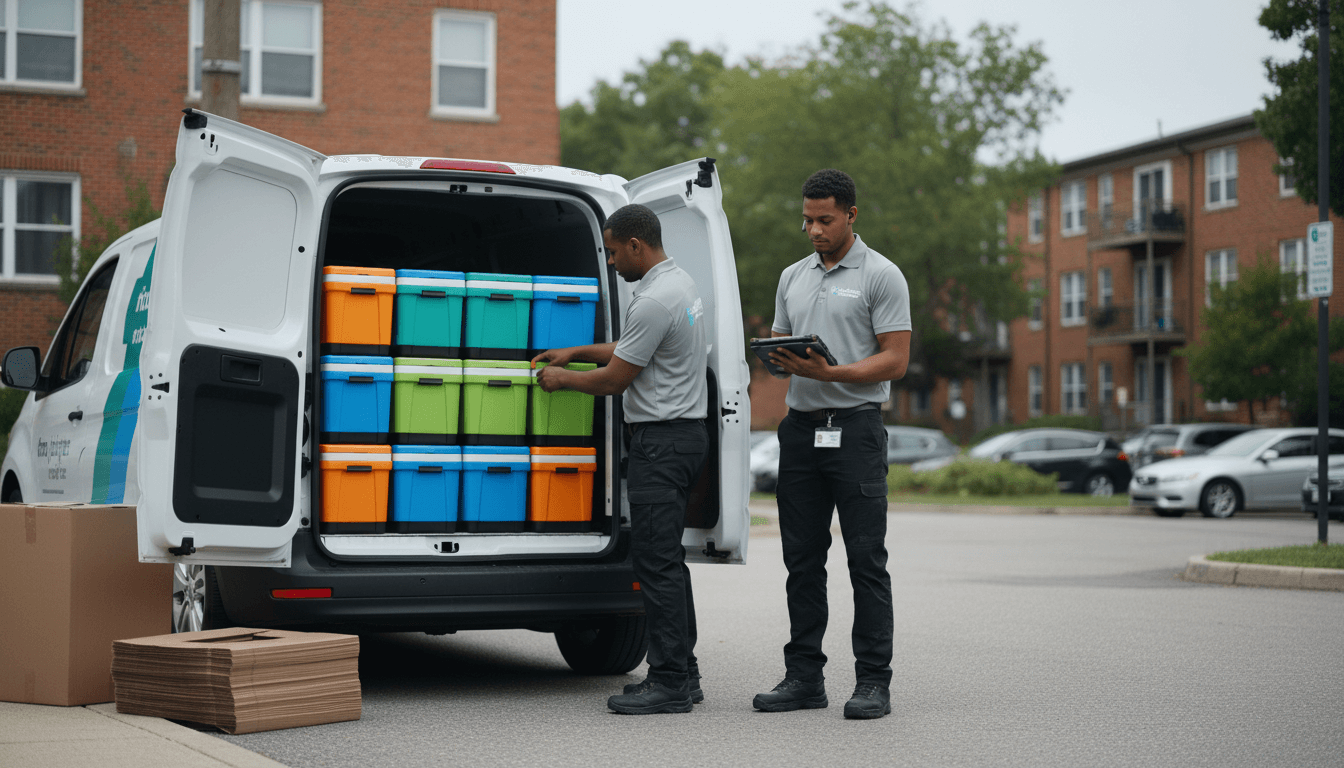
How AI Powers Same-Day Grocery and Parcel Growth
Amazon’s same-day fresh grocery delivery is now available in 2,300 cities and towns—up from 1,000 just a few months earlier. That number isn’t just a retail milestone. It’s a logistics signal.
Same-day perishables are brutally unforgiving. You’re dealing with narrow delivery windows, strict temperature requirements, high substitution rates, volatile demand, and customers who will absolutely notice if the strawberries arrive warm. If you can run that operation profitably (or even close to it), you’ve built a last-mile machine that can also move a lot of regular parcels.
Here’s the part many transportation and logistics teams miss: same-day grocery isn’t only about groceries. It’s a demand magnet that increases stop density, creates steadier delivery cadence, and quietly pulls more non-grocery packages into the same network. And the only realistic way to orchestrate that complexity at scale is with AI-powered logistics optimization.
Same-day grocery is a parcel strategy (whether you call it that or not)
Same-day grocery expands a delivery network in ways standard e-commerce can’t. Groceries are habitual—weekly, sometimes daily. That frequency changes the economics of last-mile delivery.
When customers start ordering produce, dairy, meat, frozen items, and bakery alongside household goods and gifts in a single basket, a retailer wins twice:
- Higher order frequency: Amazon reported customers who add fresh groceries shop about twice as often as those who don’t.
- Higher basket attachment: Groceries become the “reason” for the order; general merchandise becomes the add-on.
- More predictable delivery volume: A steadier stream of orders means fewer extreme peaks and troughs.
Analysts have described this as a “Trojan horse” approach to parcel share. I agree with the spirit of that idea, but I’d put it more bluntly: if you control the customer’s weekly replenishment behavior, you’re halfway to controlling their parcel behavior too.
This matters for shippers, 3PLs, and carriers because it creates a new competitive baseline. The new question isn’t “Can you do next day?” It’s “Can you do same-day reliably, with margin, while meeting cold-chain constraints?”
The real constraint isn’t vans or drivers—it’s decision-making speed
Same-day grocery forces thousands of micro-decisions per hour:
- Which orders should be promised same-day vs. next-day?
- Which fulfillment node should pick the order?
- How do we batch orders into routes without breaking temperature rules?
- When should we split a basket into multiple shipments?
- What substitutions should be offered when a SKU is missing?
Humans can’t do that manually at scale. Rule-based systems crack under real-world variance (traffic, cancellations, late picking, stockouts, weather). AI systems are built for that variance.
Where AI shows up in same-day last-mile delivery
At a practical level, same-day networks rely on a stack of AI-driven capabilities that work together:
-
Demand forecasting and labor planning
- Predicts order volume by hour, neighborhood, and category (fresh vs. frozen vs. ambient)
- Improves staffing and reduces “panic hiring” or overtime spikes
-
Inventory and substitution intelligence
- Anticipates which SKUs will stock out and pre-plans substitutes
- Learns customer preferences (brand sensitivity, dietary constraints, price tolerance)
-
Promise-time optimization
- Decides what delivery windows to offer based on real capacity, not wishful thinking
- Balances conversion (offering more slots) vs. service failures (late deliveries)
-
Dynamic routing and dispatch
- Continuously re-optimizes routes when cancellations, add-ons, and traffic happen
- Handles constraints like “frozen items can’t sit in the van beyond X minutes without active cooling”
-
Network design feedback loops
- Uses actual route performance to refine micro-fulfillment placement and delivery-zone boundaries
If you’re building an AI in transportation & logistics roadmap, this is a strong template: same-day grocery is basically a master class in constraint-based optimization.
Why combining groceries + general merchandise is so powerful
Amazon’s same-day grocery expansion includes a 30% larger selection of perishables than earlier in the rollout, largely sourced through Whole Foods. Bigger selection increases adoption, and adoption increases delivery density.
That density is the quiet engine behind parcel growth.
Stop density is the hidden KPI
Last-mile cost is heavily driven by:
- Miles per stop
- Stops per route hour
- First-attempt delivery success
Groceries increase the likelihood that a delivery happens when a customer is home (especially in the evening). That improves first-attempt success and reduces redelivery costs—something parcel carriers obsess over.
And once you’ve got a route going to a neighborhood anyway, adding a small parcel to that same stop is cheap compared to sending a separate route tomorrow.
The “same-day basket” changes customer expectations
From an operations perspective, the most dangerous competitor isn’t another carrier—it’s a customer’s new mental baseline.
When customers can get groceries same-day for free over $25 (in many areas), or pay a small fee for smaller orders, they start to treat same-day as normal. That expectation bleeds into:
- gifting
- home essentials
- apparel
- small electronics
This is where AI-driven slotting, routing, and capacity planning becomes strategic, not just operational. You’re not only delivering orders—you’re shaping behavior.
What it takes to run perishables at scale (and why AI is mandatory)
Perishables introduce constraints that parcel-only networks don’t have to manage every minute.
Cold-chain constraints create operational complexity
A same-day grocery network has to manage at least three “temperature worlds” simultaneously:
- Ambient (pantry items)
- Chilled (dairy, meat)
- Frozen (ice cream, frozen meals)
AI helps determine:
- optimal batching so frozen items aren’t picked too early
- loading order so temperature-sensitive goods are placed correctly
- routing so the most fragile products aren’t last on route
Micro-fulfillment and pick speed become delivery speed
Same-day isn’t won on the road alone. It’s won by:
- pick path optimization
- smart slotting (placing high-velocity items closer)
- labor scheduling by predicted wave
That’s why AI in warehouse automation belongs in the same conversation as last-mile routing. If your pick process is slow, you can’t “route your way” into same-day performance.
The competitive ripple effect for carriers, retailers, and 3PLs
When a retailer uses grocery to build a denser last-mile network, the ripple effect hits everyone:
Traditional parcel carriers face a tougher mix
If more high-frequency deliveries shift into retailer-owned networks, carriers may be left with:
- lower-density rural routes
- more expensive residential stops
- more bulky/awkward packages
That mix shift pressures margins. It also changes how carriers think about partnerships, surcharges, and service tiers.
Retailers will copy the “bundle basket” play
Analysts have already pointed out that if other major retailers bundle grocery + non-grocery shopping baskets in their marketplaces, carriers could lose share faster.
I’m firmly in the “this will spread” camp, especially because it aligns with what customers already do in December: multiple urgent purchases, gifting, and pantry replenishment compressed into short windows. Same-day is a seasonal advantage that can become a year-round habit.
3PLs and last-mile providers have an opening—if they productize AI
A lot of last-mile providers pitch capacity. Capacity is table stakes.
The winning pitch is predictability:
- on-time rate by promised window
- cold-chain compliance rate
- substitution satisfaction
- cost per successful stop
Those metrics require AI-driven planning and exception management, not just more drivers.
Practical AI moves logistics teams can make in the next 90 days
Same-day grocery at Amazon scale is out of reach for most companies. But the methods aren’t. If you’re a shipper, carrier, 3PL, or retailer building your AI in transportation & logistics plan, these are realistic near-term steps.
1) Start with promise accuracy, not route optimization
Most teams jump straight to routing. I’ve found promise-time accuracy is the better first win.
- Measure: % of orders delivered within the promised window
- Add: dynamic slot throttling when capacity is tight
- Outcome: fewer late deliveries, fewer refunds, fewer escalations
2) Treat substitutions as a forecasting problem
If you deliver groceries (or anything with stockouts), substitutions are not “customer service.” They’re a machine learning input.
- Track: substitution acceptance by SKU/category
- Predict: which SKUs are likely to stock out by time of day
- Offer: substitutes proactively at checkout to reduce last-minute churn
3) Use AI to raise stop density before you add drivers
Before hiring, model your network:
- Identify neighborhoods where you already have frequent stops
- Incentivize add-on parcels (or cross-category bundles) in those zones
- Rebalance delivery zones to reduce deadhead miles
4) Build an exception “control tower” for same-day
Same-day operations live and die by exception handling:
- late pick
- missing items
- customer not home
- traffic incidents
An AI-assisted control tower prioritizes exceptions by service risk and cost impact. That’s how you stop one bad hour from becoming an all-day failure.
Where this is headed in 2026: faster promises, tighter networks
Amazon is already testing 30-minute delivery in select cities. That direction is predictable: shorter windows, more localized fulfillment, and more automation.
The real strategic shift is what happens when same-day grocery coverage expands alongside broader rural delivery investments. The moment a retailer can economically serve low-density areas with reliable delivery, the line between “retailer network” and “third-party parcel carrier” gets blurry.
For the rest of the industry, there’s a clear lesson: AI isn’t a nice-to-have in last-mile logistics anymore. It’s the only way to operate high-speed delivery with consistent service levels.
If you’re planning investments for next year, I’d focus on one question: What would break first in our network if we doubled our same-day volume in four months? Your answer will point directly to where AI can create the fastest operational lift—and the strongest competitive moat.