UP–NS could create a coast-to-coast rail network. Here’s how AI can reduce merger risk through smarter routing, forecasting, and compliance analytics.
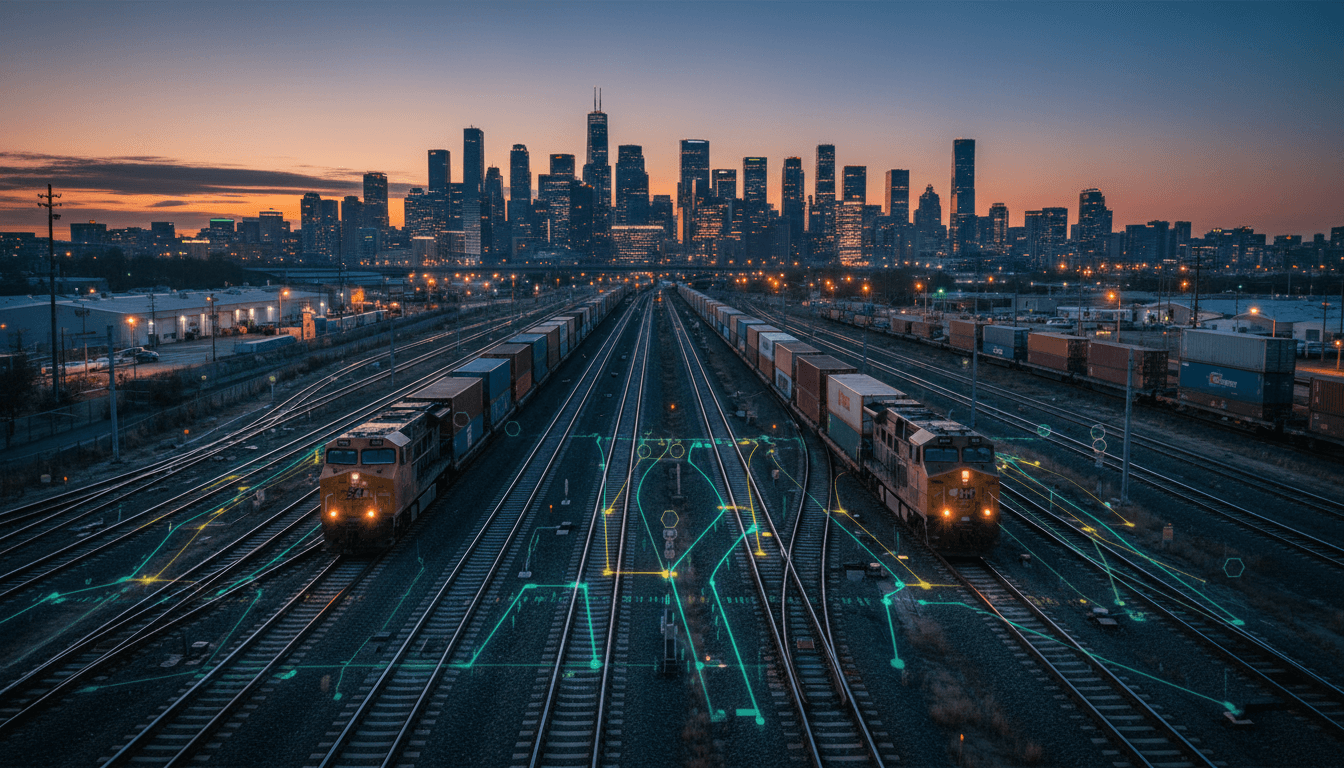
AI Lessons From the Union Pacific–Norfolk Southern Merger
Union Pacific and Norfolk Southern are set to submit a formal merger application to the Surface Transportation Board (STB) on Dec. 19, outlining a proposed $85 billion deal to create the first coast-to-coast U.S. freight railroad. The companies say a single-line network could cut transit times by up to two days by reducing handoffs at interchange chokepoints like Chicago and St. Louis.
Here’s the part most people miss: the merger story isn’t only about antitrust, labor, and shipper choice. It’s also a stress test for AI in transportation & logistics. When you stitch together two huge rail networks, you don’t just combine track miles—you combine dispatching philosophies, yard operations, crew pools, maintenance regimes, customer commitments, data systems, and exceptions. That complexity is exactly where AI either proves its value or becomes shelfware.
If you’re a shipper, 3PL, port operator, rail-adjacent manufacturer, or logistics tech leader, this merger is a useful lens for a practical question: What does it take to run an integrated transportation network without service falling apart—and where does AI actually help?
What the UP–NS rail merger is really proposing
A clear way to read the application (expected to be thousands of pages) is this: UP and NS want regulators to believe the combined system will create more competitive end-to-end service, not less.
The headline claims are straightforward:
- A combined network of roughly 53,000 route miles across 43 states
- More freight moving on single-line routings rather than interchange-to-interchange handoffs
- Faster transit (the companies cite up to two days saved on certain lanes)
- Lower administrative friction (fewer handoffs means fewer bills, fewer exception chains, fewer “who owns this?” moments)
The objections are equally predictable—and not trivial:
- Some shippers fear fewer rail options on key corridors
- The industry has a real memory of service meltdowns after past mega-mergers
- Labor groups worry about job impacts and operating-model changes
The STB process is long by design: completeness checks, comment periods, potential responsive applications, then a formal review that can take a year or longer. That timeline matters because it creates a window where both railroads will try to prove they can integrate without breaking service.
The operational risk everyone worries about: integration chaos
The best argument against big rail mergers isn’t philosophical—it’s operational. A merged railroad can look great on a map and still perform badly in real life.
Where integrations go sideways
Rail service doesn’t collapse because of one big failure. It collapses because of hundreds of small ones compounding:
- Yard dwell creeps up by 20 minutes here, 40 minutes there
- Crews aren’t positioned where demand spikes
- Locomotive availability doesn’t match the new lane mix
- Dispatching priorities clash with customer commitments
- Weather, work windows, and speed restrictions amplify congestion
Once congestion starts, rail networks behave like fluids in a clogged pipe: pressure builds upstream, recovery takes longer than expected, and “normal” performance doesn’t return just because leadership tells everyone to hustle.
Why this merger raises the bar
UP and NS are pitching interchange avoidance as the prize—particularly around Chicago and St. Louis. That’s a legitimate goal. Interchanges add time, variability, and paperwork.
But interchange avoidance doesn’t automatically create reliability. You still need an operating plan that can absorb variability, coordinate across territories, and recover from disruption fast.
That’s where AI can earn its keep—if it’s deployed like an operating system, not a slide deck.
Where AI actually helps in a merged rail network (and where it doesn’t)
AI in logistics is most valuable when it reduces variability, improves decision speed, and prevents small exceptions from becoming systemic failures. A merger is basically an exception factory.
AI use case #1: Network-wide ETA prediction that operations will trust
A merged UP–NS system will create new end-to-end lanes. The first question customers ask on new lanes is simple: “When will it arrive, and how confident are you?”
Traditional ETAs are brittle because they assume stable dwell, stable congestion, and stable handoffs. A merger disrupts all three.
AI-driven ETA models can perform better by learning from:
- Segment-level transit distributions (not averages)
- Yard dwell patterns by day-of-week and inbound mix
- Congestion signals (train density, work windows, slow orders)
- Disruption history (weather corridors, seasonal peaks)
The key is operational alignment: ETAs must be explainable enough that dispatchers and customer teams don’t ignore them. If the model can’t answer “why is this late?” in plain language, it won’t stick.
AI use case #2: Dynamic routing and interchange suppression (without surprises)
One promise of a transcontinental railroad is fewer interchanges. But if you remove an interchange, you shift volume, crew needs, and yard work elsewhere.
AI-based route optimization can help evaluate routing changes before they become service incidents:
- Simulate lane shifts under peak conditions (holiday surges, port bursts)
- Predict where congestion will move, not whether it will disappear
- Recommend routing rules that reduce conflicts with passenger rail windows and maintenance blocks
This is where I take a stance: static routing guides won’t be enough for a merged network. The moment a corridor gets constrained, the railroad needs decision support that can propose alternates fast—and quantify the trade-offs.
AI use case #3: Precision scheduled railroading meets reality
Many Class I railroads already operate with PSR principles. In mergers, PSR can become a blunt instrument if it’s treated as “do more with less.”
AI can make PSR more precise by tying schedules to real constraints:
- Crew availability forecasts tied to hours-of-service and geography
- Locomotive utilization with maintenance cycle constraints
- Yard labor planning with inbound block profiles
This is less glamorous than “autonomous trains,” but it’s where margin and reliability come from.
AI use case #4: Disruption management and recovery playbooks
Winter operations (and it’s December as this filing lands) are unforgiving. Snow, extreme cold, flooding, and wind events cause cascading failures.
AI systems can support recovery, not just prediction:
- Detect early warning signals (dwell inflection, missed slots, train starts slipping)
- Recommend triage actions (prioritize certain blocks, resequence departures)
- Quantify customer impact (which shipments will miss plant windows)
A useful rule: Prediction without a decision loop is just a report. Recovery requires AI outputs that translate into dispatch and terminal actions.
AI and regulatory review: turning compliance into an advantage
The STB review process will involve heavy scrutiny of competition, service, labor, and broader public interest claims. That’s not just legal work—it’s analytics work.
The compliance opportunity
A major merger forces rigorous documentation:
- Service impact assessments
- Competitive effects by lane and commodity
- Operational plans and contingencies
- Ongoing performance monitoring if conditions are imposed
AI-powered analytics can support this in two practical ways:
- Scenario modeling: “What happens to service levels if volume shifts by X%?” or “If this corridor is constrained, where does congestion propagate?”
- Continuous monitoring: near-real-time KPIs (dwell, velocity, missed connections) with anomaly detection that flags issues before they become public.
If regulators and shippers don’t trust the railroad’s data, they won’t trust the promises. Transparent metrics and consistent reporting aren’t a nice-to-have; they’re the price of admission.
What shippers and 3PLs should do now (even before any approval)
A year-plus review window is not “wait and see” time. It’s prep time.
1) Map exposure to rail concentration by lane
If you rely on rail for a meaningful slice of volume, identify lanes where you could lose optionality. Build a lane-level view of:
- Primary rail routings today
- Feasible alternates (truckload, intermodal, barge, different rail pairings)
- Customer delivery penalties or production risk tied to lateness
The goal isn’t panic. It’s negotiating from a position of clarity.
2) Upgrade your forecasting inputs
A merged network will change schedules, cutovers, and service patterns. Your forecasts should include more than sales projections.
Useful signals to incorporate (often overlooked):
- Plant shutdown calendars and restart ramps
- Port and border crossing variability
- Weather risk corridors by month
- Promotion and seasonality effects (Q4 retail, Q1 industrial restock)
AI forecasting isn’t magic, but it’s good at mixing messy signals into a probability-weighted view—exactly what you need when service patterns are shifting.
3) Ask carriers for “confidence,” not just an ETA
When you evaluate a rail offering (or an intermodal product), don’t accept a single timestamp as truth. Ask for:
- ETA plus a confidence band (for example: 80% likelihood window)
- Top delay drivers on that lane
- Escalation triggers (what threshold causes proactive replan)
If a provider can’t talk in probabilities, they probably can’t manage variability either.
4) Build an exception workflow that scales
Merger periods create more exceptions. If your team handles exceptions manually in email threads, you’ll feel the pain fast.
A scalable workflow looks like:
- Automated detection of “late-risk” shipments
- Clear ownership and escalation rules
- Playbooks for reroute, expedite, inventory buffering, and customer comms
This is a prime place to apply AI copilots carefully—summarizing exception context, drafting customer updates, and recommending options—while humans keep final control.
The bigger lesson for AI in transportation & logistics
The tempting narrative is “bigger network equals better service.” The real narrative is harsher: bigger networks punish weak coordination.
This is why AI in transportation & logistics keeps circling back to the same fundamentals—routing, forecasting, resource planning, and exception management. The value isn’t theoretical. It’s operational.
If the UP–NS merger progresses, expect the debate to focus on competition and labor (as it should). But the outcome will hinge on something more practical: whether an integrated network can maintain reliability while it changes its operating rhythm.
If you’re building or buying AI for logistics, use this moment as your litmus test: Can our systems help us run through disruption, not just analyze it afterward? That answer will decide who wins service wars in 2026.