AI cold chain visibility reduces temperature excursions and last-mile losses. See why connected “cube” packaging is becoming the new standard for pharma logistics.
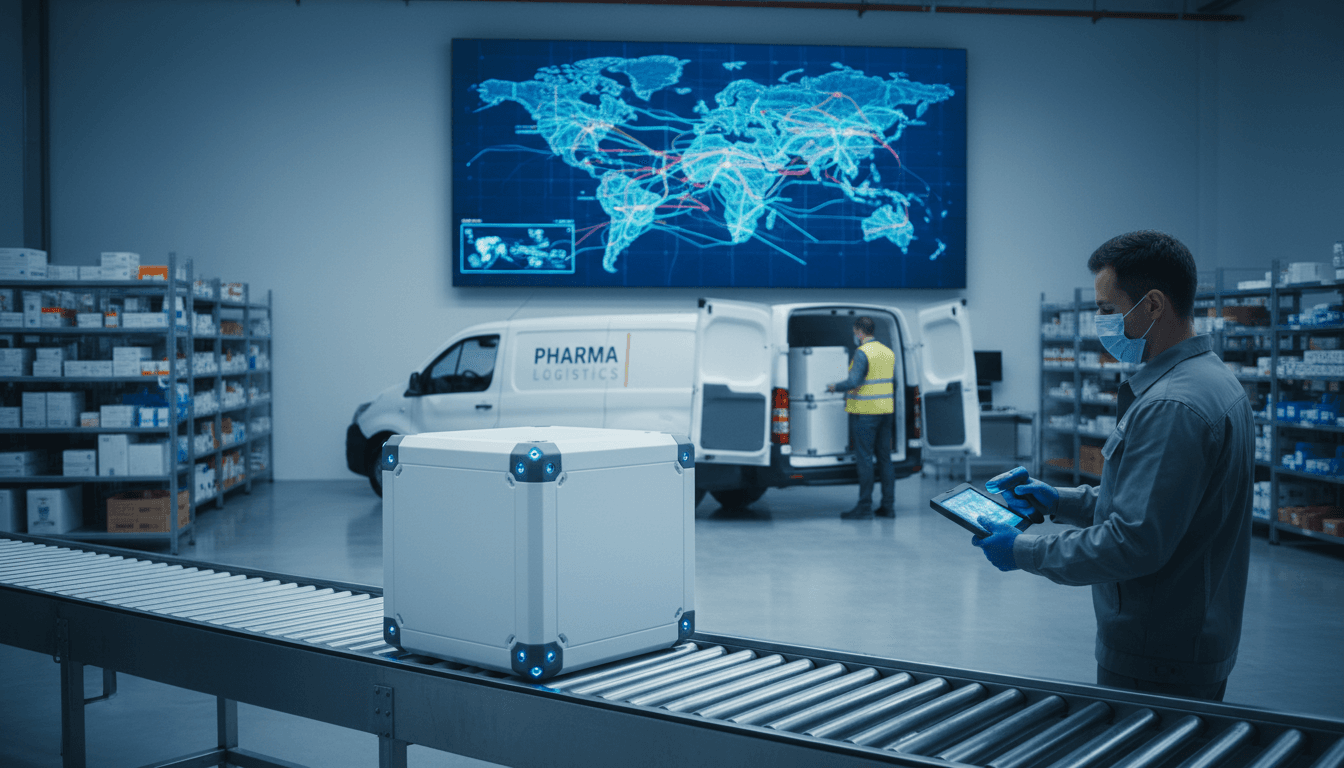
AI Cold Chain Visibility: Why the “Cube” Wins
A single missed handoff can ruin a shipment of temperature-sensitive medication. Not “late by a few hours” ruin—clinically unusable ruin. And the scale is brutal: temperature excursions cost the pharmaceutical supply chain about $35 billion per year.
That’s why Ember LifeSciences’ recent $16.5 million Series A matters beyond the funding headline. It’s a signal that pharma cold chain logistics is shifting from “package it well and hope” to instrumented, data-driven delivery—the same direction we’ve been tracking throughout this AI in Transportation & Logistics series.
Here’s my take: the most important part of Ember’s story isn’t the container. It’s the operational idea behind it—treating cold chain like a controllable system, not a post-mortem audit.
The real cold-chain problem: you can’t fix what you can’t see
Cold chain failures persist because most networks still operate blind between scan events. You might know when a parcel left the pharmacy and when it arrived, but you often don’t know what happened in between—especially in last-mile delivery, where “porch time” and misdeliveries are common.
Traditional cold chain packaging is typically designed around:
- Expected transit duration (often with buffers)
- Static ambient assumptions
- A “hold time” promise that may not match real conditions
That approach breaks down fast in December. Peak-season carrier networks, weather delays, and higher route variability create the exact conditions that expose weak assumptions. When something goes wrong, teams frequently find out after the patient receives the product—or after it’s already spoiled.
Ember’s bet is straightforward: continuous temperature tracking + location context turns cold chain from a packaging problem into a network control problem.
Why Ember’s connected cold chain cube is getting attention
Ember’s value proposition is mid-transit intervention. Real-time visibility matters only if it changes outcomes.
According to Ember’s leadership, the platform can flag risk early enough for a shipper to act—reroute, recover, relabel, expedite, or replace—before the medication becomes a loss.
One anecdote from the field captures this perfectly: a pharmacy shipment was mistakenly delivered hundreds of miles away. Instead of writing it off, the team generated a new label while the shipment was still “alive” in the network, arranged an overnight pickup via a major carrier, and recovered the product before it spoiled. The claimed impact was stark: the value saved in that single event outweighed a year of packaging costs.
That’s the cold chain math many teams don’t model explicitly:
- A single high-value specialty therapy can be worth thousands (or far more)
- The operational cost of intervention can be modest compared to the loss
- The biggest risk isn’t the known failures—it’s the invisible ones
“The bigger risk is not the failures the industry identifies, but the ones it never sees, when patients unknowingly receive compromised medication.”
Passive packaging is back—because last-mile delivery demands it
Ember’s second-generation container shifts from active refrigeration to a scalable passive design optimized for high-volume patient deliveries.
That’s not a step backward. It’s an acknowledgement of what last-mile really looks like:
- High parcel volume
- High route variability
- More touchpoints (and more chances for delay)
- Patient experience requirements (easy returns, simple instructions)
A passive platform—with advanced insulation and phase change materials—often scales better operationally than an active refrigerated unit. It can be lighter, simpler to handle, and easier to turn quickly. Ember also emphasizes reusability, which matters because pharma still burns a shocking amount of single-use cold chain packaging.
The key detail is that Ember kept the “brain”:
- Bluetooth connectivity
- GPS/location awareness
- Temperature telemetry across the journey
So the container becomes a sensor-enabled asset, not just a box.
Where AI actually fits: from visibility to prediction and control
Visibility is step one; AI is what makes the system proactive. A sensor telling you “it’s warming up” is useful. A model telling you “this shipment will breach its threshold in 47 minutes unless intercepted” is operationally decisive.
Here’s how AI-driven logistics shows up naturally in a connected cold chain like Ember’s.
Predictive excursion risk (not just threshold alarms)
A basic rule-based system triggers an alert at a temperature limit. A predictive system estimates risk earlier by combining signals such as:
- Current temperature trend (rate of change)
- Container thermal profile (how long it typically holds under similar conditions)
- Lane-specific delay likelihood (hub dwell, missed sort, weekend effects)
- Local weather conditions and seasonal patterns
The output isn’t just an alert. It’s a decision: intercept now vs. monitor vs. replace.
Exception management that doesn’t drown your team
Most operations don’t have a “cold chain control tower” staffed 24/7. AI helps by triaging exceptions:
- Group events by root cause pattern (carrier lane, facility, delivery window)
- Rank by value-at-risk and probability of excursion
- Recommend the least disruptive action
When you’re shipping thousands of patient parcels, the difference between “100 alerts” and “7 high-confidence interventions” is everything.
Intelligent last-mile routing for temperature-sensitive parcels
For time- and temperature-sensitive deliveries, route optimization can’t be based solely on distance.
An AI routing layer can incorporate:
- Planned dwell time (how long the parcel may sit in a vehicle)
- Stop sequence risk (porch exposure, signature requirements)
- Customer availability windows
- Known misdelivery hotspots
This matters even more as home-based care grows and more therapies are delivered directly to patients.
Asset pooling and container reuse forecasting
Reusable cold chain containers are only “sustainable” if the reverse logistics works.
AI can improve reuse economics by forecasting:
- Where containers will accumulate
- When retrieval capacity will be constrained
- How many containers are needed for next week’s expected demand by region
That turns reuse from a nice idea into a predictable operating model.
What shippers should look for in a smart cold chain program
If you’re evaluating connected cold chain tech, the container specs are secondary to the operating system around it. Here’s a practical checklist I’ve found separates pilots from real scale.
1) Intervention playbooks (who does what, when)
If an excursion is predicted, do you:
- Request a same-day intercept?
- Upgrade to overnight?
- Reroute to a pickup point?
- Trigger an automatic replacement shipment?
If the answer is “we’ll figure it out when it happens,” you won’t capture the ROI.
2) Data ownership and auditability
Pharma logistics lives under quality requirements and audit expectations. Your system should produce:
- Time-stamped temperature history
- Location context
- Chain-of-custody events
- Proof of thermal integrity at delivery
Think of it as compliance output generated automatically, not assembled manually.
3) Integration into WMS/TMS and customer service
The fastest way to kill adoption is to create a separate dashboard no one monitors.
Smart cold chain needs to surface into:
- Shipment status views your teams already use
- Customer service workflows (so agents can respond quickly)
- Carrier exception processes
4) Lane-level learning (continuous improvement)
The best value comes after the first 60–90 days, when you can start answering questions like:
- Which hubs create the most dwell risk?
- Which delivery windows lead to porch exposure?
- Which carriers or service levels correlate with excursions?
That’s the moment cold chain stops being “insurance” and becomes network optimization.
Why this funding round signals a bigger shift in pharma logistics
Ember’s Series A—led by a financial investor with participation from major healthcare and logistics strategics—points to mainstream adoption, not experimental pilots. The model has already been validated with large healthcare players, and the product direction (lighter, passive, reusable, connected) is aligned with where distribution is headed:
- More specialty medications shipped direct-to-patient
- More decentralized clinical trials requiring verifiable last-mile performance
- More pressure from payers and regulators for proof, not promises
If you’ve been watching the broader AI in Transportation & Logistics trend, this fits a familiar pattern:
- Add sensors to create reliable telemetry
- Use analytics to understand exceptions
- Use AI to predict and prevent failures
- Scale operationally with repeatable playbooks
Cold chain is simply a higher-stakes version of the same transformation.
Practical next steps: how to start without boiling the ocean
You don’t need to instrument every shipment on day one. A disciplined rollout works better—and sells internally.
- Pick one high-impact lane or therapy class (high value, high excursion risk, high complaint rate).
- Define “success” in dollars and outcomes: reduced write-offs, fewer emergency replacements, higher on-time and in-range delivery.
- Stand up an exception response workflow with clear owners and response times.
- Measure intervention ROI: how many shipments were saved, how many replacements avoided, how many escalations prevented.
- Expand only after you can explain the economics to finance and quality in one slide.
The reality? Connected packaging is easy to buy. A predictable intervention machine is what creates durable advantage.
Cold chain tech like Ember’s cube is pushing the industry toward a simple standard: if you can’t prove it stayed in range, you’ll be expected to treat it as if it didn’t. As 2026 approaches and patient delivery volumes keep climbing, that expectation will spread.
If you’re building an AI-driven logistics roadmap, this is a great place to apply it: fewer losses, cleaner compliance, and a last-mile experience patients can trust. The question worth asking next is operational, not technical: when your system predicts an excursion, who has the authority—and the playbook—to act in minutes, not hours?