Wagner’s 3PL acquisition adds 1M sq ft. Here’s how AI in logistics helps turn M&A scale into better forecasting, labor planning, and network performance.
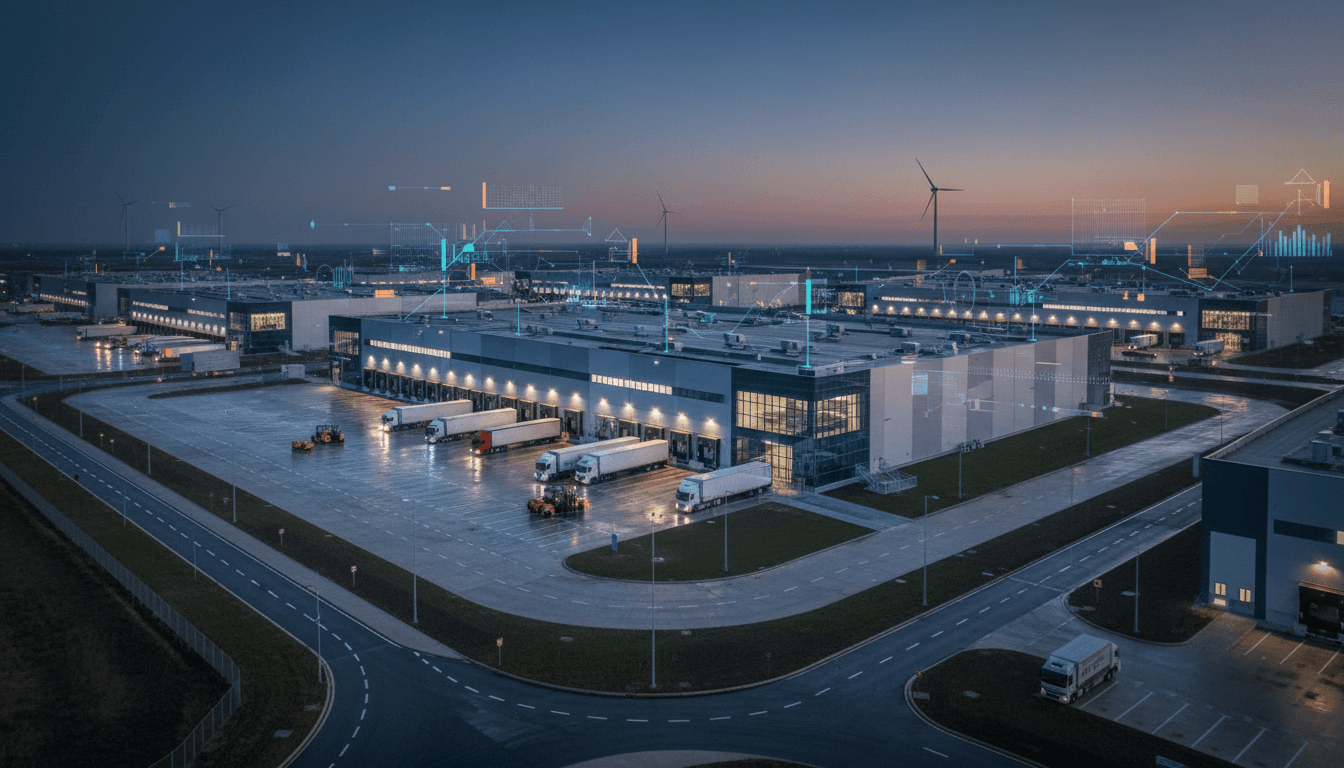
3PL M&A: Turning Warehouse Growth Into AI Wins
Wagner Logistics just added four warehouses and 1 million square feet of capacity overnight by acquiring the contract logistics business of Dawson Logistics. That’s the headline. The real story is what happens after the press release—because for most 3PL acquisitions, the value isn’t created at signing. It’s created (or lost) in the first 180 days when two operating models collide.
If you’re a shipper evaluating 3PL partners—or a logistics leader planning your own expansion—this deal is a clean case study: physical scale is easy to measure, but operational scale is where performance is won. And in 2025, operational scale increasingly means AI in transportation and logistics: forecasting, slotting, labor planning, exception management, and network optimization.
Wagner’s move pushes its footprint to more than 8 million square feet and strengthens its position in apparel and industrial logistics. Those verticals are exactly where AI can turn “more buildings” into “better outcomes”: fewer stockouts, faster fulfillment, lower touches, and tighter service-level performance during peak season.
What the Wagner–Dawson deal really signals about 3PL strategy
This acquisition is a bet on contract logistics scale—and that’s where 3PL competition is heading. Brokerage and transportation capacity cycles come and go, but contract logistics value compounds when you standardize processes, data, and service models across a bigger footprint.
Here’s what we know from the announcement:
- Wagner Logistics acquired Dawson Logistics’ contract logistics operations for an undisclosed amount.
- The transaction adds 90 employees, plus warehouse operations in Danville (Illinois), Cincinnati, and Nashville (Tennessee).
- The acquired unit now operates under the Wagner Logistics brand.
The important detail isn’t just the square footage. It’s the operating surface area Wagner just increased:
- More SKUs, more customer profiles, more order patterns
- More carrier touchpoints and appointment schedules
- More labor scheduling complexity
- More WMS/TMS integrations (or migration decisions)
Scale like this creates two possible outcomes:
- You standardize and get stronger (service improves, cost-to-serve drops).
- You accumulate complexity (service variability grows, planning gets noisy).
AI is increasingly the separator between those two.
Why contract logistics M&A is accelerating
Contract logistics acquisitions are happening because customers are demanding three things at once:
- Faster fulfillment (e-commerce expectations didn’t relax)
- More resilience (multi-node distribution is now normal)
- Lower total landed cost (finance teams are back in control)
3PLs respond by buying footprint and customers—but the winners are the ones who can operate that footprint consistently. That’s why AI-driven logistics optimization isn’t a “nice to have” after M&A. It’s how you avoid paying for capacity you can’t run efficiently.
Where acquisitions usually break: integration is a data problem first
Most companies get integration backwards. They start by debating org charts and branding while the daily operation is quietly bleeding in the background: missed cutoffs, mis-slotted inventory, inconsistent wave logic, and KPI definitions that don’t match.
Acquisitions like Wagner–Dawson create immediate pressure in five areas:
1) WMS and master data alignment
Answer first: If your item masters and location masters don’t align, your labor model and inventory accuracy won’t align either.
When a 3PL adds new warehouses, you typically inherit:
- Different naming conventions for zones/locations
- Different cartonization rules
- Different packout logic and exception codes
- Different cycle count processes
AI can help here, but not in the “magic button” way. The practical win is automated data quality checks and anomaly detection:
- Flag SKUs with unusual dimensional/weight changes
- Detect inventory patterns that suggest systematic mispicks
- Identify location classes that are driving high travel time
2) Labor planning and peak readiness
Answer first: Peak season punishes manual labor planning because the inputs change daily.
We’re in mid-December. Every warehouse leader knows what that means: the operation is either stable because planning was solid in October, or it’s chaotic because demand variability outpaced staffing decisions.
Adding 1 million square feet isn’t just adding capacity—it’s adding labor volatility.
AI forecasting models can translate order and unit forecasts into operational staffing plans:
- Predict inbound unload labor by ASN patterns
- Forecast pick/pack hours by order profile (each, case, pallet)
- Recommend cross-training targets by bottleneck probability
The best results come when AI forecasts are connected to constraints that humans understand: dock doors, MHE availability, cut times, and carrier pickup schedules.
3) Network design and inventory placement
Answer first: More nodes only help if you place inventory intentionally.
A bigger warehouse network gives Wagner more options to reduce zone shipping, improve delivery speed, and buffer risk. But unless inventory placement is optimized, you can end up with:
- Split shipments increasing parcel spend
- Unbalanced safety stock
- Transfer freight costs that erase service gains
AI-driven network optimization is built for this exact scenario—especially after M&A—because it can evaluate trade-offs across thousands of lane and SKU combinations:
- Which SKUs should live in Nashville vs. Cincinnati?
- Where should returns be consolidated to reduce rework?
- What happens to cost-to-serve if you change order cutoffs?
This matters more in apparel (high SKU counts, seasonality, returns) and industrial (bulky items, variable demand, different handling classes).
How AI helps maximize M&A value in the first 180 days
If you want a simple integration thesis: AI turns messy operational signals into decisions you can act on.
Below are the highest-ROI AI use cases right after a contract logistics acquisition.
AI use case #1: Exception management that prevents service failures
Answer first: The fastest cost savings come from reducing the number of problems that require human escalation.
After integration, exceptions spike: inventory discrepancies, order holds, carrier appointment misses, damaged goods, and return disposition delays.
A practical AI workflow is:
- Classify exceptions by root-cause probability (data issue, process issue, supplier issue, carrier issue)
- Prioritize by customer impact (SLA breach risk)
- Recommend the next best action (re-slot, re-pick, expedite, re-label, rebook appointment)
This is where “AI in warehouse operations” becomes tangible: fewer firefights, more predictable outbound.
AI use case #2: Dynamic slotting and pick-path optimization
Answer first: Slotting is never “done,” and after M&A it’s often wrong.
When a new facility joins the network, product mix changes. Order profiles change. Returns flows change. Static slotting rules can’t keep up.
AI-supported slotting uses observed demand and travel time to recommend:
- Which SKUs to move closer to packout
- Which items should be co-located due to frequent co-picks
- When to re-slot based on seasonality shifts (critical for apparel)
Even small reductions in travel time compound across millions of picks.
AI use case #3: Transportation optimization across a larger footprint
Answer first: A bigger network increases routing options—and also increases routing mistakes.
With additional facilities in the Midwest and Southeast corridors, there’s an opportunity to:
- Reduce average miles per order
- Improve on-time performance
- Lower parcel zone exposure
AI route optimization and mode selection can continuously decide:
- Ship-from location (based on inventory, capacity, promised date)
- Carrier and service level (based on cost and SLA risk)
- Consolidation opportunities (multi-order bundling)
If you’re a shipper, ask your 3PL candidate one direct question: “How do you decide ship-from location at order release?” If the answer is “rules in the WMS,” you’re leaving money on the table.
What shippers should ask when a 3PL expands by acquisition
When a 3PL adds warehouses through M&A, shippers often focus on “more space.” That’s understandable, but it’s not the right procurement lens.
Here are the questions that separate real capability from marketing:
- What’s your integration playbook for WMS/TMS and reporting?
- Ask how long KPI harmonization takes and what changes in the first 60 days.
- How do you forecast labor and throughput during peak?
- Look for forecast-to-staffing logic, not spreadsheet heroics.
- How do you optimize inventory placement across multiple warehouses?
- The answer should include cost-to-serve, not just geography.
- How do you manage exceptions at scale?
- Ask for examples: mispicks, damaged inbound, carrier no-shows.
- What automation and AI tools are already in production?
- You want proven workflows: forecasting, slotting, ETA prediction, anomaly detection.
My take: if a 3PL can’t explain these clearly, they’re probably operating on institutional knowledge—and institutional knowledge doesn’t scale after an acquisition.
The bigger trend: 3PL scale is shifting from real estate to intelligence
Wagner’s acquisition of Dawson’s contract logistics unit is also a signal about where 3PL value is moving. Real estate scale is visible, but decision scale is what customers feel.
- Eight million square feet is impressive.
- Eight million square feet run on inconsistent data and manual planning is expensive.
For the AI in Transportation & Logistics series, this is a recurring theme I keep seeing: companies expand networks faster than they expand operating systems. The winners treat AI and analytics as the operating system—especially right after M&A when variance is highest and the benefits of standardization are immediate.
If you’re considering a network expansion (or selecting a 3PL that’s expanding), the smartest next step is to pressure-test the “day two” plan: forecasting, labor planning, inventory placement, and exception management. That’s where acquisition value turns into measurable outcomes.
If you’re mapping your 2026 logistics roadmap right now, ask yourself one forward-looking question: When your network gets bigger, will your decisions get better—or just louder?