Meet the women driving AI robotics in 2025—and what their work means for automation leaders in manufacturing, healthcare, and logistics.
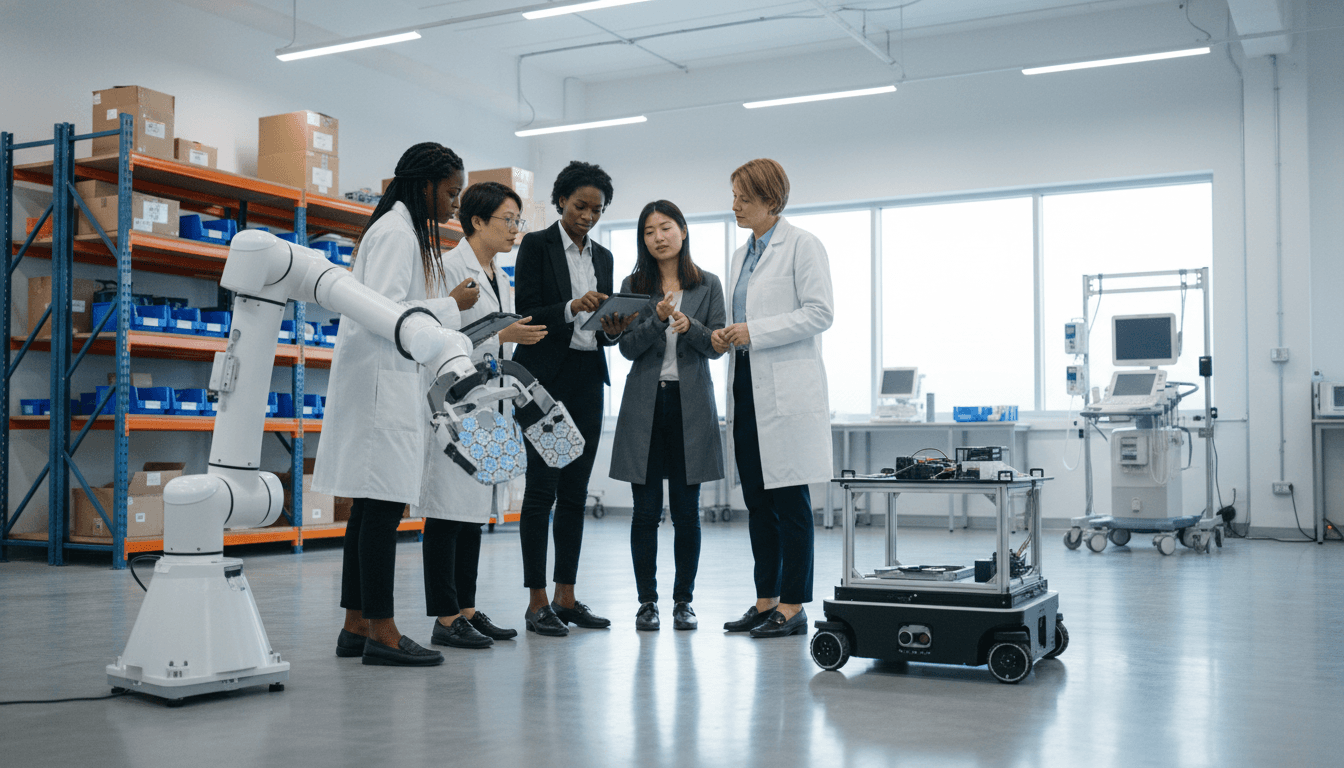
Women Shaping AI Robotics and Automation in 2025
Robotics teams love to talk about algorithms, sensors, and compute. But the hard truth is that most robotics failures in the real world aren’t caused by “not enough AI.” They’re caused by mismatched incentives, unclear safety ownership, brittle data pipelines, and products that don’t fit the messy environments they’re supposed to work in.
That’s why lists like Women in Robotics You Need to Know About 2025 matter—because they spotlight the people tackling the unglamorous parts of deployment: touch sensing that survives factories, standards that keep humans safe, language systems that don’t confuse operators, and autonomy that works outside a lab. In this edition of our AI in Robotics & Automation series, I’m going to use the 2025 honorees as a lens: not just who they are, but what their work signals about where AI-powered robotics is heading next.
If you’re leading automation in manufacturing, healthcare, logistics, or field operations, this post is meant to be practical: what trends to watch, what questions to ask vendors, and where teams commonly get burned.
The 2025 robotics “frontier” is deployment, not demos
The biggest shift in AI robotics right now is simple: the center of gravity has moved from research novelty to operational reliability. You can see it in what the 2025 honorees are building—tactile sensing for handling, embodied AI for homes, swarm robotics for medicine and the environment, and safety standards that reduce deployment risk.
Here’s the pattern I’ve noticed across successful deployments: teams win when they treat AI as a system component, not a magic layer.
What “AI-enabled robotics” actually means in 2025
In practical terms, AI-enabled robotics is typically a stack:
- Perception AI (vision, depth, tactile, multimodal): identifying objects, surfaces, people, or hazards
- Decision and planning (task planning, motion planning, mission planning): choosing actions under constraints
- Human-robot interaction (natural language, intent recognition, shared autonomy): coordinating with operators
- Safety and compliance (test methods, validation, robot safety standards): proving the robot can be trusted
- Operations (monitoring, simulation, data management): keeping performance stable after go-live
The 2025 honorees span that full stack—which is exactly what you want if your goal is robotics that works on a Tuesday night shift, not just at a conference.
The women to know—and what their work signals for industry
The Robohub/Women in Robotics list highlights 20 leaders across research, startups, standards, and communication. Rather than restating bios, I’ll map several honorees to industry-relevant themes you can act on.
1) Tactile sensing and dexterous handling are becoming table stakes
Robots are great at repeatable motion. They’re less great at “feel.” That’s why tactile sensing is showing up as a major differentiator in material handling and manipulation.
- Heba Khamis (UNSW; co-founder of Contactile) works on tactile sensors that give robots a more human-like sense of touch for difficult handling tasks.
Why this matters for automation buyers: If your workflow involves deformable items (bags, food, textiles), glossy packaging, or tolerance stack-ups, vision alone often hits a ceiling. Tactile sensing can reduce:
- mis-grasps and drops
- over-squeeze damage
- slow “hunt and peck” behavior that kills throughput
Procurement question to ask: What percentage of successful picks/insertions rely on force/torque or tactile feedback, and what happens when surfaces vary? If the vendor can’t answer clearly, expect surprises during commissioning.
2) Human-centric robot learning is the real path to safe collaboration
Most companies get collaborative robotics wrong by obsessing over arm payload and ignoring human workflow variability. The most useful robots in shared spaces are the ones that learn constraints, communicate intent, and fail safely.
- Georgia Chalvatzaki (TU Darmstadt; PEARL Lab) advances human-centric robot learning for safe, intelligent collaboration.
- Monica Anderson (University of Alabama) researches distributed autonomy and inclusive human-robot teaming.
What this signals: In manufacturing and healthcare, the next wave of ROI comes from hybrid cells where people do the judgment-heavy steps and robots do the tiring, precise, or hazardous steps.
Implementation tip: Treat collaboration as a design project, not a hardware install.
- Map handoffs (who starts the task, who confirms success)
- Define “safe stop” behavior and operator override
- Train operators on robot intent cues (lights, sound, UI states)
If you’re piloting AI robotics in a warehouse or hospital, the fastest win is often reducing operator cognitive load, not chasing full autonomy.
3) Natural language is entering robotics—carefully, and with guardrails
Language models are everywhere, but in robotics the stakes are higher because words become motion.
- Dimitra Gkatzia (Edinburgh Napier) works on natural language generation for human-robot interaction.
My stance: Natural language interfaces will be valuable first in supervision and exception handling, not as free-form “tell the robot anything.” The winning pattern is constrained language:
- the robot summarizes what it thinks you asked
- it asks for confirmation when safety or cost is high
- it logs instructions as structured actions (auditable)
Buyer question to ask: How does the system prevent ambiguous commands from becoming dangerous actions? You want to hear about confirmations, role-based permissions, and simulation previews.
4) Swarm robotics is maturing into real environmental and medical use cases
Swarm robotics can sound like sci-fi until you view it as an engineering strategy: lots of simple agents coordinating to cover large spaces or deliver distributed effects.
- Sabine Hauert (University of Bristol; co-founder of Robohub) is a pioneer in swarm robotics for nanomedicine and environmental work.
Operational implication: Swarms shift the reliability model.
- You don’t need every unit to be perfect.
- You need the system to degrade gracefully.
That mindset is already influencing commercial fleets in logistics and inspection: fleet learning, fleet monitoring, and fleet-level KPIs beat single-robot heroics.
5) Embodied AI is expanding from factories into homes and everyday mobility
Industrial robotics has clear ROI math. Home robotics is harder—unstructured environments, unpredictable humans, and tighter safety expectations.
- Alona Kharchenko (Devanthro) is building embodied AI for homes.
- Kathryn Zealand (Skip) is building powered clothing—often described as “e-bikes for walking.”
The bigger point: Embodied AI isn’t only humanoids. It’s assistive mobility, wearable robotics, and service robots that blend into daily routines.
If you work in healthcare operations, elder care, or rehabilitation, pay attention here: assistive robotics adoption is increasingly driven by staffing gaps and injury prevention, not novelty.
6) Standards and test methods are the hidden accelerators of adoption
You can’t scale what you can’t certify, insure, or explain to a safety committee.
- Carole Franklin leads robotics standards development at A3 (ANSI & ISO robot safety work).
- Ann Virts (NIST) develops test methods for mobile and wearable robots.
Why this matters: In 2026 procurement cycles, I expect more buyers to require:
- documented validation methods
- performance metrics under variation (lighting, dust, floor changes)
- safety cases that go beyond “it passed a demo”
This is especially true in hospitals, public-facing service robotics, and mixed-traffic warehouses.
What leaders in manufacturing, logistics, and healthcare should do next
If your organization is evaluating AI-powered robotics right now, the list of honorees points to a simple reality: the winners will be systems thinkers. Here’s a pragmatic checklist I recommend.
Use a “pilot with teeth” plan
A pilot that doesn’t change anything operationally teaches you very little. A useful pilot has:
- One workflow owner (not a committee)
- A single measurable KPI (throughput, pick success rate, cycle time, injury reduction)
- A defined exception process (what happens when the robot fails)
- A data loop (what logs are saved, who reviews them weekly)
Vet vendors on variability, not averages
Robots look great on the median case. Real operations live in edge cases. Ask for:
- performance under messy conditions (reflective packaging, mixed SKUs, clutter)
- mean time to recover (not just mean time between failures)
- staffing assumptions (how many humans per robot per shift)
Invest in the “boring” layer: simulation, monitoring, and updates
One reason NASA and space robotics programs keep showing up in robotics leadership is that they treat simulation and operations as first-class.
- Meghan Daley (NASA) leads teams building and integrating simulations for robotic operations.
In terrestrial automation, the parallel is straightforward:
- simulate changes before deploying updates
- monitor drift in perception models
- track environment changes as “data incidents”
If you want AI robotics to keep improving after go-live, budget for operations, not just hardware.
Diversity in robotics isn’t a slogan—it’s a performance driver
When robotics teams lack diversity, product blind spots show up fast: safety assumptions, interaction design, fit for different body types, speech patterns, or operator training styles. Diverse teams catch these earlier, when fixes are cheap.
Representation also affects the talent pipeline. The robotics labor market is tight, and it’s not getting looser in 2026. If you want to ship AI robotics at scale, you need access to the whole talent pool.
A practical approach I’ve found works well:
- sponsor applied projects with universities or local robotics communities
- mentor early-career engineers into systems roles (where influence compounds)
- make visibility part of leadership KPIs (speaking slots, paper support, internal demo ownership)
Where AI robotics goes from here
The 2025 honorees make one thing clear: AI in robotics & automation is expanding outward—from industrial arms to mobile manipulators, from warehouses to hospitals, from single robots to fleets, and from “cool demos” to safety-tested systems.
If you’re building or buying robotics in 2026 planning cycles, take a cue from the leaders on this list: focus on sensing that handles reality, interaction that respects humans, and standards that make deployment repeatable.
If your team is considering an AI robotics pilot this year, what’s the one workflow where reliability matters more than novelty—and where a robot would make your operators’ day measurably better?