Rivian’s AI assistant points to cars as robots on wheels. Learn what it means for autonomy, personalization, and AI automation across industries.
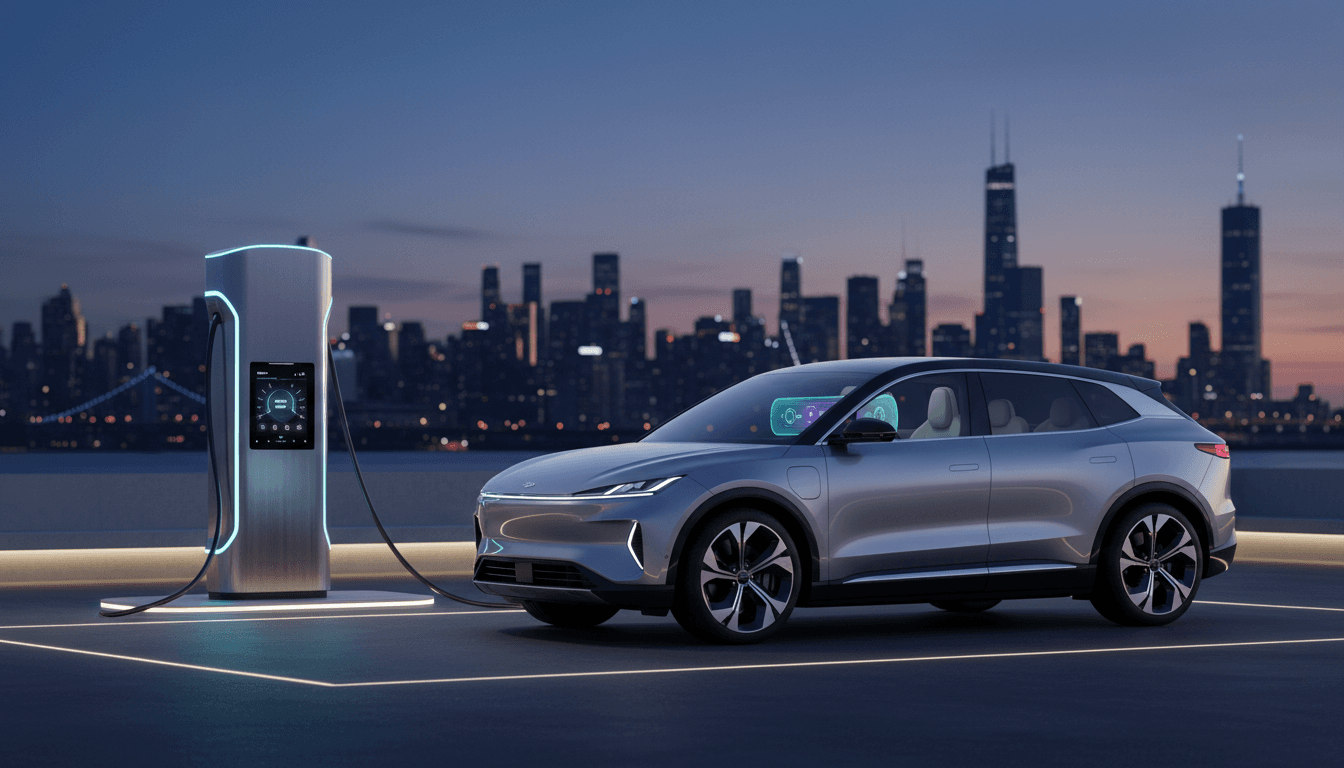
Rivian’s AI Assistant: What It Signals for Automation
Rivian building its own AI assistant isn’t just a “new feature” story. It’s a signal that vehicles are becoming software-first robots on wheels—systems that sense, decide, and act, while still needing to feel simple and trustworthy to the person in the driver’s seat.
The timing matters. Rivian teased more details around its AI & Autonomy Day (December 11), and while the RSS summary is short, the strategic direction is clear: the next competition in EVs won’t be only range, charging, or horsepower. It’ll be who builds the most helpful, safest, and most personal autonomy stack—and who controls the interface layer where the driver (and everyone else in the car) interacts with that intelligence.
This post is part of our AI in Robotics & Automation series, and Rivian is a clean case study: an AI assistant in a vehicle sits at the intersection of human-in-the-loop automation, edge AI, safety engineering, and personalization. If you work in media & entertainment, there’s a direct parallel too: the same ingredients that make an in-car assistant feel smart—context, taste, timing, and trust—also power great content discovery and personalized experiences.
Why Rivian is building an AI assistant (instead of just integrating one)
Rivian’s decision to build its own AI assistant is about control of the product experience and control of the autonomy roadmap.
If an automaker relies entirely on a third-party assistant, it often inherits that assistant’s priorities: generic conversation skills, cloud dependency, limited access to vehicle-specific signals, and a roadmap that might not match the car’s safety requirements. A vehicle assistant isn’t a smart speaker. It’s a front-end to a system that can influence navigation, driver attention, cabin controls, and—eventually—automation features.
The assistant is becoming the “operating system” people notice
Most drivers don’t evaluate autonomy in technical terms. They judge it by the interface moments:
- “Did it understand what I asked the first time?”
- “Did it change the climate without making me hunt through menus?”
- “Did it route me somewhere sensible when traffic hit?”
- “Did it interrupt me at the wrong time?”
That’s the same reality streaming platforms face: users don’t care about the model architecture; they care whether recommendations fit their mood and whether playback is frictionless.
Owning data flows (and safety constraints) is the point
A Rivian-built assistant can be designed to pull from vehicle telemetry, cabin context, navigation state, charging plans, driver settings, and sensor-derived signals—under strict rules. In automation, the difference between “cool demo” and “shippable product” is usually constraints:
- What is the assistant allowed to do while driving?
- Which commands require confirmation?
- How does it behave when it’s uncertain?
- What happens with spotty connectivity?
Building in-house makes it easier to design an assistant that’s natively compliant with automotive-grade safety and reliability expectations.
What an in-car AI assistant needs to do well (and where most fail)
A real in-vehicle AI assistant has to be more than conversational. It must be contextual, bounded, fast, and measurable.
Here’s the standard most companies get wrong: they optimize for clever chat when they should optimize for task completion under constraints.
Task completion beats small talk
The highest-value actions in a vehicle are the unglamorous ones:
- Navigation and routing that respects charging constraints (battery, elevation, temperature, charger availability).
- Cabin control that’s immediate, predictable, and safe.
- Driver support that reduces cognitive load (not adds to it).
- Vehicle education (“Why is my range estimate lower today?”) in plain language.
An assistant that can reliably do those four things becomes sticky fast.
“Edge-first” matters in a moving robot
Vehicles are mobile robotic platforms. That means latency and connectivity aren’t “nice to have” concerns; they determine whether the system feels dependable.
An effective automotive AI assistant typically requires a hybrid approach:
- On-device inference for core commands (climate, wipers, seat heaters, basic routing changes) to keep latency low.
- Cloud augmentation for heavier reasoning, broad knowledge, and complex multi-step tasks—when it’s safe and permitted.
This mirrors robotics deployments in warehouses and healthcare: the robot must keep functioning locally, even if the network gets weird.
Confidence, fallbacks, and “I don’t know” are features
In cars, hallucination isn’t funny—it’s a support ticket or a safety risk. A strong assistant needs explicit policies for uncertainty:
- Ask a clarifying question when intent is ambiguous.
- Offer constrained choices ("Do you mean the nearest fast charger or the cheapest?").
- Default to no action when the command is risky.
- Log failures in a way engineering teams can actually fix.
A safe AI assistant is one that knows when to stop and ask.
The autonomy tie-in: the assistant is the human layer of automation
Rivian’s mention of AI alongside “autonomy” hints at a broader architecture: an assistant isn’t separate from automated driving features; it becomes the human interface to them.
That matters because autonomy adoption has a trust problem. People don’t build trust from marketing. They build it from consistent, explainable behavior.
Expect assistants to become “explainers” for automated systems
One near-term use case: the assistant explains what the vehicle is doing.
- “Why did you slow down?”
- “Why did you change lanes?”
- “Why are you asking me to take over?”
If Rivian can provide clear, accurate explanations aligned with the vehicle’s perception and planning stack, it reduces anxiety and increases appropriate use. In robotics & automation, this is the same pattern seen with collaborative robots: explain intent, show constraints, earn trust.
Personalization will shift from “nice” to “expected”
Drivers will expect the vehicle to learn preferences the way apps do:
- Preferred cabin temperature by time of day
- Navigation defaults (avoid highways, prefer scenic routes, minimize charging stops)
- Media preferences for different occupants
- Workflows (“When I say ‘camp mode,’ do these five things”)
This is where our AI in Media & Entertainment campaign connects directly: the best personalization isn’t “more content.” It’s the right experience at the right moment, based on context.
What media and entertainment teams can learn from Rivian’s approach
A vehicle AI assistant is a forcing function for good AI product design. The constraints are tighter, the safety bar is higher, and the environment changes constantly.
If you’re building AI for content personalization, audience analytics, or automated production workflows, you can borrow three principles from the automotive setting.
1) Context beats profiles
Most personalization stacks over-index on static profiles (“User likes sci-fi”). Vehicles can’t afford that. Context changes minute to minute.
In media, context signals that matter more than teams admit:
- Time of day and session length
- Device type (TV vs phone) and co-viewing likelihood
- Recent completions vs abandons
- Mood proxies (genre switching, rewatch behavior)
Automotive assistants that work well treat context as first-class. Media assistants and recommendation engines should too.
2) Automation needs visible guardrails
A vehicle assistant must be explicit about what it can and can’t do. The same is true for AI in creative operations.
Examples of guardrails that build trust:
- “I can generate a trailer script, but I won’t imitate a specific actor’s voice.”
- “I can summarize dailies, but you need to approve the final cut list.”
- “I can suggest thumbnails, but I’ll flag anything likely to be misleading.”
The meta-lesson: trust comes from constraints you can explain, not from flashy outputs.
3) Measure success as task completion, not model cleverness
Automotive teams measure what matters: latency, failure rates, disengagements, and recoveries.
Media teams should adopt similarly hard metrics for AI features:
- Time-to-first-play (recommendations)
- Edit-to-approval cycle time (production automation)
- Percentage of suggestions accepted (assistants)
- Error categories and recovery time (support bots)
If the assistant doesn’t reduce friction, it doesn’t belong in the product.
Practical checklist: building an AI assistant for any “real-world automation” product
Whether you’re shipping an in-car AI assistant, a warehouse robot interface, or an AI production assistant for a studio team, the fundamentals are the same.
Define the assistant’s job in verbs (not vibes)
Write a simple list of verbs the assistant must handle reliably:
- Route, schedule, explain, configure, summarize, flag, approve, escalate
Then rank them by value and risk.
Design the safety model before the conversation model
Decide upfront:
- Which actions are read-only vs write (changing state)
- Which actions need confirmation
- Which actions are blocked while driving / during recording / during live broadcast
- How to handle partial failures (e.g., can’t reach a service)
Build for “messy reality”
Real environments include noise, accents, interruptions, multiple occupants, and changing goals.
A strong assistant supports:
- Interrupt-and-resume (“Actually, cancel that…”)
- Multi-intent requests (“Navigate to the charger and warm the cabin”)
- Degraded mode (“No signal—here are offline options”)
Instrument everything
If you can’t measure it, you can’t improve it. Log:
- Intent detection confidence
- Latency percentiles (not just averages)
- Top failure intents
- Fallback usage
- Human override frequency
Those signals become your roadmap.
People also ask: what does a Rivian AI assistant likely include?
Based on how automotive assistants are trending, and Rivian’s emphasis on AI and autonomy, these are the most likely capability areas (and the ones worth watching).
Will it run on-device or in the cloud?
A useful automotive AI assistant usually runs core commands on-device for speed and reliability, with cloud help for complex queries. The differentiator is how well the system degrades when connectivity drops.
Is this about voice control or autonomy?
It’s both. Voice is the interface, but autonomy is the long-term value: the assistant becomes the way you request, understand, and supervise automated behaviors.
Why not just use a phone assistant?
Phones don’t have full access to vehicle systems, don’t share the same safety model, and can’t reliably coordinate with autonomy features. A vehicle-native assistant can be designed around the car’s constraints and sensors.
Where this goes next for AI in robotics & automation
Rivian building its own AI assistant is part of a broader shift: robots are getting personalities, and the personality is really just a well-designed interface to autonomy, personalization, and safety.
For teams watching AI adoption, here’s the takeaway I’d bet on: the winners won’t be the companies with the flashiest demos. They’ll be the ones who build assistants that are boring in the best way—fast, accurate, constrained, and measurably helpful.
If you’re leading AI initiatives in media, entertainment, or any automation-heavy business, now’s a good time to audit your own “assistant layer.” Where are users still doing manual work because the AI isn’t trustworthy yet? Where would better context and clearer guardrails remove friction?
Rivian’s AI & Autonomy narrative raises a bigger question that applies far beyond EVs: when your product becomes a robot, what does your assistant need to be responsible for—and what should it never do?