Museum lab automation shows how robots scale DNA workflows beyond factories. Learn where AI fits, what to automate first, and how to validate results.
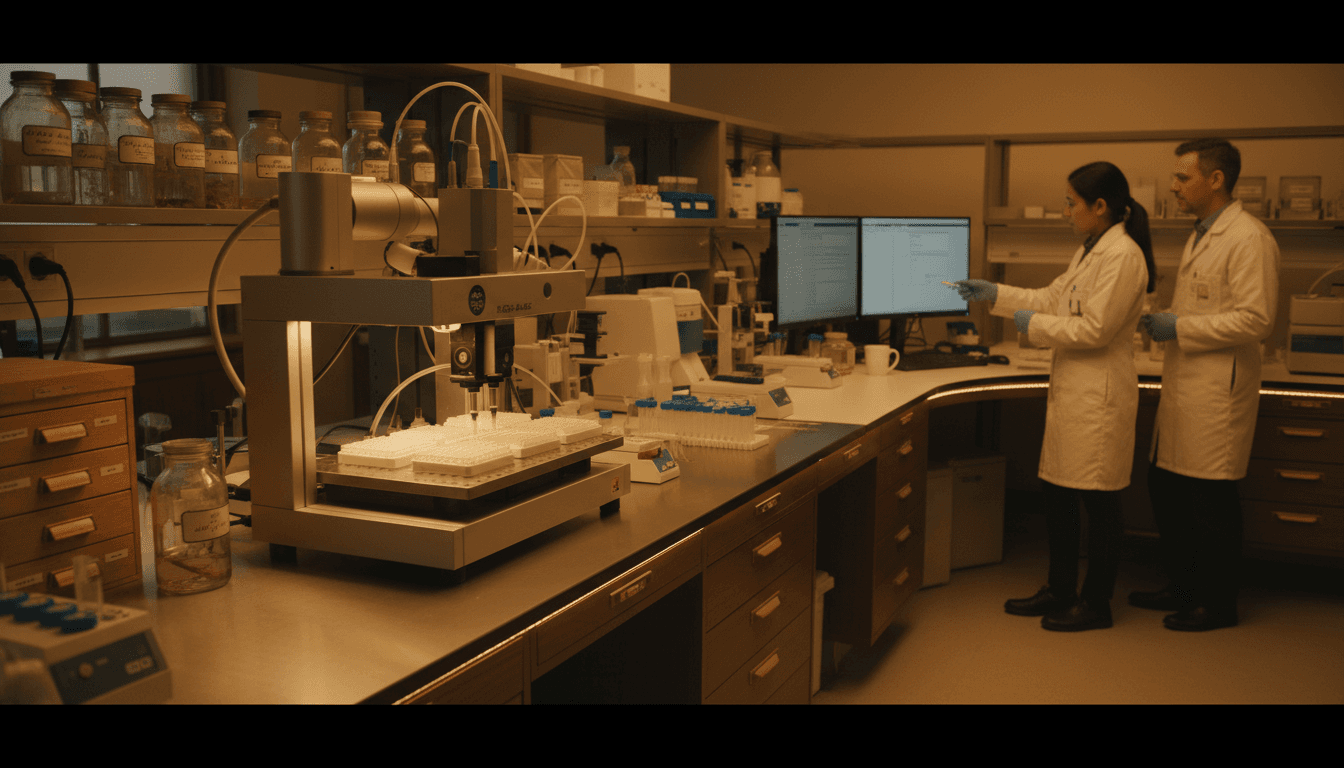
Museum Lab Automation: Robots That Scale Science
A modern museum isn’t just galleries and gift shops. Behind the scenes, many museums run serious molecular biology labs—processing tissue, bone, soil, plant, and microbial samples that can be decades (or centuries) old. The bottleneck isn’t curiosity. It’s throughput.
That’s why I liked the premise of Robot Talk Episode 129, where Yuen Ting Chan (Natural History Museum) discusses bringing robotics into museum molecular labs. Museum automation sounds niche until you look closer: it’s a clean, real-world example of AI in robotics & automation expanding beyond factories into service, research, and public institutions.
Here’s the stance I’ll take: If your lab work is repeatable, the “museum” part is irrelevant—automation principles apply the same way as they do in manufacturing. What changes is the constraint set: fragile specimens, limited volumes, complex provenance, and huge diversity of sample types.
Why museum labs are a perfect testbed for robotics
Answer first: Museum molecular labs have the right mix of high repeatability and high variability—making them ideal for intelligent automation.
Most people associate robot automation with identical parts on a conveyor. Museum biology is the opposite: each specimen can be unique, degraded, contamination-prone, and precious. Yet many steps in DNA extraction, library prep, and PCR setup are still structured, timed, and scriptable.
That tension—unique inputs, repeatable process—is exactly where robotics shines.
The real constraint: sample scale vs. human time
Museums often hold millions of specimens, and research teams frequently want to run studies across hundreds or thousands of samples to detect population-level patterns. Manual pipetting doesn’t scale without adding staff, and adding staff doesn’t necessarily improve consistency.
Automation gives you two things at once:
- Capacity: more samples per week without burning out the team
- Consistency: the same mix times, the same volumes, the same incubation sequencing
Yuen Ting Chan’s experience translating wet-lab protocols into scripts for liquid handling systems highlights the hidden work most leaders underestimate: automation succeeds or fails at the translation layer—where real protocols meet real hardware.
What “robotic automation” actually means in a museum molecular lab
Answer first: In this context, robotics usually means liquid handling robots running scripted protocols, wrapped in disciplined lab operations.
When people hear “robots,” they picture arms with grippers. In molecular biology, the workhorse is typically a liquid handling platform (sometimes with plate movers, sealers, heaters, magnetic modules, and barcode scanners).
The robotic value isn’t only speed. It’s that you can encode the protocol as an executable workflow.
From protocol to script: where the engineering lives
Chan’s background—nearly 20 years optimizing lab protocols and over a decade implementing automation—maps to a repeatable pattern I’ve seen across automation projects:
- Protocol normalization: remove ambiguity (“mix gently” becomes a defined aspiration/dispense cycle)
- Error-proofing: add volume checks, tip tracking, and recovery steps
- Specimen-aware handling: adjust mixing intensity, dwell times, and pipetting speeds
- Run logging: capture everything needed for traceability and audit
A useful one-liner for teams considering lab automation:
A protocol you can’t specify precisely is a protocol you can’t automate reliably.
Why museum specimens add complexity (and why that’s good)
Museum samples can be old, limited in mass, and chemically “weird.” Preservatives, environmental exposure, and long-term storage conditions change viscosity and contamination risk.
This pushes labs toward automation patterns that also translate well to other service industries:
- Adaptive workflows: different scripts or parameters based on specimen metadata
- Strict chain-of-custody: barcoding, plate maps, and digital records
- Contamination control: standardized tip usage, layout discipline, and run segmentation
If you work in healthcare, diagnostics, food testing, or even high-mix manufacturing QA, this should sound familiar.
Where AI fits: intelligent automation, not just scripted robots
Answer first: AI makes lab robots more robust by handling variation—deciding when to deviate from the default script and documenting why.
A lot of labs start with “pure automation”: fixed scripts that assume the world behaves. That’s fine for the first win. But museums—because of specimen diversity—benefit quickly from adding intelligence around the robot.
Here are pragmatic, high-ROI ways AI shows up in museum lab automation (and how they map to broader robotics and automation programs).
1) Sample triage and routing
Not every sample deserves the same workflow. AI can help classify samples by:
- specimen type (tissue, bone, swab, environmental)
- expected DNA yield
- contamination risk indicators
- required downstream method (PCR, sequencing library)
Even a simple rules-plus-ML approach can route samples into “fast lane” vs. “cautious lane” protocols. This is the same idea as dynamic routing in warehouse automation.
2) Computer vision for liquid handling reliability
Vision systems can catch the annoying failures humans notice instantly:
- no liquid picked up (air aspiration)
- droplets clinging to tips
- unexpected foam or turbidity
- meniscus anomalies
That’s not science fiction; it’s a practical quality layer. Treat it like an “inspection station” in manufacturing—except you’re inspecting microliters.
3) Predictive maintenance for lab uptime
Robots fail in boring ways: clogged tips, worn seals, calibration drift. AI-based monitoring of run logs (errors, retries, cycle counts) can predict when a module needs service.
In museums, uptime matters because runs are often scheduled around limited access to certain specimens and staff time. In December especially, when staffing can be thinner, reliability beats raw speed.
Human-robot collaboration: the part most teams underestimate
Answer first: Successful lab automation is a workflow redesign project, not a robot installation.
Chan’s role—translating and optimizing protocols while deploying automation—highlights a truth: the robot doesn’t replace scientists; it changes what scientists spend their attention on.
Here’s what changes when it’s done well:
- Scientists spend less time on repetitive pipetting
- More time goes into experimental design, controls, and interpretation
- Labs can run larger sample numbers without compromising repeatability
The new “golden skill”: automation literacy
You don’t need every biologist to become a robotics engineer. But teams do need shared literacy:
- how scripts represent lab intent
- how to validate a new automated method
- what counts as a meaningful exception
- how to interpret robot logs and QC signals
My opinion: the most valuable hire in an automated lab is often a translator—someone who can speak wet lab, robotics, and data. That’s exactly the kind of profile Chan represents.
Validation isn’t optional (and it’s not one-and-done)
If you’re generating publishable results—or supporting conservation decisions—method validation must be formal. A good validation plan covers:
- accuracy vs. manual baseline
- precision (repeatability across runs and operators)
- contamination rates and controls
- edge cases (low volume, degraded samples)
Automation often improves consistency, but only if validation is designed to detect subtle failure modes.
What museum automation teaches every service industry leader
Answer first: Museums prove that automation can thrive outside manufacturing—when you design for variability, traceability, and trust.
If you lead robotics programs in healthcare, labs, education, or other service contexts, museum automation offers a clean set of lessons.
Lesson 1: Standardization is the product
Automation forces clarity. When you encode workflows, you expose ambiguity. The “product” isn’t the robot run—it’s the standardized process that survives staff turnover and scales across projects.
Lesson 2: High-mix workflows can still be automated
Museums are high-mix by nature. The trick is to automate modules (extraction, cleanup, normalization, aliquoting) and then assemble them into workflows based on metadata.
That modular mindset transfers directly to:
- hospital sample prep
- food safety testing
- environmental monitoring
- manufacturing test labs
Lesson 3: Trust is built with traceability
Public institutions operate under scrutiny. Automation helps because every action can be logged.
A strong museum automation stack usually includes:
- barcoding and plate mapping
- run logs with timestamps and operator attribution
- QC checkpoints and exception handling
- inventory and sample provenance tracking
This is where AI can support explainability: not just “the model said so,” but “the workflow chose Protocol B because the sample was low-input and high-inhibitor risk.”
Practical next steps: how to start automating a museum (or any research lab)
Answer first: Start with one high-volume workflow, define success metrics, and build a validation-first rollout.
If you’re considering lab robotics—museum or not—this is a grounded way to begin:
- Pick one workflow with real volume pressure. DNA extraction or PCR setup are common starting points.
- Write the protocol like software. Every step must be measurable: volumes, times, mixing cycles, temperatures.
- Instrument your process. Decide what you’ll log and what “good” looks like (yield, contamination, rerun rate).
- Automate the boring but critical parts first. Tip tracking, plate mapping, barcodes, run reports.
- Validate against the manual baseline. Include edge cases and define acceptance criteria before you run.
- Add AI only where variation hurts you. Vision checks, routing logic, and anomaly detection are practical early wins.
One strong metric set I like for leads evaluating ROI:
- samples processed per technician per week
- rerun rate due to pipetting/setup errors
- contamination rate per batch
- cost per sample (including consumables and labor)
The bigger picture for AI in Robotics & Automation
Museum lab automation is a reminder that the next wave of robotics growth isn’t limited to production lines. It’s happening in places that look “non-industrial” from the outside—museums, hospitals, schools, and research centers—where the real need is reliable processes at scale.
If you’re building an AI-enabled automation strategy, take a cue from the museum context: design for variability, prove trust with traceability, and treat humans as the owners of the science—not the hands doing the pipetting.
If you’re exploring robotics for your lab or service operation, what’s your highest-volume workflow that still depends on manual precision—and what would change if it ran with consistent, logged, robot-level execution?