Disney’s robotic Olaf highlights how AI humanoid robotics is expanding into service industries where experience, safety, and uptime drive ROI.
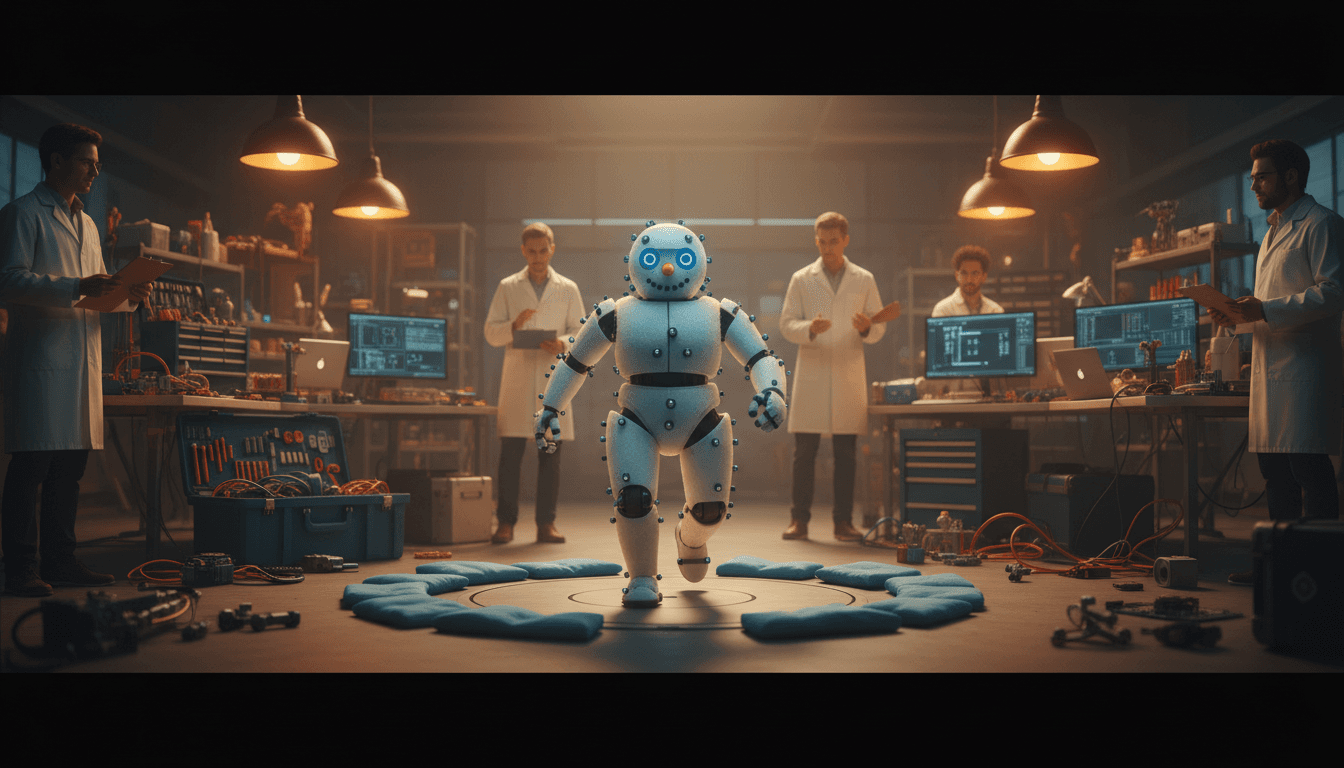
Disney’s Robotic Olaf Shows Where Humanoids Win
A humanoid robot carrying boxes in a warehouse is impressive. A humanoid robot that makes a child forget they’re looking at motors, belts, and control loops? That’s harder.
That’s why Disney’s self-walking Olaf matters beyond theme parks. It’s a clean, public example of a trend I’ve been watching across the AI in Robotics & Automation space: humanoid robotics is expanding fastest in places where experience is the product—entertainment, hospitality, retail, and any customer-facing environment where trust, attention, and emotion drive revenue.
Olaf’s debut also lands at a useful moment on the calendar. Late December is peak season for live experiences and high-footfall venues. If you run a robotics program in a service business, this is when you feel every constraint at once: safety, reliability, uptime, staffing, and the fact that a “minor glitch” is now someone’s viral video.
Why Robotic Olaf is a real service-robot milestone
Robotic Olaf is a milestone because it proves humanoid robotics can be commercially valuable even when the robot isn’t “general purpose.” Most companies get stuck chasing the dream of a universal helper robot. Disney is doing something more pragmatic: build a robot that does one role extremely well—walk, gesture, emote, and interact—then wrap it in a character guests already care about.
This isn’t just animatronics as usual. Traditional animatronics are typically fixed to a base or constrained track systems, with motion designed around predictable geometry. A self-walking character introduces a different class of complexity:
- Unstructured interactions: Guests move unpredictably; kids run; crowds compress and expand.
- Safety requirements in close proximity: Not “industrial safe,” but “family safe.”
- Performance consistency: The robot must repeat the same emotional beats hundreds of times per day.
- Operational uptime: A park robot isn’t a lab demo. It’s closer to an airline schedule.
The business lesson: in service industries, robotics ROI often comes from experience throughput (more guests served per hour), experience quality (higher satisfaction and repeat visits), and labor leverage (staff redeployed to higher-touch tasks), not just labor replacement.
The AI stack behind “believable movement” (and why it’s different)
Believable character robotics is an AI control problem disguised as entertainment. The goal isn’t only balance and locomotion; it’s timing, intent, and motion that reads as “alive.”
Here’s how the AI and robotics layers typically break down in character-grade humanoid systems:
Motion control: stability first, style second
A walking character needs robust locomotion control—balance, foot placement, disturbance rejection. But for Olaf (and similar characters), stability is table stakes. What differentiates the system is that movement must be stylized.
In practice, teams often combine:
- Model-based control (for predictable, stable gait)
- Learned policies (to handle edge cases and terrain variability)
- Motion libraries (curated “acting” beats: waves, head tilts, micro-bounces)
The result is a hybrid approach: AI helps expand the envelope, but the final performance is still directed.
Perception: “understand the crowd” without overfitting to it
A character robot in a guest environment typically needs perception for:
- Proximity and collision avoidance
- Pose and crowd flow estimation (basic “where are people?”)
- Interaction triggering (when to wave, when to pause)
Crucially, it doesn’t need to interpret every conversation. Over-perceiving can be a liability in public spaces. The win is minimum viable perception that keeps interactions safe and natural.
Behavior orchestration: the real product is the performance
The core “AI” many guests experience is not a large language model. It’s a behavior system that decides:
- What beat comes next
- How long to hold eye contact (or the illusion of it)
- When to stop, reset, and rejoin a path
In other words: service-robot autonomy is often a choreography engine with safety overrides.
What other robots in the same week tell us about the market
The IEEE Spectrum roundup that introduced Olaf also included a handful of robotics demos that—when you put them side by side—show where the industry is heading.
Logistics humanoids: reliability is the headline, not the trick
A demo of humanoid robots running an 18-minute uninterrupted warehouse task (moving dozens of boxes into racks at different heights) is meaningful because it highlights the real adoption threshold: not “can it pick up a box,” but “can it run without constant rescue.”
Service-industry takeaway: if your robot can’t operate for long stretches without intervention, you don’t have a robot product—you have a staff augmentation tool that may or may not pay back.
Robot-human teaming in triage: autonomy with accountability
Disaster and medical-response robotics keeps pushing on the same constraint service businesses face: high stakes + messy environments + human oversight.
The technology pattern is similar:
- Robots gather data and perform repeatable physical tasks
- Humans make the judgment calls
- Interfaces and workflows matter as much as hardware
If you’re deploying robots in hotels, airports, hospitals, or retail, you’ll end up designing for the same principle: autonomy where it’s safe; escalation where it’s not.
Tactile sensing on quadrupeds: the underrated capability
Work on tactile sensing (like full-back sensor networks for quadrupeds carrying shifting loads) signals something I wish more teams prioritized: contact awareness.
Entertainment robots benefit from this too—soft bumps happen, costumes shift, accessories move. Robots that can feel and adapt are simply easier to operate in public.
Where humanoid robots make sense outside factories (and where they don’t)
Humanoid robots win in service industries when the environment is built for people, the tasks are varied, and the interaction is part of the value. That’s why entertainment is a natural early market.
Strong-fit use cases (high ROI potential)
- Theme parks and attractions: guided interactions, controlled boundaries, high volume
- Retail flagship experiences: product storytelling, queue entertainment, brand engagement
- Hospitality lobbies: wayfinding, check-in triage, event greeting and routing
- Museums and exhibitions: scripted education + adaptive pacing for different groups
- Airports and venues: crowd-friendly guidance, line management, multi-language prompts
Weak-fit use cases (likely disappointment)
- Anything requiring deep improvisation with zero training data (humans do this better)
- Back-of-house tasks with simple geometry (wheeled robots often beat humanoids on cost)
- Highly cluttered manipulation without clear process redesign (you’ll drown in exception handling)
A stance I’ll defend: if your service-robot plan starts with “we’ll deploy a humanoid because it can do what people do,” you’re probably headed for a budget fire. Start with one repeatable guest journey and redesign the environment around it.
Practical checklist: adopting “character-grade” robotics in service businesses
If Disney-style animatronics feels far from your world, borrow the operating discipline anyway. Here’s what actually reduces risk in service deployments.
1) Define the performance contract (not just the task)
Write requirements like you’re producing a show:
- Cycle time per interaction
- Acceptable failure behaviors (safe stop, reset posture, call attendant)
- Peak throughput targets (e.g., interactions per hour)
- Noise limits, speed limits, and personal-space rules
2) Engineer for uptime, then for features
Service environments punish fragile systems. Plan for:
- Hot-swappable batteries or rapid charging windows
- Fast “return to neutral” recovery sequences
- Self-check routines at shift start (sensors, joints, thermal)
3) Treat the costume/skin as a first-class system
Disney understands this better than most robotics startups: covers, skins, and costumes change everything.
- They affect heat dissipation
- They limit range of motion
- They introduce snag points
- They change perceived safety
If you’re building customer-facing robots, design the “outer layer” like a product, not an afterthought.
4) Put humans in the workflow on purpose
The best service robots don’t eliminate staff; they make staff more effective.
- Train attendants on recovery flows
- Give them clear “when to intervene” rules
- Log interventions as data for improvement
5) Measure the right KPIs
For entertainment and customer experience robotics, track metrics that map to revenue:
- Average interaction time
- Queue abandonment rate (before vs after robot)
- Guest satisfaction or NPS lift in robot zones
- Uptime percentage by hour of day
- Intervention rate per operating hour
What this means for AI in Robotics & Automation in 2026
Robotic Olaf is a reminder that humanoid robots don’t need to be universal to be profitable. They need to be reliable, safe, and emotionally legible in the environment they’re meant for.
As we head into 2026, I expect the biggest adoption in service robotics to come from teams that think like Disney Imagineering: ship a focused experience, instrument it heavily, iterate fast, and treat operations as part of the product.
If you’re evaluating robotics for a service business—retail, hospitality, healthcare, logistics, or public venues—build your roadmap around one question: Where would a robot increase throughput or trust without demanding constant supervision? Answer that honestly, and you’ll know whether you need a humanoid, a mobile base, a kiosk, or no robot at all.