DHL’s $1.5M LAX cold storage expansion signals a bigger shift: cold chain risk is rising. Here’s how AI and automation make it smarter and safer.
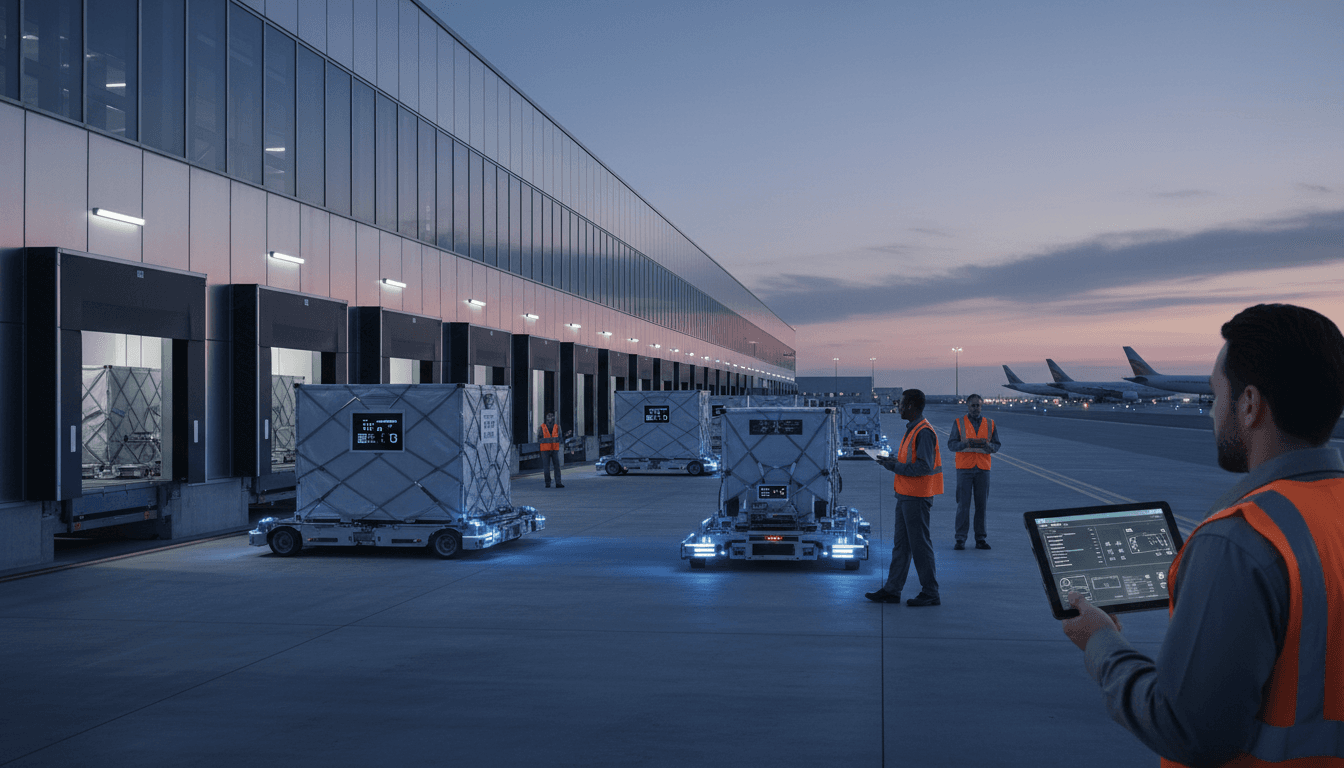
DHL’s LAX Cold Chain Bet—and the AI Layer It Needs
$1.5 million isn’t a flashy number in global logistics. But spend it in the right place—cold storage steps from the tarmac at LAX—and it can remove a painful amount of risk from life sciences shipping.
DHL Global Forwarding’s cold storage expansion near Los Angeles International Airport is a clear signal about where the market’s headed: more temperature-sensitive freight, higher compliance expectations, and zero tolerance for excursions. If you ship pharmaceuticals, diagnostics, biologics, or clinical trial materials, you already know the real cost isn’t “capacity.” It’s the one shipment that arrives warm, late, or undocumented.
Here’s the angle I don’t see enough companies embracing: infrastructure is the entry ticket; intelligence is the differentiator. Cold rooms, sensors, and SOPs get you into the game. AI-driven monitoring, robotics, and automation are what make performance repeatable—especially at an air gateway as complex as LAX.
Why DHL’s LAX cold storage expansion matters right now
Answer first: LAX is a high-velocity crossroad for life sciences freight, and adding cold capacity there reduces both dwell time and excursion risk for shipments moving between Asia Pacific, Latin America, and North America.
LAX isn’t just “a big airport.” For temperature-controlled cargo, it’s a stress test: flights arrive in waves, trucking appointments stack up, and warehouse teams have to manage strict handoffs while customs and security add variability. DHL’s move strengthens Los Angeles as a critical gateway for high-value, time- and temperature-sensitive cargo.
The RSS source makes an important point that’s easy to miss: this investment is as much about risk reduction as it is capacity. That’s exactly right. In cold chain logistics, risk shows up in predictable places:
- Dwell time on the dock or on the ramp while paperwork or linehaul gets sorted
- Handoff complexity (airline → handler → forwarder → truck) where accountability blurs
- Visibility gaps where you don’t know conditions until it’s too late
- Audit pressure where “we think it stayed cold” isn’t a valid answer
DHL is also aligning this site with its broader Health Logistics plan: over $2 billion committed over five years to expand life sciences and healthcare logistics globally, with about half earmarked for the Americas. That’s the macro story behind a $1.5 million facility upgrade: the cold chain is becoming a strategic network, not a niche service.
Cold chain logistics is becoming a robotics and automation problem
Answer first: As cold chain volumes rise, manual processes become the bottleneck; robotics and automation are the only scalable way to keep speed high and excursions low.
This post sits in our AI in Robotics & Automation series for a reason. A modern cold facility isn’t “a warehouse with a chiller.” It’s a system that has to orchestrate:
- Temperature zones (2–8°C, -20°C, -80°C, controlled ambient)
- High-frequency receiving and staging
- Chain-of-custody documentation
- Regulated packaging handling and replenishment (dry ice, gel packs)
- Exception management when flights slip or trucks arrive early
The RSS content notes advanced temperature-control systems, real-time environmental monitoring, digital dashboards, video surveillance, and automated workflows supporting audit-ready operations. That’s the foundation.
Where robotics and AI show up next is in the “unsexy middle” of operations—the repetitive moves that create exposure:
Where automation reduces excursions the most
Answer first: Automate the steps that add dwell time and human variability.
- Automated putaway and retrieval: Goods-to-person systems reduce door-open time and speed up moves into the correct temperature zone.
- Autonomous mobile robots (AMRs) in cold environments: Short, frequent moves are safer than long, manual batch moves that create staging piles.
- Smart dock scheduling: Synchronize appointments with flight ETAs and warehouse capacity so temperature-controlled freight doesn’t wait.
- Computer vision checks: Verify label integrity, packaging condition, and seal status at receiving—especially for high-value shipments.
I’m opinionated here: if your cold chain relies on “hero operators” to keep things from going sideways, you don’t have a process—you have a fragile workaround. Automation turns best practices into defaults.
The “AI layer” that makes cold storage smarter (and cheaper)
Answer first: AI improves cold chain performance by predicting risk before excursions happen and by optimizing energy, labor, and flow in real time.
Once you’ve got sensors, logs, and operational data flowing, AI can do four high-impact jobs. These are practical, deployable use cases—especially at an air gateway facility.
1) Predict excursions before alarms trigger
Traditional monitoring is reactive: temperature crosses a threshold, then you scramble.
AI-driven monitoring can be predictive by correlating signals such as:
- Door-open duration and frequency
- Compressor cycle behavior
- Facility hot spots (location-based thermal drift)
- Weather and ramp conditions
- Dwell-time patterns by airline/flight lane
The output isn’t just “it’s 8.1°C.” It’s “this shipment has a 72% probability of excursion in the next 18 minutes if it stays in staging.” That changes how supervisors prioritize moves.
2) Orchestrate warehouse flow under uncertainty
At LAX, variability is normal: late arrivals, early trucks, customs holds.
AI scheduling can continuously rebalance:
- Which door gets which load
- Which temperature zone should stage which SKU class
- Which team handles regulated exceptions
Done right, it works like an air traffic controller for freight—reducing congestion where cold shipments are most exposed.
3) Forecast cold capacity (and stop overbuilding)
The cold storage market is projected to more than double by the early 2030s (as cited in the source). The reflex is to build more rooms.
But capacity without forecasting is just expensive anxiety. AI-driven demand forecasting can predict volume spikes by lane, customer segment, and seasonality (yes, even in December when healthcare demand patterns and year-end shipping pushes collide).
This is especially relevant for:
- Vaccine and biologic replenishment cycles
- Flu/respiratory season diagnostic demand
- Clinical trial enrollment waves
- Pharma product launches
4) Optimize energy usage without compromising compliance
Cold facilities are energy-hungry. DHL’s design includes sustainability measures like electric forklifts, energy-efficient lighting, paperless workflows, and recycling programs, aligned with its GoGreen Plus and Strategy 2030 commitments.
AI can extend that by optimizing:
- Compressor staging (run-time and cycling)
- Defrost scheduling
- Zone-level setpoints based on real load heat
- Predictive maintenance to avoid “fail warm” scenarios
You don’t save money by nudging setpoints and hoping auditors don’t notice. You save money by reducing waste while staying audit-proof.
Compliance is the product—AI helps you prove it
Answer first: In pharma logistics, performance isn’t real unless you can document it; AI improves data integrity, chain of custody, and audit readiness.
DHL’s LAX site follows WHO Good Distribution and Storage Practices and meets internal Air GxP baselines, and it plugs into a larger network of 112 Air GxP-certified stations and 22 IATA CEIV Pharma-certified stations worldwide. Those certifications matter because they create standardized expectations.
Still, audits don’t care about your logo wall. They care about evidence.
What “audit-ready operations” should look like
If you’re evaluating cold chain partners—or building your own controlled environment—use this checklist mindset:
- Continuous monitoring with tamper-evident logs
- Exception workflows that capture root cause, corrective action, and prevention
- Chain-of-custody clarity across every handoff
- Training records tied to roles and tasks (not just annual box-checking)
- Video and access control aligned to high-value, regulated freight
The RSS article highlights the human side too: 31 life sciences specialists with 560 combined years of experience, with certifications including TAPA, CEIV Pharma, and HAZMAT. That blend—experienced people plus instrumented processes—is what wins regulated freight.
AI fits here as a force multiplier:
- Flag documentation gaps before they become audit findings
- Detect anomalous access patterns in restricted zones
- Auto-generate compliant “shipment narratives” from event streams (arrival, staging, temp trace, handoff)
Practical next steps: how to make an airport cold chain “AI-ready”
Answer first: Start with data capture and exception discipline, then add AI where it reduces dwell time, excursions, and audit friction.
If you’re a shipper, forwarder, 3PL, airport handler, or cold facility operator, here’s a pragmatic rollout path.
Step 1: Standardize your event model
Define events that every system agrees on:
arrived_airsidereceived_warehouseentered_zone_2_8released_to_carrierexception_hold_customs
If you can’t map an end-to-end timeline, AI won’t save you—because you won’t have clean inputs.
Step 2: Instrument the “risk moments,” not just the rooms
Temperature sensors in storage are table stakes. The high-risk moments are transitions:
- Ramp → dolly → door
- Door → staging
- Staging → correct zone
- Zone → dispatch
Put sensors, scans, and SOP prompts where excursions begin.
Step 3: Automate exception handling
Most cold chain failures are exception failures:
- Flight delay
- Truck no-show
- Packaging damage
- Dry ice replenishment timing
Build playbooks and automate the routing: who gets alerted, what decision is required, what evidence is captured.
Step 4: Add AI where it makes measurable improvements
Pick one: excursions, dwell time, or audit prep time. Then target the model.
Good early projects include:
- Predictive dwell-time alerts by lane and airline
- Computer vision receiving checks for packaging condition
- Energy optimization with compliance constraints
What DHL’s move signals for 2026 planning
DHL’s LAX expansion is a straightforward message: life sciences logistics is scaling, and cold chain performance is becoming a competitive weapon. If you’re planning for 2026, the question isn’t whether to invest. It’s where.
My take: don’t treat AI as a dashboard upgrade. Treat it as an operational layer that reduces temperature risk, compresses cycle time, and produces audit-grade proof without draining your team.
If a $1.5 million cold storage expansion is about risk reduction, the next phase is obvious: making that risk reduction measurable, predictive, and repeatable across the network. When your cold chain is “smart,” you can move faster without gambling on product integrity.
Where would you rather be next year: adding more cold space, or running the space you have with fewer exceptions and cleaner audits?