AI robotic palletizing is where adaptive automation proves itself. Learn what PASCO’s evolution teaches—and how to buy a reliable palletizing cell for 2026.
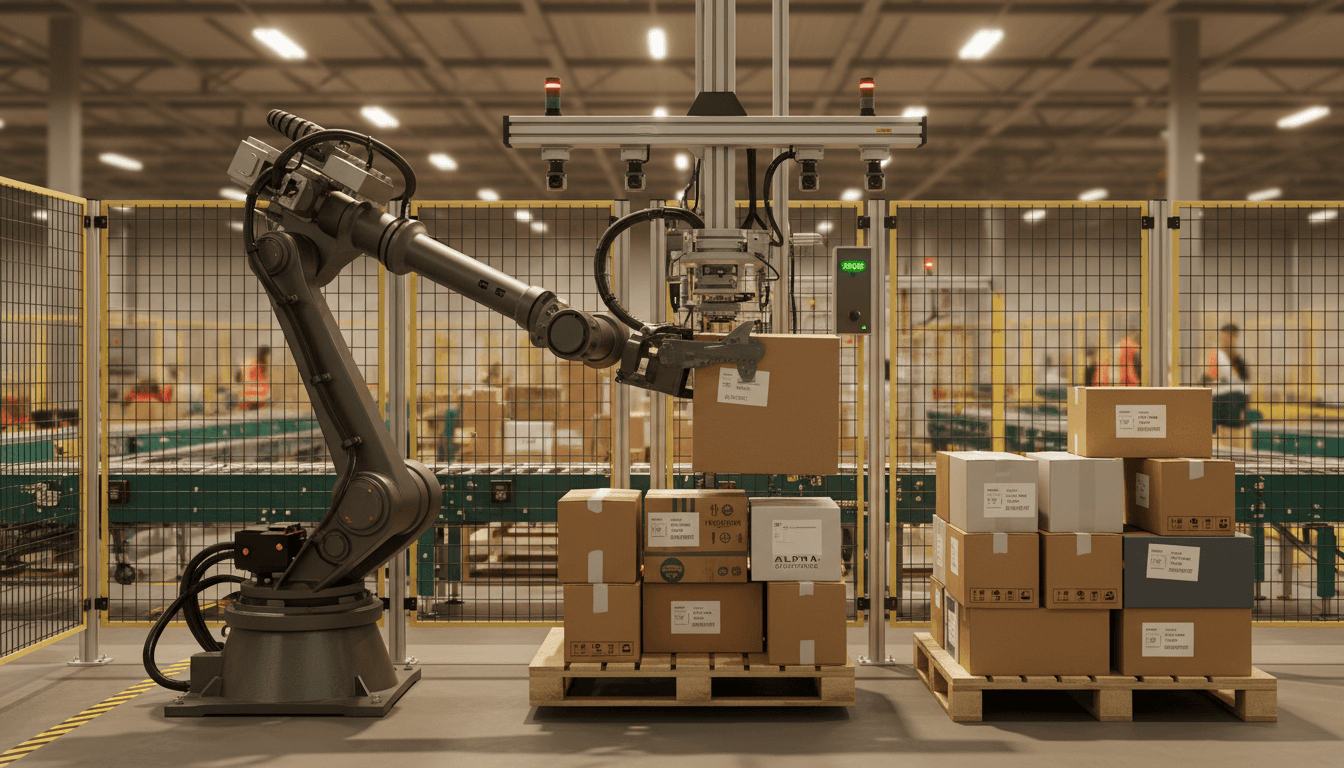
AI Robotic Palletizing: Lessons from 50 Years at PASCO
A lot of automation projects fail for a boring reason: they treat palletizing like a “simple” end-of-line task. It isn’t. Palletizing is where real-world variability shows up—skewed cartons, mixed SKUs, stretch-wrap changes, seasonal throughput spikes, and the relentless pressure to ship on time.
PASCO’s five-decade arc in robotic palletizing is a useful lens for where the industry is headed right now. Not because longevity is automatically impressive, but because palletizing forces design discipline. You can’t hide behind a demo when you’re stacking product for 16 hours a day in a dusty warehouse.
This post is part of our AI in Robotics & Automation series, and I’m going to take a stance: AI matters most in palletizing when it reduces engineering effort and operational fragility—not when it adds fancy features. The win is adaptive automation that keeps running when conditions change.
Why robotic palletizing became the proving ground for AI
Robotic palletizing is the “stress test” of factory automation systems because it sits at the intersection of packaging variability, safety, and logistics deadlines. If a robot can reliably build pallets across product changeovers, it’s usually a sign the surrounding system design is mature.
Over the last 50 years, the job shifted from “move boxes from A to B” to “coordinate a whole micro-factory at the end of the line.” Modern palletizing cells are expected to integrate with:
- Conveyors and accumulation logic
- Print-and-apply and label verification
- Case inspection (dimension/weight) and reject lanes
- Stretch wrappers and pallet dispensers
- Warehouse execution/management systems
That integration pressure is exactly why AI-enabled automation is showing up here first in a practical way: vision, sensing, and adaptive decision-making reduce the number of brittle assumptions your system relies on.
The big change: from fixed routines to adaptive behaviors
Traditional palletizing automation relied on tightly controlled inputs: consistent cases, consistent infeed, consistent spacing, and consistent pallet patterns. The reality in 2025 is messier:
- E-commerce and retail push more SKU variety and smaller batch runs.
- Labor shortages shift expectations toward lights-out end-of-line automation.
- Peak season (yes, right now in December) exposes every bottleneck you thought you didn’t have.
AI doesn’t replace good mechanical design. It extends it—by letting the cell tolerate variance without constant reprogramming.
PASCO’s evolution: what “design excellence” looks like in palletizing
Design excellence in robotic palletizing is mostly invisible. It’s cycle-time stability, repeatable grip performance, predictable changeovers, and maintainability by the people actually on shift.
PASCO’s story (as covered in the original piece) highlights a broader trend in industrial robotics systems: palletizing has matured from “robot + fence” into standardized, engineered solutions.
Here’s what that maturity usually includes.
1) Mechanical simplicity that supports uptime
Answer first: The best palletizing cells are mechanically boring on purpose.
Complex end-effectors and clever mechanisms can look great in a proposal, but they often increase maintenance load and reduce fault recoverability. Mature designs tend to emphasize:
- Robust grippers sized for the real product envelope (not the ideal one)
- Simple, serviceable wear parts
- Clear access for clearing jams and replacing tooling
If you’re evaluating vendors, ask a blunt question: “Show me the three most common failure modes and how operators recover in under 2 minutes.” The answer tells you more than a cycle-time chart.
2) Pattern flexibility without engineering pain
Answer first: Pattern changes should be a recipe update, not a controls project.
Pallet patterns are rarely static over a product’s lifetime. Marketing changes packaging. Retailers change pallet heights. Plants standardize slip sheets. A modern robotic palletizing system should support:
- Multiple pallet patterns per SKU (including alternate patterns)
- Automatic layer and pallet height adjustments
- Mixed-case palletizing when required
This is where AI shows up indirectly: smarter configuration tools and validation reduce the engineering hours needed to support variety.
3) Safety and throughput that can coexist
Answer first: Safety isn’t a trade-off against throughput; poor cell layout is.
PASCO’s long runway in this space points to a truth: palletizing is as much about the cell as the robot. The best layouts avoid “hero moves” where a person has to enter the cell frequently.
A strong design typically includes:
- Thoughtful infeed/outfeed flow and accumulation
- Defined manual intervention points outside the hazard zone
- Clear operator HMIs with guided recovery steps
AI can support safety too—particularly via vision-based zone monitoring and anomaly detection—but only after the fundamentals are right.
Where AI actually improves palletizing (and where it doesn’t)
AI is getting stapled onto everything in manufacturing. I’m not impressed by that. What I do care about is whether AI reduces the cost of variability.
Here are the AI capabilities that consistently pay off in palletizing automation and warehouse automation solutions.
Vision for real variability: skew, crush, and misalignment
Answer first: AI vision helps when products aren’t where they’re “supposed” to be.
Classical vision works well when lighting and geometry are controlled. In palletizing, conditions drift. AI-based perception (often using deep learning models) improves robustness for:
- Detecting case pose and position on a conveyor
- Identifying damaged cartons or open flaps
- Locating pallets and slip sheets when placement isn’t perfect
The practical benefit is fewer stoppages caused by small misalignments—and fewer “mystery faults” that only your best technician can diagnose.
Adaptive picking and gripping decisions
Answer first: Adaptive logic is what turns a robot from fast to dependable.
A palletizer shouldn’t attempt the same pick the same way every time. If a case is rotated, overhanging, or slightly deformed, the system should adjust grip points or approach angles automatically.
This is especially relevant when using common platforms like Fanuc robotic palletizers, where performance is excellent but the application success depends heavily on how well the cell handles edge cases.
Predictive maintenance that focuses on the right signals
Answer first: Predictive maintenance is useful when it’s tied to operational decisions.
The mistake is collecting thousands of data points and generating dashboards nobody uses. The better approach is small and specific:
- Monitor vacuum decay rates (for suction tooling) to predict leaks
- Track cycle-time drift by motion segment to catch mechanical wear
- Use fault clustering to identify recurring root causes
If you can schedule a tooling refresh during planned downtime instead of losing a Saturday shift, the ROI is immediate.
Where AI tends to disappoint
AI struggles when it’s used as a substitute for basic engineering. Watch for red flags:
- “It learns your products automatically” (but can’t explain validation steps)
- “No fixtures needed” (until you see the fine print on infeed requirements)
- “Fully autonomous” (but still needs constant operator babysitting)
A good vendor will describe AI as bounded assistance, not magic.
A practical checklist for buying a robotic palletizing system in 2026
Most companies get this wrong: they select a palletizing cell based on robot brand, not on how the system behaves on a bad day.
Answer first: Your selection process should focus on variability, recovery, and changeover—then speed.
Use this checklist to drive a better conversation with integrators and OEMs.
Define your variability envelope (before you talk to anyone)
Write down:
- Case size and weight range (including future SKUs)
- Packaging fragility (crush sensitivity, slippery film, open-top)
- Infeed variability (spacing, skew, accumulation behavior)
- Pallet types and quality (new vs. recycled, stringer vs. block)
- Peak throughput requirements (holiday/seasonal spikes)
If you can’t describe your variability, you’ll pay for it later in change orders.
Demand recovery workflows, not just alarm codes
Ask to see the HMI screens and operator flow:
- How does the system guide a jam clear?
- Can it “resume from known state,” or does it require a full reset?
- Are faults explained in plain language?
A mature design reduces mean time to recovery more than it improves top speed.
Validate integration early (software bottlenecks are real)
Palletizing is end-of-line, but it’s not isolated. You need alignment with upstream and downstream systems:
- Case tracking and recipe management
- Label verification and reject handling
- Wrapper coordination and pallet discharge
If your facility is already wrestling with warehouse automation software bottlenecks, make sure the palletizer isn’t adding another control layer that can’t keep up at peak.
What PASCO’s history suggests about the next 5 years
Answer first: The future of palletizing is less about new robots and more about smarter system design.
We’re already seeing a shift toward adaptive automation as the default expectation:
- More sensors per cell (vision, force, barcode, dimensioning)
- More software-defined flexibility (recipes, patterns, SKU logic)
- More closed-loop control (inspection feeding decisions in real time)
And a December reality check: peak shipping season doesn’t care about your roadmap. If your automation can’t handle variability without specialist intervention, it won’t scale.
From my perspective, the winners will be the teams that treat robotic palletizing as a product, not a project—standardized modules, clear operating procedures, and AI used selectively to reduce fragility.
Next steps: turn palletizing into an AI-enabled advantage
Robotic palletizing is one of the most bankable investments in factory automation systems—when it’s designed for change, not just for speed. PASCO’s multi-decade run in this category reinforces the point: reliability is the feature that compounds.
If you’re planning a 2026 end-of-line automation upgrade, start with a simple internal exercise: list the top 10 reasons your current palletizing process stops. Then map each stop to either (a) mechanical redesign, (b) controls logic, or (c) AI perception/adaptation. You’ll immediately see where AI helps—and where it’s a distraction.
What’s the one source of variability in your plant—packaging, pallets, or scheduling—that you’d eliminate first if you could? That answer usually points to your highest-ROI automation move.