Serve Robotics hit 2,000+ sidewalk robots. Here’s what it signals for AI last-mile delivery, the real economics, and how to evaluate a pilot fast.
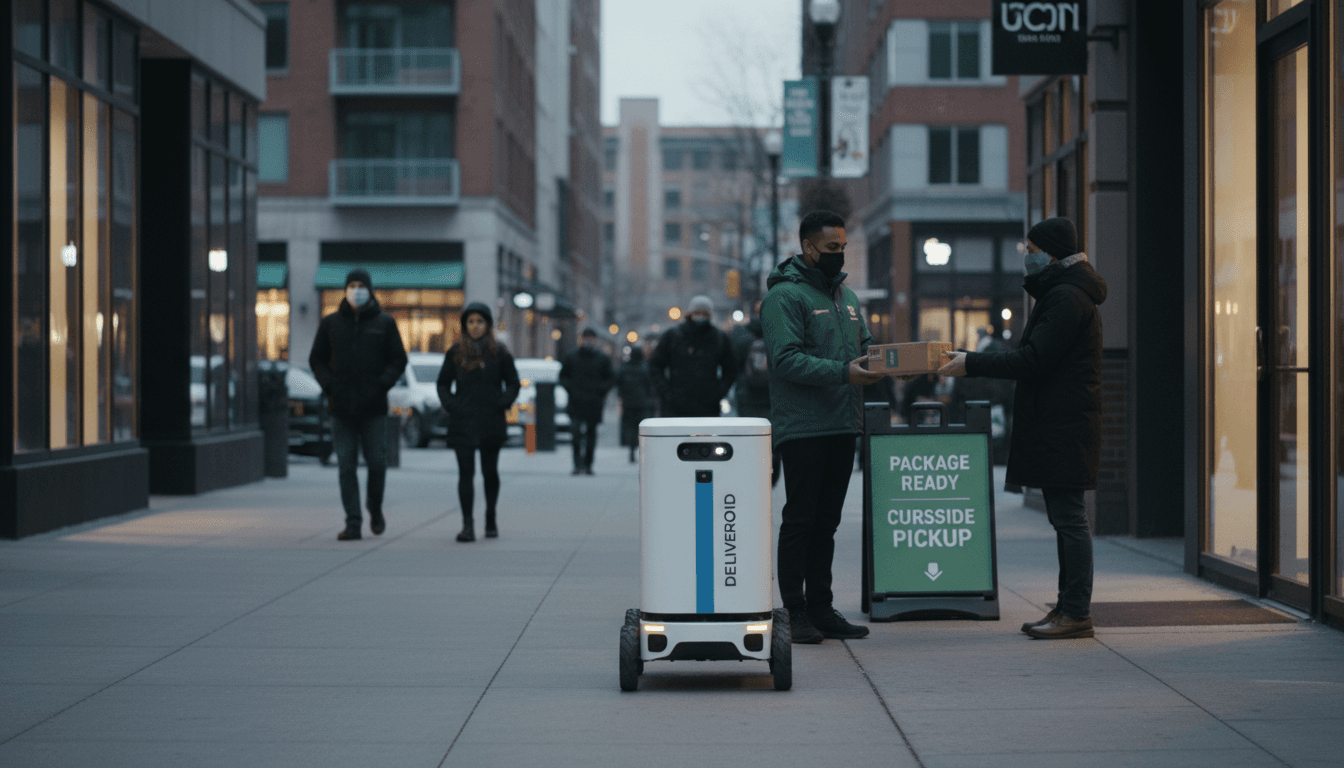
2,000 Sidewalk Robots: AI Last‑Mile Delivery at Scale
Serve Robotics passing 2,000+ deployed sidewalk delivery robots in the U.S. is one of those milestones that sounds like a headline—until you do the math. Thousands of machines operating in public, across multiple cities, in messy real-world conditions, is a scaling story, not a demo.
For transportation and logistics leaders, this matters for a simple reason: last-mile delivery is still where cost, variability, and customer expectations collide. You can optimize linehaul, squeeze warehouses, and forecast demand—but if the last mile is late, expensive, or inconsistent, the customer experience (and margin) takes the hit.
This post is part of our “AI in Robotics & Automation” series, and I’m going to take a stance: sidewalk delivery robots are no longer a novelty category. They’re becoming a practical node in the local logistics network—especially for dense neighborhoods and short, frequent trips.
What the 2,000-robot milestone actually proves
Answer first: A 2,000+ robot fleet proves operational repeatability—charging, maintenance, routing, safety processes, remote support, and partner integration—at a level most robotics programs never reach.
Serve Robotics reported three numbers that matter more than any marketing video:
- 2,000+ deployed robots across the U.S.
- A 20x fleet expansion since the start of 2025
- A 99.8% completion rate for deliveries in complex urban environments
If you’ve worked in automation, you know why this is significant. The hardest part isn’t building a robot—it’s building a system that keeps robots working day after day with predictable performance.
Scaling robotics isn’t a hardware problem; it’s an operations problem
A sidewalk robot fleet is a distributed logistics asset. That means you’re managing:
- Field reliability: tires, motors, sensors, weather exposure, curb impacts
- Battery operations: charging cadence, battery health, swap vs. charge strategies
- Exception handling: blocked sidewalks, construction, crowds, drop-off friction
- Remote operations: human-in-the-loop support when autonomy hits edge cases
- Local compliance: city rules, sidewalk etiquette, speed limits, right-of-way norms
The operational muscle you build here carries into other automation initiatives: yard automation, micro-fulfillment robotics, even AV-assisted middle mile. The pattern is the same: autonomy is a product, but operations is the business.
Why AI-powered sidewalk delivery works (and where it doesn’t)
Answer first: Sidewalk robots work when deliveries are short-distance, frequent, and predictable; they struggle when drop-offs require complex building access, long distances, or highly variable terrain.
Serve’s robots are designed for SAE Level 4 autonomy in urban environments—meaning they can operate without a driver within defined conditions. In practice, the value comes from pairing autonomy with good constraints: operate in dense neighborhoods, keep routes short, and focus on repeatable delivery types.
The sweet spot: dense, short, frequent trips
Sidewalk delivery robots make the most sense in places like:
- high-density neighborhoods with strong delivery demand
- campuses, mixed-use districts, and “15-minute city” zones
- areas where parking and curb access make car delivery inefficient
This is why expansion into markets like Los Angeles, Atlanta, Dallas–Fort Worth, Miami, Chicago, Fort Lauderdale, and the Alexandria, Virginia area is telling: these are places with dense pockets where a robot can stay busy.
The hard part: the last 30 feet
Most companies get last-mile wrong because they obsess over routing and ignore the reality of the “last 30 feet.” That’s where failure hides:
- locked lobbies and elevator access
- confusing drop-off instructions
- customers who aren’t responsive
- steep ramps, broken sidewalks, temporary barriers
The strong completion rate Serve reports suggests they’ve built a workable approach to exceptions—some combination of robust navigation, conservative behavior, and remote support. But for logistics teams evaluating this model, here’s the practical takeaway: pilot programs should measure handoff friction as aggressively as travel time.
The business case: where the savings and service gains come from
Answer first: The economics improve when robots reduce labor minutes per delivery, increase delivery density per hour, and cut re-delivery/late-delivery costs—without adding a new layer of operational chaos.
The source article notes Serve’s robots can carry the equivalent of four large pizzas plus drinks and sides in an insulated compartment. That’s a small detail with big implications: capacity defines how many order types you can profitably serve and whether you can batch deliveries.
What robots change in the cost structure
Robotic last-mile delivery isn’t just “replace a driver.” In many deployments, it’s closer to:
- shift labor from driving to supervision and exception handling
- reduce cost per drop in dense zones by keeping assets continuously utilized
- improve consistency by avoiding parking delays, traffic micro-delays, and handoff variability
For peak season—right now, mid-December—this matters even more. Holiday demand spikes amplify the weakest link in local logistics: driver availability, traffic congestion, and customer impatience. Robots can’t solve everything, but they can absorb a slice of demand where conditions are predictable.
Don’t ignore the “robot ops” line item
If you’re building a business case, include costs that teams often undercount:
- depot/charging footprint and staffing
- field maintenance and spare parts inventory
- remote operator coverage and tooling
- local permitting, insurance, and incident response processes
I’ve found that robotics pilots fail less from autonomy performance and more from unclear ownership: who responds when a robot is blocked, who resets it, who owns customer communication, who owns SLA reporting.
How platforms like Uber Eats and DoorDash are hedging their bets
Answer first: Platforms are deploying multiple autonomy modalities (sidewalk robots, drones, autonomous vehicles) because no single approach wins across every geography, order type, or regulatory environment.
The article points out that both Uber Eats and DoorDash have multi-year agreements with Serve Robotics—and both are also working with other autonomy providers.
DoorDash, for example, has activity across:
- sidewalk robots (including other providers)
- drones for specific delivery profiles
- its own robot development efforts
- autonomous vehicle partnerships for groceries and meal orders in select regions
Uber Eats also works with multiple autonomy partners across sidewalk robots and autonomous vehicle deployments in certain cities.
Why this matters for shippers and retailers
This “portfolio strategy” is a signal to retailers and logistics operators: autonomy will arrive as a mixed fleet, not a single vendor bet.
If you’re planning for automated delivery as part of your network, design for interoperability:
- standard order status events (handoff, arrival, exception, completion)
- consistent proof-of-delivery requirements
- customer comms templates that don’t assume a human courier
- SLAs that account for autonomy’s different failure modes
Treat autonomous delivery like you treat carriers: one carrier rarely covers every lane perfectly.
Beyond food: groceries, parcels, and return logistics are the real prize
Answer first: The biggest upside for sidewalk robots is expanding from meals into micro-parcel logistics—convenience items, small retail orders, and returns—where frequency is high and margins depend on efficiency.
Serve’s CEO explicitly called out groceries, convenience, small parcels, and return logistics as natural fits. I agree, and I’d go one step further: returns may be the most underappreciated use case.
Why returns fit sidewalk autonomy
Returns are often:
- short-distance (to a local drop point or retailer)
- time-flexible (same-day isn’t always required)
- operationally annoying for human couriers (low “tip incentive,” inconsistent packaging)
A robot pickup flow with clear packaging rules and predefined pickup points can reduce failed pickups and create a predictable reverse logistics lane.
What “ubiquitous” looks like in five years
If sidewalk robots become common in local logistics, expect operational changes that look boring—but pay off:
- designated curb/sidewalk “micro-delivery zones” near dense retail clusters
- tighter integration between micro-fulfillment nodes and local delivery robots
- more dynamic batching: one robot handles multiple nearby orders per trip
- better exception playbooks shared across cities (construction, events, closures)
That’s the broader theme of this series: AI in robotics isn’t about flashy autonomy—it’s about building repeatable, measurable processes around autonomous systems.
Practical checklist: how to evaluate autonomous last-mile delivery in 60 days
Answer first: A good evaluation measures service reliability, customer experience, and operational burden—not just per-delivery cost.
If you’re a retailer, 3PL, or platform team considering sidewalk robot delivery, here’s a tight plan.
1) Choose the right pilot geometry
Pick zones with:
- high order density within 1–2 miles
- predictable sidewalks and crossings
- a cooperative merchant set (staff will actually stage orders correctly)
Avoid starting with sprawling suburbs. You want repetition first.
2) Define success metrics that don’t lie
Track:
- completion rate (successful drop-offs / total attempts)
- average delivery time and variance (consistency matters)
- exception rate by category (blocked path, customer no-show, access issue)
- cost per completed drop (not per dispatched trip)
- customer satisfaction for robot deliveries vs. human deliveries
3) Stress-test the handoff
Run deliberate tests:
- apartment lobbies vs. single-family homes
- night deliveries vs. daytime foot traffic
- bad instructions (simulate real customer behavior)
The handoff is where autonomy programs quietly bleed.
4) Decide your operating model early
Answer these before scaling:
- Who monitors robots in real time?
- Who owns customer messaging during exceptions?
- Who pays for failed attempts or re-deliveries?
- What’s the incident process if a robot is tampered with?
If you can’t answer those, you’re not ready to scale—no matter how good the robot is.
What to watch in early 2026
Serve plans to launch additional cities in early 2026, after deploying in 110 high-density neighborhoods and introducing Gen 3 robots to support higher-volume operations. The direction is clear: more robots, more neighborhoods, broader use cases.
The question for logistics teams isn’t “Will robots exist?” They already do. The better question is: Which parts of your last-mile network are structured enough to benefit from autonomy right now—and which parts need process fixes before autonomy will help?
If you’re exploring AI-powered last-mile delivery, now is a smart time to map your delivery footprint, identify dense repeatable zones, and pressure-test an operating model that can handle exceptions without turning your support team into a 24/7 fire brigade.
What would it take for your operation to treat autonomous delivery—robots, drones, or AVs—as a standard carrier option instead of a special project?