AI dexterity is the key to reliable automation. See how learning-based control improves robotics and inspires scalable U.S. digital services.
AI Dexterity: The Missing Skill in U.S. Automation
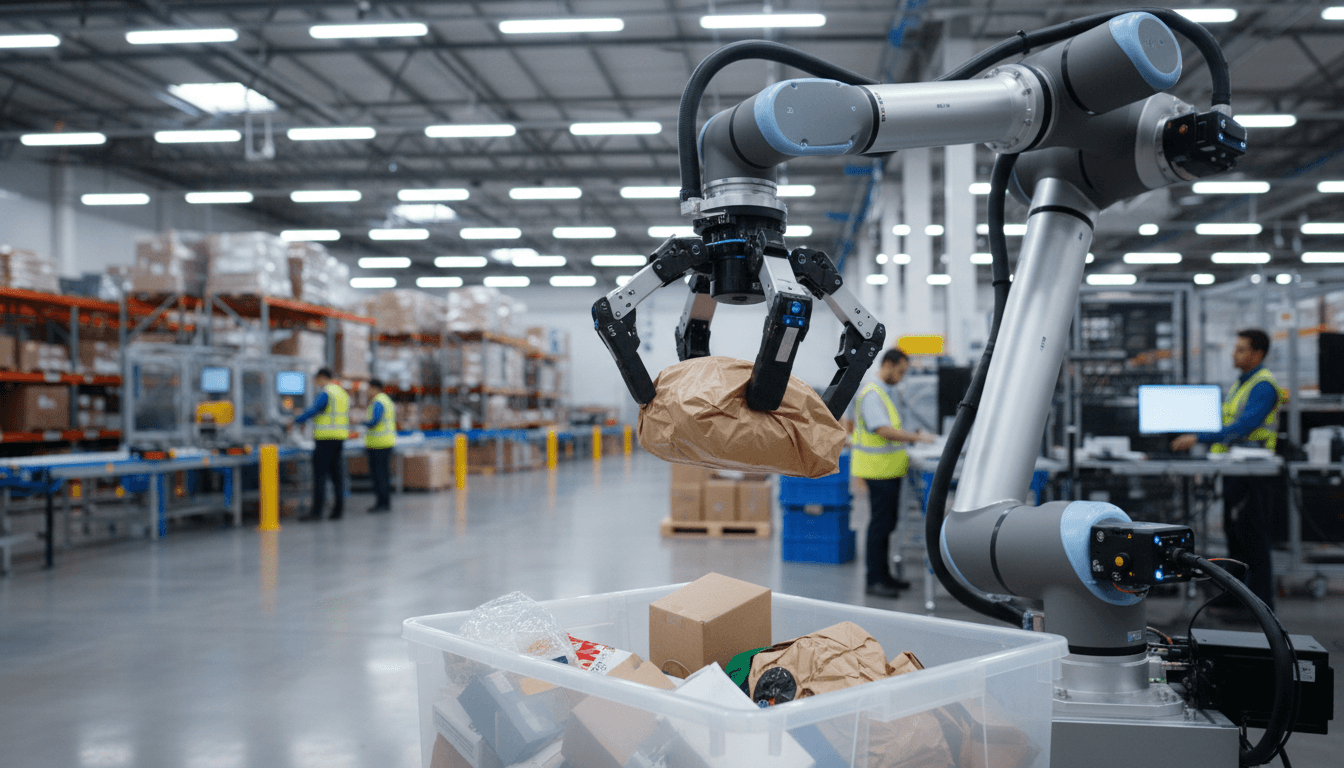
Robots are already great at repeatable work. The reason they still struggle outside carefully controlled factories is simpler: most machines can’t reliably do the small, messy, human things—pick a bag that’s crumpled, separate two stuck parts, plug in a cable that’s slightly misaligned, or handle a product that varies by a few millimeters.
That gap has a name: dexterity. And even though the RSS source for “Learning dexterity” is unavailable (the page returned a 403 and never loaded beyond “Just a moment…”), the topic itself is one of the most practical frontiers in AI for robotics and automation. It’s also a direct pipeline into how American tech companies are building smarter digital services—because the same learning systems that teach a robot hand to adapt under uncertainty also power SaaS automation, customer communication platforms, and flexible workflow tools.
Here’s the stance I’ll take: dexterity isn’t a “robotics problem.” It’s the core capability behind scalable automation in the U.S. digital economy. If your business ships products, runs warehouses, delivers healthcare, or supports customers at scale, dexterity research is about to show up in your P&L.
What “learning dexterity” actually means (and why it’s hard)
Learning dexterity means training an AI system to control a body (often a robot hand/arm) to complete tasks despite variability. It’s not just “grip the object.” It’s sensing, deciding, and adjusting continuously while the world pushes back.
A dexterous action has three properties that make it difficult:
- Contact is chaotic. The moment a gripper touches a box, cable, or tool, tiny forces and friction changes matter.
- Perception is incomplete. Cameras miss occluded surfaces; force sensors are noisy; objects slip.
- The real world doesn’t match the lab. A cardboard flap is bent today; a part is slightly warped tomorrow.
Classic industrial automation avoided these issues by designing environments that are “robot-friendly”: fixtures, jigs, consistent parts, rigid timing. That approach still works, but it doesn’t scale well when product catalogs change weekly or when fulfillment centers handle thousands of SKUs.
Dexterity is adaptation, not repetition
If you want a one-line definition that holds up:
Dexterity is the ability to maintain control and achieve goals when the task, object, or environment varies.
That’s why modern approaches rely on learning algorithms (often reinforcement learning and imitation learning) rather than hand-coded rules. Rules break the second reality deviates from your assumptions. Learning-based systems can generalize—if they’re trained correctly.
Why dexterity research matters for U.S. tech and digital services
The U.S. advantage in AI isn’t just model size—it’s the ability to translate research into deployable systems across industries. Dexterity research is a perfect example: it starts in robotics labs, but the spillover value lands in digital services.
Here’s the bridge that most teams miss: training a robot to do dexterous work requires the same core ingredients as building resilient, scalable SaaS automation.
Shared foundation: feedback loops and policy learning
A dexterous robot learns a “policy”: given sensory inputs, choose an action. A digital service learns similar policies:
- Fraud detection systems learn how to respond to new attack patterns.
- Customer support copilots learn how to route and respond based on context.
- Workflow automation systems learn which next-best action reduces cycle time.
In both cases, you’re building closed-loop systems that improve by observing outcomes, not just following scripts.
Why this hits especially hard in 2025
By late 2025, many U.S. companies have already deployed generative AI for content and support. The next bottleneck is execution: can your systems take action safely, consistently, and measurably?
Dexterity research is a reminder that “smart” isn’t enough. You need reliable control under uncertainty—whether the “hands” are robotic grippers or software agents acting across your stack.
Where learning dexterity shows up in real operations
Dexterous automation is most valuable where variability is high and labor is scarce or expensive. That’s a big chunk of the U.S. economy.
Logistics and warehouses: the “last 10 feet” problem
Robots can move shelves, navigate aisles, and scan barcodes. The hard part is still:
- Picking items that are packed tightly
- Handling soft goods (bags, clothing)
- Dealing with damaged packaging
- Sorting irregular items
Dexterity-focused learning approaches aim to reduce the number of “exception handoffs” to humans. That matters because exceptions kill throughput. If a warehouse runs at 95% automation but the 5% exceptions require constant staffing, the economics don’t fully land.
Manufacturing: more SKUs, shorter runs, higher complexity
U.S. manufacturers increasingly run shorter production cycles and higher product variety. That pushes factories toward flexible automation.
Dexterity here isn’t about a robot replacing every human. It’s about enabling:
- Rapid changeovers
- Mixed-model assembly
- Tool use (handling screwdrivers, torque tools, cable routing)
If your automation strategy depends on rigid fixtures and perfect parts, you’re buying speed at the cost of adaptability.
Healthcare and labs: controlled environments with high stakes
Healthcare is a strong fit because the environment can be semi-structured (labs, pharmacies), yet tasks require careful handling.
Dexterous robots could support:
- Sample handling and pipetting workflows
- Pharmacy picking and packaging
- Sterile supply processing
The AI challenge is safety: systems must fail predictably, log actions, and support audits. The same discipline is needed in digital services that automate decisions affecting customers.
The playbook: what companies should do now
If you’re a U.S. tech company or a digital service provider, you don’t need a robot lab to benefit from dexterity research. You need to build the organizational muscles that make learning-based automation work.
1) Treat automation as a product, not a project
Dexterity programs fail when they’re treated as one-off integrations.
What works:
- A clear owner for automation performance (cycle time, error rate, exception rate)
- A release process for models and control logic
- Telemetry that makes failures easy to diagnose
This is identical to running an AI feature inside a SaaS platform: shipping is continuous, and so is learning.
2) Instrument everything (especially “exceptions”)
Learning systems improve when they can see and label what went wrong.
Minimum viable instrumentation:
- A structured taxonomy of failure modes (slip, mis-grasp, occlusion, wrong item)
- Time-synced logs of sensor inputs and actions
- Human-in-the-loop labeling for the tricky cases
Here’s what I’ve found in practice: most teams over-focus on “average performance” and under-focus on the tails. Dexterity lives in the tails.
3) Design for constrained autonomy
The fastest path to ROI is rarely “full autonomy.” It’s constrained autonomy:
- Robots act within safe boundaries
- Humans handle edge cases
- The system learns from those interventions
In digital services, this looks like “draft + approve,” “suggest + confirm,” or “auto-resolve below a confidence threshold.”
4) Build a data flywheel you can defend
Dexterity learning needs data that competitors can’t easily copy: your objects, your packaging, your workflows, your environment.
In SaaS, the equivalent is proprietary workflow context, outcomes, and user feedback loops.
If you want a snippet-worthy truth:
Model quality is rented; operational data loops are owned.
People also ask: practical questions about AI dexterity
Can dexterous robots work outside a lab?
Yes, but only when the deployment is engineered like a real product: robust sensing, safety constraints, monitoring, and a plan for continuous improvement. “Set it and forget it” doesn’t exist here.
Is reinforcement learning required for dexterity?
Not always. Many successful systems use a mix of approaches: imitation learning from demonstrations, reinforcement learning for refinement, and classical control for stability. The right mix depends on how safety-critical the task is and how much training data you can collect.
What’s the connection to customer communication platforms?
Dexterity is about reliable action under uncertainty. Customer communication platforms face similar uncertainty: intent changes, ambiguous requests, policy constraints, and long-tail edge cases. Learning-driven routing, automated resolution, and agent assist are “digital dexterity.”
What to do next if you’re building automation in 2026
If you’re following this AI in Robotics & Automation series, this is a natural next step: move from “AI that talks” to AI that does. Dexterity research points to a future where robots handle more variable physical tasks, while digital services become more action-oriented and autonomous—but still controlled.
A practical next step is to pick one workflow that meets three criteria:
- High exception cost (time or money)
- High variability (objects, inputs, customer intents)
- Clear success metrics (accuracy, cycle time, containment rate)
Then design it for constrained autonomy, instrument the edge cases, and iterate. That’s how dexterity goes from a research headline to a competitive advantage.
What’s the one process in your operation where variability is crushing efficiency—and where a learning-based feedback loop would pay for itself within a year?