Meta’s Limitless acquisition signals a push toward AI devices that power deeper personalization in media and entertainment. Here’s what to do next.
Meta’s Limitless Deal and the Rise of AI Devices
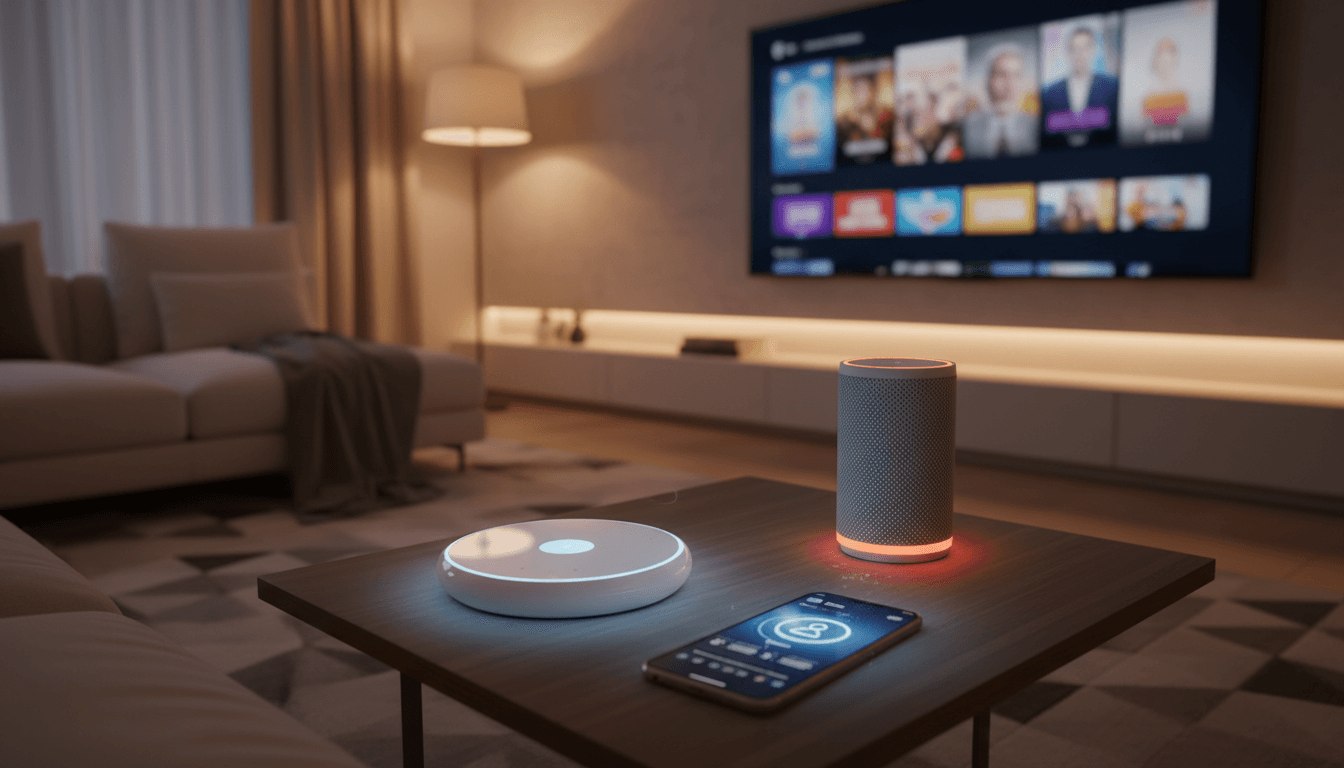
A decade ago, “personal computing” meant a phone and maybe a laptop. Now the industry’s money is flowing toward something more intimate: AI that listens, remembers, and acts across your day. Meta’s acquisition of AI device startup Limitless—a company that says it shares Meta’s vision of bringing personal superintelligence to everyone—isn’t just another M&A headline. It’s a signal that the next battleground is AI hardware, and the prize is personalized media and entertainment experiences that follow you between screens, rooms, and real-world moments.
For teams building products in media, entertainment, and experience design, this matters because “AI personalization” is shifting from a feature inside an app to a capability embedded in devices. And for anyone tracking our AI in Robotics & Automation series, it’s another step toward a familiar pattern: sensors + models + actuators = systems that don’t just recommend… they do.
Snippet-worthy take: Meta buying Limitless is less about a gadget and more about owning the “always-with-you” layer that shapes what you watch, hear, and create.
Why Meta bought Limitless: owning the personal AI device layer
Answer first: Meta’s acquisition of Limitless strengthens Meta’s push into AI-first consumer hardware—devices that can capture context, run AI assistants, and deliver personalization that feels continuous rather than session-based.
Meta already has strong distribution in social media and messaging, plus consumer hardware learnings from wearables and mixed reality. What it hasn’t fully owned (yet) is the personal memory layer—the ability for an AI to build an evolving model of your preferences and intentions across time.
Limitless’ framing—personal superintelligence for everyone—fits neatly into this strategy. “Superintelligence” is a loaded word, but the practical interpretation in consumer products is straightforward: an assistant that’s not just reactive, but proactive, because it has a usable, searchable understanding of:
- what you like (taste graphs for movies, music, creators)
- what you’re doing (calendar, messages, location context)
- what you’ve said (conversations, notes, voice snippets)
- what you’ve watched and abandoned (attention signals)
The business logic is simple: AI personalization needs new inputs
Recommendation engines already run modern entertainment platforms. The next step is expanding inputs beyond taps and scroll time.
A dedicated AI device can provide higher-quality signals than a phone app alone:
- Ambient audio (meetings, conversations, “remember this” moments)
- Wearable context (movement, routine patterns, environmental cues)
- Always-available capture (voice-first interactions when hands/eyes are busy)
In robotics terms, this is classic: better sensors produce better state estimation. Better state estimation improves decisions. Better decisions improve outcomes.
What “personal superintelligence” means for media and entertainment
Answer first: In media and entertainment, “personal superintelligence” will look like hyper-personalized programming, smarter creation tools, and assistants that manage attention—sometimes aggressively.
The real shift is moving from “recommended for you” to assembled for you.
1) From recommending content to assembling experiences
Today’s platforms optimize feeds. Tomorrow’s AI assistants will optimize evenings.
Concrete examples of what AI-powered personalization could become:
- A dynamic watchlist that updates in real time based on your mood, time available, and who’s in the room.
- A “sports mode” that automatically builds highlight reels for your favorite teams with your preferred commentary style.
- A kids’ bedtime flow that chooses story length, tone, and music based on routine patterns and how long the day’s been.
This isn’t abstract. It’s the same mechanics as industrial automation scheduling: constraints (time, fatigue), objectives (satisfaction, retention), and resources (content catalog).
2) Personal AI that edits, remixes, and produces
Once an AI device understands your preferences and captures context, it can become a creative co-pilot for everyday media creation:
- Auto-cutting clips from a night out into the pacing you typically share
- Generating captions in your “voice” (word choice, humor, cadence)
- Turning long recordings into shareable segments for Reels/Stories-like formats
In practice, the competitive advantage isn’t just model quality. It’s workflow ownership—being present at the moment of capture, not only at the moment of upload.
3) Attention becomes a managed resource
Here’s the uncomfortable part: if a personal AI device can shape what you consume, it can also shape how much you consume.
The best products will treat attention like battery life:
- “You’ve got 22 minutes—here’s one episode, not three.”
- “Skip this; it’s similar to what you already watched last night.”
- “Your friend group is active—want a shared queue instead?”
This is where brand trust will be won or lost.
The AI hardware angle: why devices matter more than apps
Answer first: AI hardware matters because it can deliver low-friction, always-available interactions, collect richer context, and run parts of the experience locally for speed and privacy.
A phone can do a lot, but it competes with everything else on the device: notifications, apps, and constant context switching. Dedicated AI devices can be designed around one job: capturing and acting on intent.
Always-on context is the new interface
Most companies get this wrong: they treat AI as a chat box.
The stronger pattern is AI as an operating layer—an assistant that:
- understands context without being asked every time
- reduces repeated prompts (“what’s my… again?”)
- anticipates the next step (“you’re leaving—should I download this?”)
For media and entertainment, that means personalization doesn’t start when you open an app. It starts when you start living your day.
What robotics and automation teams should notice
This is where our series theme connects.
AI devices are essentially consumer-grade automation nodes:
- Sensors: microphones, cameras, motion, proximity
- Compute: on-device inference + cloud calls
- Actuators: notifications, playback control, capture triggers, publishing workflows
If you’ve worked with service robots or smart manufacturing lines, the pattern will feel familiar: the value is in closed-loop systems that observe → decide → act → learn.
What changes for creators, studios, and streaming platforms
Answer first: Meta’s move raises the bar for personalization and will pressure media companies to deliver assistant-ready metadata, interoperable user preferences, and new ad formats that respect context.
If Meta controls more of the “personal AI layer,” everyone else will need to decide how they show up inside it.
Metadata becomes product strategy
If a personal AI is assembling experiences, your catalog needs machine-readable depth. Not just genre tags.
Teams should be investing in:
- scene-level descriptors (pace, intensity, dialogue density)
- “why people love this” attributes (comfort watch, twisty, aesthetic)
- suitability constraints (family-safe, violence, language)
- short-form extractability (what clips well and why)
A useful internal bar: Could an assistant confidently pick the right 18-minute segment for this person right now?
New distribution: assistant-mediated discovery
Assistant-mediated discovery changes everything:
- Fewer direct app opens
- More content consumed via “play something I’ll like”
- Greater importance of being the “default” provider for certain contexts (workout, commute, cooking)
This resembles how automation platforms choose which job to run next. You’re competing for priority in a scheduler.
Ads shift from demographics to moments
The ad opportunity is obvious—and risky.
Personal AI devices can infer “moments” (winding down, commuting, hosting friends). That enables:
- moment-based sponsorships
- interactive ads that feel like helpful suggestions
- tighter frequency control across surfaces
But it also creates new failure modes: creepy relevance, accidental inference, and over-personalization that makes users feel watched.
The privacy and safety reality: memory is power
Answer first: The biggest risk of AI devices for personalization is persistent memory—because storing and using context can easily cross the line from helpful to invasive.
If a device captures audio, routines, or relationships, governance can’t be an afterthought. For media and entertainment brands partnering with platforms or building their own assistants, I’d treat the following as non-negotiable product requirements:
- Clear memory controls: view, edit, export, delete—without friction.
- Mode-based capture: obvious “on/off” states and event-based recording indicators.
- Local-first where possible: on-device inference for sensitive tasks.
- Hard boundaries for minors: content controls plus data minimization.
- Context integrity: don’t merge profiles across people in the same room without consent.
Snippet-worthy take: If your personalization strategy depends on data users wouldn’t be comfortable reading back on a screen, you’re building a future PR crisis.
Practical moves: how to prepare your team for AI device-led personalization
Answer first: Prepare by designing for assistant interoperability, strengthening content intelligence, and testing contextual experiences that don’t require constant user input.
Here’s what I’d do over the next 90 days if I owned growth or product for a media/entertainment brand.
1) Build a “personalization readiness” checklist
Use a simple internal audit:
- Can we describe every asset beyond genre and cast?
- Do we have robust “keep watching” semantics (where did they stop, why)?
- Can we generate safe, accurate summaries and previews automatically?
- Do we support short-session consumption (5–20 minutes) without frustration?
2) Prototype assistant-first user journeys
Don’t start with a chat UI. Start with outcomes.
Examples worth prototyping:
- “I have 30 minutes before dinner” → AI picks one episode segment or a short film
- “We’re hosting friends” → AI builds a shared playlist that matches the group
- “I want something like last Friday night” → AI uses memory to recreate a vibe
3) Treat personalization as automation, not marketing
Personalization isn’t just getting the right title on a homepage. It’s automating decisions users don’t want to make.
A useful mindset from robotics and automation:
- define the task
- define constraints
- define failure modes
- measure outcomes
If you can’t articulate the failure mode (for example, “AI suggests intense horror after a stressful day”), you can’t fix it.
4) Prepare for M&A ripple effects
Meta’s acquisition of Limitless is part of a broader trend: platforms buying the missing parts (hardware, data capture, model talent) to control the full stack.
Expect:
- faster iteration cycles on AI devices
- tighter coupling between devices and social/entertainment surfaces
- more partner pressure for metadata access and content APIs
If you’re a smaller player, differentiation comes from specialty: niche catalogs, unique communities, or creator-first tooling.
Where this goes next for AI in Robotics & Automation
Meta’s Limitless deal fits a bigger story we’ve been tracking in this series: AI is shifting from software that advises to systems that sense and act.
For media and entertainment, that “act” might be as simple as starting playback—or as consequential as shaping a child’s viewing habits, steering cultural discovery, or deciding which creators get surfaced.
If you’re building in this space, the forward-looking question isn’t whether AI devices will influence entertainment. It’s who gets to set the defaults—and whether users will trust those defaults when the assistant knows them better than their search history ever did.