OpenAI Residency points to a bigger shift: U.S. digital services now need AI builders who can ship reliable, measurable features—not just prototypes.
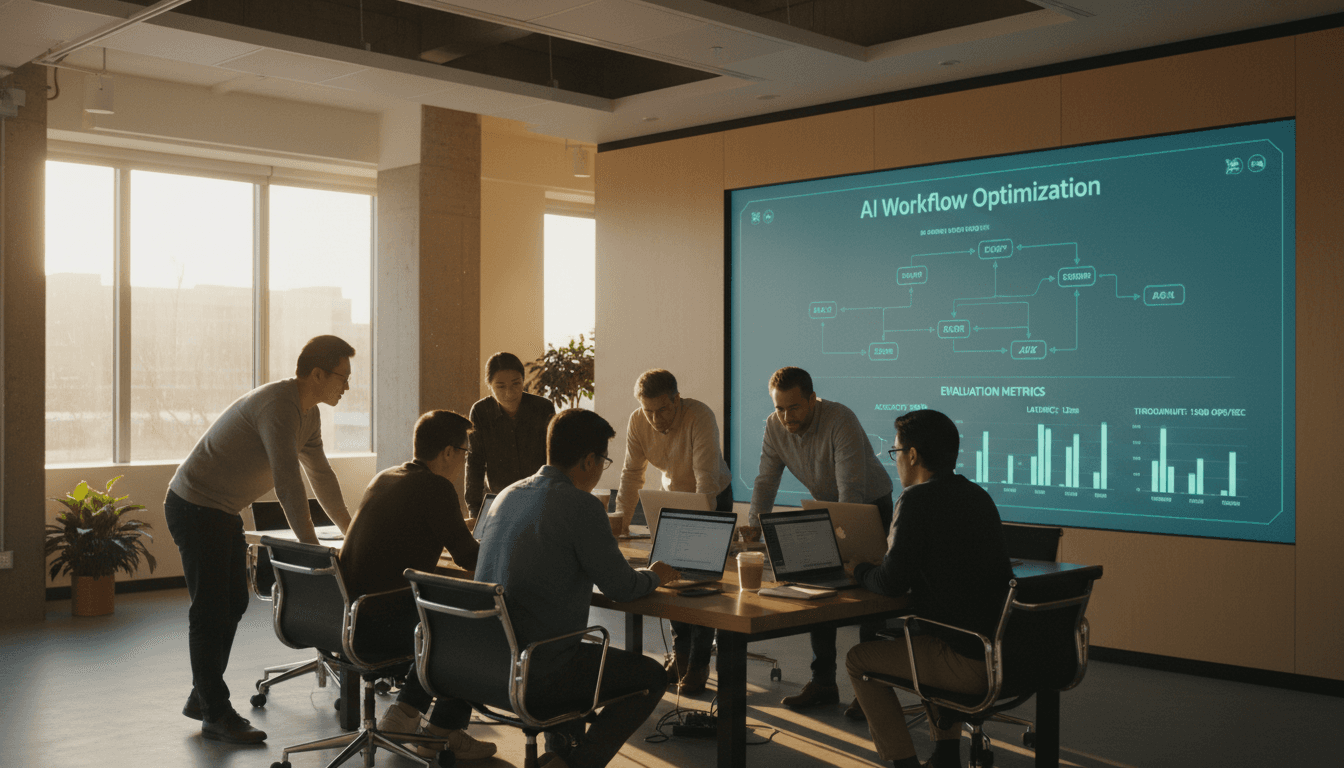
OpenAI Residency: Building AI Talent for U.S. Digital Services
Most companies say they “can’t find AI talent.” What they really mean is they can’t find people who can ship.
That gap matters more in late 2025 than it did even two years ago. U.S. digital services—SaaS platforms, fintech apps, customer support tools, healthcare portals, and internal automation systems—aren’t experimenting with AI anymore. They’re budgeting for it, deploying it, and being held accountable for outcomes like lower support costs, faster onboarding, and better user retention.
OpenAI’s Residency is best read through that lens: not as a feel-good training initiative, but as a pipeline for people who can build production-grade AI systems. When you expand the idea beyond one company, it also signals where the U.S. digital economy is headed: toward tighter integration between model research, product engineering, and responsible deployment.
Why AI residency programs matter for the U.S. digital economy
AI residency programs exist for a simple reason: the most valuable AI skills sit between research and software engineering.
A lot of “AI hiring” still over-optimizes for credentials—PhDs, publications, or a long list of ML buzzwords. That approach misses the people you actually need in 2026: builders who can evaluate models, design reliable workflows, manage data risk, and improve user experiences without turning your product into a science project.
For U.S.-based digital services, this is directly tied to competitiveness. When a company can:
- shorten the path from prototype to production,
- instrument AI features with measurable KPIs,
- and implement guardrails that keep regulators, security teams, and customers comfortable,
…it ships faster and wastes less.
Snippet-worthy takeaway: AI talent isn’t scarce. AI shipping capability is scarce.
The talent gap isn’t “ML knowledge”—it’s systems thinking
What I see across SaaS and digital platforms is a recurring failure mode: teams treat AI as a single component instead of a system. They’ll pick a model and wire it into an app, then act surprised when quality drifts, costs spike, or customers find ways to break it.
Residency-style training tends to focus on the missing pieces:
- Evaluation discipline: defining “good” in terms of accuracy, helpfulness, refusal behavior, and latency
- Data and privacy rigor: understanding what should never enter prompts, logs, or fine-tuning sets
- Reliability engineering: fallbacks, timeouts, caching, model routing, and incident response
- Human factors: user trust, transparency, and reducing workflow friction
Those are exactly the skills that power modern digital services in the United States.
What the OpenAI Residency signals about where AI work is going
The RSS summary is short—OpenAI announced the OpenAI Residency to support and develop AI talent—but the implication is big: AI companies are investing in structured “on-ramps” because the work has become too complex to learn ad hoc.
The reality? The center of gravity in AI has shifted. It’s not just about training bigger models; it’s about making AI useful in real products under real constraints.
The new default: AI features with business owners and SLAs
In 2023, a chatbot demo could get applause. In 2025, AI features are expected to have:
- an owner (PM, eng lead, or applied AI lead)
- a target metric (deflection rate, conversion lift, handle time reduction)
- an SLA mindset (uptime, latency targets, predictable spend)
Residency programs encourage this operational view. And that matters because U.S. digital services are increasingly bundling AI into core workflows: onboarding, compliance review, customer communication, and knowledge management.
AI roles are converging, not splitting
A common misconception is that teams must choose between “research people” and “product people.” What’s happening instead is convergence:
- Product engineers are learning evaluation and prompt/system design.
- ML engineers are learning product constraints, UX, and instrumentation.
- Security and privacy teams are learning AI threat models.
A residency can accelerate that convergence by putting people into environments where the expectation is simple: learn fast, ship responsibly, and measure impact.
How this talent pipeline powers U.S. digital services (practical examples)
The easiest way to understand why programs like OpenAI Residency matter is to look at the work U.S. digital service providers are doing right now. These aren’t science experiments; they’re operational upgrades.
1) Customer support automation that doesn’t burn trust
Support is one of the first areas companies apply AI because the ROI can be obvious. But naive automation backfires: hallucinated answers, tone problems, policy violations, or “confidently wrong” refunds advice.
Residency-trained builders tend to ship support copilots with safeguards:
- answer only from approved knowledge sources
- cite internal article IDs (not public links) to make auditing easier
- escalate to humans when confidence is low or when policy triggers fire
- track deflection and customer satisfaction, not just deflection
This is how AI powers customer communication tools without turning support into reputational risk.
2) Back-office workflow automation in regulated industries
Healthcare, fintech, and insurance are adopting AI in the U.S. faster than many people expected—but with a strong emphasis on controls.
Examples of “boring but valuable” automation:
- summarizing call notes into structured CRM fields
- drafting prior authorization letters for clinician review
- extracting entities from documents (dates, amounts, coverage terms)
- generating compliance checklists based on internal policy libraries
The key is that AI outputs become drafts, not decisions, unless the organization can prove consistency and auditability.
3) Marketing and growth teams using AI without brand drift
Marketing teams have embraced AI for content, but brand drift is real: inconsistent voice, incorrect product claims, and accidental “policy promises.”
Residency-style expertise helps teams build constraints like:
- approved message frameworks and claim libraries
- controlled tone and persona guidelines
- review workflows for regulated claims
- automated fact-checking against internal product documentation
In practice, this is how AI supports content creation while keeping brand standards intact.
If you’re building AI features, steal this residency-style playbook
You don’t need to run your own residency to benefit from the mindset. You can adopt the operating model.
Start with a measurable AI product spec (not a model choice)
The best teams write specs that look like this:
- User job-to-be-done: “Resolve billing issues without waiting on an agent.”
- Success metric: “Reduce average time-to-resolution by 20% while holding CSAT steady.”
- Constraints: “Only use approved billing policies; never request full SSN.”
- Failure modes: “Hallucinated policy; incorrect refunds; privacy leakage.”
- Guardrails: retrieval grounding, escalation triggers, redaction, rate limits.
Notice what’s missing: “Pick model X.” The model is a component. The system is the product.
Build evaluation into your weekly cadence
Most teams evaluate once, right before launch, and then wonder why quality degrades.
A better approach is ongoing evaluation:
- Maintain a test set of real user queries (de-identified where required).
- Track quality metrics weekly (helpfulness, groundedness, refusal correctness).
- Add new “gotcha” cases whenever support or compliance finds a failure.
Snippet-worthy takeaway: If you can’t measure it weekly, you can’t improve it safely.
Design for cost and latency like you mean it
In U.S. SaaS, AI margins matter. If latency is too slow or inference costs balloon, adoption stalls.
Practical techniques that show up in mature teams:
- caching for repeated questions
- routing: smaller models for easy tasks, larger for hard ones
- summarizing long context before sending it to the model
- strict token budgets per workflow step
This is where “AI product engineering” starts to look like traditional systems engineering—because it is.
People also ask: what is the OpenAI Residency, and who is it for?
OpenAI Residency is described as an effort to support and develop AI talent. More broadly, an AI residency is a structured program that helps capable builders ramp into applied AI work quickly—usually by combining mentorship, real projects, and exposure to research-grade thinking.
Do you need a PhD to work in applied AI?
No. U.S. digital services need people who can ship reliable features: evaluation, data handling, product thinking, and engineering discipline. Deep research backgrounds help in some roles, but they aren’t the only path.
What skills should applicants build for AI residency-style roles?
If you’re aiming at applied AI roles in 2026, prioritize:
- strong Python + software engineering habits (testing, code reviews, observability)
- LLM evaluation methods and dataset creation
- retrieval-augmented generation (RAG) patterns and grounding strategies
- privacy/security basics (PII handling, prompt injection awareness)
- product metrics and experimentation
What this means for U.S. tech leaders planning 2026 roadmaps
If you’re a founder, product leader, or head of engineering, the OpenAI Residency announcement should prompt one practical question: Are you building internal capability, or just buying tools?
Buying AI features is fine—until you need differentiation, reliability, or compliance. Then you need talent that can adapt models to your workflows, your data, and your risk profile.
That’s why I like the residency model as a signal. It suggests the winning organizations in U.S. digital services will be the ones that treat AI as a craft: trained, mentored, measured, and continuously improved.
Where do you want your team to be by next holiday season—still experimenting in a sandbox, or operating AI features with the same confidence you run payments, auth, and uptime?