RL environments train utility AI to act in messy workflows. See how to apply reinforcement learning to energy procurement, spares, and grid operations.
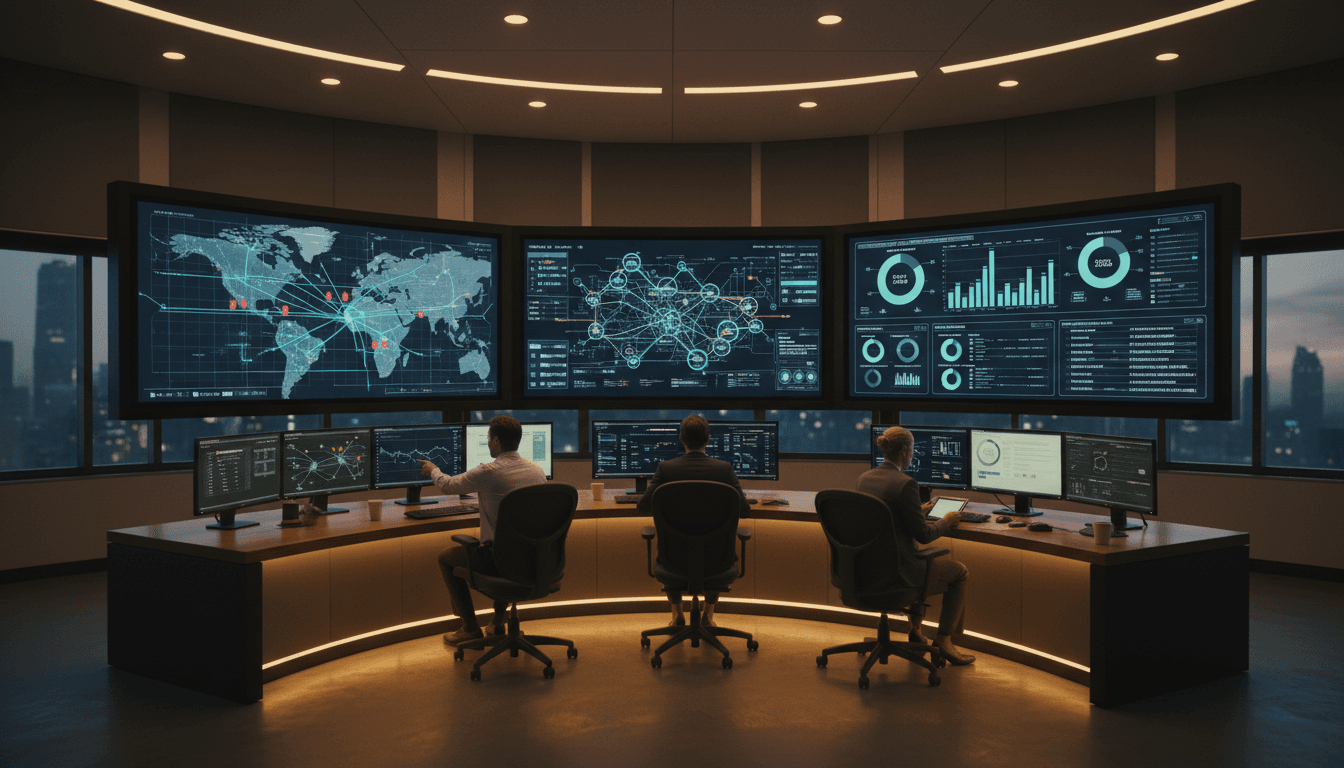
RL Environments: The Missing Piece for Utility AI
Utilities don’t lose sleep because they lack data. They lose sleep because the grid is messy.
Storm-driven outages, transformer lead times, congestion constraints, renewable variability, cybersecurity policies, union work rules, and a thousand “small” operational exceptions collide every day. A large language model trained on perfect documentation can sound smart in a meeting, then fall apart when it hits the real workflow: incomplete tickets, conflicting telemetry, a SCADA alarm flood, and a procurement portal that times out.
That’s why the next frontier in AI for energy and utilities isn’t “even bigger models.” It’s reinforcement learning (RL) environments—controlled, interactive “classrooms” where AI agents practice decisions, see consequences, and improve through feedback. If you’re building AI for supply chain and procurement in the utility world, this is the most practical idea you can act on in 2026.
Bigger models won’t fix grid reality—interactive training will
Answer first: Utility AI fails most often at execution, not at generating plausible text. RL environments train models to act, recover, and complete multi-step work under constraints.
Most enterprise AI programs still look like this: collect historical data, train or fine-tune a model, deploy it into a chatbot or dashboard, and expect it to handle real operations. That approach is fine for summarization and search. It’s weaker for work that requires:
- Sequencing: do A, then B, then C, while validating each step
- Tool use: switch between OMS/ADMS, EAM, GIS, and vendor portals
- Constraint satisfaction: budgets, safety rules, switching orders, outage windows
- Error recovery: missing fields, failed API calls, bad sensor data, human overrides
RL environments directly target those failure modes. The model doesn’t just predict the next word; it learns policies—habits of action—by interacting with a simulated world where it can try, fail, and improve.
The shift: from “knowing” to “doing”
Pretraining taught models broad knowledge. Human feedback made them more helpful and less erratic. RL environments add the piece utilities care about most: competence inside operational workflows.
A good one-liner to keep in mind:
If your AI can’t practice the job, it won’t reliably do the job.
What an RL environment is (and why utilities should care)
Answer first: An RL environment is a sandbox that turns business workflows into repeatable episodes with rewards, penalties, and realistic friction—exactly what utility operations and procurement need.
In reinforcement learning, a model repeatedly runs a loop:
- Observe the current state (telemetry, asset health, inventory, weather, crew availability)
- Act (create a work order, reroute power flow, order parts, schedule crews)
- Receive a reward (lower cost, reduced SAIDI/SAIFI impact, improved fill rate, fewer safety violations)
- Update behavior to improve future outcomes
What makes this powerful for energy and utilities is the environment can include the gritty stuff that breaks automation in production:
- Role-based access controls and approvals
- Procurement thresholds and bid policies
- Data latency and missing measurements
- Vendor constraints and shipping delays
- “No work during peak load” restrictions
- Storm surge scenarios and mutual aid rules
The utility version of “coding sandbox”
The RSS article uses live coding environments as an example—models improve when they can run code, see errors, and fix them.
Translate that to utilities:
- A procurement sandbox where an agent must create a compliant purchase order, pick an approved supplier, respect contract pricing, and handle backorders.
- A field-work sandbox where an agent must propose a switching plan that passes safety checks, coordinates outage windows, and produces a valid work package.
- A grid-ops sandbox where an agent must relieve congestion and maintain voltage within limits while renewables fluctuate.
The point isn’t fancy. It’s practical: if the agent can’t complete an end-to-end workflow in a sandbox, it won’t complete it in your production stack.
Where RL environments pay off in energy supply chain & procurement
Answer first: RL environments are most valuable where decisions are sequential, high-stakes, and constrained—exactly the profile of utility procurement and supply chain operations.
Utilities are still feeling the aftershocks of multi-year volatility in equipment lead times (especially for large power transformers and critical substation components). By December 2025, many procurement teams have already tightened governance and diversified suppliers—but they still rely on brittle, manual coordination across systems.
RL environments help build agents that can operate inside that coordination.
Use case 1: Inventory optimization under real lead-time risk
Classic inventory models assume clean demand signals and stable lead times. Utility reality includes:
- Condition-based demand (failures cluster)
- Storm-driven surges
- Repair-versus-replace decisions
- Vendor fill-rate variability
In an RL environment, you can simulate lead-time distributions, vendor reliability, and demand spikes, then reward policies that:
- Maintain service levels (critical spares never stock out)
- Reduce carrying cost (don’t hoard slow-moving parts)
- Avoid emergency freight (penalize expedite dependence)
A practical reward mix many teams use:
- + for meeting service level on critical SKUs
- − for stockouts (weighted by criticality)
- − for obsolescence write-offs
- − for expediting and premium freight
- + for contract compliance and consolidated orders
Use case 2: Supplier selection that respects policy, not just price
Procurement isn’t a lowest-price game. It’s policy, risk, and performance.
An RL-trained procurement agent can learn to choose suppliers while honoring:
- Approved vendor lists and safety qualifications
- Diversity or local sourcing goals
- Framework agreements and negotiated tiers
- Cyber and physical security requirements
The environment can include “gotchas” on purpose: expired insurance certs, missing conflict minerals forms, or suppliers that look cheap but fail on OTIF (on-time in-full). You reward what you actually want: reliable delivery, compliant paperwork, fewer exceptions.
Use case 3: Maintenance planning that synchronizes parts, crews, and outages
This is where the “AI in supply chain” series meets grid operations.
For a utility, a maintenance plan is a supply chain plan:
- Do we have the part?
- Is the crew available and qualified?
- Is there an outage window?
- Are permits and traffic control in place?
RL environments let an agent practice planning where a “good” schedule is one that reduces truck rolls and outage minutes, not one that looks tidy on paper.
Use case 4: Storm response logistics without real-world consequences
Storm logistics are a prime candidate for simulation.
In an RL environment, you can model:
- Warehouse locations, staging sites, and road closures
- Crew travel times and work/rest rules
- Priority customers (hospitals, water treatment)
- Fuel constraints and generator availability
You can then train policies that minimize restoration time while respecting safety and resource constraints. This is the same “fail a thousand times safely” idea described in the RSS content—just applied to grid resiliency.
How to build “classrooms” for utility agents (without boiling the ocean)
Answer first: Start with one workflow, instrument it like a game, and add realism in layers—data first, then tools, then friction.
Most teams overcomplicate RL environments by trying to simulate the entire grid and every enterprise system at once. Don’t.
Here’s a sequence that works in utilities and regulated industries.
Step 1: Pick a single workflow with a measurable outcome
Good starting workflows for energy supply chain and procurement:
- “Replenish critical spares” for a defined asset class
- “Source and issue a PO” for a high-volume category
- “Create a compliant work package” for planned maintenance
If you can’t define success in one sentence, the environment will become a science project.
Step 2: Define the reward like a scorecard the business already trusts
Utilities already run scorecards. Use them.
Examples of extractable reward components:
- Fill rate for critical SKUs
- OTIF by supplier and category
- Emergency PO count
- Expedite spend as % of category spend
- Work order cycle time (ready-to-schedule → completed)
- Safety and compliance violations (hard penalties)
RL works when the reward reflects real incentives. If the business cares about compliance, make noncompliance expensive in the reward.
Step 3: Build a “digital twin” that’s good enough—not perfect
You don’t need a physics-accurate grid model to start training procurement behaviors.
A useful environment often begins as:
- Historical distributions (lead times, failure rates, demand)
- Simple constraints (budget caps, min/max order quantities)
- A tool layer (APIs or mocked interfaces for ERP/EAM)
Then you add realism:
- Partial observability (missing fields, delayed updates)
- Adversarial events (storm shock, vendor disruption)
- UI friction (approvals, rejections, access limitations)
Step 4: Treat tool use as part of training, not a bolt-on
If the agent will place orders, it must practice placing orders.
That means the environment should include the same classes of actions the agent will take in production:
- Search catalogs
- Check contract pricing
- Create requisitions
- Route approvals
- Handle exceptions and returns
This is where many “agentic AI” pilots stall: they test intelligence in a chat box, then deploy into a workflow jungle.
Step 5: Add governance early—utilities can’t afford “creative” agents
Utilities are right to be strict here.
In training and deployment, you want:
- Hard constraints (actions disallowed by policy)
- Audit logs of every tool call and decision
- Human-in-the-loop for high-impact steps
- Scenario testing for worst cases (storms, cyber incidents)
A helpful mental model is “autopilot with checklists,” not “fully autonomous operator.”
People also ask: practical RL environment questions utilities raise
Can’t we just fine-tune an LLM on our SOPs and tickets?
You’ll get a stronger assistant, but not a reliable operator. Fine-tuning teaches patterns; it doesn’t teach interactive competence—especially under exceptions, delays, and multi-system workflows.
Do we need a full grid digital twin to use reinforcement learning?
No. For procurement and supply chain, a probabilistic simulator of demand and lead times plus a realistic tool workflow often delivers value faster than a full physics simulation.
What data do RL environments need in utilities?
Two categories:
- Foundational data: item master, supplier master, contracts, lead times, inventory history, work orders
- Behavioral data: what “good” looks like—approval policies, exception handling, safety/compliance rules
RL doesn’t eliminate the data problem. It raises the bar on data quality because the agent will act on what it sees.
Where this fits in the AI in Supply Chain & Procurement series
This series has been building a simple argument: predicting demand is only half the job; executing decisions inside procurement workflows is where value appears.
RL environments are the bridge from analytics to execution. They’re how you train an AI agent to place the right order, from the right supplier, at the right time, with the right approvals—then recover when something breaks.
If you’re mapping your 2026 roadmap, I’d take a stance: budget for the environment. Not just the model. Not just the data lake. The environment is where competence is built.
The next question to ask your team is straightforward: Which workflow would you trust an AI agent to practice 10,000 times in a sandbox next quarter—and what score would prove it’s improving?