Multi-agent AI and human–AI interaction can make supply chain robotics scalable, safer, and easier to run—if you design for coordination and exceptions.
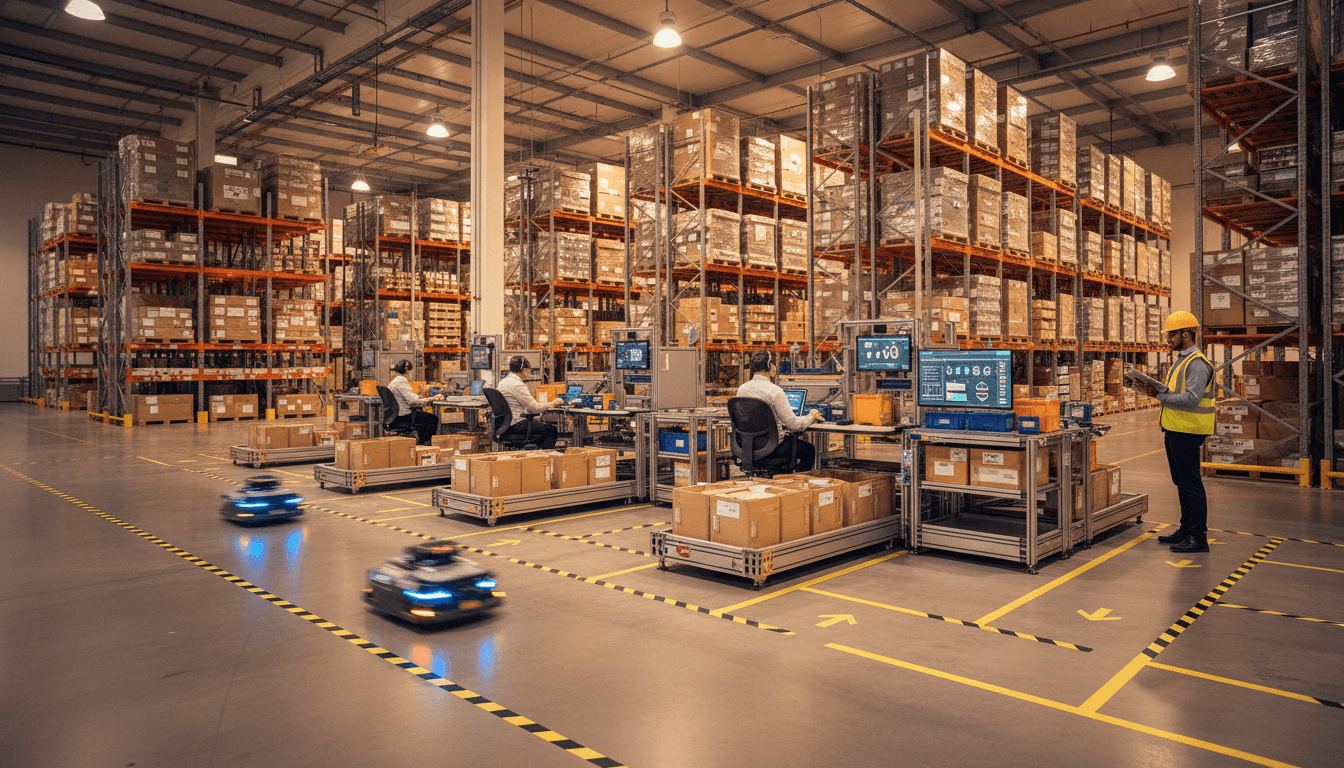
Multi-Agent AI for Supply Chains: Human-Robot Teamwork
Warehouse robotics has a coordination problem: one robot can be impressive, but ten robots can be chaos if they don’t share plans, priorities, and a common understanding of what “urgent” means.
That’s why I pay attention when Professor Manuela Veloso talks about multi-agent systems and human–AI interaction. Her career spans autonomous robotics and AI planning, and she now leads AI research in a high-stakes operational environment (finance). The throughline is consistent: AI is most valuable when it can collaborate—both with other AIs and with people.
This post is part of our AI in Supply Chain & Procurement series, and it’s written for teams building or buying automation in logistics, manufacturing, and service operations. The point isn’t to recap a podcast episode. The point is to translate the ideas behind Veloso’s work into practical guidance for supply chain leaders who want automation that actually ships product on time.
Multi-agent systems are the “operating system” for real automation
Multi-agent systems matter because supply chains are inherently multi-agent already. Forklifts, AMRs, pick stations, WMS rules, planners, carriers, and suppliers all make local decisions that interact. When you add robots, you’re not adding one system—you’re adding more agents.
A multi-agent approach treats each robot (and sometimes each software service) as an agent that:
- Perceives its local state (location, load, battery, obstacles)
- Plans actions (route, pick sequence, handoff)
- Negotiates/coordinates with peers (who takes which task, who yields at intersections)
- Adapts when conditions change (blocked aisle, rush order, missing pallet)
Here’s the stance I’ll defend: If your automation plan doesn’t include explicit coordination logic, you’re building a demo—not an operation. Single-agent optimization breaks the moment priorities conflict.
What multi-agent coordination looks like in a warehouse
In supply chain automation, multi-agent systems usually show up in three patterns:
- Task allocation: Which robot takes which job (pallet move, tote transport, cycle count)
- Traffic management: How robots share space safely and efficiently (right-of-way, rerouting)
- Shared objectives: How the fleet optimizes system-level goals (OTIF, throughput, energy, labor assist)
A simple, useful mental model: local autonomy with global constraints. Each robot acts independently, but the system enforces constraints like safety zones, SLA deadlines, and congestion limits.
Human–AI interaction is the difference between “autonomous” and “usable”
Human–AI interaction (HAI) determines whether automation fits the way work actually happens. In supply chains, people constantly resolve ambiguity: damaged cartons, partial pallets, substitutions, rush requests, mis-slots, exceptions from procurement, and carrier delays.
Veloso’s long-running focus on AI systems that collaborate with humans maps cleanly to a modern reality: the best automation isn’t lights-out; it’s people + machines doing what each does best.
The real goal: fewer exceptions reaching humans
Most teams think HAI means a nice dashboard. That’s only half of it.
The better goal is: use AI to reduce the number of decisions that require a human—without hiding the decisions that still need one. In practice, that means:
- Robots handle repeatable moves and replan when the environment changes.
- Humans handle exceptions and policy choices.
- The interface makes it obvious why a robot is asking for help.
A good human–AI interface doesn’t just show status. It explains intent and constraints.
Three HAI patterns that work in operations
- Intent-based requests (not alerts): “I can’t complete Pick 184 because Bin A3 is empty. Approve substitution from A4?”
- Confidence-based escalation: Only escalate when the model’s uncertainty crosses a threshold.
- Fast override with audit trail: Humans can override routing/task choices, and the system logs the reason (gold for continuous improvement).
If you’re running peak-season operations (and December is when many teams feel every weakness), exception design matters as much as path planning.
Why multi-agent AI is showing up across industries (finance included)
Veloso’s move from academia to a major financial institution is a reminder that coordination problems aren’t unique to robotics. Finance has portfolios, risk systems, compliance workflows, and human decision-makers—another multi-agent environment.
Supply chains can borrow two operational lessons from regulated, high-stakes domains:
1) Automation needs guardrails, not vibes
In robotics terms, guardrails are safety zones and collision avoidance. In supply chain planning, guardrails are:
- Approved supplier lists
- Risk thresholds for single-sourcing
- Service-level constraints (fill rate, OTIF)
- Budget ceilings and contract rules
When you add AI agents (for procurement intake, supplier selection, inventory rebalancing), you need policy constraints that are machine-enforceable.
2) Collaboration beats monolithic “one brain” systems
A lot of organizations still chase the fantasy of a single end-to-end optimization engine. The reality is simpler: multiple specialized agents coordinating through shared goals and contracts is more robust.
Example: one agent forecasts demand; another recommends PO timing; another assigns warehouse labor; another routes AMRs—each with explicit interfaces and shared KPIs.
Practical applications: where to use multi-agent AI in supply chain today
The highest ROI comes from problems with constant change plus shared resources. That’s multi-agent territory.
Fleet orchestration for AMRs and mixed automation
If you have AMRs, conveyors, and manual carts sharing space, your system needs to coordinate:
- Pick/putaway priorities across zones
- Battery charging schedules vs. rush orders
- Congestion pricing (discourage routes through choke points)
A solid starting metric: missions completed per hour per robot, but only if you also track blocked time (time spent waiting due to congestion or contention).
Yard and dock scheduling (the forgotten multi-agent problem)
Dock doors are shared resources. Carriers, warehouse teams, and yard trucks all behave like agents with competing objectives.
Multi-agent AI can:
- Predict late arrivals and reassign doors early
- Coordinate yard moves to prevent bottlenecks
- Prioritize loads based on downstream production or customer SLAs
Even modest improvements here show up quickly in detention fees, labor overtime, and missed cutoffs.
Procurement workflows as human–AI teaming
Procurement is full of “agent-like” components: requesters, approvers, supplier reps, contract rules, and risk teams.
Human–AI interaction patterns that translate well:
- AI drafts RFQs and compares supplier quotes with explainable criteria (lead time, MOQ, defect rates)
- AI flags contract non-compliance before a PO is submitted
- AI routes approvals based on spend category and risk, with clear rationale
The win isn’t replacing category managers. It’s reducing cycle time and preventing avoidable exceptions.
Implementation checklist: build collaborative AI that earns trust
Trust is operational, not philosophical. People trust systems that are predictable, correct, and easy to override.
Here’s a field-tested checklist for multi-agent AI in robotics and automation programs:
Define system-level objectives in numbers
Pick 2–3 primary metrics and make them non-negotiable. For supply chain automation, I like:
- OTIF (%) or on-time ship rate
- Throughput (units/hour) by shift
- Cost per order (or cost per line)
Then define constraints:
- Safety (zero collisions; speed limits)
- Compliance (approved suppliers; audit rules)
- Labor rules (breaks; ergonomics; union constraints where applicable)
Decide how agents coordinate
You need an explicit coordination mechanism. Common choices include:
- Auction-based task allocation (robots “bid” based on travel time, battery, urgency)
- Central scheduler with local replanning (good for predictability)
- Decentralized negotiation (good for resilience, harder to debug)
Most warehouses do best with a hybrid: central priorities, local autonomy.
Design for exceptions first
Write down your top 20 exceptions before you buy hardware:
- Missing inventory in bin
- Damaged pallet
- Blocked aisle
- Network outage
- Robot stuck / localization drift
- Priority order injected mid-wave
For each exception, define:
- Detection signal
- Default action
- Escalation path to a human
- Recovery time target (e.g., “stuck robot recovered in < 5 minutes”)
Instrument everything (or you’re flying blind)
At minimum, log:
- Task assignments and reassignment reasons
- Wait time at intersections/doors
- Human overrides (what, when, why)
- Near-miss safety events
These logs become your continuous improvement backlog—and your proof of ROI.
Common questions teams ask (and straight answers)
“Do we need multi-agent AI if we only have a small fleet?”
Yes, if robots share space or resources. Coordination problems start at 2 agents, not 200.
“Isn’t a central controller enough?”
A pure central controller can work, but it becomes brittle when the environment changes fast. Local replanning is what keeps operations from stalling.
“How do we keep humans from fighting the system?”
Make the system legible: show intent, allow overrides, and keep the cost of correction low. If a supervisor needs five screens to fix one bad assignment, you’ll lose adoption.
Where this goes next for supply chain & procurement
Multi-agent systems and human–AI interaction aren’t academic side quests. They’re the core of whether your robotics program scales from a pilot to a network standard.
If you’re planning 2026 budgets right now, I’d prioritize automation initiatives that coordinate across boundaries: fleet + WMS, dock + yard, procurement approvals + supplier performance. That’s where collaboration creates compounding returns.
The question I’d leave you with is simple: when something unexpected happens in your operation, does your automation help your team recover faster—or does it add another system they have to babysit?