Marijuana rescheduling could disrupt DOT THC testing fast. Learn what it means for trucking compliance—and how AI can help manage safety and risk.
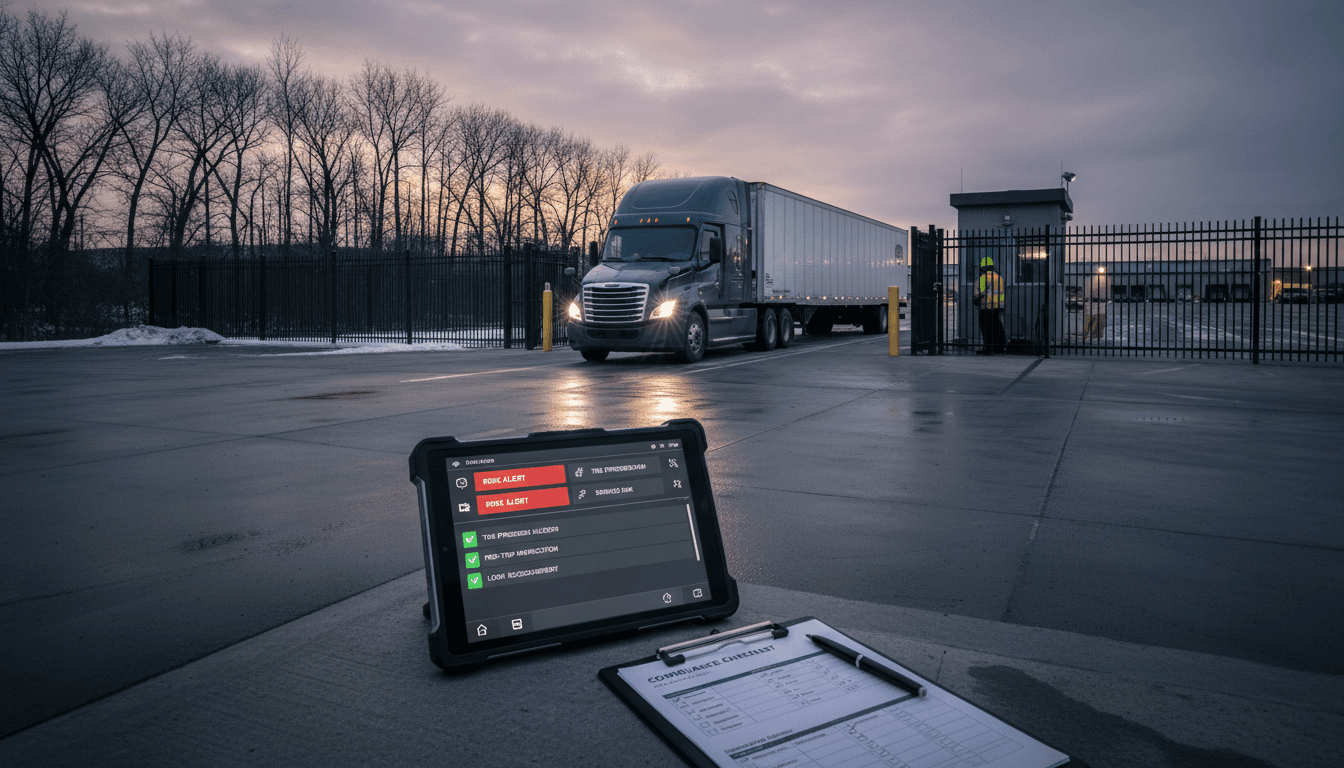
Marijuana Rescheduling: A Compliance Shock for Trucking
A single policy tweak in Washington could break one of trucking’s most relied-on safety controls overnight.
If marijuana moves from Schedule I to Schedule III under the Controlled Substances Act—as the Trump administration says it’s “looking very strongly” at—the Department of Transportation (DOT) could lose its practical ability to require THC testing for nearly 4 million CDL holders, unless the rescheduling action includes explicit language preserving federal testing authority.
For anyone running a transportation network (carriers, brokers, 3PLs, shippers with private fleets), this isn’t culture-war noise. It’s an operational risk event. Drug testing rules sit inside dispatch workflows, safety scorecards, insurance underwriting, shipper requirements, and post-crash litigation. If the rules change quickly—or become legally ambiguous—you’ll feel it in capacity, claims, and service reliability.
This post is part of our AI in Supply Chain & Procurement series, and I’m going to take a clear stance: treat marijuana rescheduling as a compliance disruption you can model, monitor, and mitigate—especially with AI-driven compliance and risk management.
Why Schedule III could break DOT marijuana testing
Answer first: DOT’s testing program depends on Department of Health and Human Services (HHS) laboratory guidelines that historically authorize testing tied to controlled substance schedules. If marijuana lands in Schedule III without a carve-out, DOT may lose the legal and practical foundation to keep THC on the federal testing panel.
The key problem is how the system is wired:
- HHS sets the Mandatory Guidelines that labs and Medical Review Officers follow.
- DOT testing requirements (49 CFR Part 40 / Part 382) operationalize those guidelines.
- The current DOT “five-panel” includes marijuana because it’s been treated as a Schedule I/II controlled substance within the federal workplace testing framework.
Marijuana today is Schedule I (alongside drugs like heroin and LSD). Schedule III includes drugs like ketamine, anabolic steroids, and codeine combinations—not typically included in the federal workplace testing panel.
If rescheduling happens abruptly, the knock-on effects aren’t theoretical:
- Test forms and workflows still listing marijuana could become invalid or contestable.
- HHS-certified labs could be placed in a position where they can’t process or verify results as they do now.
- Medical Review Officers could be left with results that become legally harder to stand behind.
The first real test will be legal. One driver losing work or license privileges due to a THC result after rescheduling has every incentive to sue. Even if DOT ultimately prevails, months of uncertainty can still disrupt hiring pipelines and random testing programs.
The safety program exists because disasters forced it into existence
Answer first: Federal transportation drug testing wasn’t created to check a compliance box; it was created because impairment killed people.
A cornerstone case often cited is the 1987 Chase, Maryland rail crash, where impairment (including marijuana) was implicated and 16 people died. That era’s drug-related incidents helped drive the Omnibus Transportation Employee Testing Act of 1991, built on a blunt premise: impairment in safety-sensitive roles costs lives.
Trucking adopted and matured this framework for decades. Whatever your opinion on cannabis legalization, the operational reality is simple:
A drug testing program is a safety system—deterrence, detection, and documentation—embedded into daily operations.
Remove one major pillar (THC) and you don’t just change a test. You change behavior incentives, insurer expectations, shipper audits, and courtroom narratives.
What the Clearinghouse numbers say (and why logistics leaders should care)
Answer first: THC isn’t a marginal issue in DOT testing—it’s the majority of positives, so losing THC testing creates an immediate compliance and risk-management gap.
According to FMCSA Drug and Alcohol Clearinghouse figures cited in the source content:
- 184,839 positive marijuana tests have been recorded since the Clearinghouse launched in 2020 (through April 2025).
- Marijuana represents 59% of all substances identified in positive drug tests.
- In 2024 alone, 34,936 CDL holders tested positive for delta-9 THC metabolite.
- 291,664 drivers have at least one drug/alcohol violation on record.
- 184,337 drivers are in prohibited status until completing the return-to-duty process.
Why this matters beyond carrier safety departments:
- Capacity planning: If a compliance shift changes who can be hired, who gets screened out, or how fast drivers return to duty, your tender acceptance rates and service levels move.
- Claims and litigation: Plaintiffs’ attorneys love ambiguity. When policies are unclear, they argue negligence.
- Network consistency: A patchwork of carrier policies means uneven safety controls across lanes and regions.
If your business is seasonal (and December is peak for weather, holiday surge returns, and year-end shipping pushes), you already have enough variability. Regulatory variability is the kind you can’t “expedite” your way out of.
The “two-track” reality: DOT rules vs. company policy
Answer first: Even if federal THC testing becomes restricted, carriers can still test under company authority—so shippers and brokers should expect a widening gap between “minimum compliance” carriers and “risk-managed” carriers.
Trucking already operates with two overlapping systems:
Federal DOT testing (mandatory for CDL operations)
DOT testing covers pre-employment, random, post-accident, reasonable suspicion, return-to-duty, and follow-up testing. It’s standardized, auditable, and tied to the Clearinghouse.
Company policy testing (voluntary, but increasingly decisive)
Carriers can run non-DOT testing programs that go beyond federal panels. If THC drops off the federal panel, company policy is the backstop.
This is where supply chain leaders should get opinionated. Relying on “DOT minimums” is a losing strategy in a world of nuclear verdicts and shipper scorecards. If THC testing becomes optional, the market will split:
- Carriers that keep robust testing and documentation (often demanded by insurers and sophisticated shippers)
- Carriers that loosen standards to hire faster (short-term capacity gain, long-term liability risk)
The latter may look attractive during tight capacity—but it’s exactly the scenario that creates catastrophic exposure after a crash.
The real operational risk: confusion, fragmentation, and lawsuits
Answer first: The immediate threat isn’t legalization; it’s operational ambiguity—different interpretations across agencies, states, labs, and courts.
Rescheduling does not automatically legalize marijuana federally. But it can still create a high-friction transition period that hits day-to-day operations:
- Policy fragmentation: Some carriers will keep zero-tolerance THC rules; others will soften.
- Hiring turbulence: Applicants and recruiters won’t share a single assumption about what “allowed” means.
- Audit and documentation gaps: If forms, panels, and MRO processes don’t align, you invite disputes.
- Post-crash complexity: A plaintiff’s attorney only needs one soundbite: “You stopped testing.”
The uncomfortable nuance: current urine testing detects use, not impairment. THC metabolites can be detectable long after impairment fades. Drivers hate that, and I get why. But from a fleet risk perspective, a detection-based program is still the only widely deployed deterrent tool at scale.
That’s why the narrowest workable solution is also the most practical: a safety carve-out that preserves DOT authority to test safety-sensitive transportation workers for cannabis regardless of schedule.
Where AI actually helps: compliance resilience, not buzzwords
Answer first: AI can’t decide policy, but it can keep your operation stable while policy changes—by monitoring regulatory signals, forecasting disruption, and enforcing consistent controls across a carrier network.
In the AI in Supply Chain & Procurement context, this is a classic case of “compliance as a supply risk.” Here are practical, non-hype ways I’ve seen AI and automation reduce exposure:
1) Regulatory change detection and workflow alerts
Build an internal “regulatory watch” that flags:
- Schedule changes, agency guidance updates, and enforcement memos
- State-level employment law shifts that affect testing and discipline
- Litigation trends (motions, rulings) that indicate how courts are treating THC testing disputes
AI can summarize updates and route them to safety, legal, HR, and operations with role-based action prompts (update policy language, revise forms, brief dispatch, notify customers).
2) Policy-to-process mapping (the part most companies skip)
When rules change, the failure usually happens in the handoff between policy and operations:
- The policy says one thing
- The vendor’s panel says another
- The onboarding checklist still reflects last quarter
AI-assisted document intelligence can compare:
- Company drug policy n- TPA/lab testing panels
- Driver onboarding packets
- Post-accident kits and checklists
…and highlight mismatches before they become courtroom exhibits.
3) Carrier network risk scoring for shippers and brokers
If you’re sourcing transportation, you need more than on-time performance. You need compliance posture.
A workable model scores carriers on:
- Testing program scope (DOT-only vs. DOT + company authority)
- Clearinghouse query discipline and documentation maturity
- Safety events, preventables, and claims trends
- Insurance limits and loss runs (where available)
Then your procurement team can route freight based on risk tolerance: higher-risk lanes get higher-control carriers.
4) Scenario forecasting: “What if THC leaves the federal panel?”
This is where AI forecasting earns its keep. Model the downstream impacts:
- Changes in pre-employment screen pass rates
- Time-to-seat for new hires
- Expected accident/claim frequency sensitivity (even small increases matter)
- Insurance premium scenarios
The goal isn’t perfect prediction; it’s preparedness. If the rule changes quickly, you’ll already have playbooks.
What to do in the next 30 days (carriers, shippers, and 3PLs)
Answer first: Prepare as if a carve-out won’t be included—because waiting for perfect clarity is how compliance gaps get baked into operations.
For motor carriers
- Separate your company drug policy from DOT language. Write it so it stands on its own even if federal panels change.
- Confirm with your TPA/lab what happens operationally if marijuana is rescheduled: panels, forms, MRO verification, turnaround times.
- Standardize documentation (checklists, post-accident kits, reasonable suspicion training records). If it’s not documented, it didn’t happen.
- Review your insurer and shipper requirements now. Many will quietly require THC testing regardless of DOT.
For shippers and brokers
- Ask carriers directly whether they run DOT-only testing or DOT + company authority testing (including THC).
- Update carrier onboarding questionnaires to capture testing program details, not just “DOT compliant.”
- Build a lane-level risk plan: which shipments require stricter carrier selection based on exposure (hazmat, high-density urban, high-value, refrigerated).
For private fleets and procurement teams
- Run a policy stress test: if THC testing disappears federally, what changes in your hiring, discipline, and incident response?
- Put AI-driven compliance monitoring on the roadmap if it’s not already there. This is exactly the kind of regulatory volatility it’s built for.
The question executives should be asking now
Marijuana rescheduling could be a big economic shift for the cannabis industry, but for trucking it’s something else: a potential compliance shock that ripples through safety, capacity, insurance, and shipper trust.
If federal THC testing authority weakens, the carriers that stay stable will be the ones with strong company policies, disciplined documentation, and fast change management. For the rest of the logistics ecosystem, the winners will be those who treat compliance data like supply chain data—measured, monitored, and used to make routing and sourcing decisions.
So here’s the forward-looking question to bring into your next safety or procurement meeting: If DOT marijuana testing pauses for 90 days due to legal ambiguity, what breaks first in your network—and what would you want automated before day one?