Hainan’s customs closure changes China–ASEAN routing. See how AI improves customs clearance, value-add processing, and multi-node logistics planning.
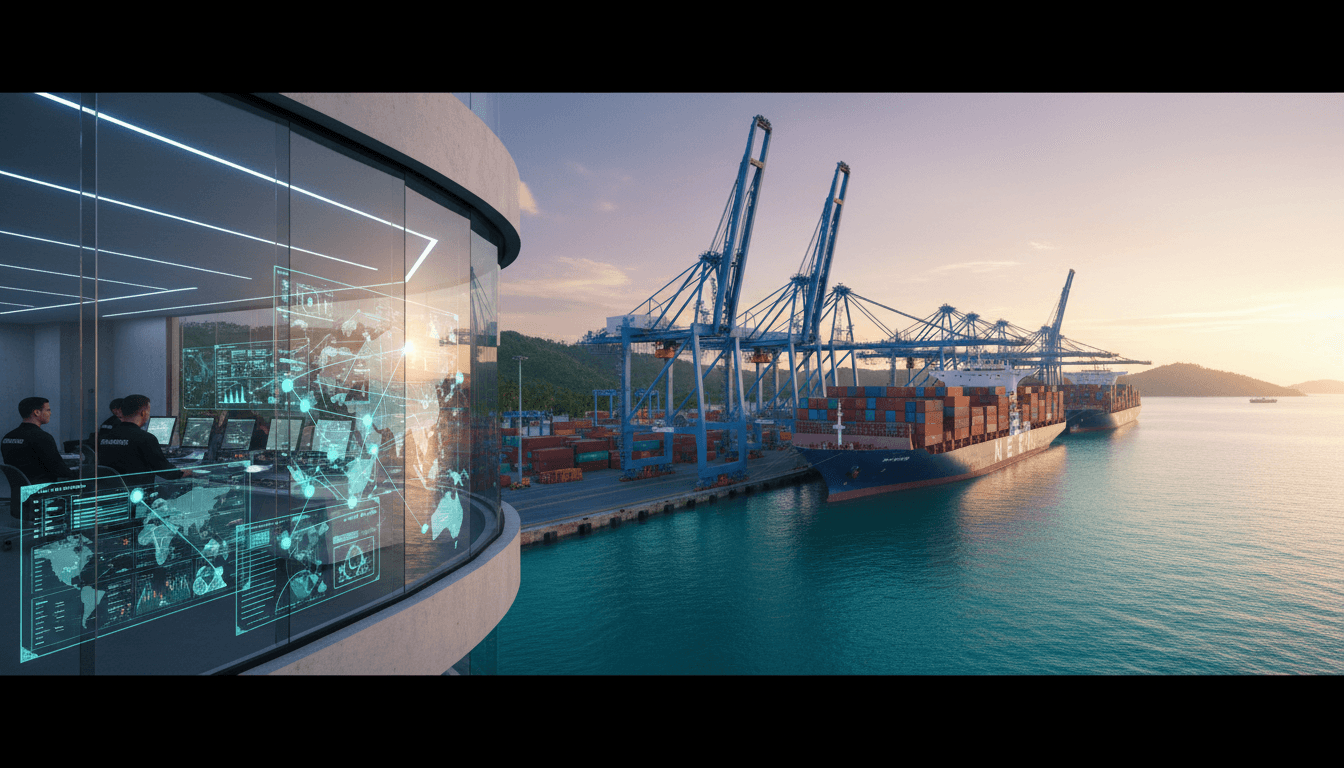
Hainan Customs Closure: The AI Playbook for Shippers
On December 18, 2025, Hainan flipped a switch that supply chain leaders can’t ignore: the Hainan Free Trade Port (FTP) began island-wide customs closure operations. That sounds like bureaucracy. It isn’t. It’s an operating model that changes where inventory sits, where light manufacturing happens, and how fast goods can move between China and Southeast Asia.
Most companies will treat this as “a China policy update” and move on. That’s a mistake. When customs rules change at this scale, the winners aren’t the firms with the best slide deck—they’re the ones with data discipline and AI-assisted execution across trade compliance, transportation planning, and warehouse operations.
This post is part of our AI in Supply Chain & Procurement series, where we focus on practical ways AI improves forecasting, supplier decisions, risk management, and global logistics. Hainan is a perfect case study because it combines policy incentives with operational complexity—the exact place AI earns its keep.
What Hainan’s “island-wide customs closure” really changes
Hainan’s model isn’t isolation. It’s selective friction removal.
The system is commonly summarized as:
- “Eased access at the first line”: Hainan ↔ overseas flows are simplified for most goods.
- “Controlled access at the second line”: Hainan ↔ mainland China flows follow standard import rules (tax, compliance, controls).
- “Free flow within the island”: goods and production factors circulate more freely inside Hainan.
Operationally, this creates a new pattern: import into Hainan with low procedural drag, process/assemble/value-add, then decide whether to route to the mainland (with compliance gates) or ship back out to ASEAN/global markets.
The incentives are big enough to alter network design
Three policy elements matter most for supply chain configuration:
- Zero-tariff expansion: Eligible “zero-tariff” goods expand from about 1,900 to ~6,600 tariff lines, covering roughly 21% → 74% of import/export items. The exemption can apply to import tariffs, import VAT, and consumption tax. The article notes ~20% tax savings on imported equipment for some enterprises.
- Value-added processing tariff exemption: More flexible rules and the ability to calculate cumulative value-add across upstream/downstream enterprises to meet the “over 30% value-added” threshold for tariff-free entry of finished goods into the mainland.
- “Dual 15%” tax incentives: 15% corporate income tax for encouraged industries operating substantively in Hainan, plus individual income tax relief above 15% for eligible high-end/in-demand talent.
If you’re running regional distribution, postponement, kitting, or light assembly, those levers change the math—especially for categories like high-end equipment, biopharma, and green tech.
Why Hainan can become a “China hub” for China–ASEAN flows
Hainan’s location matters, but the bigger shift is institutional: it’s moving from a geographic waypoint to a rules-based processing and routing hub.
The source article highlights that Hainan can be the nearest maritime gateway for parts of China’s southwest and central-west, potentially saving about 10 days versus routing through eastern coastal ports for certain flows. Even if the average varies by lane, the strategic point holds: time-to-market becomes negotiable if your network includes Hainan.
A practical way to think about it: the “decision triangle”
For many shippers, Hainan turns routing into a three-way decision:
- Ship direct to mainland China (traditional model)
- Ship to Hainan → process/warehouse → ship to mainland (policy-optimized model)
- Ship to Hainan → transship/export to ASEAN (regional hub model)
That triangle creates opportunity—and planning complexity.
Complexity is where AI helps, because humans don’t reliably optimize across:
- dynamic duty/tax implications
- shifting service levels and port congestion
- SKU-level value-add eligibility rules
- supplier variability and lead-time noise
3 ways AI optimizes customs and logistics operations in emerging trade zones
AI doesn’t “do customs.” People and authorities do customs. AI reduces the avoidable errors and waiting that make customs feel unpredictable.
1) AI-assisted classification, document prep, and exception handling
The fastest clearance is the clearance you don’t have to rework.
In zones like Hainan—where first-line flows are eased but second-line flows are controlled—documentation quality becomes a competitive advantage.
What AI can do well:
- HS code and product attribute suggestions based on historical entries and product master data
- Document completeness checks (invoice/packing list/certificates consistency)
- Anomaly detection: flag shipments likely to trigger inspection (unusual weights, value outliers, mismatched country-of-origin fields)
- Auto-generated broker task lists when shipment patterns match known risk profiles
My opinion: if you’re still treating trade data as an afterthought and relying on manual “tribal knowledge,” Hainan will punish you. The moment you start routing volume through policy-driven lanes, mistakes scale.
2) Predictive ETA + port/yard flow orchestration
The article mentions competitive clearance speeds (e.g., e-declarations processed within an hour in some cases) and highlights Yangpu’s growing competitiveness. Whether a port is fast on paper or fast in practice often depends on your orchestration.
AI-powered visibility and prediction improve:
- Labor planning at DCs and bonded facilities (don’t staff for the schedule; staff for the predicted arrival)
- Appointment scheduling and drayage sequencing
- Container dwell time reduction via early exception alerts (missing docs, holds, payment issues)
This is where “AI in transportation and logistics” becomes concrete: better predictions reduce detention/demurrage exposure and keep inventory from turning into expensive parked metal.
3) Value-added processing eligibility analytics (the 30% problem)
Hainan’s “value-added processing” policy is powerful, but it comes with a measurement challenge: can you prove you crossed the value-add threshold, consistently, at SKU and batch level?
AI and advanced analytics can support this by:
- Building a SKU-level value-add model (materials, labor, overhead allocation rules)
- Simulating different BOM substitutions and process steps to reach eligibility
- Detecting when upstream cost swings (commodity inputs, FX, supplier price changes) could push you below the threshold
This is procurement meets operations. In our AI in Supply Chain & Procurement series, this is the pattern we keep seeing: trade strategy fails when procurement and manufacturing don’t share a common data model.
Network and warehouse design: where automation actually pays off
Hainan’s model encourages more processing, postponement, and zone-based inventory strategies. That’s good—until your warehouse becomes a bottleneck.
The highest ROI automation tends to show up in three places:
Bonded inventory segmentation and “second-line ready” staging
If some SKUs are destined for the mainland (second line) and others for export, you want physical and logical separation:
- location control (bonded vs non-bonded)
- lot tracking and audit trails
- packaging and labeling steps triggered by destination rules
WMS rules engines are fine. Where AI adds value is predicting the mix and repositioning labor and slots ahead of time.
Postponement cells for kitting, light assembly, and compliance labeling
Hainan becomes more attractive when you can delay final configuration until demand is clearer.
AI improves postponement by:
- forecasting variant-level demand (not just product family)
- recommending kitting batches to minimize changeovers
- optimizing packaging and labeling decisions by destination
Transportation planning for a multi-nodal Asia network
The article frames a likely shift from a Singapore-centric “hub-and-spoke” to a more multi-nodal network that includes Hainan and other Chinese coastal ports.
That’s exactly the kind of problem modern AI planning can handle:
- multi-leg routing optimization (cost, time, reliability)
- carrier performance scoring by lane and season
- disruption re-routing with constraint awareness (capacity, holds, holiday closures)
December matters here. Peak season spillover, year-end inventory positioning, and Lunar New Year prebuild planning all amplify the value of scenario planning—and the penalty for getting it wrong.
What this means for Singapore and Hong Kong—and why shippers should care
The source article makes an important point: Hainan’s rise doesn’t just create competition; it forces role clarity.
- Hong Kong retains “soft power” strengths (finance, legal, offshore RMB), while Hainan provides cost and mainland market access. A realistic operating model is: Hong Kong services + Hainan processing/market access.
- Singapore feels pressure on pure transshipment economics (the article notes examples of up to 32% cost savings routing Indonesian cargo directly to Yangpu rather than via Singapore). Singapore’s response is likely higher-value services (green shipping, digital trade, maritime law).
Here’s why this matters to a shipper: if the region becomes multi-nodal, your risk isn’t choosing the wrong hub—it’s being locked into only one hub. AI-based network design helps you keep options open without doubling cost.
Implementation checklist: how to prepare without betting the company
If you’re considering Hainan as a node in your China–ASEAN network, start with controlled moves.
Step 1: Build a lane-by-lane “Hainan candidate” shortlist
Prioritize SKUs/lane combos with:
- high duty/tax sensitivity (equipment, high value components)
- strong postponement benefits
- volatile demand (where holding generic inventory helps)
- high rework costs from compliance errors (where data quality improvements pay)
Step 2: Fix master data before you add complexity
You don’t need a massive transformation first, but you do need basics:
- consistent product attributes (materials, origin-relevant details)
- BOM visibility for value-add calculations
- standardized document templates and version control
Step 3: Put AI where it reduces friction fastest
In most organizations, the quickest wins are:
- document and classification QA
- predictive ETAs + exception alerts
- inventory segmentation and slotting recommendations
Then graduate to value-add optimization and full multi-node routing.
A useful rule: automate decisions that happen every day; use AI-assisted scenarios for decisions you make monthly or quarterly.
Where this goes next
Hainan’s island-wide customs closure is a signal that trade zones are becoming programmable—not in the software sense, but in the operational sense. Rules, incentives, and controls are being designed to pull specific supply chain behaviors into specific geographies.
If your supply chain planning stack can’t translate policy into routing, inventory, and process decisions, you’ll miss the upside. If it can, Hainan becomes a flexible “China hub” option—especially for China–ASEAN flows.
If you’re mapping your 2026 network, the question to ask your team isn’t “Should we use Hainan?” It’s this: What would have to be true—in our data, our processes, and our automation—for Hainan to be a low-risk node we can turn on when the economics make sense?