Yellow terminal sales are reshaping LTL networks. Learn how AI network planning improves routing, facility utilization, and procurement decisions during consolidation.
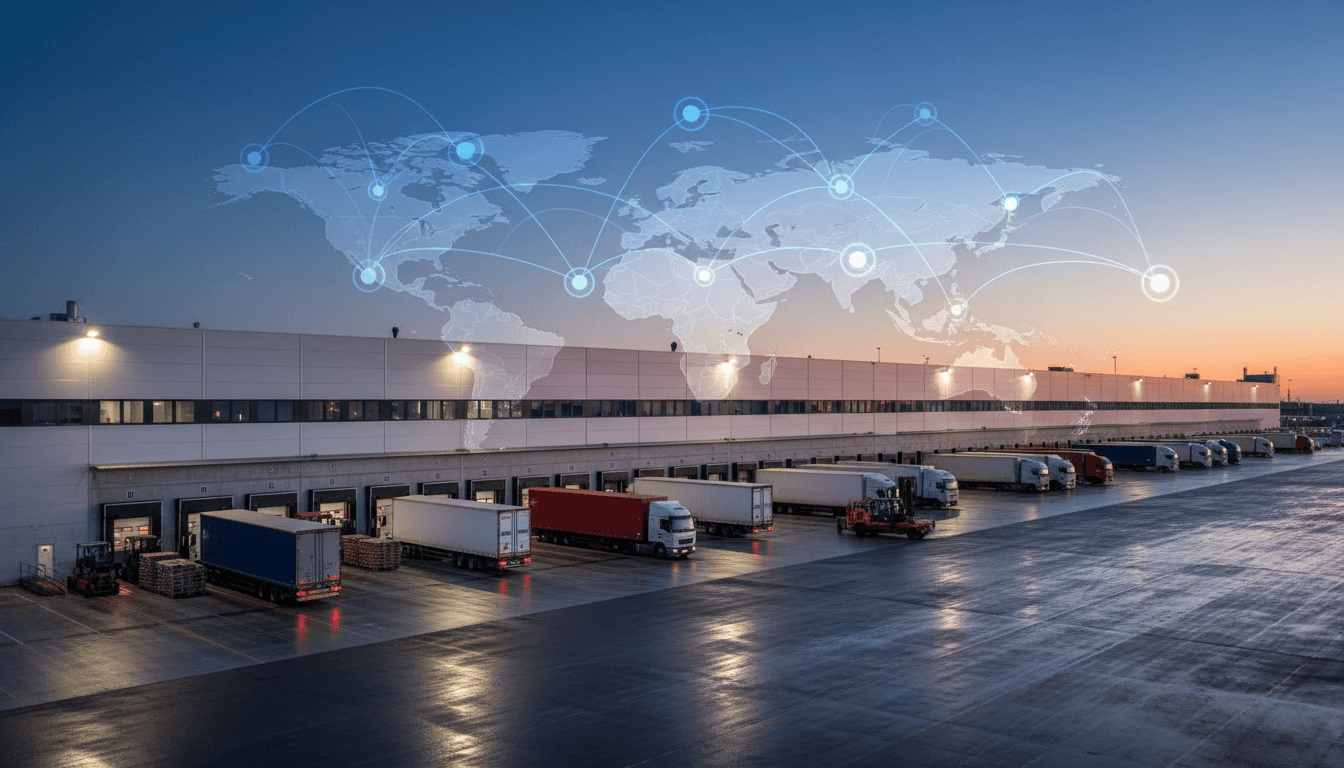
AI Network Planning After Yellow Terminal Sales
Yellow’s bankruptcy liquidation has already produced $2.4 billion in real estate sales and $176 million in equipment sales, and it’s still reshaping the less-than-truckload (LTL) map. The latest example: a 35-door West Sacramento terminal sold for $3.4 million, headlining a court-approved set of three terminal deals totaling $4 million.
If you’re responsible for supply chain planning, procurement, or transportation strategy, this isn’t just bankruptcy news. It’s a live case study in what happens when capacity, facilities, and freight flows get re-arranged—fast. And it’s also where AI in supply chain and procurement earns its keep, because most companies try to “patch” a network change with spreadsheets and tribal knowledge. That’s how you end up paying for empty miles, overbuying capacity, and missing service commitments.
Here’s the practical angle: terminal sales are a physical signal that networks are being restructured. AI can help you respond with the same speed—optimizing facility utilization, linehaul routing, and procurement decisions while the industry is still in motion.
What Yellow’s terminal sales tell you about the LTL market
Answer first: Yellow’s terminal liquidation shows that LTL networks can be re-built asset-by-asset—and competitors, shippers, and brokers need to adapt their routing and procurement models accordingly.
A federal bankruptcy court approved purchase agreements for three former Yellow facilities:
- West Sacramento, California: 35 doors, sold for $3.4 million
- Monroe, Louisiana: 10 doors, sold for $295,000 (purchased by Crown Enterprises, tied to an LTL carrier)
- LaGrange, Georgia: 17 doors, sold for $275,000
Zoom out and the scale is the real story. Yellow’s estate has largely been liquidated, with proceeds used to repay secured debt, bankruptcy financing, and other claims. Estimates suggest $600 million–$700 million remains to satisfy outstanding claims. There are also agreements in place to reduce multiemployer pension withdrawal liability claims—still being challenged by Yellow’s largest shareholder.
That legal and financial context matters, but the operational signal matters more: doors and yards are changing hands, and those physical nodes determine what LTL is good at—pickup and delivery density, cross-dock velocity, and service reliability.
Why West Sacramento is a big deal (even if you don’t ship to Sacramento)
Answer first: A terminal in a high-demand freight region affects lane economics far beyond its ZIP code.
West Sacramento sits in a region where shippers care about tight delivery windows, retail replenishment, and strong linehaul connectivity to the Bay Area, Central Valley, and broader West Coast. A 35-door facility is not a “small tweak” to local capacity—it can change:
- How quickly freight can be cross-docked and re-sorted
- How much pickup-and-delivery territory can be covered with acceptable driver hours
- Which carriers can offer competitive transit and accessorial pricing
If you’re a shipper, procurement leader, or 3PL, this is the kind of event that should trigger a network re-check, not a “wait and see.”
The real operational problem: network changes break your assumptions
Answer first: When terminals move, your historical routing guide becomes less trustworthy—AI models can re-learn the network faster than humans can.
Most transportation and procurement teams make decisions on assumptions they don’t regularly audit:
- “Carrier X is always fastest on Lane Y.”
- “This metro always needs a next-day commit.”
- “We can cover this region from that DC without adding cost.”
Facility sales and consolidations break those assumptions because they change the inputs:
- linehaul schedules
- terminal cut times
- city driver staffing density
- cross-dock congestion patterns
- interline/partner coverage rules
The uncomfortable truth: your routing guide can be accurate and still be wrong—accurate for last year’s network, wrong for this quarter’s reality.
Where AI fits in the “messy middle” of network restructuring
Answer first: AI helps you continuously re-optimize routing and facility utilization as the network shifts, instead of re-bidding and re-routing once a year.
In the “AI in Supply Chain & Procurement” series, we usually talk about forecasting demand and managing supplier risk. This is the same theme, just applied to physical freight networks: AI is a planning layer that adjusts when the world changes.
In practice, AI can:
- detect shifting performance patterns (transit time drift, claims, missed pickups)
- recommend routing changes based on updated constraints
- optimize facility-to-terminal assignments (which DC feeds which terminal)
- support procurement decisions with scenario analysis (what happens if we shift 15% volume?)
This matters in December 2025 specifically because many teams are already dealing with end-of-year budget locks, peak/holiday service variability, and 2026 bid planning. A sudden network shift in LTL capacity is exactly when static plans fail.
How to use AI to optimize terminal utilization and routing
Answer first: Treat terminal locations as constraints in an optimization problem, then let AI produce routing and capacity decisions that reflect the new map.
If you’re restructuring your own network (adding/removing facilities, consolidating carriers, changing regions), you can borrow a playbook from events like Yellow’s liquidation.
1) Build a “network digital twin” (lightweight, not perfect)
Answer first: You don’t need a perfect model—you need a usable one that updates.
Start with a simplified representation of your network:
- ship-from nodes (plants, DCs, stores)
- ship-to nodes (customers, regional hubs, forward stocking locations)
- carrier service points (terminals, linehaul hubs)
- constraints (dock hours, cut times, appointment rules, product restrictions)
A practical tip I’ve found useful: model in weeks, not days at first. Weekly volumes smooth out noise and help the AI detect structural changes instead of chasing every late trailer.
2) Re-score carriers using “current capability,” not legacy reputation
Answer first: Performance has to be measured as a moving target during network change.
When terminals change hands, carrier performance can temporarily worsen or improve. AI-based scorecards should incorporate:
- on-time pickup and delivery by lane and by week
- variance (not just average transit)
- damage/claims rate
- appointment compliance
- accessorial frequency (detention, reconsignment, liftgate)
Then use those signals to automatically adjust routing guidance—especially for “must-win” customer shipments.
3) Optimize routing with constraints procurement actually cares about
Answer first: Lowest cost is rarely the objective; it’s lowest cost subject to service and risk.
Procurement and transportation leaders typically need a composite objective:
- cost per hundredweight (LTL) or cost per shipment
- service commitment (next-day / two-day / guaranteed)
- risk constraints (avoid carriers with volatility spikes)
- capacity constraints (don’t overload one carrier in a metro)
A good AI model makes those trade-offs explicit. A weak one pretends cost is all that matters and quietly burns you later with service failures.
4) Run scenario planning before you change your routing guide
Answer first: Scenario planning is the fastest way to avoid “we changed it and it got worse.”
Here are scenarios worth running when the market is absorbing facilities:
- Carrier consolidation scenario: One or two carriers absorb more volume because they gained terminals.
- Service degradation scenario: Transit times worsen by 0.5–1 day in a region for 4–8 weeks.
- Capacity tightening scenario: Pickup coverage is constrained in specific ZIP clusters.
- Cost shock scenario: Base rates hold, but accessorials rise due to congestion and re-handling.
Even basic scenario analysis can prevent expensive over-corrections.
Procurement lessons: treating terminals as “supplier capability”
Answer first: In transportation procurement, a terminal footprint is a supplier capability—and AI helps you quantify it instead of guessing.
When procurement teams evaluate carriers, they often focus on rate tables and discounts. But facility footprints and operating density determine whether those rates are achievable without service fallout.
Terminal ownership changes, like the West Sacramento sale, should prompt procurement to ask better questions:
- Which metros will see better pickup coverage next quarter?
- Where might cross-dock capacity become a constraint?
- Which carriers can now run more direct linehaul (fewer touches)?
- Are we about to overpay for “guaranteed” services we don’t need?
AI can support these decisions by combining operational data (shipments, exceptions, dwell) with external signals (facility changes, capacity shifts) to recommend:
- reallocation of volume by region
- bid strategy adjustments for 2026
- contract terms tied to service variance, not just averages
One-liner worth remembering: If a carrier’s network changed, your contract assumptions changed too—whether you re-bid or not.
People also ask: what should shippers do right now?
Should we re-bid our LTL spend because terminals are being sold?
Answer first: Not necessarily—but you should re-model lanes and service expectations immediately.
A full re-bid can be slow and disruptive, especially at year-end. A smarter first step is to run an AI-supported lane analysis to identify where performance/cost risk has changed the most, then selectively re-source those lanes.
How quickly do terminal acquisitions affect service?
Answer first: Effects show up within weeks, but stabilizing operations can take a quarter.
There’s usually a transition period where staffing, dispatch processes, and linehaul scheduling are adjusted. That’s exactly when dynamic routing guidance is valuable.
What data do we need to do AI network optimization well?
Answer first: Shipment history plus a small set of operational timestamps gets you most of the value.
Start with:
- origin/destination ZIPs
- pickup and delivery timestamps
- carrier SCAC and service level
- accessorial codes and amounts
- exception reasons (missed pickup, appointment failure)
You can improve from there, but you don’t need a “data perfection project” to get results.
A practical next step: treat 2026 network planning as continuous
Terminal sales like Yellow’s West Sacramento facility aren’t a one-off event. They’re a reminder that logistics networks are being reshaped in pieces—by bankruptcies, acquisitions, real estate economics, and changing freight demand.
If you’re running procurement and transportation planning with annual bids and static routing guides, you’re choosing a slower feedback loop than the market. AI in supply chain and procurement is the alternative: continuous measurement, continuous routing improvement, and scenario planning that anticipates the next disruption instead of reacting to it.
If you had to defend your 2026 routing guide today, would you be arguing from current network reality—or last year’s performance report?