Use AI to make Foreign Trade Zones pay off in 2025—through smarter compliance, forecasting, and duty deferral strategy.
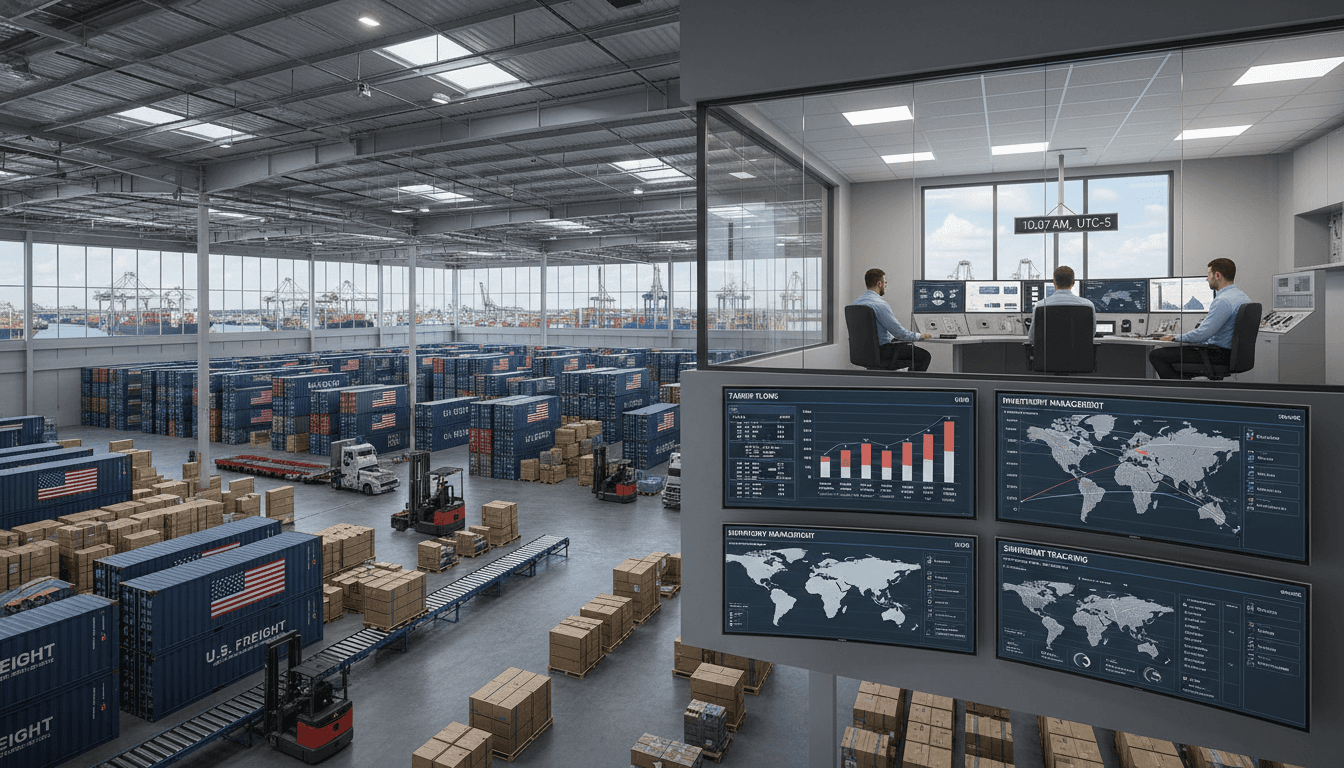
AI Strategies for Foreign Trade Zone Operations
A 50% tariff on steel and aluminum isn’t a “line item problem.” It’s a forecasting problem, a cash-flow problem, and—if you’re operating through a Foreign Trade Zone (FTZ)—a compliance problem that can either be tightly controlled or quietly spiral.
FTZs were created in a high-tariff era (1934). They’re suddenly back in the spotlight for the same reason: trade policy volatility is pushing importers and manufacturers to look for protected ways to manage duties and working capital without breaking compliance. The catch is that the FTZ playbook many companies memorized a decade ago doesn’t fully work anymore.
This post is part of our “AI in Supply Chain & Procurement” series, and I’m going to take a stance: if your FTZ strategy isn’t paired with serious analytics and automation, you’ll either overpay duties or overpay in overhead. AI won’t make tariffs disappear, but it can make FTZ operations measurably more predictable.
What FTZs still do well in 2025 (and what changed)
Answer first: FTZs still excel at duty deferral, export relief, and certain fee/tax advantages—but the classic “inverted tariff” manufacturing benefit has been curtailed for many use cases due to expanded requirements to admit goods in Privileged Foreign (PF) status.
The traditional FTZ value that still matters
FTZs are secure, federally authorized sites where inventory is treated by U.S. Customs and Border Protection as if it’s outside U.S. commerce until it’s formally entered. That gives operators a legitimate toolkit:
- Duty deferral: Pay duties when goods leave the zone for U.S. commerce—not when they arrive.
- Export relief: Exported goods can avoid U.S. duties entirely in many scenarios.
- Weekly entry and MPF savings: High-volume operators can consolidate a week of withdrawals into a single entry, potentially reducing Merchandise Processing Fee (MPF) exposure and brokerage/entry costs.
- State/local tax benefits (location-dependent): Some jurisdictions provide inventory or property tax relief for goods held in an FTZ.
Those benefits didn’t vanish. What changed is which benefits deliver the biggest check at the end of the quarter.
The big shift: PF status and the “inverted tariff” squeeze
Historically, manufacturers used FTZs to address “irrational tariff treatment”—when imported components had higher duty rates than the finished goods they became. The ability to bring parts in, manufacture, then pay the finished-good rate was the classic win.
The environment described in the source article highlights a key reality for 2025: expanded tariff actions and reciprocal tariff frameworks have pushed more product categories into PF-status treatment, which locks classification and duty rate at admission. When PF applies broadly, the manufacturer loses much of the inverted tariff advantage because the higher-duty component rate can’t be replaced by the finished-good rate later.
So if you’re evaluating an FTZ now, the question isn’t “Do we get inverted tariffs?” It’s: “Where do our savings come from now—cash flow, exports, fees, taxes—and do they beat compliance and operating costs?”
The modern FTZ business case is an analytics problem
Answer first: In 2025, an FTZ decision is mostly a modeling exercise: inventory dwell time, tariff exposure by SKU, export share, and compliance cost determine whether the program pays off.
In practice, I see three numbers drive the answer more than anything else:
- Inventory turnover / dwell time inside the zone
- Export percentage (even partial exports can matter a lot)
- Withdrawal volume (drives weekly entry/MPF mechanics and workload)
Why dwell time is the hidden “cash-flow lever”
Duty deferral is only meaningful if you’re holding goods long enough for cash timing to matter. If you’re cross-docking imports through a DC and shipping out in days, deferral can be a rounding error. If you hold inventory for weeks or months—industrial distribution, project-based equipment, seasonal peaks—deferral turns into real working capital.
Here’s the operational truth: FTZ value rises as your inventory becomes less predictable. That’s exactly what tariff volatility creates.
Export relief is suddenly the star of the show
As inverted tariff mechanics narrow for many manufacturers, export relief becomes one of the cleanest duty-avoidance paths left. If you make or configure product in the U.S. and ship some portion abroad, an FTZ can prevent you from paying U.S. duties on goods that never truly “enter” U.S. commerce.
If your sales team is growing international channels in 2026, your FTZ model should treat export volume as a core input—not a footnote.
Where AI fits: making FTZ operations predictable and provable
Answer first: AI helps FTZ operators reduce cost and risk by improving classification accuracy, forecasting withdrawals, optimizing inventory placement, and automating compliance workflows.
FTZs are regulated environments. That’s why “let’s just try it” approaches fail. The right use of AI in transportation and logistics is pragmatic: use automation where errors are expensive and use prediction where volatility is expensive.
1) AI-assisted tariff and customs classification (with human sign-off)
Classification work is detail-heavy and punishes inconsistency. AI can support teams by:
- Suggesting HTS classifications based on product attributes, past rulings, and internal history
- Flagging “classification drift” (same SKU classified differently across facilities/brokers)
- Detecting anomalies when PF election at admission could lock in an unfavorable rate
This isn’t about letting a model “decide duties.” It’s about giving compliance teams a shortlist and rationale so they spend time on the hard calls.
Snippet-worthy rule: If your classification process can’t explain itself in an audit, it’s not a process—it’s a gamble.
2) Predictive inventory withdrawal planning (the weekly entry advantage)
Weekly entry savings sound simple until you’re coordinating hundreds of withdrawals, multiple carriers, and shifting demand.
AI forecasting can help you:
- Predict withdrawal volumes by day and SKU family
- Smooth workload for zone-to-commerce movements
- Time withdrawals to align with demand and reduce split shipments
Better forecasting doesn’t only reduce transportation cost. It reduces compliance chaos: fewer last-minute edits, fewer manual reconciliations, fewer “we’ll fix it later” entries.
3) Computer vision and anomaly detection inside the FTZ
Physical accuracy matters more in an FTZ because inventory status ties directly to customs treatment.
Pairing scanning, IoT, and vision models can:
- Validate inbound condition and counts
- Flag mismatches between expected vs received labels/pack configurations
- Detect unusual shrink patterns that lead to time-consuming adjustments
The practical benefit is boring—and that’s a compliment: fewer exceptions.
4) AI-driven scenario modeling for tariff shocks
Trade policy can change faster than your annual budgeting cycle. AI-supported scenario planning (often a mix of optimization + simulation + ML forecasting) can model:
- Landed cost impacts by SKU and sourcing lane
- “Hold vs withdraw” timing impacts on cash
- Export-mix changes and duty exposure
- Whether an FTZ footprint still makes sense under alternative tariff regimes
You’re not trying to predict the exact next policy move. You’re building a playbook for the top 5 scenarios that would blow up your margin.
A practical FTZ + AI checklist for importers and manufacturers
Answer first: Start with a narrowly-scoped pilot that measures duty timing, export relief, and compliance workload—then automate the steps that create the most exceptions.
Here’s a field-tested way to structure it.
Step 1: Build a SKU-level “tariff exposure map”
Create a dataset that ties together:
- SKU and component structure (BOM where relevant)
- Country of origin
- Current duty and remedy tariffs applied
- PF/NPF implications (where applicable)
- Expected dwell time
- Export probability
If you can’t build this cleanly, you’re not ready to estimate FTZ ROI.
Step 2: Quantify the compliance cost honestly
FTZ participation isn’t free:
- Software and integration work (WMS/ERP/broker/zone inventory)
- Inventory control and recordkeeping process changes
- Training and internal audit readiness
- Broker/consulting support
The mistake I see is comparing “duty savings” to “nothing.” Compare it to your real operating model.
Step 3: Choose automation targets that reduce exceptions
Don’t automate everything. Automate what causes rework:
- Product master data cleanup and enrichment
- Classification suggestion + variance detection
- Document matching (commercial invoice, packing list, admission data)
- Exception queues (missing COOs, mismatched quantities, late changes)
Step 4: Put governance around AI outputs
Because FTZs are regulated, governance isn’t optional:
- Human approval for duty/classification decisions
- Audit logs for changes and model recommendations
- Clear ownership between compliance, finance, and operations
If you can’t show how a number was produced, don’t use it to file anything.
Common questions leaders ask before committing to an FTZ
Answer first: The right questions are less about “What’s an FTZ?” and more about whether your trade, inventory, and data realities fit the program.
“Are FTZs still worth it without inverted tariffs?”
Often, yes—if duty deferral and export relief are meaningful in your business model. Many companies should stop treating inverted tariff savings as the only reason to participate.
“We move inventory fast. Does duty deferral still help?”
If your dwell time is measured in days, the cash-flow benefit can be small. But you may still see value from weekly entry mechanics, export relief, or local tax treatment—depending on your profile.
“Can AI reduce our FTZ compliance headcount?”
AI usually reduces rework, not accountability. Expect fewer manual touches and fewer exceptions. Keep humans in the loop for decisions that carry regulatory risk.
Where this goes next in 2026
Trade policy uncertainty isn’t going away just because the calendar flips. If anything, the next wave of volatility will come from sudden tariff adjustments, country-of-origin scrutiny, and litigation outcomes that can change the economics quickly.
FTZs remain a legitimate tool, but the winners will be the companies treating FTZ operations like a data discipline. That’s the bridge to the broader theme of this series: AI in supply chain and procurement turns uncertainty into planning variables—then helps operations execute against the plan.
If you’re considering an FTZ or re-evaluating an existing one, the next step is straightforward: build a scenario model, identify where exceptions are born, and automate those choke points first.
What would change in your network if you could predict, a month ahead, which SKUs should stay in-zone for cash flow, which should be withdrawn for demand, and which should be built for export to avoid duties entirely?