AI clustering turns millions of errors into actionable groups. See how lessons from chip DRC apply to utility grid ops and energy procurement exceptions.
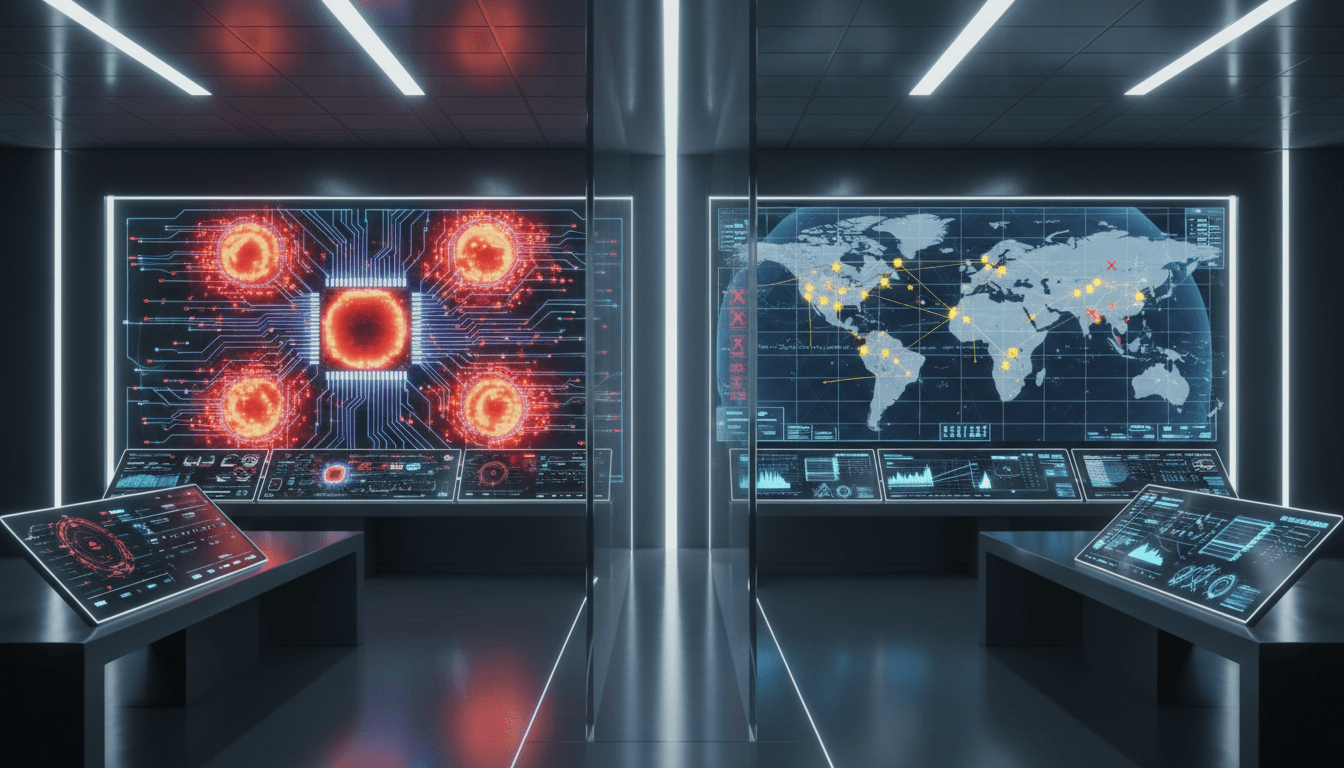
AI Error Clustering: From Chip DRC to Grid Ops
A modern system-on-chip can generate millions to billions of design rule check (DRC) markers long before it ever reaches manufacturing. That number isn’t just “big.” It’s operationally paralyzing—because each marker is a potential defect, and someone has to decide what to fix first.
Energy and utilities leaders should care about this. Not because you’re taping out chips, but because your world has the same failure mode: too many alerts, too many exceptions, too little time. Whether it’s SCADA alarms, AMI event streams, DER telemetry, outage tickets, or supplier exceptions, the bottleneck is rarely the lack of data. It’s the lack of triage.
This post takes a lesson from AI-powered chip verification—where computer vision and machine learning cluster vast “dirty” result sets into a small number of actionable root causes—and reframes it for AI in Energy & Utilities and this series on AI in Supply Chain & Procurement. The throughline is simple: AI turns sprawling exception backlogs into prioritized work.
The shared problem: complexity creates bottlenecks, not clarity
Answer first: When systems get complex, verification and operations don’t fail because teams miss everything—they fail because they can’t reliably find the few things that matter most.
In chip design, physical verification teams run DRC to ensure layouts are manufacturable. Historically, DRC was often treated as a late-stage gate. The trouble is that late-stage DRC can surface millions of violations, and fixes at that point are disruptive and expensive.
Utilities face the same pattern when they only “verify” late:
- A substation modernization goes live, and only then do you discover telemetry mapping issues.
- A DER program scales, and only then do you realize interconnection workflow exceptions are exploding.
- A procurement team consolidates vendors, and only then do lead times and quality escapes show up in the field.
Here’s the uncomfortable truth I’ve seen across industries: Most organizations don’t have a data problem. They have an exception management problem. The backlog grows until the backlog becomes the process.
Why “shift-left” matters outside chip design
Answer first: Shift-left works because fixing issues earlier is cheaper, faster, and less politically painful.
Chip teams are pushing DRC earlier (“shift-left”), catching violations at the block and cell level rather than after full-chip integration. But that creates a new challenge: early-stage designs are “dirty,” producing tens of millions to billions of flags.
That tradeoff will sound familiar to grid operators and supply chain leaders:
- Earlier forecasting runs produce more “false positives” (but also earlier warning).
- Earlier asset analytics produce more maintenance candidates (but prevent failures).
- Earlier supplier risk signals generate more exceptions (but reduce disruption).
Shift-left is the right direction. The question is how you keep early detection from drowning the team.
The real breakthrough: AI clustering replaces manual triage
Answer first: The most practical use of AI in high-stakes systems is compression: turning millions of raw events into a few hundred actionable groups tied to root causes.
In the RSS source, AI-powered DRC analysis is described as using computer vision and machine learning to cluster errors, highlight hotspots, and guide engineers toward systematic issues. The key idea isn’t a prettier dashboard. It’s that the system can organize chaos.
One cited example shows the magnitude: instead of manually grinding through 3,400 checks producing 600 million errors, AI clustering reduces the work to investigating 381 groups, with debug time improving by at least 2×. Another example describes clustering 3.2 billion errors from 380+ rule checks into 17 meaningful groups.
Those numbers matter because they point to a pattern that applies cleanly to utilities and procurement:
- You don’t need AI to find every issue.
- You need AI to find the few recurring issue types that create the bulk of the cost and delay.
What “computer vision” really means in this context
Answer first: Vision AI isn’t only about photos—it’s about treating complex layouts (or networks) as spatial problems where patterns repeat.
In chip verification, “vision” can mean reading the geometry of layouts and error markers, then finding spatial patterns—clusters, streaks, hotspot regions—that suggest a common failure cause.
Utilities can apply the same mental model:
- Feeder maps, outage heatmaps, vegetation risk corridors, and transformer loading are spatial.
- DER congestion issues tend to recur in specific grid pockets.
- Work orders and truck rolls cluster around the same asset families and neighborhoods.
Even in supply chain, “spatial” becomes “networked”:
- Supplier tiers, lanes, DC networks, and part substitution graphs create repeating structures.
- A single upstream constraint can ripple into thousands of downstream exceptions.
AI that can recognize repeating patterns across these structures is the difference between being busy and being effective.
What chip verification can teach grid and procurement teams
Answer first: Three ideas transfer directly: (1) prioritize by systemic risk, (2) collaborate on shared views of the data, and (3) standardize “exception groups” as the unit of work.
The source article emphasizes collaboration features (shared datasets, bookmarks, annotations, ownership) because the bottleneck isn’t just analysis—it’s handoffs. That is exactly what slows down utilities and supply chain organizations.
1) Prioritize systemic issues over one-off noise
Answer first: The most valuable exceptions are the ones that repeat.
In DRC, the win comes from fixing a root cause once and clearing hundreds of related errors. In grid operations, the analog is prioritizing failures that share a cause pattern:
- A firmware version correlating with meter read failures.
- A specific connector type driving transformer secondary hotspots.
- A vendor batch correlating with premature component failure.
In procurement, it’s similar:
- A part family with recurring quality escapes.
- A supplier lane where lead-time variance is widening.
- A category where contract terms consistently generate invoice exceptions.
If your AI outputs a list of 10,000 “things,” you haven’t automated triage—you’ve digitized overwhelm.
2) Make collaboration “stateful,” not screenshot-based
Answer first: Sending screenshots is a sign the workflow is broken.
Chip teams historically shared screenshots and informal filters across email and chat. The article calls this out as unsustainable. Utilities do the same with outage war rooms, spreadsheet trackers, and copied/pasted SCADA snapshots. Procurement does it with emailed “exception lists.”
A better approach is to treat analysis as a shared, living artifact:
- A “bookmark” equivalent that preserves filter state, time window, geography, and asset class.
- Assignable exception groups with owners and due dates.
- Auditability: who changed what decision, and why.
That’s not a UI nicety. It’s how you reduce rework and prevent institutional knowledge from walking out the door.
3) Shrink the expertise gap without dumbing down the work
Answer first: AI should raise the floor—so newer staff can act like veterans—while still letting experts go deep.
The source highlights a familiar workforce reality: deep expertise is scarce, and interpreting complex results takes years. Utilities have the same problem (protection engineers, relay techs, OT security specialists). Procurement has it (category expertise, supplier quality, trade compliance).
AI clustering helps by producing consistent groupings and debug paths. The goal isn’t to replace experts. It’s to stop relying on heroics.
A useful test: if your best engineer is on vacation, does the exception backlog double?
If yes, your “process” is a person. AI should help change that.
Practical playbook: applying “DRC-style” AI to energy supply chains
Answer first: Start with one high-volume exception stream, define what a “group” means, then operationalize triage with measurable outcomes.
If you’re implementing AI in supply chain & procurement inside an energy or utility organization, don’t start with a moonshot control tower. Start where the pain is measurable.
Step 1: Choose the right exception stream
Pick a stream that is high-volume, recurring, and costly. Common candidates in energy and utilities:
- Invoice exceptions (3-way match failures, price variance, missing receipts)
- Supplier lead-time variance for critical spares (transformers, switchgear, protection relays)
- Work order material shortages and substitutions
- Quality nonconformances tied to asset performance in the field
Step 2: Define “clustering” in business terms
DRC clustering groups errors by common failure cause. Your business equivalent might be:
- Same supplier + same part family + same failure mode
- Same site + same logistics lane + same delay reason code
- Same contract clause + same invoice mismatch pattern
The key is to cluster into groups that can be owned and fixed.
Step 3: Build a triage ladder (not just a model)
A triage ladder is a policy for what gets attention first. I like a simple scoring approach that mixes:
- Safety / reliability impact (grid criticality, customer minutes at risk)
- Financial exposure (cash leakage, expediting costs, penalties)
- Recurrence (how often this group appears)
- Time-to-fix (fast wins vs long-term fixes)
AI can suggest scores. Leaders must set the policy.
Step 4: Operationalize collaboration
Treat exception groups as tickets with context:
- A shared view (filters, history, evidence)
- Assigned owner (supplier manager, planner, reliability engineer)
- Required action (RCA, supplier corrective action request, contract fix, data fix)
- Closed-loop learning (did the group recur after fix?)
Step 5: Measure outcomes that leadership actually cares about
Good metrics are outcome-based. Examples:
- Reduction in open exception backlog (by age and severity)
- Reduction in expedite spend for critical spares
- Improvement in OTIF (on-time, in-full) delivery for priority categories
- Reduction in invoice processing cycle time
- Reduction in repeat failure rates tied to supplier batches
If AI can’t move one of these, it’s not helping enough.
People also ask: “Isn’t this just another analytics dashboard?”
Answer first: No—dashboards display information; AI triage changes the unit of work from individual alerts to root-cause groups.
A dashboard that shows 50,000 exceptions may be accurate and still useless. The chip verification lesson is that productivity comes from compression and grouping, plus collaboration that keeps teams aligned on the same “truth.”
Answer first: “Will we trust AI to prioritize?” You don’t have to at first.
Start with decision support: AI proposes groups and priority rankings; humans approve. Over time, you automate low-risk actions (routing, enrichment, deduplication) while keeping high-impact decisions human-owned.
Where this goes next for AI in Energy & Utilities
Chip verification is a niche topic—until you recognize the pattern. AI is most valuable when it turns unmanageable complexity into a short, prioritized list of actions. That’s true for DRC. It’s true for grid operations. It’s true for supply chain & procurement.
If you’re building an AI roadmap for 2026 planning (and many teams are, right now), I’d bet on use cases that:
- reduce exception volume through grouping,
- shorten time-to-decision, and
- preserve context across handoffs.
The question to carry into your next ops review is straightforward: Where are we still counting alerts instead of resolving root causes—and what would it take to cluster that noise into work we can actually finish?