AI cold chain needs more than forecasts—it needs real-time shipment data. See how connected reusable containers help prevent excursions and protect pharma deliveries.
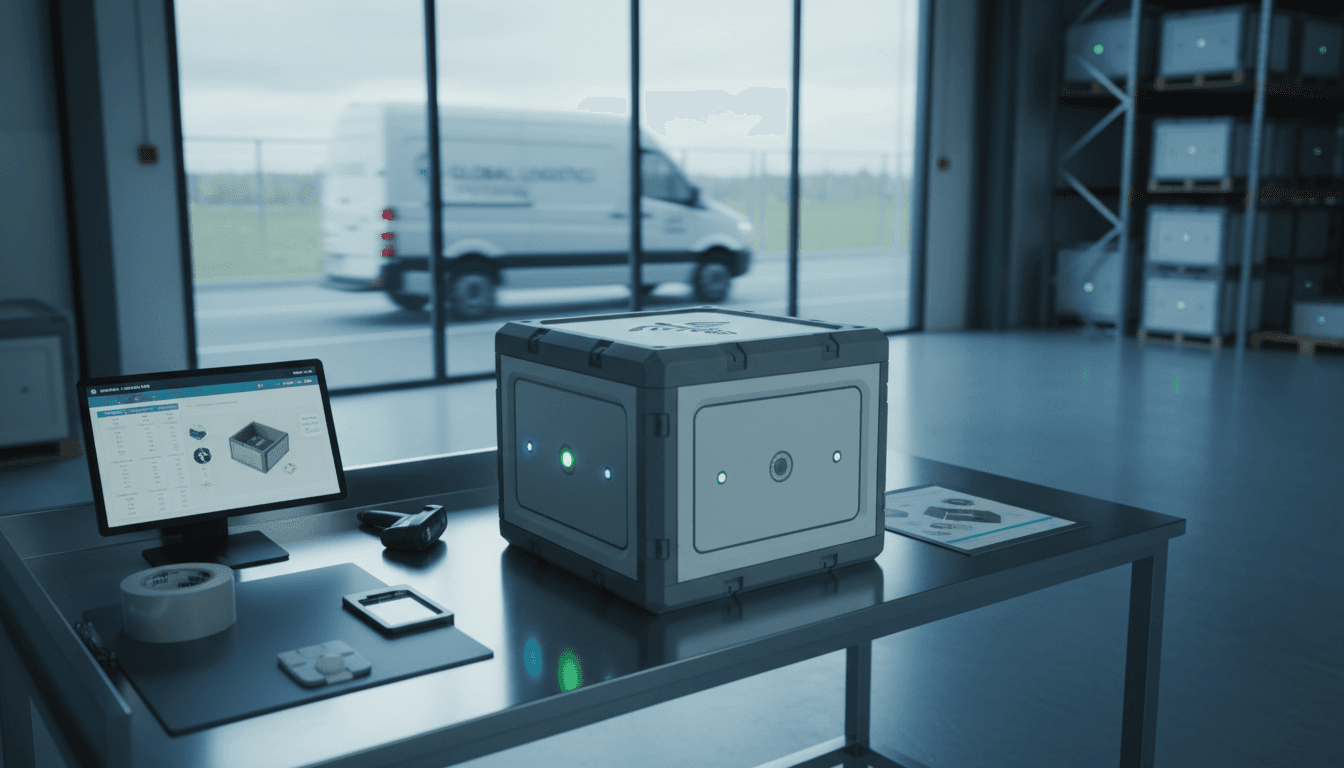
AI Cold Chain: The Connected Cube Fixing Excursions
Temperature excursions in pharma logistics aren’t a rounding error—they’re a $35 billion-a-year problem. And what makes that number so frustrating is that a lot of it is avoidable. Not with another spreadsheet, not with “more careful handling,” but with something far more practical: continuous visibility plus the ability to act while the shipment is still moving.
That’s why Ember LifeSciences’ recent $16.5 million Series A raise matters beyond startup news. The funding is a signal that pharma cold chain is shifting from “qualified packaging and hope” to instrumented, data-driven logistics—the kind that fits cleanly into an AI in Supply Chain & Procurement roadmap.
Here’s the stance I’ll take: AI won’t fix cold chain by itself. The real win comes when AI has reliable data and a controllable system in the physical world. Ember’s “connected cold chain cube” is exactly that kind of physical layer—especially as home delivery, specialty pharmacies, and decentralized clinical trials scale in 2026.
The real cold-chain problem isn’t failure—it’s invisible failure
The most expensive cold-chain failures are the ones you don’t catch. If a shipment gets warm and nobody knows, you may still deliver it, dispense it, inject it, and only later realize something was compromised. That’s not just waste; it’s clinical risk.
Traditional cold-chain packaging is largely built on static assumptions:
- “This shipper holds temperature for X hours.”
- “Lane conditions look like Y.”
- “We’ll know if something went wrong when it arrives.”
The weak spot is obvious: cold chain is dynamic. Weather changes. Hubs backlog. Drivers miss scans. A box ends up on a porch in direct sun. Static packaging can’t adapt, and static processes don’t tell you what happened until it’s too late.
Connected packaging changes the conversation from “Did it probably stay cold?” to “What was the actual thermal history, and what should we do next?” That shift is the prerequisite for any serious use of AI in cold chain logistics.
Why “proof” is becoming mandatory, not nice-to-have
In practice, the industry is drifting toward a new baseline: verifiable thermal integrity. Once patients receive more high-value, temperature-sensitive therapies at home, “we think it was fine” won’t satisfy payers, regulators, or quality teams.
Ember’s leadership has been explicit about where this is heading: always-on tracking becomes an expectation. I agree. The market is moving toward a world where:
- Temperature traceability is part of release-to-dispense decisions
- Exception handling happens mid-transit, not post-mortem
- Audit-ready data is attached to each patient shipment
That’s not hype. It’s simple risk math.
Why Ember’s “cube” is really a node in an AI-driven logistics network
Ember’s platform combines reusable cold-chain containers with Bluetooth and GPS connectivity and continuous temperature monitoring. The important part isn’t the sensor—it’s the operational change it enables: intervention.
A story from Ember’s team makes the point clearly. A pharmacy shipment was mistakenly delivered to the wrong address—hundreds of miles off. Because it was being tracked, the pharmacy could generate a new label while the shipment was still in the field, arrange an overnight pickup, and recover the medication before it spoiled. The value saved in that one event reportedly outweighed a year of packaging costs.
That’s what “connected” really buys you: time.
The procurement angle: sensors turn packaging into a managed asset
In the AI in Supply Chain & Procurement series, we talk a lot about forecasting and supplier performance. Cold-chain packaging usually sits outside those conversations, treated as a consumable cost.
Connected reusable packaging flips it into something procurement can manage like any other strategic asset:
- Utilization rate (How often is each unit used?)
- Lane performance (Where do excursions cluster?)
- Carrier/hand-off quality (Which nodes create risk?)
- True cost-to-serve by therapy, patient geography, and delivery SLA
Once you can measure these, you can optimize them. And once you can optimize them, AI becomes practical.
Ember Cube 2: scaling cold chain for home delivery (and why that matters)
Ember’s first-gen container included onboard refrigeration and fit use cases like store-to-store transfers and multi-stop routes. The more interesting development is Ember Cube 2, redesigned as a lighter, configurable passive container built for high-volume patient delivery.
This is a key strategic move. Home delivery isn’t a niche anymore—it’s a growth engine. Specialty pharmacy volumes rise every year, and decentralized clinical trials keep pushing complexity to the edge of the network.
Cube 2’s design choices—advanced insulation and bio-based phase change materials—signal a focus on:
- Lower complexity for pharmacies and patients
- Repeatable last-mile performance
- Reusable sustainability economics (less single-use waste)
Passive doesn’t mean “dumb.” In a connected system, passive can be the sweet spot: fewer failure modes, easier turnaround, and a cleaner path to scale.
Sustainability isn’t the headline—but it’s part of the ROI
Single-use cold-chain packaging creates a lot of waste, and it’s not cheap. Reusable systems can reduce disposal and repack labor while improving quality outcomes.
But here’s the opinionated part: sustainability only sticks when it rides on operational ROI. Ember’s pitch works because the economics can be justified by avoided product loss and fewer replacements/redeliveries—not because someone wants greener packaging in a vacuum.
Where AI fits: from monitoring to prediction to automated response
Real-time temperature tracking is step one. The next steps are where AI in transportation and logistics becomes decisive.
Here’s a practical maturity model I’ve seen work in cold-chain programs:
1) Visibility (what happened)
You capture continuous temperature, location, and time-in-state data across lanes, hubs, and last-mile conditions.
Outcome: audit-ready compliance data and faster exception detection.
2) Prediction (what will happen)
Once you have enough lane history, you can predict risk before it becomes loss:
- Probability of excursion given current route, weather, dwell time, and packaging config
- Risk scoring for each stop or handoff point
- Dynamic ETA + “thermal ETA” (how much safe time remains)
Outcome: proactive decision-making rather than reactive rescue.
3) Optimization (what should we do)
This is where AI impacts supply chain and procurement decisions:
- Choose packaging configuration by lane and season (not one-size-fits-all)
- Allocate inventory and set buffer stock based on cold-chain risk, not just demand
- Select carriers and service levels based on measured thermal performance
Outcome: lower cost-to-serve without increasing quality risk.
4) Automated intervention (do it now)
The hardest—and most valuable—step is linking predictions to workflows:
- Auto-create a recovery shipment if risk crosses a threshold
- Trigger a same-day pickup or reroute to a controlled site
- Notify pharmacy/patient with precise instructions (not generic alerts)
Outcome: fewer losses and fewer patient disruptions.
Connected containers like Ember’s are the physical infrastructure that makes steps 2–4 real.
What shippers should do next: a cold-chain playbook for 2026
If you manage pharma logistics, specialty pharmacy operations, or life sciences supply chain procurement, here’s what I’d prioritize going into 2026.
Start with the lanes where failure is most expensive
Pick 2–3 lanes or programs where the business case is obvious:
- High-value biologics
- Patient-direct shipments with high replacement costs
- Regions with extreme temperatures or known dwell issues
You’re looking for fast ROI, not perfection.
Define “intervention-ready” workflows before you scale sensors
Visibility without action becomes dashboard theater. Decide upfront:
- Who gets alerted (and when)
- What constitutes a rescue event vs. a watch event
- Which partners (carrier, 3PL, pharmacy) can execute changes mid-transit
If you can’t intervene, you’re mostly paying for better hindsight.
Bring procurement into the conversation early
Cold-chain performance isn’t only a quality problem—it’s a supplier and network performance problem.
Connected packaging data can support:
- Carrier scorecards based on thermal performance
- Packaging vendor negotiations based on measured outcomes
- Network redesign decisions tied to dwell-time and handoff risk
That’s squarely in the AI in Supply Chain & Procurement lane.
Measure the right KPIs (not just “excursions”)
Track metrics that drive decisions:
- Excursion rate per 1,000 shipments (by lane and season)
- Time-to-detect and time-to-intervene
- Rescue success rate (shipments recovered before spoilage)
- Replacement cost avoided (product + labor + reship)
- Reusable packaging cycle time and loss rate
Those numbers turn “cool tech” into a budget line that survives scrutiny.
The bigger shift: pharma cold chain is becoming last-mile logistics
The industry is moving from pallet-level cold chain to patient-level cold chain. That changes everything.
- More delivery points
- More variability in receiving conditions
- More opportunities for misdeliveries and delays
- Higher expectations for proof and accountability
Ember’s Series A—led by a financial investor and joined by strategic players like Cardinal Health and a major HVAC/cold-chain ecosystem investor—signals that the market believes connected, scalable cold-chain packaging is ready for broader rollout.
And it fits a pattern we see across transportation and logistics: AI succeeds when it’s paired with systems that instrument reality. The “cube” isn’t the story by itself. The story is what happens when that cube becomes a data node in a broader network—feeding forecasting, exception automation, supplier performance management, and better decisions across the supply chain.
If you’re planning your 2026 roadmap, the practical question isn’t whether you should adopt AI in cold chain logistics. It’s this: Do you have the data and operational hooks to let AI prevent losses instead of merely documenting them?