DHL’s $1.5M LAX cold storage expansion highlights a bigger shift: cold chain growth needs AI for forecasting, visibility, and audit-ready control.
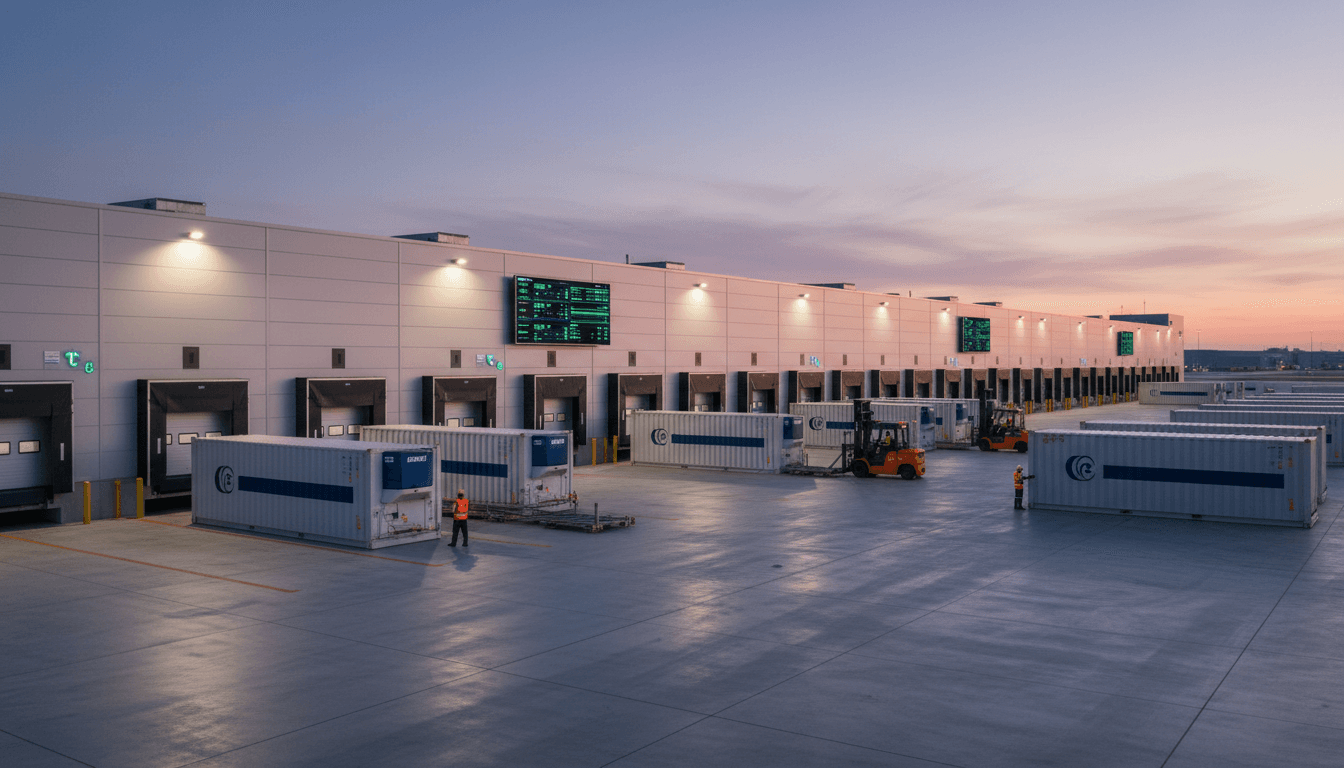
AI-Ready Cold Chain: What DHL’s LAX Expansion Signals
DHL just put $1.5 million into expanding cold storage near Los Angeles International Airport (LAX)—and if you ship pharmaceuticals, diagnostics, biologics, or any temperature-sensitive product, that number matters less than why they spent it.
Cold chain failures don’t usually look dramatic. They show up later as quarantined inventory, expedited reships, investigations, and awkward calls with quality teams. The real cost isn’t only product loss—it’s the operational drag that follows. DHL’s bet at LAX is a clear signal that the next phase of healthcare logistics is about risk reduction at scale, and that’s exactly where AI in supply chain & procurement stops being a buzzword and starts being a practical advantage.
Here’s the stance I’ll take: More cold rooms won’t fix cold chain complexity by itself. Capacity helps, but the winners will be the companies that pair infrastructure with predictive planning, real-time visibility, and audit-ready control—the places where AI does measurable work.
Why LAX cold storage capacity is suddenly strategic
LAX isn’t just another airport expansion story. It’s a high-velocity gateway connecting Asia Pacific, Latin America, and North America, and it’s increasingly a crossroads for time- and temperature-sensitive air freight.
Healthcare supply chains have three traits that make hubs like LAX critical:
- They’re time-compressed. Short shelf lives, patient schedules, and service-level penalties compress the margin for error.
- They’re compliance-heavy. Good Distribution Practices and shipper audits turn “close enough” into “nonconformance.”
- They’re increasingly global. More cross-border legs means more handoffs—the #1 place temperature excursions and documentation gaps happen.
DHL’s expanded facility is designed around those realities: advanced temperature-control systems, real-time environmental monitoring, and digital dashboards that support audit readiness. That combination matters because the cold chain problem is often an information problem—teams don’t just need stable temperatures, they need provable stability.
Cold chain performance isn’t only about staying within range—it’s about proving you stayed within range across every handoff.
The hidden business case: “risk reduction” beats “more square footage”
The original news frames the investment as both capacity and risk reduction. I agree with that emphasis, and I’d push it further: risk reduction is the revenue enabler.
When a facility can reliably handle temperature-sensitive freight, shippers can:
- Reduce safety stock tied up “just in case”
- Avoid expensive last-minute lane changes
- Keep products moving through quality release faster
- Pass audits without heroic manual effort
DHL also highlighted the human layer: 31 life sciences specialists with a combined 560 years of experience, plus certifications like CEIV Pharma, TAPA, and HAZMAT, aligned with ISO 9001/14001/45001 practices.
That detail matters because most cold chain failures aren’t caused by a lack of refrigeration—they’re caused by process drift:
- a pallet staged too long on a warm dock
- a mislabeled handling unit
- a missed handoff alert
- incomplete temperature records during exception handling
Experienced teams reduce those errors. AI reduces them further—by spotting patterns humans can’t see consistently and preventing exceptions before they become deviations.
Where AI fits: turning cold storage into a controllable system
Cold chain operations generate constant signals: temperature readings, door-open events, dwell times, flight statuses, truck ETAs, staffing rosters, ULD availability, scan compliance, and more. The challenge isn’t collecting data—it’s deciding what to do before things go wrong.
AI use case #1: Predictive dwell-time and congestion planning
At airports, dwell time is the silent killer. A lane can be “on time” while a shipment still sits too long between handoffs.
AI models can predict dwell risk based on:
- inbound flight arrival variability
- customs clearance patterns by commodity/country
- historical peak-hour bottlenecks
- staffing and equipment availability
- facility throughput constraints (by temp zone)
Operationally, that enables proactive moves like:
- pre-assigning inbound freight to specific temp zones
- scheduling labor around predicted spike windows
- reserving staged capacity before a flight lands
This is the practical connection between warehouse expansion and AI automation: the more throughput you add, the more you need intelligent orchestration to prevent the same bottlenecks from simply growing bigger.
AI use case #2: Temperature excursion prevention (not just detection)
Real-time monitoring is table stakes. The next step is excursion prevention.
AI can flag shipments as “high excursion probability” when it sees combinations like:
- long anticipated tarmac transfer + warm ambient conditions
- frequent door-open cycles in a specific zone
- repeated dwell exceptions on a specific lane
- packaging type mismatched to transit time volatility
Then the system can trigger actions automatically:
- reroute handling to a faster internal path
- prioritize a unit for immediate put-away
- recommend active packaging or additional coolant for similar future shipments
This is how AI supports supply chain safety: not by making dashboards prettier, but by shortening the time between signal and intervention.
AI use case #3: Automated compliance and audit readiness
Regulated shippers don’t just ask “Was it cold?” They ask:
- Who handled it?
- When and where did custody change?
- What were the environmental readings during each segment?
- How were exceptions managed and documented?
DHL mentions digital dashboards, video surveillance, and automated workflows supporting audit-ready operations. AI strengthens that further by:
- detecting missing scans and prompting immediate recovery
- classifying exception types and routing to the right SOP
- generating standardized deviation narratives from event timelines
- forecasting audit risk by lane, site, or customer profile
Procurement teams benefit too. When performance evidence is structured and consistent, vendor governance gets easier: fewer disputes, clearer root causes, faster corrective actions.
Why DHL’s $2B health logistics plan should change your 2026 priorities
DHL is not treating this as a one-off facility upgrade. The company has committed over $2 billion over the next five years to expand life sciences and healthcare logistics globally, with roughly half earmarked for the Americas.
That scale signals two realities:
- Healthcare logistics demand is rising and getting more complex. The market for cold storage is projected to more than double by the early 2030s.
- Service expectations are tightening. “Patient-centric logistics” isn’t a slogan—it’s an operations mandate where delays and excursions have direct patient impact.
If you’re a shipper, a 3PL, or a procurement leader, the implication is straightforward: you’re heading into a period where carriers and forwarders will differentiate on control, visibility, and exception performance, not only on rates.
And if you’re investing in AI for supply chain planning, LAX is a useful lens: the most valuable AI initiatives are the ones that reduce exceptions and make capacity predictable.
Practical checklist: how to apply AI to cold chain logistics now
If you want to turn this trend into a 2026 roadmap, start with a focused set of questions. You don’t need a moonshot program; you need a sequence that improves reliability quarter by quarter.
1) Start with lane-level risk scoring
Build a lane score that combines:
- historical dwell time variance
- excursion rates (by packaging type)
- customs volatility
- handoff count (touchpoints)
Use it to decide where to invest first: packaging upgrades, alternate routings, extra monitoring, or different partners.
2) Instrument “handoff integrity,” not just temperature
Temperature is an outcome. Handoffs are the driver.
Track:
- scan compliance by milestone
- staging time outside temp zones
- number of exception interventions per shipment
- time-to-close for deviations
AI is most effective when it can learn from repeatable operational signals.
3) Use AI to plan capacity like an airline, not a warehouse
Cold chain facilities at airports behave more like network nodes than static warehouses.
Apply forecasting to:
- inbound volume by temp band (2–8°C, frozen, CRT)
- equipment needs (dollies, cool rooms, forklifts)
- labor requirements by shift
Then tie the forecast to operational triggers—so the plan becomes action.
4) Build exception playbooks that can be automated
Most companies rely on tribal knowledge for exception handling. That doesn’t scale.
Define:
- top 10 exception types
- the correct SOP for each
- the data required to close it
- the customer notification rules
Once that’s documented, AI can help classify, route, and even draft first-pass documentation.
5) Make sustainability measurable in cold chain operations
DHL’s facility design includes electric forklifts, energy-efficient lighting, paperless workflows, and recycling programs, aligned with emissions reduction targets.
AI can help here too by reducing waste drivers:
- fewer expedited moves due to better forecasting
- less spoilage due to fewer excursions
- optimized energy usage via smarter zone control and workload balancing
Sustainability wins that come from fewer exceptions are the ones finance teams actually keep.
What shippers and procurement teams should ask partners after this news
If you’re evaluating forwarders, airports, or cold chain providers, these questions cut through the marketing fast:
- How do you predict and prevent dwell-time risk at the airport?
- What’s your process for “proof of condition” from receipt to tender?
- How do you handle exceptions—and how fast do you close the documentation loop?
- Can you provide lane-level performance data (not only network averages)?
- Where is AI actually used in operations—alerts, staffing, routing, compliance, or all of the above?
A provider with real operational maturity will answer with specifics: thresholds, workflows, ownership, and timelines.
The bigger picture for the AI in Supply Chain & Procurement series
This DHL LAX expansion is a strong example of a pattern we keep coming back to in this series: AI creates the most value where physical operations meet planning and compliance.
Cold storage expansion adds capacity. AI makes that capacity predictable, auditable, and safer to use at higher volume.
If you’re planning your 2026 initiatives, don’t treat cold chain as a niche capability. Treat it as a forcing function. The companies that can move sensitive freight with fewer exceptions will set the performance bar for the rest of the network.
So here’s the forward-looking question worth sitting with: When your next demand spike hits—new therapy launch, seasonal diagnostics surge, or a supply disruption—will your cold chain operation scale on process, or on heroics?