Cargo theft is now digitally driven. See how AI cargo theft prevention reduces losses with real-time risk scoring, identity checks, and automated response.
AI Cargo Theft Prevention: Turn New Rules Into Results
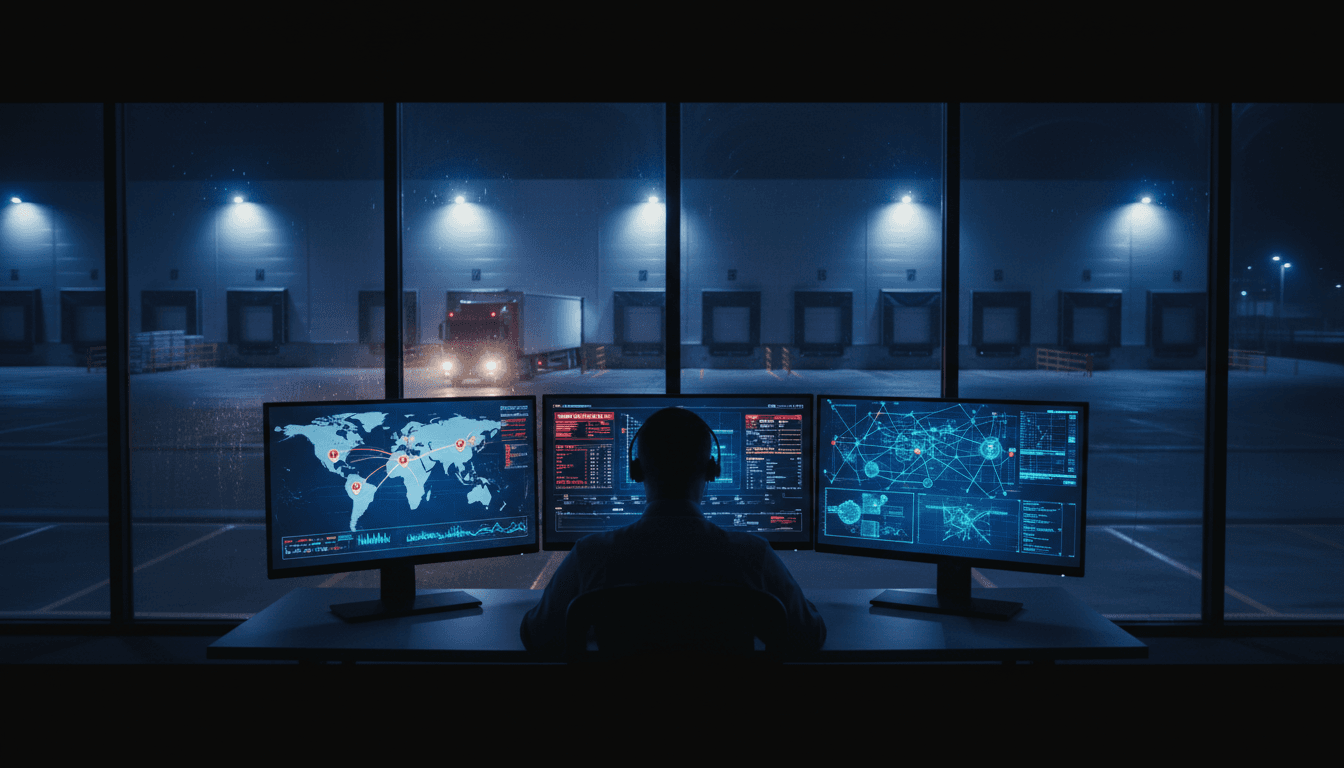
Cargo theft isn’t a “someone cut the seal” problem anymore. It’s a keyboard problem.
At a recent House Judiciary hearing, trucking and retail leaders described a surge in digitally-driven strategic theft—criminals who can alter shipment details, impersonate legitimate partners, and redirect loads while they’re already rolling. The American Transportation Research Institute estimates cargo theft costs motor carriers $1.83B to $6.56B per year, and the average loss per incident is $29,108 for motor carriers and $95,351 for logistics companies. That’s not a nuisance line item. That’s margin.
The policy response gaining momentum is the Combating Organized Retail Crime Act (CORCA), a bipartisan bill aimed at creating a unified federal response to organized retail crime and cargo theft. I’m in favor of it—because coordination matters. But legislation alone won’t stop fast-moving fraud networks. If your shipment data can be manipulated in minutes, your defenses can’t be quarterly training sessions and a spreadsheet of “known bad actors.”
This post is part of our AI in Supply Chain & Procurement series, where we focus on AI’s practical role in reducing risk and improving resilience. Here’s how to translate the CORCA moment into an actionable, AI-driven cargo theft prevention program.
Why cargo theft is spiking: the “strategic theft” playbook
Strategic cargo theft is spiking because criminals have shifted from physical access to process access. They don’t need to break into a trailer if they can break into the workflow.
At the hearing, industry leaders described transnational groups using laptops to manipulate shipment instructions and divert freight. The appeal is obvious: it scales, it’s hard to trace across jurisdictions, and by the time a shipper realizes something’s off, the freight is already fenced.
What strategic theft looks like operationally
Most theft events now have a digital “setup” phase. In practice, that can include:
- Identity spoofing: impersonating a carrier, dispatcher, or broker contact
- Load board and onboarding fraud: fake MCs, stolen credentials, burner emails
- Bill of lading or appointment manipulation: subtle changes to pickup numbers, addresses, times
- “Double brokering” camouflage: rerouting through layers of intermediaries to muddy accountability
- Fast liquidation: resale via secondary markets, online channels, and overseas movement
The hard truth: many networks you rely on—carriers, brokers, warehouses, marketplaces—were built for speed and cost efficiency, not adversarial behavior. That’s why the problem has grown faster than traditional controls.
What CORCA gets right (and where technology has to carry the load)
CORCA’s best idea is straightforward: coordination is a force multiplier. When criminals operate across states and borders, local investigations get fragmented and slow.
The bill’s major provisions (as described in the hearing coverage) include:
- A new Organized Retail and Supply Chain Crime Coordination Center within ICE to align federal, state, and local efforts
- Expanded money laundering statutes to include gift card misuse tied to criminal enterprises
- A lower threshold for federal involvement in interstate transportation of stolen property: $5,000 aggregate value over 12 months
- Greater scrutiny of digital and marketplace channels that enable resale and monetization
I like this direction because it targets the ecosystem, not just the incident. The resale and monetization pathways—especially digital marketplaces and gift-card-based schemes—are how theft becomes a repeatable business.
The gap CORCA can’t fill by itself: real-time decisioning
Even with a coordination center, the theft attempt still happens at 2:13 a.m. on a Tuesday when someone requests a “minor” change to a delivery address. By the time a case is referred, the freight is gone.
That’s why AI in supply chain security matters: it enables real-time detection and intervention inside the operational systems where theft is executed.
Where AI actually reduces cargo theft (not just “flags stuff”)
AI reduces cargo theft when it’s designed to do three things: verify identity, detect abnormal behavior, and orchestrate the response quickly enough to prevent loss.
1) AI identity verification for carriers, brokers, and contacts
The biggest preventable losses I see in logistics security come from treating identity as a static checkbox (“carrier is in our system”) instead of a living risk signal.
AI can strengthen identity verification by:
- Scoring onboarding risk using historical patterns (phone/email reuse, domain age, dispatch behavior)
- Detecting synthetic identities and suspicious document reuse
- Comparing new partner profiles to known fraud clusters (shared attributes across incidents)
This is especially relevant to procurement teams that onboard carriers, brokers, and suppliers. If procurement gates are weak, operations pays the price.
2) Behavioral anomaly detection on load changes (the real attack surface)
Strategic theft often looks like a normal workflow request:
- “Please update the delivery address.”
- “New appointment time—same facility.”
- “We need to swap trailers.”
- “Different driver at pickup.”
Individually, these can be legitimate. Collectively—and at the wrong time—they’re a theft pattern.
AI models can learn what’s normal for your network and detect risk signals such as:
- Sudden change requests outside typical hours
- Address changes that don’t match the consignee footprint
- Unusual frequency of “small edits” on high-value loads
- Mismatch between historical lane patterns and current instructions
- Communication anomalies: new contact channel, tone shifts, copy/paste templates
The point isn’t to block everything. It’s to route risky changes into a higher-trust workflow (step-up verification) while letting normal freight move.
3) Predictive risk scoring for high-theft lanes and vulnerable nodes
The hearing highlighted that theft is growing and increasingly organized. That means patterns exist. AI is good at pulling them out.
A solid cargo theft prevention model typically combines:
- Lane and facility risk (history of incidents, timing patterns)
- Commodity risk (resale value, fencing speed)
- Operational friction (handoffs, cross-docks, last-minute tenders)
- Partner risk (new entrants, weak digital hygiene signals)
When you score risk before tendering, you can do practical things:
- Require stricter verification for high-risk loads
- Assign more trusted carriers to theft-prone lanes
- Adjust dwell-time policies and appointment buffers
- Pre-stage geofencing and exception monitoring
This is where AI risk management in logistics becomes procurement-relevant: it changes how you select partners, not just how you react.
4) Automated response playbooks that stop theft mid-stream
Detection without response is just expensive observation.
AI-enabled workflows can trigger prevention actions such as:
- Step-up authentication for any change request (call-back to known numbers, secure portal approvals)
- Dynamic geofencing around pickup and delivery locations
- Real-time lockouts on shipment edits when risk crosses a threshold
- Escalation routing to an internal security desk or 3PL control tower
- Evidence packaging (timeline, messages, edits) for faster law enforcement handoff
This is especially useful if CORCA expands cross-jurisdiction collaboration—because you can provide structured, time-stamped evidence instead of “we think something happened.”
Holiday season reality check: why gift card fraud matters to freight leaders
One detail from the hearing deserves more attention: gift card scams.
A retail executive described gift card fraud mechanics—stealing inactive cards, capturing activation data, then draining funds after consumers load money. Losses were estimated at over $1B across the past two years, and the problem spikes during holiday purchasing.
Why should transportation and logistics leaders care?
Because these fraud channels are connected. When theft networks monetize through gift cards, marketplaces, and overseas resale, they’re harder to disrupt with traditional cargo-theft tactics. CORCA’s focus on money laundering and marketplace oversight is aiming at the profit engine.
AI can complement that by identifying where your supply chain is feeding that engine:
- High-theft SKUs and lanes
- Facilities with recurring “exception” patterns
- Partners that appear repeatedly across loss events
If you’re looking for a practical December action item: prioritize monitoring and step-up controls for high-resale commodities during peak season, not just “all freight equally.”
A practical blueprint: build an AI cargo theft prevention program in 90 days
You don’t need a moonshot platform to get results. You need a focused program with clear controls and measurable outcomes.
Days 1–30: Instrument the workflow (where theft happens)
- Map every system where shipment details can change (TMS, email, portals, EDI, messaging)
- Define “high impact edits” (address, consignee, pickup number, carrier swap)
- Start logging change events with user identity, timestamp, and channel
If you can’t reconstruct who changed what, when, and how, you can’t train models or prosecute cases.
Days 31–60: Add risk scoring and step-up verification
- Create a basic theft-risk score using lane, commodity, value, partner age, and edit frequency
- Implement step-up verification for high-risk edits
- Set escalation rules (who reviews, SLA, and “stop-ship” authority)
This is where most companies see fast wins because it closes the easiest loophole: unauthorized change requests.
Days 61–90: Train anomaly detection and automate response
- Train anomaly models on historical shipments and change logs
- Add automated playbooks (lock edits, notify security, trigger call-backs)
- Track metrics weekly:
- prevented loss events
- time-to-detect
- time-to-freeze edits
- false positive rate
A good target is reducing investigation time from days to hours and cutting high-risk edits that bypass verification to near-zero.
What to ask vendors (and your own team) before buying “AI security”
A lot of products say “AI” but behave like static rules.
Here are questions that reveal whether a solution will actually reduce cargo theft:
- What actions can the system take automatically? (Not just alerts.)
- Can it monitor shipment edits across channels (portal + email + EDI), or only inside one tool?
- How does it handle identity proofing for new carriers and contacts?
- Can we tune risk thresholds by commodity and lane so we don’t clog operations?
- How does it package evidence for claims, insurers, and law enforcement?
If the answer is “we’ll send an email alert,” you’re still going to lose loads.
The stance: coordination is necessary, but prevention is operational
CORCA is a strong signal that lawmakers are taking cargo theft and organized retail crime seriously, especially as transnational groups and digital marketplaces make theft easier to scale. But the companies that actually reduce losses will be the ones that treat theft as a data security and process integrity problem—then deploy AI to protect the workflow.
This is the broader theme of our AI in Supply Chain & Procurement series: resilience comes from better decisions before disruption hits. In this case, that means verifying identities, scoring risk, and controlling shipment changes in real time.
If cargo theft is now a keyboard problem, your response can’t be paperwork after the fact. It has to be a system that can say, instantly: “This change doesn’t look right—prove it.”
What would happen in your operation tomorrow if someone tried to reroute a high-value load mid-transit—would you catch it in minutes, or in the claims meeting next week?