Mastercard’s WhatsApp chatbot launch signals a bigger shift: chat is becoming the front door for digital payments, support, and fraud response.
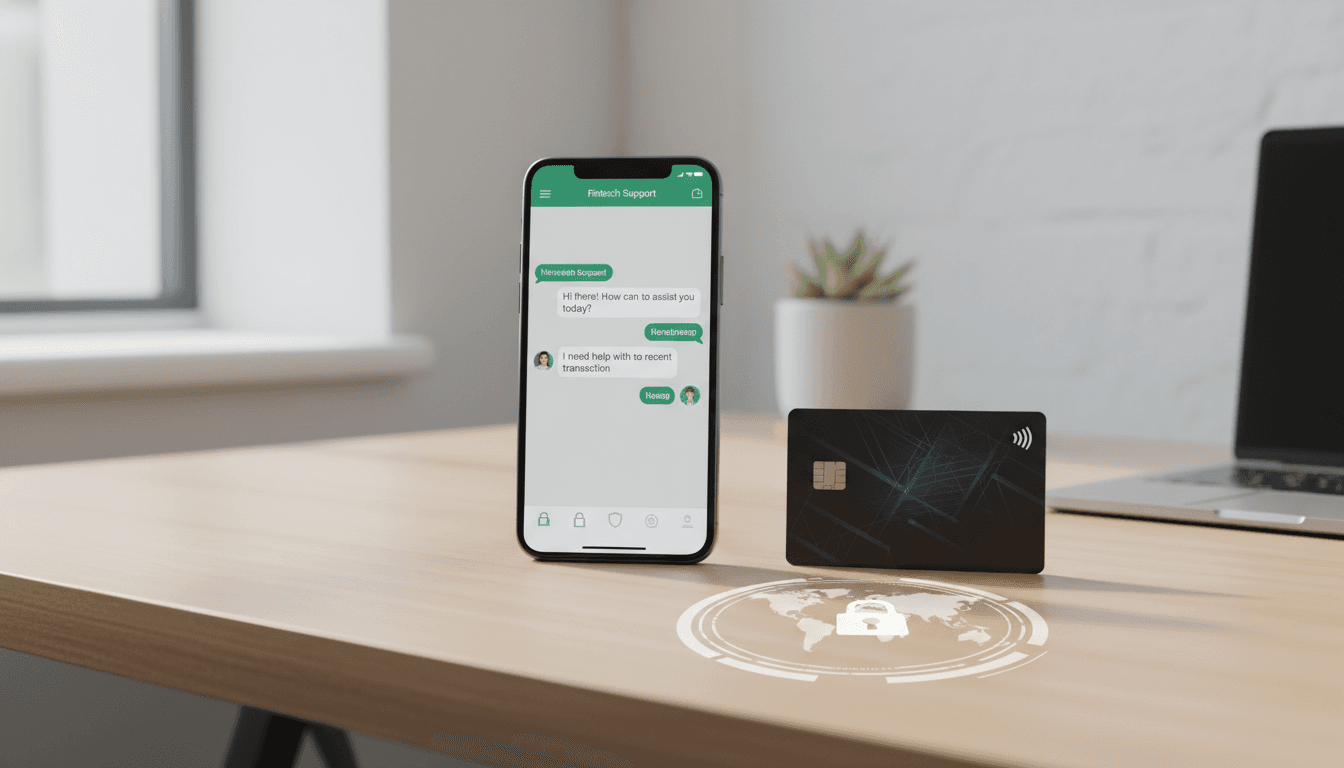
WhatsApp Chatbots Are Becoming the New Payments Front Door
A Mastercard WhatsApp chatbot launch in Azerbaijan sounds small—one market, one messaging app, one bot. I don’t see it that way. It’s another signal that messaging platforms are turning into the default “front door” for digital payments, especially in regions where WhatsApp is the daily operating system for life and business.
And in late 2025, that front door matters more than ever. The holiday peak has just stress-tested customer support, dispute flows, and fraud teams across fintechs and banks. When volumes spike, users don’t want to hunt through app menus or wait on hold. They message. If payments providers aren’t meeting customers inside the channels they already use, they’re accepting friction as a business strategy.
This post is part of our AI in Payments & Fintech Infrastructure series, and the point isn’t “a bot is nice.” The point is: a well-designed chatbot becomes infrastructure—a lightweight interface for onboarding, support, fraud triage, and even transaction routing decisions.
Why a WhatsApp chatbot is a serious payments move
A WhatsApp chatbot is a distribution and service decision, not a marketing stunt. It moves key payment and account interactions to a place users already trust and check dozens of times per day.
In practical terms, messaging-based service reduces three high-cost failure points in payments:
- Unresolved confusion (users abandon sign-up, 3DS, tokenization, wallet provisioning)
- Slow support (chargeback questions, card controls, lost card workflows)
- Fraud panic (customers see a suspicious transaction and need instant action)
In markets where WhatsApp adoption is high, the bot becomes a first-response layer—often faster than email, cheaper than call centers, and more accessible than standalone apps.
The channel shift: payments are following attention
Most fintech product teams still think in terms of “our app” as the primary touchpoint. But attention has moved. Messaging apps are where customers coordinate family budgets, run side hustles, and confirm deliveries. Payments naturally piggyback on that behavior.
This is why the Mastercard chatbot launch in Azerbaijan is strategically consistent with broader digital payments trends:
- Conversational UX is now a standard expectation, not a novelty
- Self-service support is increasingly required to scale profitably
- Instant controls (freeze card, dispute, verify transaction) must be available in seconds
If you’re building payment experiences in 2025, the question isn’t whether to use chat. It’s whether you can make chat safe, accurate, and operationally integrated.
What “AI in payments” actually does inside a chatbot
A chatbot that only answers FAQs is a cost saver. A chatbot connected to payments infrastructure is a growth and risk tool.
Here’s the clean way to think about it: AI turns conversation into intent, and intent can trigger secure workflows across your stack.
1) Smart routing: getting the user to the right resolution fast
In payments support, speed isn’t just convenience—it reduces loss. The longer a fraud incident or dispute sits unresolved, the more likely the customer is to:
- file a chargeback instead of using an internal resolution path
- churn to another card or wallet
- post publicly and escalate reputational damage
AI-driven routing means the bot can classify the request (fraud, dispute, limit increase, card delivery, wallet provisioning) and push it down the right path:
- self-serve action (best)
- assisted digital support (chat agent with context)
- urgent escalation (fraud ops)
A well-instrumented bot also reduces “handoff amnesia” by passing a structured summary to agents: user intent, last actions taken, transaction IDs, device signals, and risk flags.
2) Fraud triage: shrinking the time-to-freeze window
Payments fraud is often about minutes. If a customer notices a transaction and can freeze the card from WhatsApp immediately, you reduce the blast radius.
A payments chatbot can support fraud triage flows like:
- “Was this you?” transaction confirmation
- card freeze/unfreeze
- spend controls for e-commerce or international transactions
- step-up verification when risk is elevated
AI adds value by detecting patterns in the conversation itself—panic language, repeated prompts, inconsistent details—and combining that with telemetry (device reputation, velocity checks, geo anomalies) to decide whether to:
- allow self-service
- require stronger authentication
- escalate to a human
3) Personalization without creeping people out
Personalization in payments should be practical, not “we noticed you like coffee.” The best personalization reduces failure:
- reminding users of common next steps during wallet setup
- explaining why a transaction was declined in plain language
- suggesting the safest path to resolve a dispute
If a bot knows a user is in onboarding, it should prioritize provisioning and verification help. If they’re a long-time user, it should prioritize card controls, limits, and dispute tools.
The stance I’ll take: payments personalization should optimize clarity and safety first. If it can’t be explained simply, it probably shouldn’t be automated.
The infrastructure behind the bot: what has to be true
A WhatsApp chatbot only works if it’s backed by the right fintech infrastructure. Otherwise it becomes a dead-end that creates more tickets than it closes.
Below is the operational checklist I’ve found separates “nice bot” from “real channel.”
Identity, authentication, and consent (non-negotiable)
Messaging platforms weren’t designed as banking channels. That’s why authentication design matters.
Strong implementations typically include:
- step-up authentication for sensitive actions (freeze card, change profile data, dispute filing)
- session timeouts and re-auth requirements
- clear consent prompts for retrieving account data
- phone-number-to-customer mapping with safe fallback if the number changes
If you rely only on “the user is on WhatsApp” as authentication, you’re building an account takeover path.
Transaction and account data access (with guardrails)
For a bot to be useful, it needs controlled access to:
- recent transactions (displayed safely, with partial masking)
- card status and controls
- dispute status
- delivery and provisioning status
Guardrails matter:
- return the minimum necessary data
- mask PAN and sensitive identifiers
- rate-limit queries to prevent enumeration
- log every access for audit and investigation
Human-in-the-loop support that doesn’t lose context
Even the best AI escalates. The difference is whether escalation is graceful.
A good handoff includes:
- a structured summary of what the bot learned
- relevant IDs (transaction reference, dispute case, authorization code where appropriate)
- a risk score or “why escalated” reason
- the last 10 user messages for tone and intent
This is where AI improves operations: agents stop re-asking the same questions, and handle time drops.
What this means for fintech teams in 2026 planning
Azerbaijan isn’t the point. The pattern is.
Messaging-first service is spreading because it improves three metrics executives actually care about:
- cost-to-serve (deflects routine tickets)
- retention (faster resolution reduces churn)
- loss rates (faster fraud response reduces downstream damage)
If you’re building in payments, consider these 2026 planning moves.
Build “chat-ready” payment operations
If your internal processes require five systems and three teams to answer “why was my payment declined,” a chatbot won’t save you. Fix the workflow first.
Chat-ready ops usually include:
- a unified view of transaction lifecycle (auth → capture → clearing → settlement)
- clear decline reason taxonomy translated into plain language
- dispute lifecycle visibility (filed, represented, won, lost)
- fraud case management hooks
The bot then becomes the interface to that operational spine.
Treat WhatsApp as a regulated channel, not a social one
Compliance teams often join late and slow everything down. Bring them in early with a simple framing: this is a service channel that needs auditability, consent, and controls.
Key policies to define up front:
- what data can be displayed in chat
- what actions are permitted self-serve
- retention and logging rules
- incident response when a conversation indicates fraud
Measure the right things (or you’ll optimize the wrong behavior)
Chatbot success isn’t “number of conversations.” It’s resolution quality.
Metrics I’d track:
- containment rate (issues solved without human)
- time-to-freeze for suspected fraud
- time-to-resolution for disputes
- repeat contact rate (same issue within 7 days)
- escalation quality score (agent-rated context usefulness)
- customer satisfaction by intent category (fraud vs onboarding vs disputes)
If containment climbs but repeat contacts rise too, your bot is confidently wrong—worse than useless.
Common questions teams ask before launching a payments chatbot
“Can a chatbot actually reduce chargebacks?”
Yes—if it offers fast, credible resolution paths. Customers often file chargebacks when they can’t get timely answers. A bot that can identify merchant names, provide receipt context, and initiate disputes correctly can reduce unnecessary chargebacks.
“Is WhatsApp safe enough for financial support?”
It can be, if you design for security: minimal data exposure, step-up authentication, strict session rules, and full audit logs. The bigger risk is usually process gaps, not the channel.
“Where does AI add the most value first?”
Start with intent classification and smart routing, then add fraud triage and personalized guidance for high-friction flows like wallet provisioning and declines.
Where Mastercard’s move points next
A WhatsApp chatbot in Azerbaijan is a practical play: meet users where they already communicate, reduce service friction, and strengthen the digital payments experience through conversational support.
From the AI in payments perspective, the bigger idea is this: the most scalable payment experiences are the ones that turn support into infrastructure. When the bot is integrated with risk, disputes, and transaction visibility, it stops being “customer service” and becomes part of how payments run.
If you’re planning your 2026 roadmap, ask one hard question: when a customer messages “I don’t recognize this transaction,” can your systems take them from panic to resolution in under 60 seconds—safely? If the answer is no, a chatbot isn’t the feature you need. The underlying fintech infrastructure is.