UPI is becoming a reference architecture for digital payments. Here’s what to copy—and how AI improves fraud, routing, and resilience.
UPI as a Payments Blueprint—and Where AI Fits Next
By 2025, it’s hard to find a serious digital payments conversation that doesn’t circle back to a single idea: real-time account-to-account transfers at population scale. India’s Unified Payments Interface (UPI) didn’t invent instant payments, but it did something rarer—it proved a repeatable architecture that can support everyday commerce, small merchants, and high-frequency consumer payments without forcing every bank and fintech to reinvent the plumbing.
That’s why UPI is increasingly discussed as a reference architecture for digital payments. Not because every country should copy-paste India’s model, but because the design principles travel well: open rails, interoperable apps, simple addressing, and strong governance.
Here’s the part many teams miss: once you standardize the rails, your bottleneck moves from “can we send money?” to “can we run this safely, cheaply, and intelligently?” That’s where this post fits into our AI in Payments & Fintech Infrastructure series—UPI-like systems create the perfect surface area for AI to improve fraud detection, transaction routing, risk controls, and operational resilience.
Why UPI is becoming a reference architecture
UPI is a reference architecture because it combines interoperability, real-time settlement behavior, and a shared rulebook in a way that’s friendly to both banks and fintechs.
Most payment ecosystems get stuck in one of two traps:
- Closed loops that are easy to operate but fragment the market.
- Bilateral integrations that scale painfully—every new partner adds another custom connection.
UPI’s core idea is more pragmatic: define a common set of rails and rules so participants can compete on user experience, not on bespoke connectivity.
The architecture principle that matters: “many apps, one set of rails”
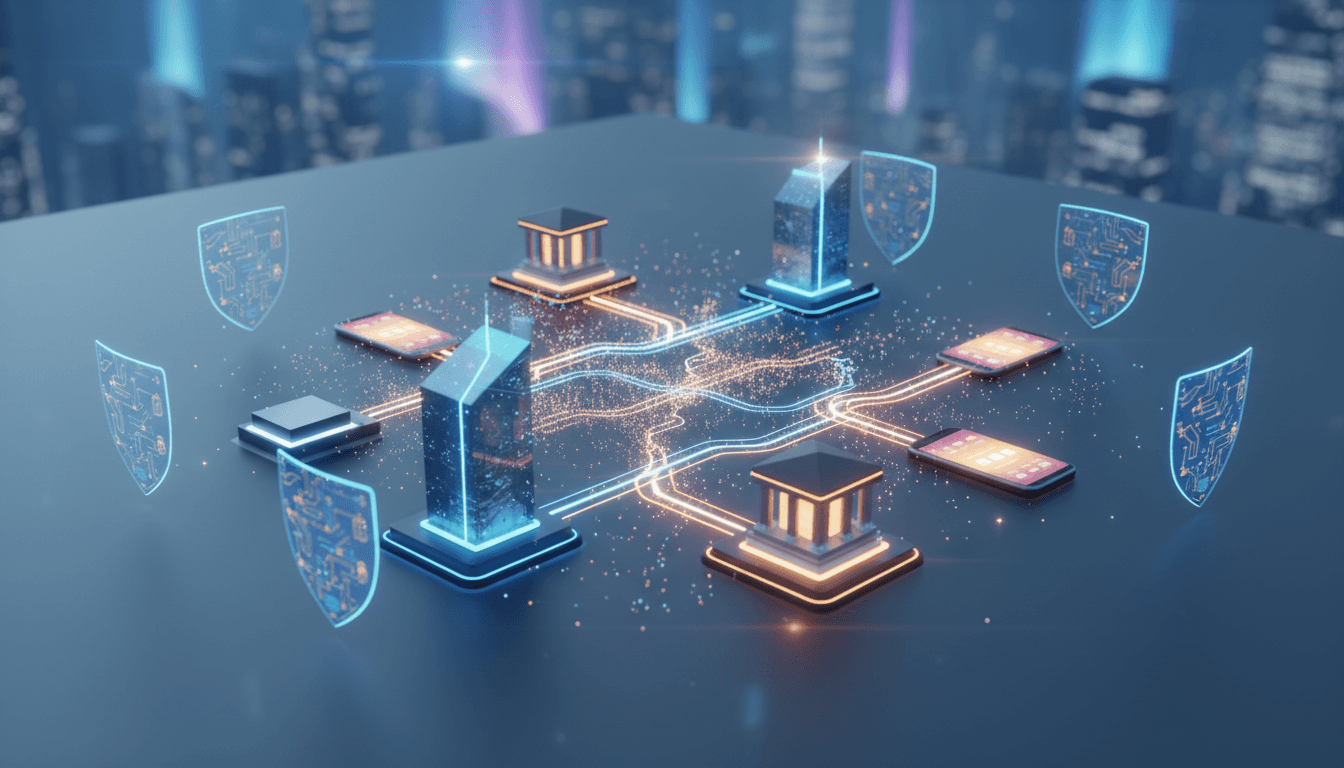
UPI’s approach encourages a diverse app ecosystem—banks, fintechs, and big tech can all build interfaces—while relying on a shared infrastructure that standardizes how payments are initiated, authenticated, and confirmed.
That separation creates three outcomes that infrastructure leaders care about:
- Faster product iteration: front ends can change without rewriting settlement logic.
- Lower integration cost: one standard connection beats dozens of bilateral ones.
- More competition: switching costs drop when consumers can pay anyone from any app.
If you’re designing a national instant payments scheme or modernizing a domestic ACH, those outcomes are the north star.
Simple addressing is a hidden superpower
A big reason UPI-style systems work for everyday payments is that the “address” can be human-friendly (think virtual payment addresses), reducing dependence on sharing long account numbers.
This matters for inclusion and adoption:
- Fewer input errors means fewer failed transactions.
- Users can pay small merchants quickly, even in noisy, high-volume settings.
- It supports new experiences like collect requests, mandates, and contextual payments.
And it sets up an AI opportunity: a stable identity/address layer (handled responsibly) improves the signal quality for fraud models and anomaly detection.
The real lesson: governance beats technology
The rails are only half the story. The other half is governance—a consistent scheme rulebook, clear participant responsibilities, dispute flows, and operational standards.
When governance is weak, instant payments become a safety risk:
- Fraud schemes spread quickly because money moves quickly.
- Participants implement inconsistent controls.
- Disputes become expensive, slow, and brand-damaging.
UPI’s reference value is that it treats payments as a system, not an app. And that’s exactly how infrastructure teams should think.
“Instant” changes risk economics
Instant payments compress decision time. In card payments, you can often intervene post-authorization with chargebacks and network tooling. In account-to-account real-time payments, the window is smaller.
That pushes the industry toward pre-transaction intelligence:
- risk scoring before release
- behavioral anomaly detection in-session
- device and network signals
- step-up authentication when confidence drops
This is where AI stops being a “nice to have” and becomes operationally necessary.
Snippet-worthy take: Standardized rails make payments cheaper. AI makes standardized rails survivable.
Where AI improves UPI-like payment systems (practically, not theoretically)
AI adds the most value when it’s tied to specific decisions. For UPI-like systems, those decisions cluster around fraud, routing, and resiliency.
AI fraud detection for real-time payments
The best fraud programs in instant payments do two things at once: they block bad transactions and avoid false positives that hurt conversion.
A strong AI fraud detection stack typically includes:
- Behavioral models: changes in payee patterns, transaction velocity, unusual times, abnormal amounts relative to user history.
- Graph analytics: mule networks, fan-in/fan-out patterns, shared identifiers across accounts.
- Device intelligence: emulator detection, device reputation, impossible travel signals.
- Natural language signals (when available): scam patterns in payment descriptions or collect request notes.
For many institutions, the upgrade path is straightforward:
- Start with rules to cover known fraud patterns.
- Add supervised ML to reduce false positives.
- Add graph + anomaly detection to catch coordinated fraud.
The important stance: don’t treat fraud as a model you “install.” Treat it as a feedback loop with measurable outcomes—fraud loss rate, false positive rate, time-to-detect, and customer friction.
Intelligent routing and failure prediction
Even when the scheme is standardized, real-time payments still fail: bank endpoints go down, timeouts spike, or risk controls over-trigger.
AI can improve reliability by predicting and responding to issues faster:
- Failure prediction: identify PSP/bank endpoints likely to timeout based on recent latency patterns.
- Smart retries: choose retry timing and strategy based on historical success curves.
- Dynamic throttling: protect the core during surges while preserving critical flows.
If you’re operating at high volume, small reliability improvements translate into real money—fewer support tickets, fewer reversals, better merchant trust.
AI-driven operational risk controls
UPI-like systems create huge operational surfaces: disputes, reversals, chargeback-like complaints, and customer service workloads.
AI helps by:
- Classifying disputes and routing them to the correct workflow
- Detecting friendly fraud patterns (especially in merchant contexts)
- Spotting agent-assisted scams where social engineering is involved
- Summarizing case histories for faster resolution (LLM-assisted, with guardrails)
The trick is to keep humans in control where it matters. I’ve found that teams get the best ROI when AI is used to triage and prioritize, not to auto-decide edge cases with regulatory consequences.
What to copy from UPI (and what not to)
UPI’s reference status doesn’t mean every market should replicate it line-for-line. It means there are a few design choices worth copying—and a few you should adapt to local realities.
Copy these design patterns
1) Interoperability as a default. If two licensed participants can’t transact on day one without custom integrations, you’re rebuilding the old world.
2) Strong scheme rules and participant certification. Reliability and consumer trust come from enforcement, not hope.
3) Extensible transaction types. Beyond push payments: collect requests, mandates, refunds, and merchant flows.
4) Shared observability. Real-time systems need real-time monitoring. Shared incident taxonomies and scheme-wide metrics reduce blame-shifting.
Adapt these to your market
1) Identity and privacy model. What’s acceptable in one jurisdiction may be illegal in another. Design for minimization and clear consent.
2) Liability and dispute handling. Faster payments require clearer responsibility when scams happen.
3) Access models for fintechs. Some markets will prefer direct participation; others will require sponsorship.
A good guiding line: standardize the interfaces and the rules, not the innovation.
Implementation checklist: building UPI-like rails with AI baked in
If you’re a bank, PSP, or regulator working on instant payments modernization, these are the questions I’d force into the first architecture workshop.
Scheme and infrastructure
- What’s the minimum viable set of message types needed for adoption (push, collect, refund, mandate)?
- What are the SLA and timeout standards per participant?
- What scheme-wide observability metrics will be mandatory (latency, success rate, reversal rate)?
AI and risk
- What signals will be available for fraud models (device, geolocation, behavioral history, payee graph)?
- What’s the plan for model governance (drift detection, retraining cadence, audit logs)?
- Where will step-up controls sit (in-app, bank-side, scheme-level)?
Inclusion and UX
- How do users address/pay each other without sharing sensitive account identifiers?
- How will you handle offline or low-connectivity environments?
- What’s the plan for consumer education—especially for scam resistance?
Snippet-worthy take: Instant payments don’t fail because the rails are slow. They fail because risk, ops, and UX weren’t designed as one system.
People also ask (practical Q&A)
Is UPI only relevant to India?
No. UPI is relevant because it demonstrates a scalable pattern: interoperable instant payments with a common rulebook and multiple competing front ends. The exact implementation should be localized.
Do instant payments increase fraud?
They can—because speed compresses intervention time. The winning approach is to pair real-time rails with real-time intelligence: behavioral analytics, anomaly detection, graph risk scoring, and step-up authentication.
Where should AI sit in a UPI-like architecture?
In three places: pre-transaction risk scoring, network/endpoint observability, and post-transaction operations (disputes, scam handling, case triage). Putting AI only in one layer leaves gaps.
The next step after “reference architecture”: intelligent infrastructure
UPI shows what happens when a market agrees on shared rails: adoption rises, competition increases, and payments become a utility.
But utility-grade rails create utility-grade expectations—near-zero downtime, low fraud, fast dispute handling, and consistent performance during holiday spikes (and yes, December traffic is a stress test every year).
If you’re building or integrating with a UPI-like system, AI in payments isn’t about flashy demos. It’s about measurable outcomes: fewer scams approved, fewer good customers blocked, lower operational costs, and better reliability under load.
If you’re mapping your 2026 roadmap now, here’s the question I’d put on the whiteboard: once the rails are standardized, what decisions will you automate safely—and how will you prove they’re working?