Talus bringing Ingenico SoftPOS to the US signals a shift to software-defined acceptance. Here’s how SoftPOS and AI strengthen security and scale faster.
SoftPOS in the US: What Talus + Ingenico Signals
December is when payments teams feel every weakness in their stack. Higher volumes, more first-time shoppers, more chargebacks, more customer support tickets—and a lot less patience for checkout friction. Against that backdrop, the news that Talus will deliver Ingenico SoftPOS in the US is more than a product rollout. It’s a signal that payment acceptance infrastructure is shifting from dedicated hardware to software-first, data-rich endpoints.
Most companies get SoftPOS wrong by treating it like a cheaper card reader. The real value is that it turns every supported mobile device into an acceptance node that can be managed, secured, and optimized like modern software. And once acceptance becomes software, AI stops being a “nice-to-have” fraud layer and becomes part of the core infrastructure: risk scoring at the edge, smarter routing, better authentication, and faster incident response.
Below is a practical, infrastructure-focused breakdown of what the Talus + Ingenico SoftPOS move likely means for US merchants, ISVs, and fintechs—and how AI fits into the next phase of acceptance.
SoftPOS is infrastructure, not a feature
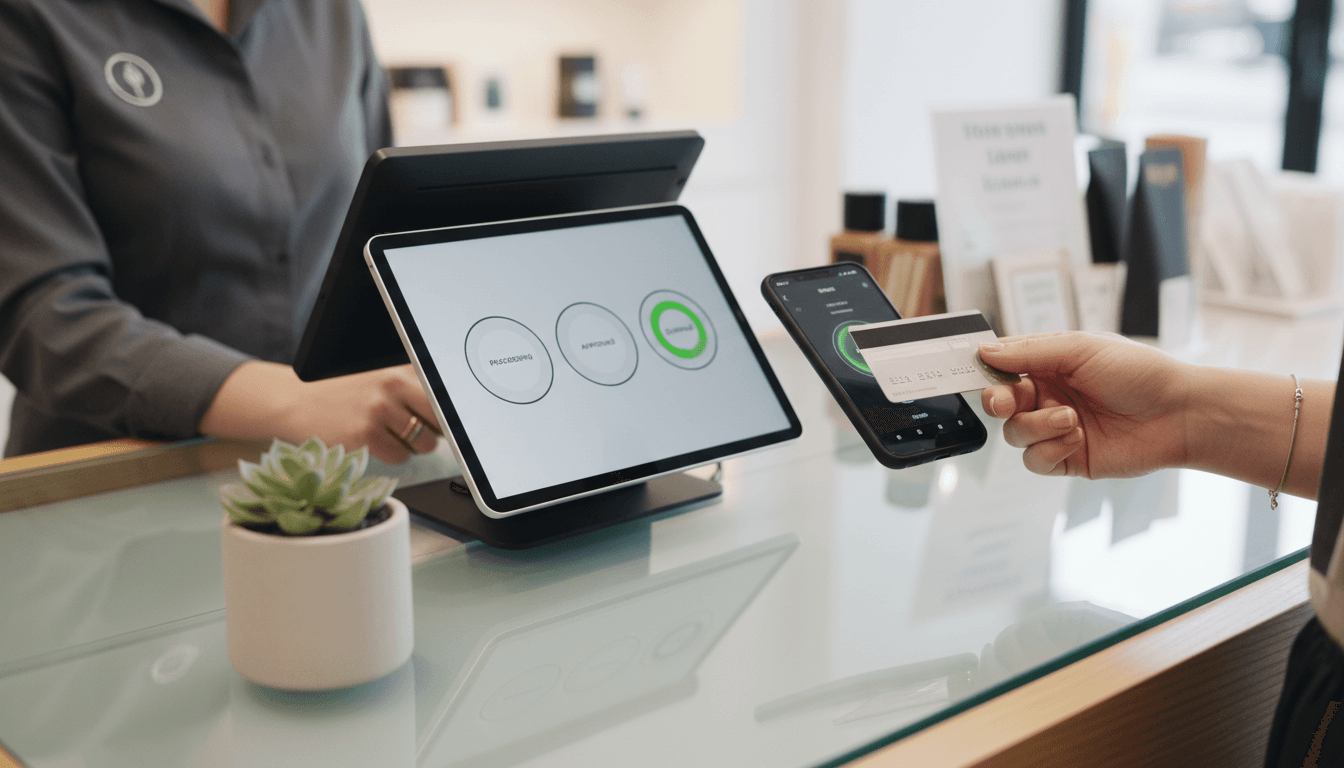
SoftPOS (software point of sale) lets a merchant accept contactless card payments directly on a smartphone or tablet using NFC—no dedicated terminal required for tap-to-pay flows.
That sounds simple. The infrastructure implications aren’t.
When you replace hardware terminals with software endpoints, you change the operating model:
- Provisioning becomes instant: devices can be activated remotely rather than shipped, installed, and serviced.
- Updates become continuous: security patches, UX improvements, and compliance-driven changes can roll out like mobile app releases.
- Telemetry becomes native: acceptance events, error rates, retry patterns, and device health become data streams you can analyze.
This matters because payments acceptance has traditionally been slow to improve. Hardware refresh cycles are long, configuration is painful, and many merchants run a patchwork of devices.
A partnership like Talus + Ingenico is essentially a bet that the US market is ready for broader software-defined acceptance—and that distribution, onboarding, and support can be handled at scale.
Where SoftPOS fits in US acceptance
SoftPOS doesn’t replace every terminal use case. It wins when:
- the merchant needs mobility (line-busting, curbside, tableside)
- the business needs rapid deployment (pop-ups, seasonal staffing, new locations)
- the acceptance point is secondary (returns desk, warehouse, concierge)
It’s also a strong fit for platform businesses—think ISVs serving SMBs—because it reduces the cost and complexity of getting merchants “live.”
Why Talus + Ingenico matters: distribution plus reliability
Partnerships are the hidden plumbing of fintech infrastructure. A strong SoftPOS product doesn’t matter if it can’t be distributed, supported, and integrated into merchant workflows.
Here’s what this pairing suggests at an infrastructure level:
- A credible SoftPOS stack needs enterprise-grade roots. Ingenico is a known name in payments hardware and acceptance. That reputation matters for merchants who still equate “payments” with “terminal on the counter.”
- Go-to-market matters as much as features. Talus (as a payments/merchant services platform) is positioned to package SoftPOS into broader merchant offerings: acquiring, onboarding, device management, and support.
- SoftPOS is moving from niche to mainstream adoption. In the US, contactless usage has steadily grown since the early 2020s. The more consumers expect tap-to-pay everywhere, the more merchants need low-friction ways to add acceptance points.
Snippet-worthy take: SoftPOS adoption isn’t limited by NFC—it’s limited by rollout, risk controls, and operational support.
If Talus can operationalize distribution while Ingenico supplies a hardened acceptance layer, that’s a blueprint other acquirers and platforms will copy.
The real risk conversation: compliance, security, and fraud
SoftPOS changes the threat model. A dedicated terminal is a purpose-built device with a narrow attack surface. A phone is a general-purpose computer. That doesn’t mean SoftPOS is unsafe—it means the controls must be different.
In practice, modern SoftPOS deployments depend on:
- Device integrity checks (root/jailbreak detection, OS version enforcement)
- Strong app shielding (anti-tamper controls, code obfuscation)
- Tokenization and encryption across the payment flow
- Operational controls (who can provision a device, revoke access, set limits)
This is where AI becomes relevant beyond buzzwords.
How AI improves SoftPOS security (without adding friction)
The best AI in payments infrastructure is boring. It reduces losses and false positives quietly.
Three places AI consistently helps in a SoftPOS world:
-
Behavioral anomaly detection on acceptance endpoints
- Detect suspicious patterns like unusual refund ratios, abnormal tap cadence, excessive offline attempts, or weird time-of-day spikes.
- Flag the device and the merchant profile together, not just the card.
-
Adaptive risk policies at onboarding
- New merchant + new device + high ticket sizes is a classic risk recipe.
- AI models can recommend stepped controls: lower limits at day 0, increase as the merchant shows healthy behavior.
- Faster dispute and chargeback triage
- When SoftPOS expands acceptance points, support tickets and disputes can rise if you don’t manage it.
- AI can auto-categorize disputes, match logs, and highlight cases with missing evidence.
A practical stance: If you roll out SoftPOS without AI-assisted monitoring, you’ll end up over-restricting good merchants to protect yourself from a small number of bad actors. That’s how “faster onboarding” turns into “more declines and more churn.”
Operational wins: faster deployment, better uptime, cleaner data
SoftPOS is often pitched as cost savings. I think the bigger win is speed.
Faster merchant activation and seasonal scaling
December 2025 isn’t just holiday retail. It’s end-of-year events, temporary kiosks, and a wave of small merchants trying to capture high-intent foot traffic.
With SoftPOS, a platform can:
- onboard a merchant remotely
- provision a device in minutes
- push configuration policies instantly (tips, receipt options, limits)
That’s not just convenient. It changes revenue timing.
Acceptance uptime becomes measurable (and improvable)
Hardware POS failures often become “someone’s problem” after the fact. SoftPOS gives you software telemetry you can use proactively:
- NFC failure rates by device model
- transaction retry rates by OS version
- drop-offs by step in checkout
- offline/online transition issues
AI can use this data for predictive incident detection:
- If a specific OS update correlates with rising failures, you can pause or patch.
- If a device fleet shows degrading performance, you can intervene before merchants complain.
Snippet-worthy take: Software-defined acceptance turns outages from surprises into dashboards.
Cleaner data for routing and authorization optimization
SoftPOS adoption also increases data consistency—especially for platforms that previously supported a messy mix of terminals.
Once you standardize acceptance through one SoftPOS stack, you can run smarter infrastructure strategies:
- optimize authorization settings
- tune contactless parameters and fallbacks
- use AI to spot issuer-specific decline quirks
This is the unsexy work that improves approval rates. And approval rates are a growth lever most merchants underestimate.
Implementation checklist: what to ask before you roll out SoftPOS
If you’re a platform, acquirer, ISO, or merchant with multiple locations, you don’t want SoftPOS to become a shadow IT project.
Here’s a deployment checklist that reflects what actually breaks in the real world.
Product and UX fit
- Which payment types are supported (contactless cards, mobile wallets)?
- What are the fallback options if tap fails?
- How does tipping, refunds, and receipts work in the flow?
Controls and governance
- Who can provision devices, and how is access revoked?
- Can you enforce device policies (minimum OS, passcode, biometrics)?
- What are default transaction limits for new merchants or new devices?
Risk, fraud, and monitoring
- Do you get near-real-time alerts for abnormal refunds and voids?
- Can you segment risk policies by merchant category and average ticket?
- Is there an AI or rules engine that supports adaptive controls rather than one-size-fits-all limits?
Support and operations
- How are logs captured for failed transactions and disputes?
- What’s the escalation path when acceptance fails mid-shift?
- Can your support team see device health without asking merchants to troubleshoot blindly?
A strong SoftPOS rollout is mostly operations. The tap experience is the easy part.
People also ask: SoftPOS in the US
Is SoftPOS secure enough for US merchants?
Yes—when it’s deployed with device integrity controls, strong key management, and active monitoring. Security isn’t a checkbox; it’s an operating model. SoftPOS requires tighter lifecycle management than traditional terminals.
Will SoftPOS replace terminals completely?
Not in the near term. High-throughput lanes, complex integrations, and certain regulated environments will keep using dedicated devices. SoftPOS expands acceptance points and handles mobile scenarios where terminals are impractical.
Where does AI fit in SoftPOS deployments?
AI fits best in fraud detection, anomaly monitoring, onboarding risk controls, and dispute operations. The goal is fewer losses and fewer false declines while scaling acceptance rapidly.
What this signals for AI in payments infrastructure in 2026
The Talus + Ingenico SoftPOS move points to a broader shift: acceptance is becoming programmable. Once acceptance endpoints behave like software, the winners will be the teams that treat them like software—instrument them, monitor them, patch them, and optimize them continuously.
For the “AI in Payments & Fintech Infrastructure” conversation, SoftPOS is a perfect example of where AI belongs: not as a flashy add-on, but as the layer that makes new infrastructure safe and scalable.
If you’re considering SoftPOS in the US, don’t start by asking whether it’s cheaper than a terminal. Start by asking whether your stack can support real-time risk decisions, device governance, and data-driven performance tuning. That’s the difference between a fast rollout and a fragile one.
Where do you see the biggest bottleneck in your acceptance stack right now—onboarding, fraud controls, device management, or approval rates?