Stadiums are high-transaction labs. See how AI improves wallet adoption, fraud detection, and routing—using EWS and Paze sports deals as a case study.
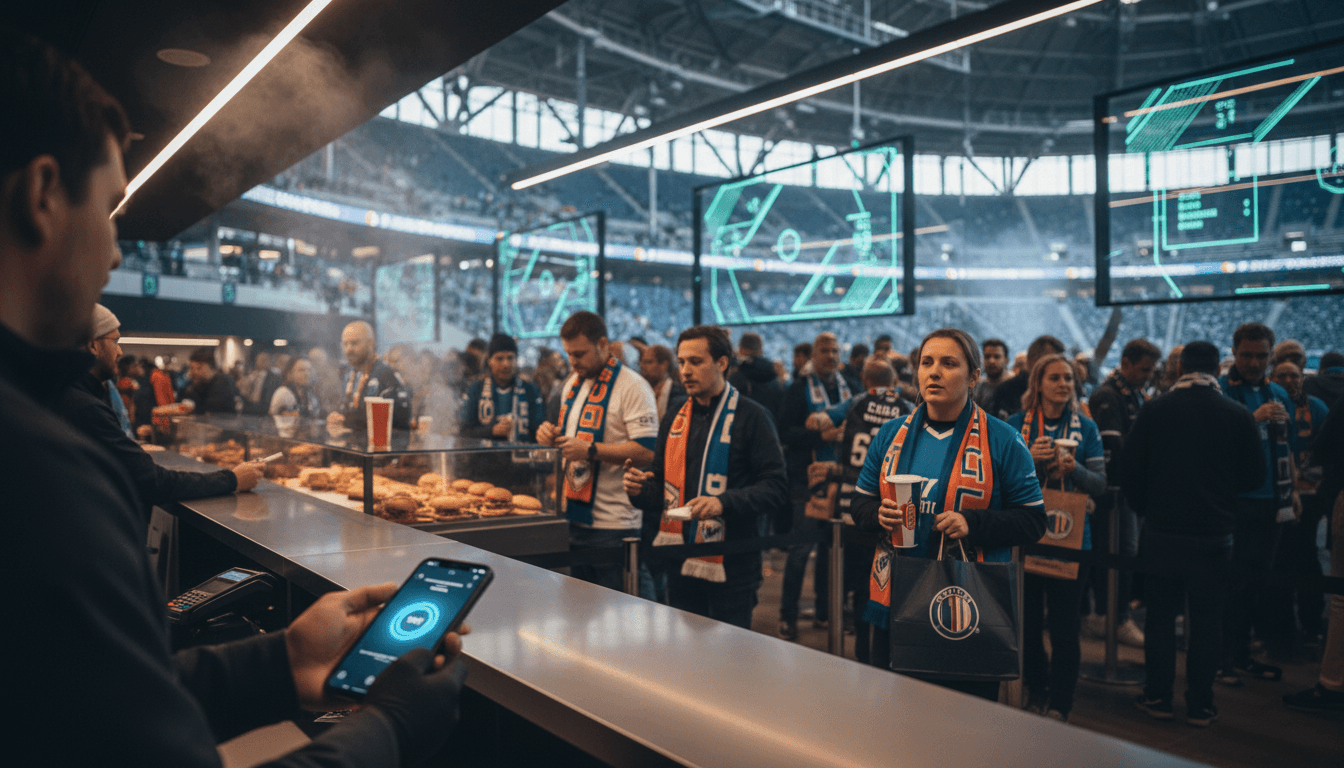
AI Payments in Stadiums: Turning Fans Into Users
A live sports game is one of the rare places where commerce is predictable and chaotic at the same time. Predictable because you can forecast bursts—pre-game entry, halftime, post-game exit. Chaotic because tens of thousands of people try to buy the same things at once, on congested networks, with staff working fast and distracted customers juggling food, phones, and emotions.
That’s why Early Warning Services (EWS)—the bank-owned fintech behind the Zelle network—is smart to push its Paze digital wallet into sports. Since September, EWS has signed Paze agreements with two pro teams: the Atlanta Hawks and New York City FC. The bet is straightforward: fans come back again and again, so the payment method they see at the stadium (and in the team’s online checkout) has a better shot at becoming a habit.
Here’s the part many teams, processors, and wallet providers miss: sponsorship visibility isn’t the real prize. Payment data and payment performance are. In high-transaction venues like stadiums, AI can improve authorization rates, reduce fraud, and shorten lines—results that actually show up in revenue and fan satisfaction.
Why stadium payments are a perfect AI testbed
Stadiums concentrate payments into intense, repeated micro-moments—and AI thrives on patterns at scale. A typical fan journey creates multiple opportunities to pay: tickets, parking, merchandise, food and drink, plus the online store later that night.
EWS’ Paze partnerships aim to be present across those moments. With NYCFC, Paze is positioned as the team’s official online checkout and official digital wallet; when the club’s new stadium, Etihad Park, opens in 2027, fans will be able to buy tickets and make in-stadium purchases using Paze. There’s also a planned on-site “Paze City Square” food hall concept—a physical reminder that payments are becoming part of the venue experience, not just a back-end utility.
The operational reality: payments are part of crowd control
When payment systems slow down, queues grow. When queues grow, customers abandon purchases—or they buy less. That’s not theoretical; operators see it every season.
AI has a practical role here:
- Forecasting demand spikes (by gate, by concession stand, by time) so you can staff and stock smarter.
- Detecting system degradation early—network congestion, device failure patterns, POS latency—and triggering failovers.
- Reducing friction with smarter authentication decisions (when to step up, when not to) so legitimate fans aren’t slowed down.
The win isn’t “better tech.” The win is fewer abandoned carts, fewer chargebacks, and faster throughput.
The real strategy behind EWS and Paze: distribution
Paze’s challenge isn’t explaining what a digital wallet is. It’s earning a default position at checkout. Sports partnerships do two things at once:
- They create repetition. Fans return to the same venue. That’s rare in retail.
- They create trust-by-association. People may not know EWS, but they trust their bank and they trust their team.
EWS is also jointly owned by seven major U.S. banks. That matters because bank-backed wallets often compete on a different axis than fintech wallets: they can push enrollment through existing bank channels and identity rails, and they can potentially reduce certain types of risk when the customer relationship is already established.
But sponsorship alone doesn’t guarantee adoption. I’ve watched too many “official payment partner” deals turn into a logo on a sign and nothing more.
If Paze wants these deals to convert into usage, it needs AI-assisted performance and personalization that fans actually feel.
Where AI fits: from “payment method” to “payment experience”
In stadium environments, “experience” is measurable:
- authorization rate
- time-to-pay
- fraud rate and false declines
- refunds and dispute handling speed
- repeat usage across channels (in-app, web, in-venue)
AI can improve all of these, but only if it’s wired into the right layer of the stack.
Three AI capabilities that matter most in stadium commerce
If you’re building payments infrastructure (or choosing it), focus on AI that improves throughput and trust—not AI demos.
1) Real-time fraud detection with venue-specific context
Stadium fraud looks different from e-commerce fraud.
- Many purchases are small.
- There are bursts of activity from the same devices/accounts.
- Geolocation and venue Wi‑Fi introduce shared signals.
- Human behavior is noisy (people are distracted, excited, moving).
A generic fraud model can overreact and produce false declines right when lines are longest.
A better approach is contextual risk scoring that incorporates:
- venue time windows (pre-game/halftime/post-game)
- device reputation within the venue
- known ticket-holder identity signals
- merchant category patterns (concessions vs. merch vs. tickets)
Good AI reduces fraud without punishing legitimate fans. In practice, lowering false declines is often more valuable than catching a small extra slice of fraud.
2) Smart transaction routing to lift approval rates
Stadiums are authorization-rate laboratories. You have intermittent connectivity, heavy contention, and high variability across terminals.
AI-driven routing can help by choosing the best path for a given transaction based on:
- issuer behavior patterns (who is more likely to approve in this context)
- network/processor latency at that moment
- fallback logic when connectivity drops
- token type and wallet rails being used
This is the unsexy part of “AI in payments,” but it’s where money is made.
A one-line stance: Any wallet partnership that doesn’t talk about auth rate and latency is mostly a branding program.
3) Personalization that doesn’t creep fans out
Sports fans are loyal, but they’re also sensitive to feeling manipulated. The right model is helpful personalization:
- Suggesting the closest concession with the shortest line
- Offering a bundle that matches past purchases (drink + snack) without oversharing
- Timing offers when they make sense (not during a penalty kick)
This is where “AI-enhanced consumer engagement” becomes real. Not with flashy features, but with small, well-timed nudges that reduce hassle.
What the NYCFC and Hawks deals signal for the broader market
EWS isn’t alone—sports venues are turning into payments battlegrounds. Other players have been aggressive here, including processors and POS platforms that sign stadiums and teams to anchor their volume.
The pattern is consistent:
- Sports venues provide captive, high-frequency commerce.
- Payment providers get high-visibility distribution.
- Teams and venue operators want higher per-cap spend and shorter lines.
The difference maker over the next 24 months won’t be who has the biggest logo on the jersey patch. It’ll be who can prove:
- higher approval rates during peak windows
- lower fraud and fewer chargebacks
- measurable reductions in queue times
- better conversion in online ticketing and merch
If you’re leading payments or digital at a bank, processor, wallet, or large merchant, this is the lesson: partnerships create access; AI turns access into retained users.
A practical playbook: how to make a sports wallet partnership convert
If you’re a venue, team, or payments provider, the partnership should be run like a performance program. Here’s what I’d insist on in the first 90 days.
Step 1: Define the metrics that decide “win”
Pick a tight set of metrics and baseline them:
- authorization rate (by stand, by time window)
- average time-to-complete transaction
- % of transactions requiring manual intervention
- fraud losses and chargeback rate
- wallet adoption rate (enrollments, active users)
- repeat usage across online and in-stadium
If you can’t measure it, you can’t improve it.
Step 2: Instrument the venue like a payments product
Stadiums often have fragmented systems: ticketing vendor, concessions operator, merch partner, separate e-commerce stack.
You need shared visibility:
- consistent tokenization across channels
- unified event-level telemetry (latency, retries, declines)
- a common identity layer (where permitted)
This is the foundation for AI to be effective.
Step 3: Use AI to fix declines before you spend on marketing
Most teams want to start with offers and promotions. I disagree.
Start with:
- reducing false declines
- improving routing and retries
- tightening fraud controls with venue context
Then market the wallet. Otherwise you’re just driving more traffic into a leaky funnel.
Step 4: Create two or three “fan moments” that justify the wallet
Wallet adoption accelerates when fans get something concrete:
- fastest line / express pickup
- instant refunds for canceled events
- seat delivery with verified payment
- exclusive merch drops tied to ticket-holder identity
Notice these are operational advantages, not generic coupons.
People also ask: what’s the connection between AI payments and sports sponsorships?
The connection is that sponsorship creates repeated checkout exposure, and AI improves checkout performance and trust. In a stadium, small changes—fewer declines, shorter lines, better fraud accuracy—translate directly into higher sales and better fan sentiment.
Another way to put it: branding gets the wallet noticed; AI makes it preferred.
Where this fits in the “AI in Payments & Fintech Infrastructure” series
This EWS case is a clean example of a broader trend we track in this series: AI is moving from “fraud tooling” into the core infrastructure decisions that shape consumer payment experiences. High-volume environments like stadiums make that shift obvious because the feedback loop is immediate. A bad payment flow shows up as a line. A good one feels like the venue is simply better run.
If you’re evaluating wallets, payment processors, or fintech infrastructure partnerships for 2026 planning, treat sports venues as a preview of mainstream commerce: dense identity signals, real-time risk decisions, and performance requirements that don’t forgive downtime.
The next step is to pressure-test your own payment stack the same way. Where are you still making static decisions in a dynamic environment—and what would change if your routing, fraud, and authentication were driven by live signals instead?