AI banking assistants and crypto roundups are pushing AI closer to the transaction layer. Here’s what Bunq’s move means for payments infrastructure and risk.
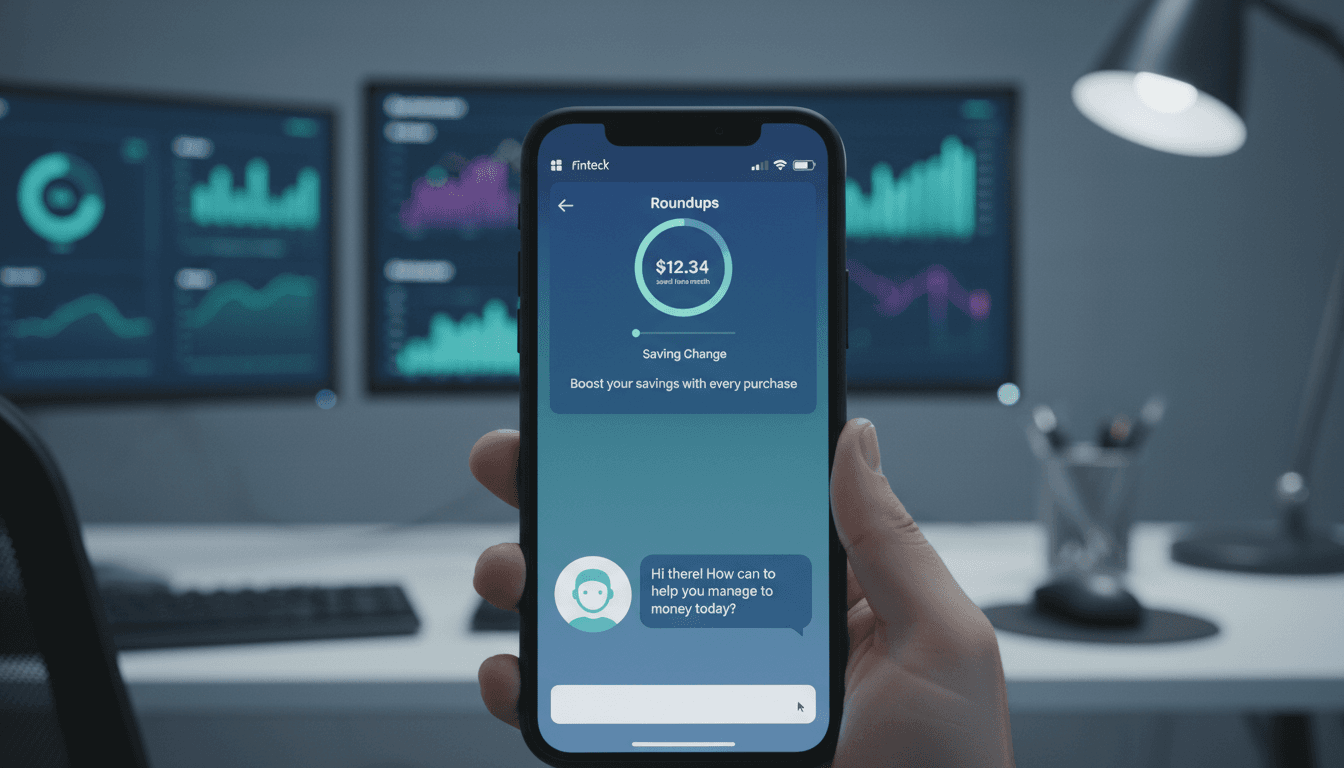
AI Banking Assistants: Bunq’s Crypto Roundups Signal a Shift
Most banking “AI” is still just a smarter search bar with a friendly tone. But when a digital bank adds an upgraded AI assistant and introduces crypto roundups (micro-investing from everyday spend), it’s a signal that AI is moving from “help me find a setting” to “help me run my money.”
Bunq’s announcement (even though the source page wasn’t accessible at scrape time) fits a pattern I’m seeing across fintech infrastructure: AI is being embedded closer to the transaction layer—where routing decisions, fraud signals, user intent, and support workflows all collide. That matters because the next wave of customer experience improvements in payments won’t come from prettier apps. It’ll come from smarter, safer decisions happening in milliseconds.
This post breaks down what features like crypto roundups and an upgraded AI assistant tell us about where digital banking and payments infrastructure are heading—and what operators should do if they want similar outcomes without creating new risk.
Bunq’s move in one line: AI + crypto in the daily money loop
Bunq’s headline—crypto roundups plus an upgraded AI assistant—points to a single strategic intent: keep customers in a continuous, guided “money loop” where saving, spending, investing, and support happen inside one intelligent system.
Roundups are deceptively simple. They turn routine purchases into automated transfers (for example, rounding a €3.60 purchase up to €4.00 and allocating €0.40 elsewhere). Adding crypto to that flow changes the stakes: now you’re automating exposure to a volatile asset class, which brings suitability, disclosures, and controls into play.
Meanwhile, an upgraded AI assistant shifts the interface from menus to intent. Instead of tapping through settings, a user can say what they want (“put my roundups into crypto,” “pause when markets drop,” “why was this payment declined?”) and the system translates that into actions.
From a payments and fintech infrastructure perspective, this combination is less about “cool features” and more about how AI mediates financial decisions at scale.
Why AI assistants in banking are becoming infrastructure, not a chatbot
The most valuable AI assistants in financial services aren’t judged by how human they sound. They’re judged by whether they can safely do three hard things:
- Understand intent (what the customer is trying to achieve)
- Act (initiate a payment, change a limit, file a dispute, adjust a rule)
- Prove and protect (authenticate, log, explain, and prevent misuse)
When a bank upgrades its AI assistant, the real story is usually behind the scenes: integration with core banking, card processing, payments ops, KYC/AML tooling, and support systems. That’s the “fintech plumbing” layer.
AI assistants are a transaction-routing problem in disguise
Here’s a stance: customer experience in payments is mostly a routing problem. Not just routing across rails, but routing across decisions.
- Route a card authorization with the best chance of approval
- Route a suspicious transfer into step-up verification
- Route a dispute into the right workflow with the right evidence
- Route a support query to self-serve, human agent, or fraud ops
A capable AI assistant can sit on top of these decision points, translating customer intent into the correct path. If the assistant is connected to real-time signals (device, behavior, merchant category, historical patterns), it can also personalize responses without guessing.
The hidden requirement: “actionable AI” needs guardrails
The moment an AI assistant can execute actions (not just answer questions), you need controls that look a lot like payments security controls:
- Strong customer authentication for sensitive actions (limit changes, new payees, crypto allocations)
- Policy checks (jurisdiction, age, product eligibility, risk tier)
- Rate limits and anomaly detection (to stop scripted abuse)
- Auditability (who asked for what, what the system did, and why)
If you can’t explain an AI-driven action to a regulator, a risk team, and a customer—don’t ship it.
Crypto roundups: small feature, big implications for payments infrastructure
Crypto roundups sound like a fun “set and forget” feature. Operationally, they’re a chain of events that touches payments, treasury, compliance, and customer support.
The key point: roundups convert high-frequency retail payments into high-frequency investment instructions. That introduces new infrastructure needs.
What has to happen under the hood
A typical crypto roundup flow requires at least:
- Purchase detection (card or account payment posts/settles)
- Delta calculation (rounding rule and threshold logic)
- Ledger movement (internal transfer to a holding pocket)
- Execution (crypto buy order, pricing, spreads/fees)
- Custody or partner handoff (where assets are held)
- Reconciliation (matching orders, fills, balances)
- User reporting (statements, tax-related exports where applicable)
Each step introduces failure modes that users will experience as “the app is broken” unless the bank has strong observability and support automation.
Risk and compliance aren’t optional with automated crypto
Automating crypto purchases brings predictable questions from regulators and risk teams:
- Is the customer clearly informed they’re buying crypto (not saving euros)?
- Can they set caps (daily/weekly/monthly)?
- Are there cooling-off controls for vulnerable customers?
- What happens during extreme volatility—do you pause, warn, or continue?
A good design principle is control by default:
- Default to low limits until the user actively raises them
- Add “pause conditions” (e.g., pause roundups when balance < X)
- Provide clear, plain-language breakdowns of fees and spreads
From a customer experience standpoint, the AI assistant can make these controls usable. From an infrastructure standpoint, those controls must be enforced in the backend, not just promised in the UI.
Where AI actually improves payments: fraud, disputes, and support loops
If you’re running payments at scale, you already know the painful truth: you can improve conversion or reduce fraud, but doing both at once is hard. AI helps—when it’s tied to the right decisions.
Fraud detection that adapts to customer behavior (not static rules)
Classic rule engines still matter, but they struggle with:
- “Good customers doing weird things” (travel, large purchase, new device)
- Fast-evolving scam patterns (social engineering, mule accounts)
- Cross-channel signals (chat + card + transfer behavior)
Modern AI fraud detection uses behavioral patterns and network signals to make risk scoring more dynamic. The practical win isn’t “AI catches more fraud.” The win is:
AI reduces false declines by using richer context, while escalating only the truly suspicious activity.
That’s where an AI assistant becomes more than a helper. It can guide step-up verification in a way customers will tolerate:
- “I’m blocking this transfer until you confirm in-app.”
- “This merchant looks unusual for you—approve once or always?”
Dispute handling: the quiet place where AI pays for itself
Disputes are operationally expensive and emotionally charged. They also have repeatable patterns.
AI can improve disputes by:
- Pre-filling chargeback reasons and evidence checklists
- Summarizing merchant descriptors and mapping them to known entities
- Flagging likely-friendly-fraud vs genuine unauthorized activity
- Providing real-time status updates that reduce “any update?” tickets
If Bunq’s upgraded assistant is truly integrated, this is one of the highest ROI areas to apply it.
Customer support: AI should remove tickets, not create them
AI assistants fail when they deflect too aggressively or hallucinate policy.
A better approach is tiered resolution:
- Instant answers for factual, low-risk questions (fees, limits, where to find statements)
- Guided workflows for medium-risk tasks (replace card, change PIN, adjust roundups)
- Fast escalation for high-risk issues (suspected scams, account takeover, blocked transfers)
The success metric isn’t “containment rate.” It’s time-to-resolution without trust erosion.
What fintech operators should copy (and what to avoid)
If you’re building in the “AI in Payments & Fintech Infrastructure” space, Bunq’s direction offers a useful blueprint—but only if you respect the operational realities.
Build the assistant on top of deterministic systems
Use AI for:
- Intent detection
- Information retrieval and summarization
- Workflow orchestration
- Personalization (within policy)
Keep deterministic systems for:
- Ledger updates
- Authentication and authorization
- Risk rules and transaction holds
- Pricing, fees, and disclosures
This split keeps the AI assistant powerful without letting it “invent” financial outcomes.
Treat “micro-actions” as high-impact infrastructure
Roundups feel tiny, but at scale they generate:
- High event volume
- Reconciliation complexity
- Edge cases (refunds, reversals, partial settlements)
If you introduce crypto roundups, decide upfront:
- How refunds unwind the roundup
- Whether you batch buys (daily) or execute per transaction
- How you handle market moves between authorization and settlement
Add explainability where customers actually need it
Explainability doesn’t have to be academic. It needs to be useful.
Good explanations sound like:
- “Your payment was declined because your merchant location didn’t match your recent activity. Approve this merchant to avoid future declines.”
- “Roundups are paused because your available balance fell below €50.”
If an AI assistant can’t explain a decline, a hold, or a crypto execution in plain language, your support team will.
People also ask: quick answers on AI assistants and crypto roundups
Are crypto roundups safe?
They’re as safe as the controls behind them. The risk isn’t just market volatility—it’s automation without caps, poor disclosure, and weak account takeover defenses.
Does an AI banking assistant increase fraud risk?
It can, if it’s allowed to execute actions without strong authentication and policy checks. Done right, it reduces fraud by improving verification flows and spotting anomalies faster.
What’s the business value of an AI assistant in payments?
Lower support costs, fewer false declines, faster dispute resolution, and better customer retention—because “getting paid” and “getting help” stop being separate experiences.
Where this is heading in 2026: intent-first banking
December is when product teams lock roadmaps and ops teams brace for peak-season volumes and year-end fraud spikes. That timing makes Bunq’s direction especially relevant: banks are preparing for an intent-first interface where customers manage money by asking, not tapping.
Crypto roundups add a second message: customers want their bank to automate “small, good decisions.” But automation only works when the infrastructure is disciplined—real-time risk, auditable flows, and customer-friendly explanations.
If you’re evaluating AI in payments infrastructure—whether for transaction routing, fraud detection, or customer support—start by mapping the decisions you already make every day. Then decide which ones AI should recommend, which ones it can execute, and which ones must stay strictly deterministic.
The question worth asking next isn’t “Should we add an AI assistant?” It’s: Which customer intents do we want to fulfill instantly, and what controls make that safe at scale?