Young Sherlock’s Prime debut shows how AI can sharpen franchise marketing, boost recommendations, and scale trailer variants to reach the right fans.
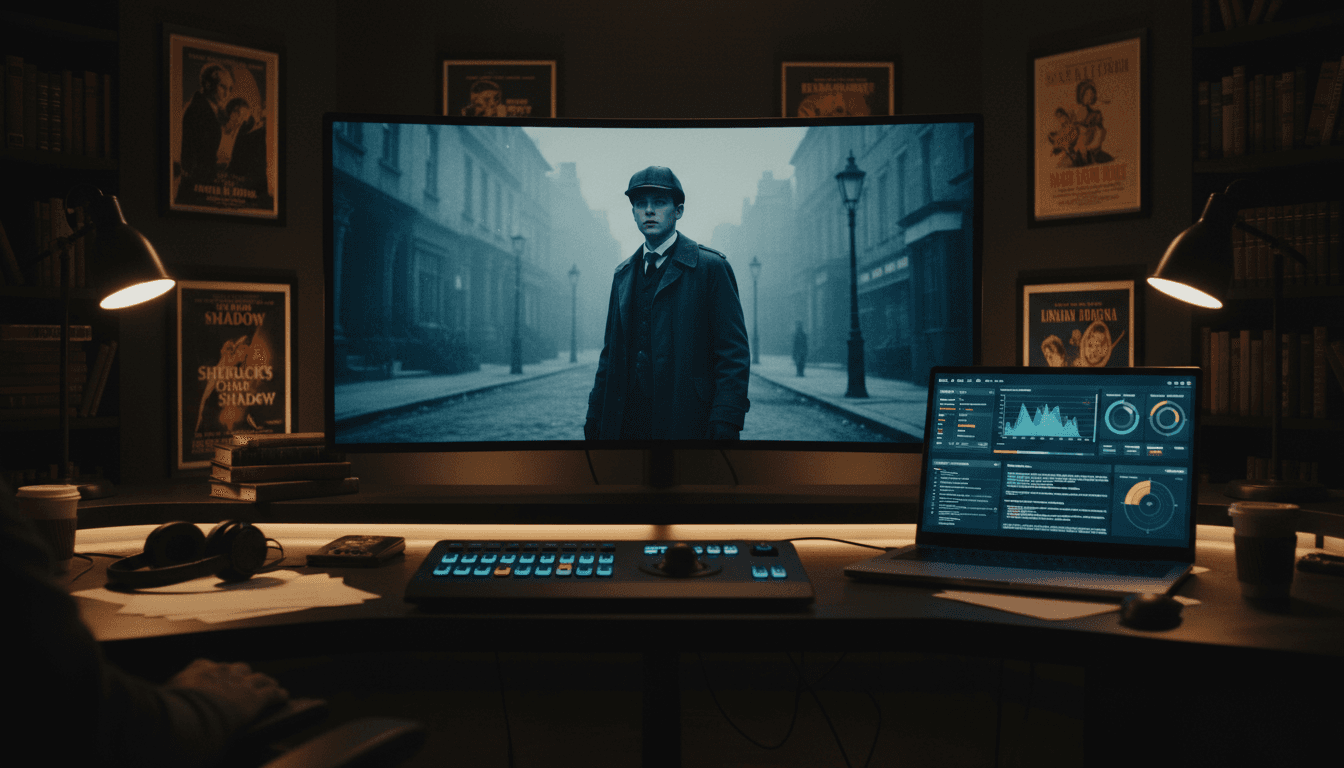
Young Sherlock on Prime: AI Lessons for Reimagined TV IP
A familiar franchise doesn’t win because it’s familiar. It wins because it feels new while still hitting the emotional beats fans expect.
That’s why the trailer drop for Guy Ritchie’s Prime Video series “Young Sherlock”—starring Hero Fiennes Tiffin as a youthful Holmes—matters beyond TV news. A classic detective reimagined as an origin story is the kind of high-stakes bet streamers keep making: recognizable IP, new angle, modern pacing, and a marketing push that has to find exactly the right audience fast.
This is where AI in media & entertainment stops being a buzzword and becomes a practical advantage. If you’re a studio, streamer, or agency, “Young Sherlock” is a clean example of how AI-driven audience insights, recommendation engines, and AI-assisted trailer production can make or break a reimagined franchise.
Why reimagined franchises are harder to market than originals
Reimagined IP is a two-front campaign: you’re selling discovery and managing expectations.
On one side: people who love Sherlock Holmes across decades of adaptations. On the other: viewers who don’t care about the brand but might care about the vibe—Guy Ritchie energy, fast dialogue, slick action, a young lead, or an origin-story arc.
The real problem: one trailer can’t do all the jobs
A single “hero trailer” has to persuade multiple audiences who want different things:
- Canon fans want authenticity (Holmes-ness, period detail, smart mysteries).
- Modern thriller fans want pace and stakes.
- Guy Ritchie fans want style—swagger, rhythm, punch.
- Young-adult skew may want character chemistry and a coming-of-age hook.
Most teams compromise into a trailer that’s “pretty good” for everyone and great for no one. That’s where AI helps: not by writing the story, but by reducing marketing guesswork and turning one piece of creative into multiple high-performing assets.
A reimagined franchise succeeds when it’s marketed as a specific promise, not as “something for everyone.”
AI-powered audience insights: what to test before you spend big
If you’re reintroducing Sherlock as young, the question isn’t “Will people watch?” The question is which promise earns a click for which segment, and how quickly you can scale that promise.
AI doesn’t replace creative judgment. It makes the early rounds of decision-making less opinion-driven.
Build an “audience map,” not a demographic bucket
The best-performing streaming campaigns I’ve seen treat audiences as behaviors, not age brackets. AI can cluster viewers based on what they actually do:
- Completion rates for mystery series vs. casual sampling
- Tendency to rewatch stylized action/crime titles
- Preference for origin stories and character arcs
- Engagement with franchise adaptations (high sensitivity to changes)
From there, you can develop audience personas tied to content signals. For “Young Sherlock,” that might look like:
- The Deduction Purists (care about case complexity)
- The Style Seekers (care about pacing, attitude, visuals)
- The Origin-Arc Crowd (care about “how he became him”)
- The Cast-First Viewers (follow actors and chemistry)
Then you test what each segment responds to—taglines, thumbnails, music choices, even the order of shots.
Practical tests AI can accelerate (without weeks of manual work)
AI-enabled analysis can speed up:
- Hook testing: Which 2–3 seconds stops the scroll for each segment?
- Narrative emphasis testing: Mystery-first vs. character-first vs. spectacle-first.
- Creative fatigue prediction: How quickly audiences tune out repeated assets.
- Sentiment readouts: Which phrases and frames trigger “not my Sherlock” backlash.
The goal isn’t to avoid controversy. It’s to avoid wasting spend promoting the wrong angle to the wrong people.
Recommendation engines: how “Young Sherlock” finds its real audience
Recommendation systems are the quiet kingmakers of streaming. If your title isn’t being surfaced to the right people in the first week, your marketing has to work twice as hard.
For a reimagined franchise, recommendation matters even more because the audience is fragmented: some viewers want “Sherlock,” some want “Ritchie,” some want “young lead in a prestige series,” and some want “fast mystery comfort-watch over the holidays.”
Metadata is strategy, not admin work
Recommendation engines rely on signals: genre tags, mood tags, themes, cast affinities, pacing, and more. The mistake is treating metadata as an afterthought.
AI can help teams generate and validate metadata at scale:
- Scene-level tagging: identify “mystery puzzle,” “chase,” “character reveal,” “romance tension,” “comic relief,” etc.
- Tone and mood labeling: “witty,” “tense,” “stylized,” “darkly comedic.”
- Comparables modeling: which audiences overlap with recent crime thrillers, origin stories, or period dramas.
This matters because a show like “Young Sherlock” can be packaged differently depending on who’s watching. Recommendation systems thrive when you give them clean, consistent content descriptors.
Seasonal timing: December viewing is different
It’s Friday, December 2025—peak “cozy binge” season. Viewing patterns tilt toward:
- Longer session times
- Household co-viewing
- Comfort genres (mystery performs well here)
AI-driven scheduling and targeting can adjust creative and placement to match seasonal intent: emphasize “bingeable mystery” for some, “stylish action” for others, and “origin story” for those who like character-driven arcs.
AI in trailer and promo production: more versions, less waste
Studios don’t fail because they lack content. They fail because they can’t produce enough high-quality variations fast enough.
AI-supported workflows can increase output without lowering craft—if you set guardrails.
What AI can responsibly automate in promo workflows
Used well, AI helps editors and producers get to better cuts faster:
- Transcript + scene search: instantly find all moments that mention a clue, a name, a rivalry, or a key line.
- Shot selection suggestions: pull high-motion sequences for action-forward cuts.
- Format adaptation: auto-build rough versions for 6s/15s/30s, vertical and horizontal.
- Localization: faster subtitle generation and language variants for international campaigns.
That doesn’t mean “push a button, ship it.” It means your team spends more time on story, rhythm, and taste—the parts humans are good at.
The smart approach: a “creative matrix” of trailer variants
Instead of one trailer and a pile of random cutdowns, build a planned matrix:
- Mystery-first cut: clue, stakes, deduction, twist.
- Character-first cut: Young Holmes’ flaw, mentor tension, transformation.
- Style-first cut: Guy Ritchie cadence, fast montage, punchy music.
- Ensemble-first cut: relationships, chemistry, rivalry.
AI can help generate and evaluate early versions using performance data signals (view-through rate, thumb-stop rate, completion rate) across platforms.
One great trailer is nice. Four targeted trailers is a plan.
What “Young Sherlock” teaches about AI-driven franchise strategy
Reimagining Sherlock isn’t just about “making him younger.” It’s about deciding what new need this adaptation serves—and proving it quickly.
Here’s a practical playbook teams can steal for any reimagined franchise:
1) Decide the promise before you decide the spend
Pick the core promise you’re making and use AI insights to validate it.
- If your promise is “smart mystery”, optimize for puzzle hooks and case escalation.
- If your promise is “stylish crime energy”, optimize for pace and tone.
- If your promise is “origin story transformation”, optimize for character turns.
Trying to promise all three in the same 20 seconds is how campaigns go soft.
2) Treat audience data like creative input, not a post-mortem
The best use of AI is early:
- During trailer scripting and select pulls
- During poster/thumbnail exploration
- During copy testing (“genius in the making” vs. “the first case”)
When data arrives after launch, it’s usually too late to fix positioning.
3) Build guardrails so AI doesn’t flatten your voice
AI has a default style: average. Franchises don’t win by being average.
Guardrails that work:
- Lock a tone bible (pace, humor level, violence level, sincerity level)
- Define do-not-use trailer tropes that don’t fit the brand
- Keep a human “final taste” pass mandatory
4) Measure what matters for streaming discovery
If your goal is subscriber acquisition or retention, you need more than views.
Track:
- Thumb-stop rate (first 1–2 seconds)
- View-through rate (especially to 50% and 95%)
- Series page click-through from promo placements
- Episode 1 completion rate (the real make-or-break for new IP angles)
People also ask: practical questions about AI in reimagined TV marketing
Can AI tell if a reimagined franchise will succeed?
AI can’t predict success with certainty, but it can reduce blind spots by identifying which audience segments respond to which positioning and which creative elements drive intent.
Does AI replace editors and trailer houses?
No. AI speeds up logging, search, versioning, and formatting. Editors still define story, pacing, comedic timing, and emotional payoff.
What’s the fastest AI win for a streaming campaign?
Asset variation. Creating multiple targeted cuts and testing them quickly tends to outperform a one-size-fits-all trailer strategy.
Where franchise storytelling goes next
“Young Sherlock” is a reminder that streamers aren’t competing on volume anymore—they’re competing on precision. Reimagined franchises will keep coming because they reduce awareness risk. The real risk shifts to positioning and discovery.
If you’re building campaigns in media & entertainment, the practical move is simple: use AI-powered audience insights to pick a promise, use recommendation-friendly metadata to help the platform surface it, and use AI-assisted production workflows to create enough high-quality variants to reach each segment.
The question worth sitting with is this: when your next reimagined title hits the trailer stage, are you shipping one message to everyone—or the right message to the right fans?