Peacock’s Arrival Ads put ads at login. Here’s how AI personalization can make them relevant, protect time-to-content, and improve live sports ad performance.
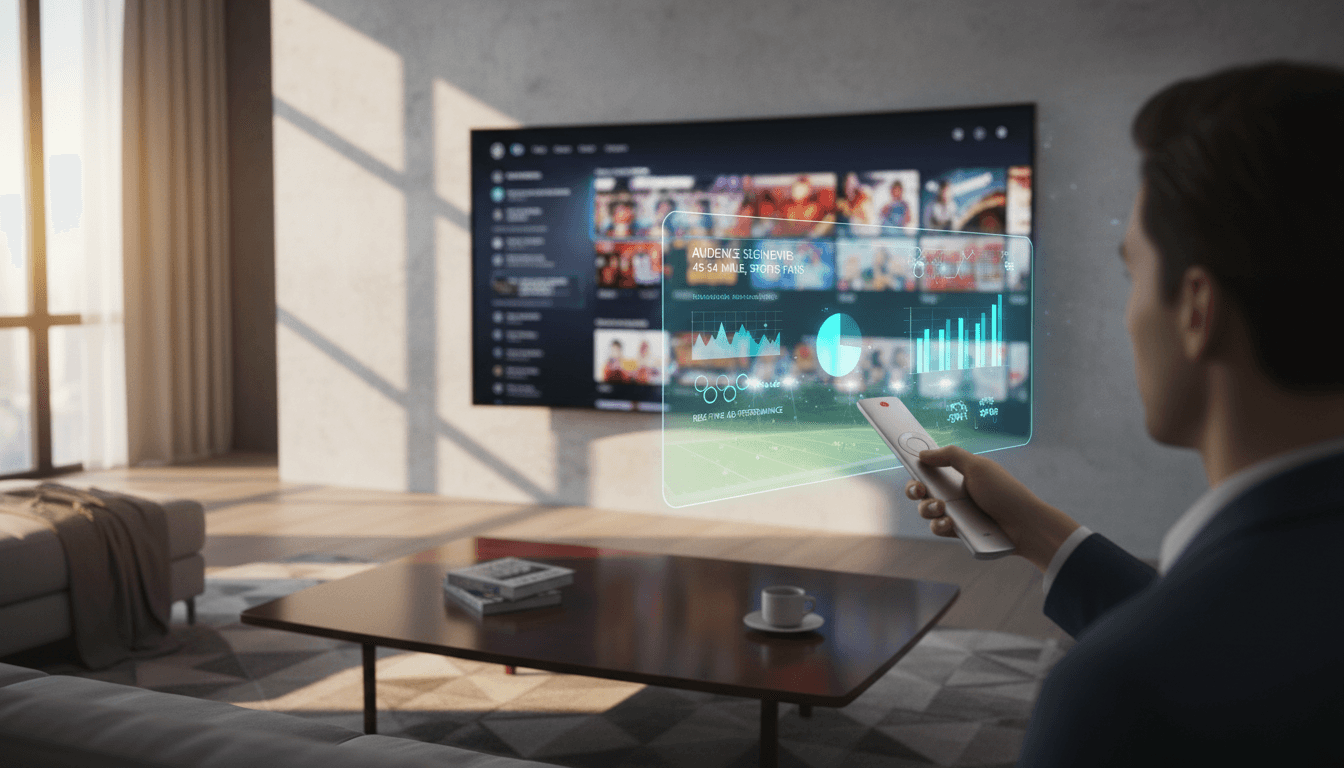
Peacock Arrival Ads: How AI Makes Streaming Ads Smarter
A 15- or 30-second ad has always been the “toll” audiences pay for free or discounted entertainment. NBCUniversal’s new idea is bolder: show an ad the moment you arrive.
NBCUniversal just introduced “Arrival Ads” for Peacock, alongside other ad-tech updates aimed at wringing more value from its biggest draw: live sports and live events. The timing isn’t accidental. January’s Consumer Electronics Show is where platforms compete to convince brands they can deliver reach and measurable outcomes. Live sports already has the reach. The platform’s bet is that smarter ad formats will deliver the outcomes.
Here’s the real story for anyone building media products or buying media: Arrival Ads aren’t just a new placement. They’re a signal that streaming monetization is shifting toward “moment-based” advertising—and AI is the only practical way to make that moment feel relevant instead of intrusive.
What “Arrival Ads” actually change (and why NBCU is doing it)
Arrival Ads shift ad exposure from “during viewing” to “before viewing,” capturing attention when the user’s intent is highest. When someone opens Peacock, they’ve already decided to watch something. That’s a dramatically different mindset than someone passively encountering a pre-roll on a random clip.
The streaming industry has been under pressure to make ad-supported tiers work without wrecking retention. Subscription growth across the market has slowed compared to the early streaming years, and price hikes have made ad tiers more attractive. That creates a blunt reality: more ad inventory will exist, and platforms will compete on ad experience quality.
Arrival Ads are a bet on three things:
- Predictability: Every session begins somewhere. That’s reliable inventory.
- Viewability: The app launch is a “full attention” moment—at least for a few seconds.
- Event spikes: Sports nights create huge surges in logins. If you want to monetize live sports, the login window is prime real estate.
The risk is obvious: if the first thing people see is a generic ad, you may be training them to associate “opening Peacock” with friction.
That’s where AI becomes less of a buzzword and more of a requirement.
AI is how Arrival Ads avoid becoming the new pop-up
AI personalization is the difference between “an ad at login” and “an ad that feels like part of the experience.” Most companies get this wrong by treating a new placement as a new billboard. Streaming isn’t a billboard; it’s a personalized product.
The right personalization goal: relevance in under one second
Arrival Ads have a brutal constraint: you’ve got a tiny window to be useful. People aren’t “settling in” yet—they’re trying to get to the game, the show, or the highlights.
AI helps by choosing the best ad fast, using signals such as:
- Session intent: Is the user coming in during a live event window?
- Recency: What did they watch in the last 48 hours?
- Frequency: Are they a daily sports viewer or a weekend-only viewer?
- Device context: Big-screen TV vs. mobile has different tolerance for interruption.
- Ad fatigue: Have they seen this creative too many times?
Done well, the Arrival Ad becomes the streaming equivalent of a great retail greeter: quick, relevant, and gone.
A practical approach: moment-based models, not “one profile forever”
A common mistake in streaming ad personalization is over-weighting long-term preferences (“likes action movies”) and under-weighting moment intent (“it’s Sunday night and the NFL game just started”).
For live sports, AI should prioritize:
- Time-sensitive relevance (game day, tournament week, premiere night)
- Geo-sensitive relevance (regional fandom and local advertisers)
- Competitive separation (ads that stand out from the same 5 national categories)
A simple, effective rule: when the platform detects live-event intent, optimize for immediacy; when it detects binge intent, optimize for continuity.
Why live sports is the perfect test bed for AI ad-tech
Live sports generates predictable attention spikes and emotionally engaged audiences—ideal conditions for AI-driven optimization. If you’re investing billions into sports rights, you need more than “more ads.” You need smarter yield per ad opportunity.
Sports audiences behave differently (and AI can read that)
Sports viewers:
- Open apps in bursts (kickoff, halftime, clutch moments)
- Engage across multiple screens (TV plus phone)
- Have stronger team affinity signals than most genres
- Tolerate ads more when they feel “part of the event,” less when they feel random
AI models can use behavioral patterns—without needing creepy personal detail—to infer what kind of night this is for the viewer.
Example scenario:
- User A logs in 8 minutes before kickoff, searches for the live channel, and usually watches full games.
- User B logs in at halftime, watches highlights, and often exits within 12 minutes.
Those are two different “arrival moments.” The ad strategy shouldn’t be the same.
The high-stakes KPI: keep the stream, keep the user
For sports, the worst-case outcome isn’t “the user didn’t click.” It’s “the user missed the kickoff and got annoyed.”
That changes what optimization should mean:
- Minimize time-to-content (TTC) during live windows
- Optimize completion rate more than click-through
- Reduce repeated exposure across devices (frequency capping that actually works)
A strong AI system will treat churn risk as a cost. If a specific ad length or category correlates with abandonment during live-event arrivals, the system should adapt quickly.
Making ad-tech feel better for viewers: the “value exchange” matters
If Arrival Ads are just extra ads, audiences will punish them. If they’re paired with a clear value exchange, they can become tolerable—even acceptable.
Here are viewer-friendly implementations I’d bet on in 2025:
1) Shorter Arrival Ads + smarter mid-stream loads
The login moment is sensitive. Platforms can compensate by:
- Serving a 6–10 second Arrival Ad
- Reducing the first mid-roll break
- Using AI to distribute ad load based on predicted session length
This is where AI in media & entertainment shows its practical value: balancing monetization against experience at the user level.
2) “Arrive with context” creative
An Arrival Ad doesn’t have to pretend it’s content. It can acknowledge the moment:
- “You’re early—coverage starts in 3 minutes.”
- “Halftime show is live now.”
AI can decide which message fits the session. Brands get higher attention; users get something that matches reality.
3) Personalized pacing: don’t treat every user the same
Some users tolerate ads; others churn fast. With AI, you can segment by behavior, not demographics:
- Ad-sensitive: low tolerance, high abandon after ads
- Ad-neutral: stable viewing regardless
- Deal-driven: responds to promos and shopping categories
That segmentation should influence ad length, creative rotation, and frequency, not just targeting.
What advertisers should do next: creative and measurement that match AI
Arrival Ads will reward advertisers who plan for intent and speed. If your creative assumes a relaxed viewer, it’ll underperform at login.
Creative guidance that fits the Arrival moment
Arrival Ads work best when they’re:
- Immediate: the offer is clear in the first 2 seconds
- Category-smart: sports arrivals favor quick-service restaurants, auto, betting (where legal), consumer electronics, and retail—if the message is timely
- Contextual: reference the event window without pretending to be “part of the broadcast”
- Frequency-aware: multiple short variants beat one long spot repeated
If you’re an agency or brand team, ask your streaming partners for creative rotation controls and fatigue reporting. Relevance dies when repetition rises.
Measurement: optimize beyond clicks
Streaming ads often get trapped in digital habits: chasing click-through rate even when the screen is a TV.
Better Arrival Ad measurement focuses on:
- Completed views (did they watch the whole ad?)
- Time-to-content impact (did this increase abandonment?)
- Incremental reach vs. linear TV
- Brand lift and search lift during live events
AI can help attribute outcomes by modeling what would’ve happened without the Arrival Ad exposure—especially useful for big event nights.
People also ask: the uncomfortable questions about Arrival Ads
Will Arrival Ads increase churn? If they’re long, repetitive, and poorly targeted, yes. If they’re short, relevant, and paired with ad-load balancing, they can be monetized without meaningful churn increases.
Are Arrival Ads just a pre-roll by another name? Not really. Pre-roll is tied to a piece of content. Arrival Ads are tied to a session start, which means the targeting and success metrics should be different.
How does AI personalization work without violating privacy? The safest path is behavioral and contextual signals (session intent, device, time window, content categories), combined with strong frequency caps and transparent controls. You don’t need sensitive personal data to make the first ad less annoying.
Why do live sports and events matter so much here? Because sports produces predictable spikes in logins and high attention. If a platform can make ads perform during sports, it can usually make them perform anywhere.
Where this goes next for AI in Media & Entertainment
Arrival Ads are a spotlight on a bigger shift: streaming platforms are becoming real-time decision engines. The ad slot is no longer a fixed schedule; it’s a dynamic choice made at the moment of user intent.
For Peacock and its competitors, the next step is obvious: tie Arrival Ads into the same AI systems that already power recommendation engines, homepage layout, and churn prediction. The platform should know whether you came for a live game, a comfort rewatch, or a quick news hit—and shape both the content and the ad experience accordingly.
If you’re a media operator, your actionable next step is to evaluate whether your stack can do three things reliably:
- Real-time decisioning (sub-second ad selection)
- Experience protection (ad-load and time-to-content guardrails)
- Learning loops (creative fatigue, abandonment signals, outcome measurement)
Arrival Ads will either become the new standard—or the next thing users learn to hate. The difference will be AI used with restraint: optimizing for revenue while treating attention like something you earn.
Where do you think the line is for streaming ad experiences—one ad at login, or is that already too far?