DALL·E 2 helps U.S. teams scale visual content fast—more variants, faster tests, better workflows. Practical use cases, workflow, and guardrails.
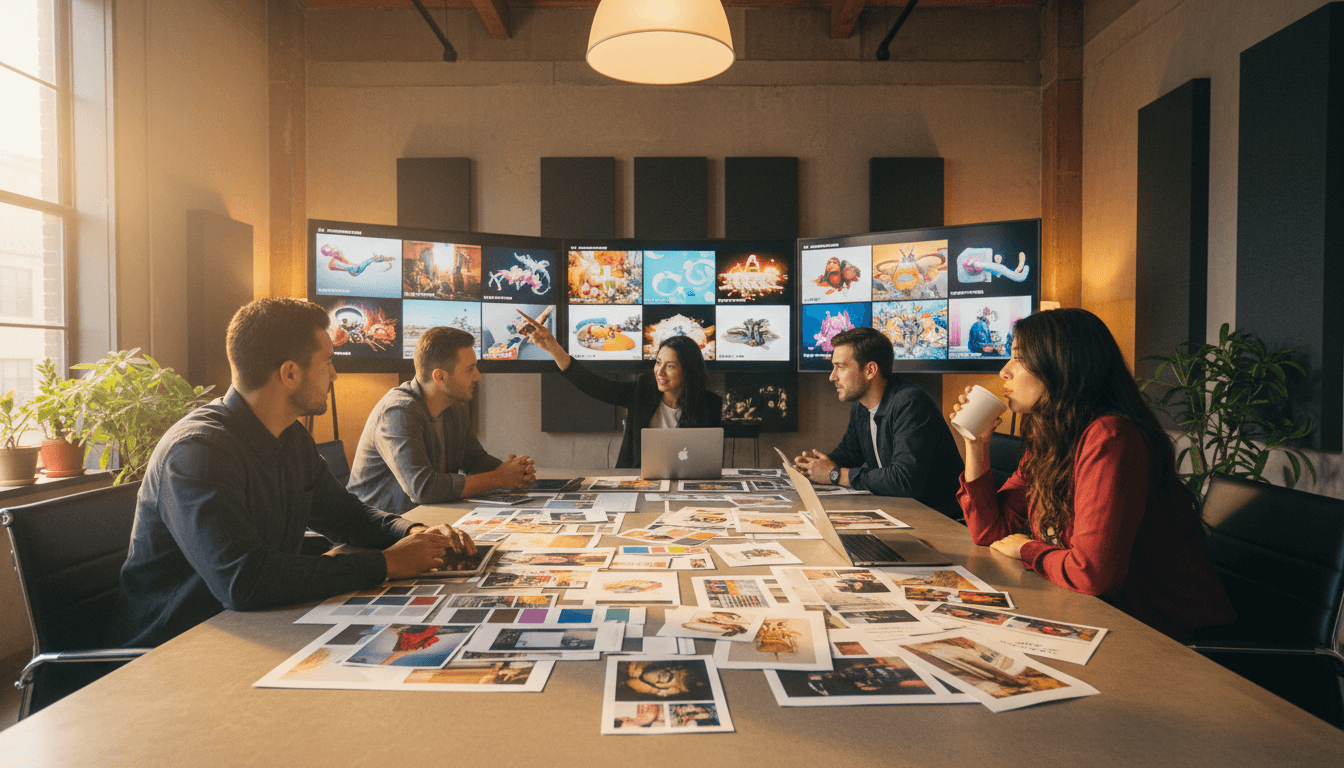
DALL·E 2 for Marketing: Scale Visual Content Fast
Most U.S. teams don’t have a creativity problem. They have a production problem.
The calendar doesn’t care that design has a backlog, that performance marketing needs 12 new variants by Monday, or that your product launch now includes app store screenshots, social cutdowns, landing page hero images, and help-center visuals. In media and entertainment especially, audiences expect fresh creative constantly—thumbnails, posters, promos, channel art, and in-product imagery—across every platform.
That’s where DALL·E 2-style text-to-image generation fits: it turns a written prompt into usable visual directions (and often usable images) quickly enough to keep pace with modern digital services. Even when you can’t directly automate the final asset, you can automate the iteration, which is where time and budget typically disappear.
This post is part of our AI in Media & Entertainment series, where we focus on AI-driven digital services that help teams ship more content with fewer bottlenecks—without lowering the bar on brand quality.
DALL·E 2 in plain English: what it’s good at
DALL·E 2 is best used as a fast visual ideation and variation engine. Treat it like a creative partner that can generate concepts, compositions, styles, and options on demand—then route the best outputs through your normal brand, legal, and production steps.
If you’re expecting “type one sentence, get a perfect campaign-ready image every time,” you’ll be disappointed. If you want 10–50 credible directions in an afternoon, you’ll feel the value immediately.
The real win is speed-to-variation
Most marketing and media workflows stall at one chokepoint: you can’t test what you can’t produce. DALL·E 2 shifts the constraint.
Instead of debating a single hero concept in a meeting, teams can:
- Generate multiple art directions (lighting, mood, setting, composition)
- Produce variant images tailored to specific audiences or placements
- Explore seasonal themes quickly (yes, even late-December “last-mile” creative)
- Build a stronger brief for designers and production vendors
It fits the way digital services already work
Digital services in the U.S. are built around continuous delivery: small releases, frequent experiments, fast feedback loops. Visual content has lagged behind because it’s expensive to create and hard to iterate.
Text-to-image generation makes visual iteration feel more like software iteration—draft, review, adjust, ship—which is why it’s showing up everywhere from streaming promo teams to ecommerce studios.
Where U.S. companies actually use DALL·E 2-style image generation
The most reliable use cases are the ones where quantity and variation matter, and where “good enough to learn” is valuable. Here are practical patterns that map to real business outcomes.
Marketing creative for paid social and landing pages
Paid social thrives on volume: hooks, angles, formats, and continuous A/B testing. DALL·E 2 can supply rapid visual options for:
- Backgrounds and scene concepts for product-in-context imagery
- “Mood board” directions for new campaigns
- Variant hero images for landing page tests
- Seasonal creative refreshes (holiday promos, New Year goals, winter themes)
My stance: if your team isn’t shipping at least weekly creative refreshes for top spend campaigns, you’re likely leaving performance on the table. The bottleneck is almost always production capacity—not strategy.
Media & entertainment: thumbnails, posters, and promo concepts
In the AI in Media & Entertainment context, the pressure is relentless. Creators and content studios need a constant stream of visuals:
- Thumbnail concepts for different audience segments
- Poster drafts for internal pitch decks
- Episode key art explorations before final photo shoots
- Social teaser imagery tied to moments (sports, awards season, finales)
DALL·E 2 is particularly useful early in the pipeline: you’re not replacing the final key art; you’re compressing the time it takes to find the direction worth investing in.
Product and UX teams: illustrations and onboarding visuals
SaaS and consumer apps in the U.S. often need clean, consistent illustrations for:
- Onboarding screens
- Feature announcement banners
- Help center articles
- In-app empty states
Generated imagery helps teams quickly align on style and narrative before commissioning final illustration work. Used responsibly, it’s a cost-effective way to reduce rework.
Internal enablement: sales decks and customer education
A “lead gen” reality: many deals are won with better explanation, not louder advertising. Visuals make explanations stick.
DALL·E 2 can support:
- Sales deck visuals that match the story
- Industry-specific mockups (for regulated or niche verticals)
- Training materials for customer success teams
The output doesn’t have to be perfect. It has to make the concept clearer and the message faster to grasp.
A practical workflow: from prompt to production-ready asset
The safest way to operationalize DALL·E 2 is to treat it as a front-end to your existing creative pipeline, not a replacement for it. Here’s a workflow that holds up in real teams.
1) Start with a creative brief, not a prompt
A strong prompt is usually just a compressed brief. Write the brief first:
- Audience and placement (TikTok, YouTube thumbnail, app store, etc.)
- Brand personality (playful, premium, technical)
- Must-include elements (product, logo usage rules, colors)
- Emotional goal (trust, urgency, curiosity)
Then translate that into prompts.
2) Generate variations intentionally
Don’t ask for “a cool image.” Ask for controlled variation. For example:
- Same concept, three visual styles (photo-real, editorial illustration, 3D)
- Same layout, three backgrounds (home office, city street, studio)
- Same subject, three camera angles (wide, medium, close)
This matters because marketing performance is often driven by small differences—contrast, focal point, clarity at small sizes.
3) Curate like an editor
Treat outputs as a contact sheet. Pick winners based on:
- Readability at the final size (especially thumbnails)
- Clear subject hierarchy (what the eye goes to first)
- Brand fit (tone, color discipline)
- Placement constraints (space for headline, safe margins)
4) Hand off to design with clearer direction
The handoff is where teams feel the biggest productivity gain. Instead of “make it modern,” you deliver:
- 3–5 approved visual directions
- Notes on what to keep/change
- A clearer path to final retouching, layout, and typography
5) Instrument the results
If you’re using AI-generated concepts for marketing, tie it to metrics:
- CTR or thumb-stop rate (paid social)
- Conversion rate (landing pages)
- Watch-through rate (promos)
- Add-to-cart rate (commerce)
A simple rule: if you can’t measure it, you can’t justify scaling it.
Guardrails: brand safety, rights, and trust aren’t optional
The fastest way to lose internal support for AI content creation is to ignore governance. You need clear rules before usage spreads.
Brand consistency guardrails
- Define a small set of approved styles and example prompts
- Create a review checklist (colors, tone, composition, prohibited elements)
- Maintain a “do not generate” list (sensitive topics, restricted imagery)
Consistency is what makes AI-assisted creative look intentional rather than random.
Legal and compliance considerations
Generated images can still create risk:
- Unintended resemblance to real people
- Misleading visuals (especially in regulated industries)
- Content that implies endorsements or false claims
If you’re in healthcare, finance, or insurance, build a review step that mirrors your copy approval process. The workflow should feel boring. Boring is good when compliance is involved.
Audience trust and authenticity
In media and entertainment, the audience relationship is fragile. If your brand is built on authenticity, be selective about where generated imagery appears.
A stance I’ll defend: use generative imagery to accelerate production, not to impersonate reality. The moment audiences feel tricked, you’ve traded short-term speed for long-term trust.
“People also ask”: quick answers teams need
Is DALL·E 2 replacing designers?
No. It changes what designers spend time on. Less repetitive exploration; more art direction, curation, layout, brand systems, and final polish.
What’s the best way to prompt for marketing images?
Start with the placement and objective, then specify subject, setting, lighting, mood, and style. Keep one variable per iteration so you can learn what caused improvement.
How does this help lead generation?
You can produce more campaign variants, test faster, and personalize visuals by segment—without waiting weeks for a new batch of design.
Where does it fit in the AI in Media & Entertainment stack?
It sits alongside recommendation engines and audience analytics as an “output layer”: AI not only chooses what people see, it helps create what they see.
The better way to approach AI visual content in 2026
DALL·E 2-style tools are most valuable when they’re treated as a creative operations upgrade. They compress the time between idea and usable concept, which is exactly what U.S. tech companies and digital service providers need when content demand keeps climbing.
If you’re building a modern content engine—especially in media and entertainment—your advantage won’t come from producing one perfect piece of creative. It’ll come from producing many good options, learning quickly, and raising the average quality over time.
If your team wanted to run twice as many creative tests next quarter, what part of your workflow would break first: briefing, reviews, design capacity, or approvals?