AI video generation like Sora is turning video into a scalable business asset. See the best U.S. use cases, workflows, and risk controls.
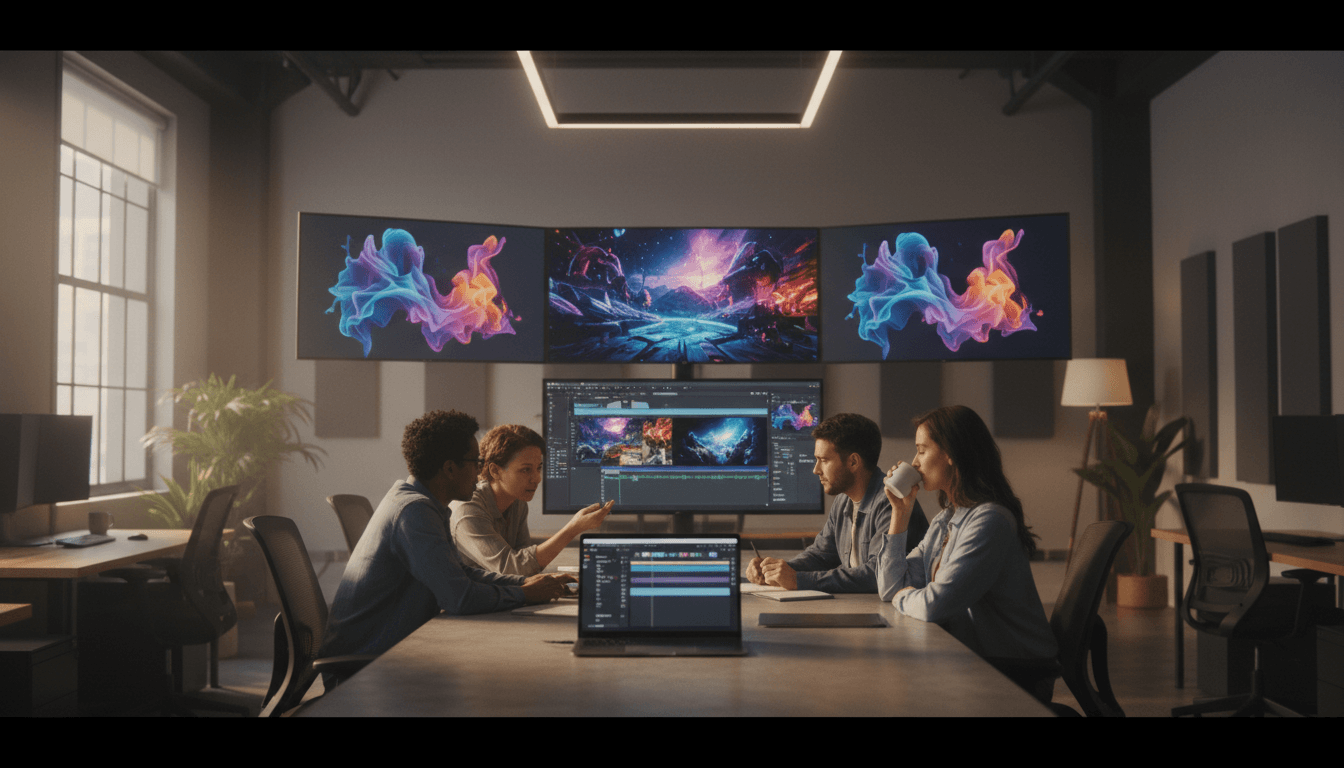
AI Video Generation in the U.S.: What Sora Signals
Most teams trying to scale video hit the same wall: time, cost, and creative bandwidth. You can crank out more ads, more explainers, more onboarding clips—but quality usually drops, and timelines still slip.
That’s why the “Just a moment… waiting to respond” experience matters more than it seems. The RSS source for Minne Atairu & Sora is effectively a placeholder—blocked behind an access gate and not fully retrievable (403). But the headline and context point to something real: OpenAI’s Sora-era video generation is becoming a major reference point for where AI in media is heading.
For U.S. tech companies and digital service providers, AI-generated video isn’t a novelty. It’s a new production layer that can change how you do marketing, customer communication, and even product experiences—if you implement it with the right guardrails.
Sora and AI-generated video: the real shift isn’t “cool videos”
AI video generation is fundamentally a throughput upgrade for communication. The flashy demos get attention, but the business value comes from turning slow, expensive video workflows into something closer to generating product screenshots or landing pages.
Here’s the shift I’m seeing in U.S. digital services: the teams that win with AI video won’t be the ones making the most cinematic clips. They’ll be the ones who treat video as an operational asset—updated frequently, personalized safely, measured rigorously.
Why video is the bottleneck in digital services
Video sits at the intersection of copy, design, brand, legal, product, and analytics. It’s also one of the few formats customers will actually watch when they’re:
- deciding whether to buy
- trying to set up a product
- stuck in a support loop
- comparing options during renewal
Yet video production often requires a multi-week workflow (brief → script → storyboard → shoot/animate → edit → approvals). AI video generation compresses parts of that pipeline.
What “Sora-level” capabilities imply for production teams
Even without quoting specifics from the blocked page, the market direction is clear: modern text-to-video models are aiming for:
- higher realism and consistency (objects, motion, lighting)
- better prompt adherence (what you ask for is what you get)
- longer clips and improved continuity
- more directability (camera moves, scene composition)
The practical implication: more teams will be able to produce video internally, and agencies will shift toward creative direction and governance, not just execution.
Where AI video generation fits in the “AI in Media & Entertainment” stack
In media & entertainment, AI is already used to personalize content, automate production, and analyze audience behavior. AI-generated video sits right in the middle: it can produce assets and enable personalization at scale.
Think of the stack like this:
- Audience insight (what people watch and where they drop off)
- Content assembly (variations, edits, localization)
- Content generation (new scenes, B-roll, synthetic shots)
- Distribution optimization (formatting per channel, A/B testing)
Sora-style video generation pushes step 3 forward—which makes steps 2 and 4 more powerful, because now you can test more creative directions without blowing your budget.
A strong stance: personalization is where the money is
Generic video can be good. Specific video performs.
AI video generation becomes most valuable when it supports:
- industry-specific versions (healthcare vs. retail vs. fintech)
- role-based versions (admin vs. end user vs. developer)
- region-based versions (U.S. state-by-state compliance messaging)
- lifecycle versions (trial onboarding vs. renewal vs. win-back)
This is exactly where many U.S. digital services want to go—and exactly where classic video production gets painfully expensive.
High-ROI use cases for U.S. businesses (beyond marketing)
The fastest wins come from “communication-heavy” workflows. Marketing is obvious, but it’s not the only place video drives revenue or reduces cost.
1) Product onboarding and in-app education
If your customer success team keeps answering the same setup questions, that’s a sign you need better education assets.
AI-generated video can support:
- feature walk-throughs that match the UI version
- short “what changed” release clips per sprint
- personalized onboarding based on plan level
A pragmatic goal for 2026 planning: ship one new onboarding clip per week without increasing headcount.
2) Customer support deflection (without feeling like a brush-off)
Support centers often rely on text articles that nobody reads. Video can deflect tickets, but only if it’s current.
AI video generation helps you keep content fresh when:
- UI changes monthly
- policies change quarterly
- seasonal issues spike (holiday shipping, end-of-year billing, Q4 security reviews)
Late December is a perfect example: customer comms surge, and teams are short-staffed. A system that can produce accurate, approved video updates quickly is a real operational advantage.
3) Sales enablement and proposal personalization
Sales teams send the same deck to everyone, then wonder why conversion stalls.
AI video generation can support:
- account-specific intro videos (industry pain points, relevant case scenarios)
- proposal “cover videos” that explain ROI assumptions
- post-demo recap clips tailored to stakeholders (CFO vs. IT)
The point isn’t to fake a human relationship. It’s to scale clarity.
4) Localization for U.S. multilingual audiences
The U.S. market is multilingual, and many services still treat Spanish-language video as an expensive “someday” project.
A sensible approach:
- translate scripts
- generate multiple voice tracks
- adapt on-screen visuals to match language norms
- validate terminology with a human reviewer
Done right, this can expand reach without doubling production costs.
How to adopt AI video generation without creating a brand risk
The biggest risk isn’t “AI video is bad.” It’s uncontrolled production. When anyone can generate video, you need rules that keep output on-brand, accurate, and compliant.
Build a three-layer governance system
-
Brand layer
- approved tone and visual references
- restricted phrases, claims, and comparisons
- style constraints (what your brand would never show)
-
Legal and compliance layer
- disclosure rules (especially for synthetic media)
- regulated claims (finance, healthcare, employment)
- IP restrictions (logos, copyrighted characters, celebrity likeness)
-
Truth layer (accuracy)
- product UI validation
- policy and pricing verification
- “no hallucinated features” checklist
A simple rule that works: No AI-generated video ships without a human confirming every factual claim.
Decide what you will not generate
Teams move faster when boundaries are explicit. Common “no-go” zones:
- medical advice beyond approved language
- anything that could be interpreted as impersonation
- “before/after” claims without substantiation
- news-style content that could be mistaken for real reporting
This isn’t fear-based. It’s operational discipline.
A practical workflow: from prompt to production-ready asset
You don’t need a perfect system to start—you need a repeatable one. Here’s a workflow I’ve found keeps quality high while staying fast.
Step 1: Write a “creative brief prompt” (not just a prompt)
Instead of “make a video about our product,” define constraints:
- audience (who is this for?)
- goal (what should they do next?)
- length (15s, 30s, 60s)
- required scenes (3–5 beats)
- prohibited content (claims, visuals, topics)
- brand references (color mood, pacing, framing)
Step 2: Generate multiple drafts, then pick one direction
AI video is cheap to iterate, but reviews aren’t. Generate 3–6 drafts, select one direction, and only then iterate.
Step 3: Add human finishing where it matters
Even strong generations benefit from:
- human-written captions
- audio leveling and music licensing
- final color consistency
- compliance checks
Treat AI like the rough cut. Treat humans like the finish.
Step 4: Measure performance like a product feature
Track metrics that map to business outcomes:
- watch-through rate at 3s / 10s / completion
- click-through rate
- conversion lift vs. control creative
- support ticket deflection rate
If you can’t measure it, you can’t scale it.
People also ask: the questions teams bring up first
Will AI-generated video replace our video team?
No. It changes the team’s focus. The work shifts from “how do we produce this?” to “what should we say, to whom, and how do we keep it consistent?” Creative direction, editorial judgment, and brand stewardship become more important.
Is AI video safe for regulated industries in the U.S.?
Yes—if you implement governance and approvals. The risk isn’t the medium; it’s publishing unverified claims or creating misleading representations. Your compliance process needs to be designed for faster iteration.
What’s the first use case to try?
Start with internal enablement or low-risk help content:
- internal training clips
- feature announcements that mirror documented specs
- support tutorials based on approved scripts
Earn trust, then expand.
What this means for U.S. digital services in 2026
AI video generation is becoming the next competitive baseline for teams that sell, support, or educate at scale. In the “AI in Media & Entertainment” series, we’ve talked about personalization and automation as a growth engine. Video is where those themes collide—because video is both high-impact and historically hard to scale.
The companies that get ahead won’t be the ones generating random clips. They’ll build a system: prompts tied to brand rules, approvals tied to risk, and metrics tied to revenue.
If you’re planning Q1 initiatives right now, ask your team one forward-looking question: Which customer conversation would improve the most if we could produce accurate video updates weekly instead of quarterly?