Disney’s Sora deal with OpenAI signals licensed AI video is heading to streaming. Here’s what it means for AI-powered content creation and digital services.
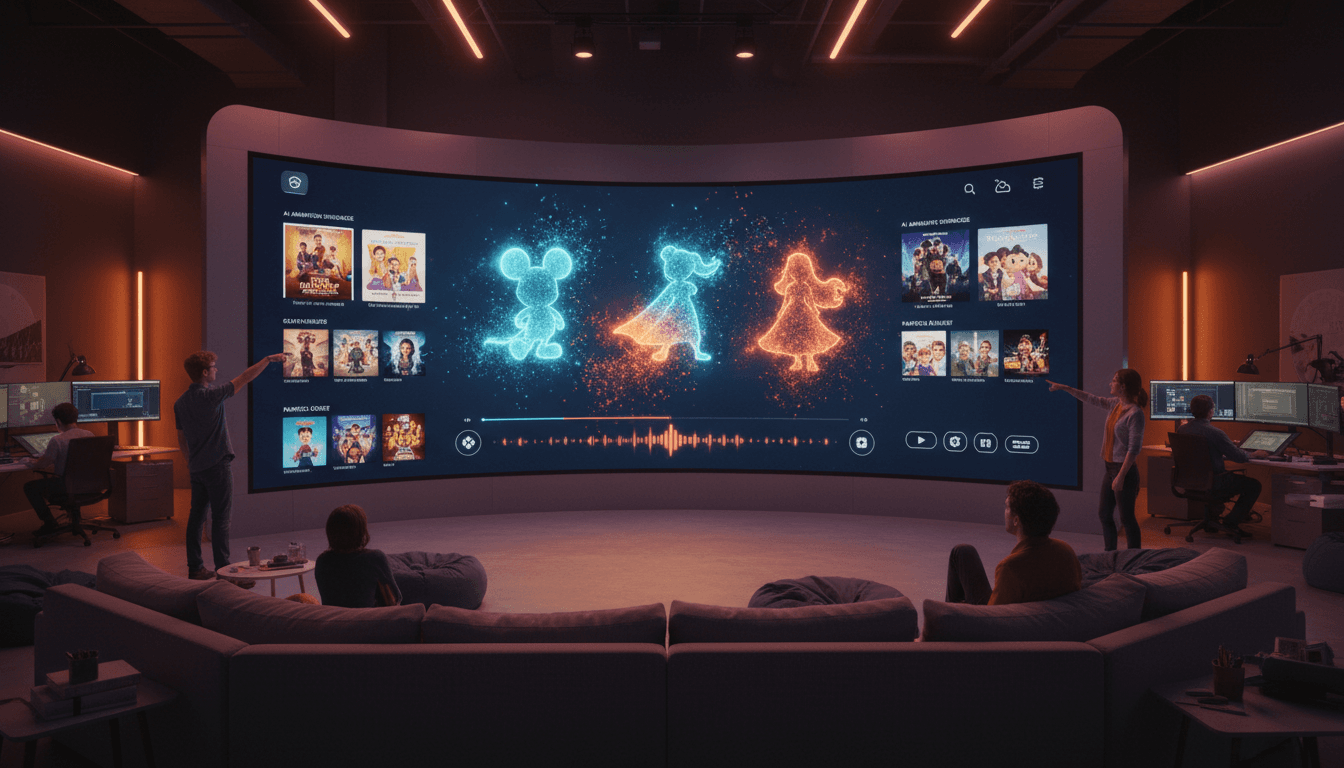
Disney + OpenAI: AI Video Characters Come to Streaming
A $1 billion investment doesn’t happen because two companies want a flashy press cycle. It happens when leadership believes a platform shift is underway.
That’s why the newly announced Disney–OpenAI agreement matters well beyond fandom. Disney is licensing characters from across Disney, Pixar, Marvel, and Star Wars into Sora (OpenAI’s short-form generative AI video platform), while also becoming a major OpenAI customer—using APIs to build new digital products and deploying ChatGPT internally. If you work anywhere near media, streaming, apps, or brand marketing in the United States, this is a clear signal: AI-powered content creation is becoming a core digital service, not a side experiment.
This post is part of our AI in Media & Entertainment series, where we track how AI personalizes content, automates production, and reshapes audience experiences. The Disney–OpenAI deal is a clean example of the next phase: licensed, brand-safe generative content that can scale to millions of people without turning every idea into a months-long production.
What the Disney–OpenAI Sora agreement actually changes
It formalizes licensed generative video as a mainstream distribution channel. Under the three-year agreement, Sora will be able to generate short, user-prompted social videos drawing from 200+ Disney-owned characters (plus costumes, props, vehicles, and iconic environments). A curated selection of these fan-inspired videos is expected to be available to stream on Disney+.
That last part is the real shift. User-generated content is not new. What’s new is a major studio saying, in effect, “We’ll host some of it.” That turns generative AI video from “something people post elsewhere” into a programmable content supply chain that can feed a first-party streaming service.
A few details worth highlighting because they shape how the industry will copy this:
- No talent likenesses or voices are included. That boundary reduces legal risk and narrows the rights surface area.
- The partnership includes trust and safety commitments (age-appropriate policies, controls to prevent illegal/harmful content).
- Disney becomes a major OpenAI API customer, indicating this isn’t just a licensing deal—it’s also an enterprise AI adoption story.
In practical terms, Disney gets a controlled way to test how fans want to co-create with its IP, while OpenAI gets a high-profile template for responsible, licensed generative media.
Why this is bigger than “fans making cute videos”
This is about scaling digital services with AI, not replacing filmmakers. Most companies still treat generative media as a marketing novelty: a campaign microsite here, an “AI trailer” experiment there. Disney is moving it toward an operational model: generate, curate, distribute, and measure.
The new model: content as an on-demand service
Sora-style generation changes the economics of short-form video in three ways:
- More output per creative hour. A creator can iterate through dozens of concepts in the time it used to take to storyboard one.
- Personalized variations at scale. Same character, different setting, different tone, different duration, different format for different platforms.
- Fast feedback loops. When creation is cheaper, you can test more, learn faster, and throw away what doesn’t land.
That’s exactly how modern SaaS products scale: ship, measure, iterate. This deal pulls entertainment closer to that cadence.
Why Disney+ is the strategic endpoint
Putting curated fan-inspired content on Disney+ isn’t just “community building.” It’s a retention strategy and a product strategy.
- Retention: Fresh short-form content can reduce churn risk between tentpole releases.
- Product expansion: Generative video can become a feature set inside the Disney+ app (think: prompt-driven shorts, seasonal templates, shareable clips).
- Data flywheel: Even with privacy controls, aggregated engagement patterns teach what audiences actually want next.
From a U.S. digital economy lens, this is what AI is doing across sectors: turning previously manual creative workflows into scalable digital services.
The responsible AI angle: why licensing beats scraping
Licensed character generation is the only sustainable path for consumer-facing AI in media. Unlicensed generation creates two problems: rights conflicts (copyright/trademark) and brand safety chaos (characters used in harmful contexts). The Disney–OpenAI approach pushes the market toward a clearer standard: permissioned IP, defined boundaries, and enforceable policies.
Here’s the stance I’ll take: the “move fast and hope nobody sues” era for generative entertainment is ending. Major brands don’t adopt AI at scale without guardrails because their downside is enormous.
What “responsible” needs to mean in practice
Statements about safety are easy. Implementation is what matters. If you’re building AI-driven content creation systems—whether for media, retail, or education—this deal hints at the baseline expectations customers and regulators are forming:
- Age-appropriate controls: not a checkbox, but real segmentation of what minors can generate and view.
- Abuse prevention: strong filters, reporting, and repeat-offender enforcement.
- Rights protection: clear handling of prompts/outputs that attempt to mimic protected elements outside the license.
- Likeness and voice boundaries: explicit blocks around real people and performers.
Those controls aren’t “nice to have.” They’re product requirements if you want distribution at Disney scale.
What this means for U.S. companies building AI-powered digital experiences
The playbook isn’t “license famous characters.” The playbook is “productize creativity.” Most organizations have some form of storytelling—brand education, onboarding, customer support, training, internal comms, or community content. AI makes that storytelling modular and repeatable.
5 practical lessons teams can steal immediately
- Treat generative media as a workflow, not a feature. Map the pipeline: prompt → generation → review → publish → measure → iterate.
- Build a curation layer. Disney+ hosting “selected” videos is the key. Curation is how you keep quality high while still scaling volume.
- Define your IP and compliance perimeter early. List what’s allowed (brands, products, templates) and what’s banned (regulated claims, sensitive topics).
- Instrument everything. Track prompt patterns, output acceptance rates, time-to-publish, and engagement. If you can’t measure it, you can’t improve it.
- Separate “creation” from “distribution.” Let people create broadly, but distribute narrowly. This reduces risk while preserving experimentation.
If you’re in media & entertainment, these lessons apply directly to AI-powered content creation and streaming personalization. If you’re outside the industry, they still apply—because the underlying move is the same: AI turns content into a service your organization can deliver continuously.
People also ask: the questions your team will get next
When will fans be able to generate Disney character videos in Sora? Early 2026 is the expected start for Sora and ChatGPT Images generating fan-inspired videos and images using the licensed Disney character set.
Will Sora include actor likenesses or voices? No. The agreement explicitly does not include talent likenesses or voices, which reduces legal and ethical complexity.
Why does the $1 billion equity investment matter? It signals long-term commitment and strategic alignment. This isn’t a pilot; it’s an ecosystem bet, with Disney also becoming a major OpenAI customer and deploying ChatGPT for employees.
Does this replace traditional animation and VFX work? Not in the way people assume. It shifts where human effort goes: toward creative direction, world-building, review, and high-impact tentpole productions—while short-form variations and social formats become far more automated.
What to watch in 2026: where this goes next
Expect generative video to become a standard layer inside entertainment apps, not a separate destination. If Disney+ can host curated Sora-generated shorts, other platforms will respond with their own versions: prompt-to-clip experiences, interactive story formats, and personalized character moments.
The more interesting question is operational: who builds the “creative ops” function for AI? The winners will be teams that combine:
- brand and IP governance,
- production-grade review workflows,
- safety engineering,
- and analytics.
That’s not just “creative.” It’s product management for storytelling.
If your organization is exploring AI in media & entertainment—whether you’re launching a streaming feature, a branded content engine, or a creator program—this Disney–OpenAI partnership is a strong model to study. Not because of the characters, but because it shows how AI can power scalable digital services while still respecting creators and users.
Where do you think the line will land in 2026: will audiences prefer studio-curated AI shorts, or fully open-ended creation tools with minimal gating?