Flood insurance lapses rose as NFIP rates increased. See how AI risk pricing and customer retention models can reduce drop-off in vulnerable communities.
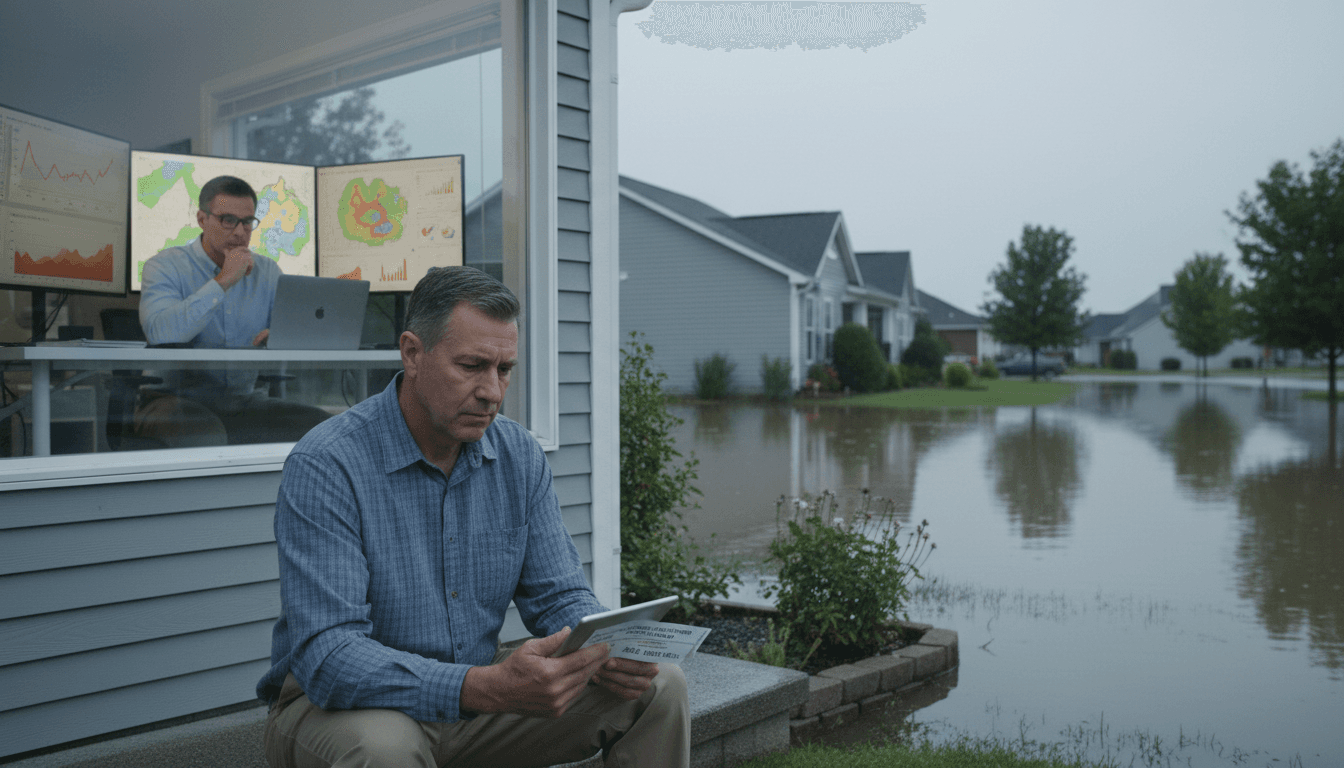
Flood Insurance Rate Hikes: How AI Can Reduce Drop-Off
A hard number tells the story: FEMA’s Risk Rating 2.0 drove up to 13% of households facing the biggest premium increases to drop NFIP flood policies. Pair that with another sobering statistic—only about 4% of American homeowners carry flood insurance—and you get a risky reality: the places that need flood coverage the most are often the places least able (or willing) to keep paying for it.
This isn’t just a FEMA problem. It’s an insurance problem. When pricing becomes more accurate, affordability becomes the battleground, and retention becomes the metric that decides whether “better risk pricing” actually makes communities safer—or simply pushes risk onto families who can’t absorb a major loss.
In our AI in Insurance series, I keep coming back to one theme: models don’t fail because they’re too smart. They fail because they’re not connected to how real people behave. Flood insurance is the clearest example. Risk-based pricing is directionally correct. But if it triggers policy lapse at scale, the system has simply shifted who gets hurt.
Risk-based flood pricing is right—behavior makes it messy
Risk Rating 2.0 is a pricing correction, not a customer strategy. FEMA moved away from broad flood zones toward property-specific pricing, using catastrophe modeling approaches similar to private insurers. Some premiums dropped. Many rose—often gradually, capped at 18% per year until the policy reached the full risk rate. New policyholders paid the full rate immediately.
From a pure actuarial standpoint, that’s defensible. The NFIP spent decades underpricing risk and accumulated around $20 billion in debt to the U.S. Treasury. Underpricing also encouraged continued development in high-risk areas. So the reform sends a clearer signal: if you live in a higher-risk location, the cost of insurance should reflect that.
But insurance isn’t a math contest. It’s a participation game.
The coverage paradox: accurate pricing can shrink the pool
Flood remains the most under-insured physical risk in the U.S. Even before Risk Rating 2.0, NFIP enrollment had been sliding since its 2009 peak (about 5.7 million policies) to under 4.7 million today. When reforms raise prices, the system risks accelerating a trend that was already going the wrong direction.
A recent academic analysis (using FEMA policy transaction data) compared ZIP codes expecting larger premium increases with those expecting smaller changes. The results were consistent and practical:
- New policy uptake fell by roughly 11% to 39% (depending on the increase quartile)
- Existing policies declined by roughly 5% to 13%
- Lower-income ZIP codes showed higher drop-off across all price-change groups
That last point matters most. Risk-based pricing is supposed to allocate cost fairly by risk. In practice, it can allocate protection by income.
Why low-income policyholders drop flood insurance first
Price increases don’t hit households equally, even when risk is the same. When budgets are tight, insurance competes with groceries, utilities, car repairs, and rent increases. A flood premium that rises steadily—even under an 18% annual cap—can feel like a subscription that never stops increasing.
Here are the most common “drop-off mechanics” I see insurers underestimate:
1) The value is invisible—until it’s too late
Flood insurance is a classic “pay for nothing most years” product. When premiums jump, customers don’t evaluate flood probability. They evaluate fairness and immediacy: “I’ve never flooded. Why am I paying more now?”
2) Confusion looks like churn
Many homeowners still assume standard homeowners insurance covers flood (it usually doesn’t). When communication is unclear, lapse behavior rises—not because customers made an informed decision, but because they didn’t understand what they were giving up.
3) Renewal is where trust gets tested
A sudden or repeated renewal increase is emotionally different from a higher initial quote. Renewal is a promise cycle: “You told me last year what this would cost.” Break that expectation and customers either shop or quit.
4) The people most exposed are least able to self-insure
Higher-income households can absorb deductibles, repairs, temporary housing, and claim delays. Lower-income households can’t. When they drop coverage, the consequence isn’t just financial—it’s displacement risk.
Where AI actually helps: keeping risk pricing and keeping people
AI won’t fix affordability by itself. It can, however, reduce unnecessary churn, target subsidies and mitigation more precisely, and help insurers communicate pricing changes in ways customers accept.
Here are three AI use cases that matter right now for flood insurance retention.
1) AI-driven lapse prediction: find the “about to drop” policies early
The most practical retention win is identifying lapse risk before renewal hits. Many insurers still treat lapse as a historical metric rather than a forecastable event.
A modern lapse model can combine:
- Premium change trajectory (not just this year’s change)
- Payment behavior (late pays, installment plan stress)
- Claim history and near-miss events (flood advisories, local incidents)
- Household proxies (property value bands, tenure, escrow vs. direct pay)
- Engagement signals (opened renewal notices, call center sentiment, portal logins)
Then your retention playbook becomes targeted, not spammy:
- For high lapse risk + high flood risk: proactive outreach + mitigation guidance + payment plan options
- For high lapse risk + moderate flood risk: education + right-sized coverage options
- For low lapse risk: lighter communication (don’t create friction)
Snip-worthy point: If you can predict lapses, you can prevent the avoidable ones—and focus help where it changes outcomes.
2) Explainable pricing: turn “rate shock” into a story customers accept
Rate increases are easier to swallow when customers understand the “why” in plain language. This is where AI can do more than generate templated letters.
A strong approach is explainable pricing summaries that translate model outputs into a small set of understandable drivers, such as:
- Distance to water source and local drainage patterns
- First-floor elevation relative to expected flood depth
- Historical flood frequency in the immediate area
- Replacement cost exposure
The goal isn’t to overwhelm. It’s to answer the real question customers ask:
“What changed—and what can I do about it?”
When you pair pricing explanations with mitigation actions (even small ones), you get a different customer reaction: less anger, more agency.
A better renewal notice isn’t prettier. It’s clearer.
AI can personalize the message structure based on the policyholder:
- A first-time buyer needs a “what flood insurance covers” summary.
- A long-tenured policyholder needs a “what changed since last year” breakdown.
- A price-sensitive household needs a “ways to reduce total cost” checklist.
This is customer engagement AI at its best: not clever phrasing, but lower confusion.
3) Smarter affordability: targeting subsidies and mitigation where they pay off
Means-tested subsidies and risk reduction investments are good ideas—when they’re precise. The challenge is allocating limited dollars without waste.
AI can support that precision by identifying:
- Neighborhoods where small mitigation measures yield large expected-loss reductions
- Households at high flood risk who are most likely to lapse after a premium increase
- Properties where mitigation credits would materially change premiums and retention
This becomes especially relevant as federal agencies face potential restructuring and reform debates. If the future of flood coverage includes more private participation, more public-private models, or a redesigned NFIP, then data-driven targeting will decide whether affordability programs are meaningful or symbolic.
What this looks like in practice
Instead of broad discounts, imagine an insurer (or public program) offering:
- A verified elevation improvement credit
- A premium stabilization option for qualified households paired with mitigation milestones
- A micro-grant for flood vents, backflow valves, or drainage improvements
AI helps select who gets which intervention so the program reduces losses and keeps coverage in force.
The hidden cost of outdated models: churn, not just loss
Most pricing modernization projects obsess over loss ratio and ignore churn cost. That’s a mistake—especially for catastrophe-exposed lines.
When lower-income policyholders drop coverage:
- The risk doesn’t disappear; it moves to disaster aid, debt, and delayed recovery
- Insurers and programs lose premium base, making rates harder to stabilize
- Communities see slower rebuilding and higher displacement after events
This matters in December 2025 because flood risk isn’t taking a holiday. Winter storms, river flooding, and coastal surge don’t care about calendar timing. Yet year-end budget pressure is when households are most likely to cut “optional” bills—especially if they believe flood is unlikely.
If you’re an insurer, reinsurer, MGA, or insurtech, the real question is operational:
Can you modernize risk pricing without pricing people out of protection?
AI is one of the few tools that can connect those dots—because it can model both hazard and behavior.
Practical next steps for insurance leaders (no big-bang rebuild required)
If you’re trying to apply AI in underwriting, pricing, or customer retention, start here:
- Build a lapse risk baseline for flood-exposed books (even a simple model beats “renewal surprise”).
- Segment renewal communications by tenure, risk level, and expected price change—reduce confusion before it becomes churn.
- Offer at least one affordability lever (installments, deductibles review, coverage counseling, mitigation credits).
- Measure retention like a risk metric: track lapse by income proxy, geography, and premium trajectory.
- Create a mitigation-to-premium feedback loop so customers see a path to lower cost over time.
These are execution details, not theory. They’re also where most organizations stall—because pricing teams, underwriting teams, and customer teams operate in separate lanes.
What the NFIP drop-off is really telling us
Risk-based pricing is necessary, and it’s not sufficient. FEMA’s experience with Risk Rating 2.0 shows what happens when pricing accuracy outpaces affordability strategy: lower-income households opt out, coverage shrinks, and communities remain financially fragile when the next flood hits.
For insurers building the next generation of AI underwriting and risk pricing, the lesson is blunt: if you don’t model customer behavior alongside hazard, you’ll build a “perfect” price that customers refuse to pay.
If you’re working on AI in insurance initiatives—pricing modernization, customer engagement AI, or underwriting automation—this is a strong moment to ask: Which customers are we about to lose, and what would actually keep them insured?