Wildfire power shutoffs are predictable shocks. See how insurers use AI with weather and utility data to improve risk decisions and speed claims.
Wildfire Power Shutoffs: How Insurers Use AI Fast
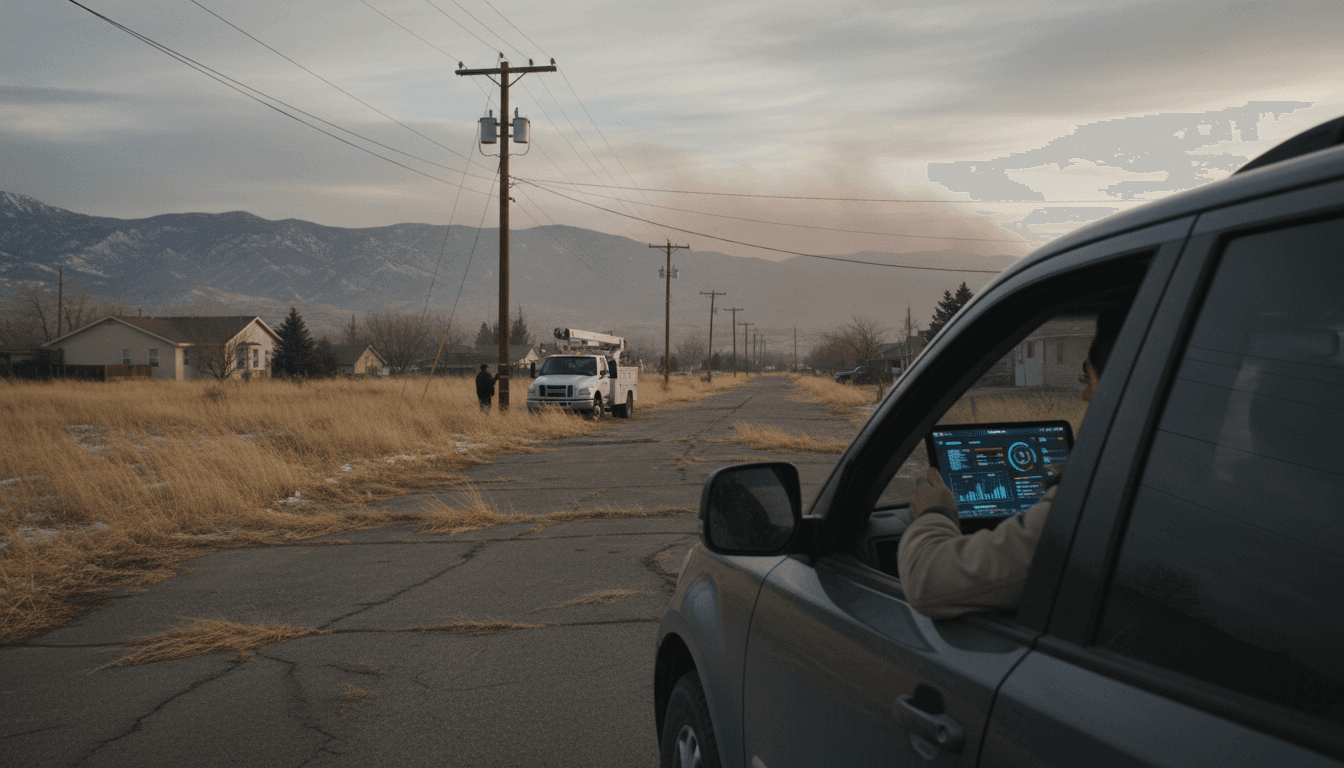
Xcel Energy’s planned power shutoffs across parts of the Denver metro and the Rockies aren’t just a utility story—they’re an insurance operations story. When gusts push toward 60 mph and conditions are warm and dry, utilities increasingly cut electricity on purpose to prevent downed lines from sparking wildfires. For insurers, that single decision can change claim volume, customer behavior, loss severity, and even fraud patterns within hours.
Most carriers still treat wildfire and public safety power shutoffs (PSPS) as “catastrophe events” that are handled after the fact: a claims spike, a scramble for staff, and a lot of manual triage. I think that’s backwards. Power shutoffs are a forecastable operational shock, and the insurers that build AI workflows around real-time weather and utility signals respond faster, pay more accurately, and keep customers calmer.
This post is part of our AI in Energy & Utilities series, where we look at how grid operations, weather volatility, and data-rich infrastructure are reshaping insurance risk. The thesis here is simple: when the grid changes state (energized → de-energized), your insurance playbook should change state too—automatically.
Why utilities are cutting power—and why insurers should care
Answer first: Utilities shut off power to reduce ignition risk from electrical equipment, and insurers should treat these shutoffs as an early-warning trigger for underwriting, claims, and customer outreach.
Preemptive shutoffs started as a “California problem.” Now they’re mainstream across the fire-prone West. Research published in 2024 found that utilities serving roughly 24 million homes and businesses in the Western U.S. have plans for proactive shutoffs during peak fire danger. Colorado’s Front Range is now part of that reality.
Here’s why it matters to insurance teams:
- Loss timing shifts forward. You get a signal before ignition (high wind + low humidity + shutoff notice). That’s rare in catastrophe work.
- Claims aren’t only wildfire. Shutoffs cause secondary losses: burst pipes from failed heat, food spoilage, sump pump failure, business interruption, and device damage from power restoration.
- Customer contacts spike even without a fire. Policyholders call because they’re anxious, confused about coverage, or need help preventing loss.
A good AI strategy starts with a mindset shift: treat PSPS like an “operational CAT” with multiple claim types, not a single peril.
The new wildfire risk stack: weather, vegetation, grid, and people
Answer first: Modern wildfire exposure is multi-factor, and AI models outperform static rating when they combine weather forecasts, fuels/vegetation, grid assets, and human activity signals.
Wildfire risk isn’t just “distance to brush.” The Denver/Rockies scenario in the source article highlights a classic setup: near-record warmth, dry air, and strong winds. Add overhead lines and you have an ignition pathway.
What traditional underwriting misses
Many rating approaches still rely heavily on:
- Historical loss by territory
- Coarse hazard maps updated infrequently
- Simple defensible space questions that are hard to verify
Those factors matter, but they’re slow. Meanwhile, wildfire drivers move quickly—hour by hour.
What AI adds (in practical terms)
AI-based wildfire risk modeling can ingest and reconcile fast-changing inputs:
- Short-range wind forecasts (gust potential is often what breaks lines and spreads embers)
- Fuel dryness proxies (soil moisture, vegetation indices, recent precipitation deficits)
- Topography and wind corridors (Front Range and canyon funneling effects)
- Grid context (feeder lines, outage footprints, historical line-fault hotspots)
- Human activity signals (holiday travel patterns, construction density, weekend recreation)
This matters because the probability of ignition and the expected severity are not constant—they swing with weather and grid state.
Snippet-worthy line: Static wildfire scoring is like pricing auto insurance without knowing whether the car is parked or driving on black ice.
Dynamic risk pricing during PSPS events (without upsetting customers)
Answer first: Insurers can use AI-driven, event-based risk signals to adjust decisions and operations—without “real-time premium shocks”—by focusing on underwriting controls, appetite, and mitigation incentives.
Dynamic pricing is a loaded phrase. Nobody wants a headline about premiums changing minute-to-minute because the wind picked up. The smarter approach is dynamic decisioning: change what you do operationally when risk spikes, while keeping pricing changes within approved and explainable bounds.
Where dynamic decisioning works today
During a high-risk wind event with potential shutoffs, carriers can:
-
Tighten binding controls temporarily
- Require additional underwriting review for certain ZIPs
- Pause instant-bind for high brush adjacency
- Trigger proof-of-mitigation (photos, inspection data) before binding
-
Re-rank portfolios for proactive outreach
- Identify policyholders with higher expected loss severity
- Prioritize those with older electrical systems, wood shake risk, or limited access routes
-
Offer mitigation nudges that actually reduce claims
- Generator safety reminders (improper use can cause fires and CO losses)
- Pipe-freeze prevention checklists when heating may be disrupted
- Business continuity tips for small commercial insureds
The key is explainability. Your AI doesn’t need to be mysterious. It can be framed as: “We’re using real-time hazard signals to prioritize support and prevent losses.” Customers tend to like that.
Claims automation when the power goes out
Answer first: AI helps insurers handle PSPS-driven claim spikes by triaging intake, validating event context, and routing to the right adjuster—or straight-through paying when appropriate.
A PSPS event creates operational friction:
- Customers can’t charge phones, scan documents, or access email.
- Call centers get slammed.
- Field inspections may be delayed because traffic lights, elevators, and building access systems fail.
AI can reduce the chaos in three concrete ways.
1) Faster, calmer first notice of loss (FNOL)
When your digital FNOL is built for disruption, you can capture essentials quickly:
- Voice-to-structured FNOL for callers
- SMS-based intake that works on limited bandwidth
- Automated triage questions based on location and outage footprint
Example triage logic:
- If the address is inside an outage polygon and the loss time aligns with the shutoff window, ask about food spoilage, sump pump, pipe freeze, or business downtime.
- If the address is outside the outage area but near the wind corridor, ask about fallen trees, roof damage, and smoke.
2) Event-aware claim validation (and smarter fraud detection)
Fraud detection works better when it’s context-aware. Utility shutoff notices and restoration timelines can become corroborating signals.
AI models can flag inconsistencies such as:
- Claimed power-surge damage when the premise was de-energized for that period
- Spoilage claims filed days after restoration with no supporting timeline
- Duplicate claims patterns across a tight geography with identical narratives
This isn’t about denying claims. It’s about routing the right claims to the right level of scrutiny so honest customers get paid faster.
3) Straight-through processing for small, high-confidence losses
PSPS events generate many low-to-mid severity claims that are predictable in scope. With the right guardrails, insurers can automate:
- Coverage checks (endorsements, deductibles, spoilage sublimits)
- Payment recommendations within thresholds
- Instant customer communications with next steps
That’s how you keep adjusters focused on the complex files—like wildfire smoke contamination, total losses, or multi-location commercial interruptions.
The missing integration: utility data as insurance-grade telemetry
Answer first: The strongest AI outcomes come from treating utility alerts and outage data as telemetry that feeds underwriting and claims workflows in near real time.
Energy and utilities already run sophisticated operations: grid monitoring, outage management systems, and risk-based shutoff protocols. Insurance often consumes those signals informally (news articles, customer calls) instead of systematically.
If you’re building an AI roadmap, a practical integration stack looks like this:
What to ingest
- Shutoff notifications (planned start time, affected counties/areas)
- Outage polygons or feeder-level footprints (where available)
- Estimated restoration time and status updates
- Weather forecast feeds aligned to service territory
What to do with it
- Trigger playbooks: “PSPS Level 2” automatically spins up staffing, outreach, and triage rules.
- Geo-match policies: map the outage footprint to your in-force book within minutes.
- Pre-stage vendors: restoration contractors, mitigation teams, temporary housing partners.
- Improve reserving: early loss estimates based on exposure mix and historical PSPS claim patterns.
In the AI in Energy & Utilities context, this is the broader pattern: grid intelligence becomes risk intelligence.
A practical playbook insurers can run next week
Answer first: Start with three workflows—event detection, policyholder prioritization, and claims triage—then add dynamic underwriting controls and continuous model monitoring.
If you want results without a two-year transformation program, implement this in phases.
Phase 1 (2–6 weeks): “Operational readiness”
- Create an event trigger: wind + dryness + utility shutoff notice = PSPS event in your ops system
- Build a portfolio heatmap: policies inside the affected footprint ranked by expected severity
- Launch customer messaging templates: outage safety, mitigation actions, how to file claims
Phase 2 (6–12 weeks): “Claims acceleration”
- Add event-aware triage rules in FNOL
- Enable photo and voice capture optimized for low bandwidth
- Set straight-through thresholds for low-severity, high-confidence claims
Phase 3 (quarterly): “Underwriting + model governance”
- Add temporary binding controls for extreme events
- Monitor drift: did the model over/under predict severity in this footprint?
- Document decisions for regulators and internal audit: inputs, logic, outcomes
The stance I’ll take: If your catastrophe plan starts after the outage begins, you’re late. The data exists earlier.
Where this is headed in 2026: fewer surprises, faster recoveries
Power shutoffs in places like Denver are a signal that wildfire risk management is becoming more proactive—and more intertwined with utility operations. That’s not a bad thing. It’s a chance for insurers to shift from paying for damage to preventing avoidable losses and making the inevitable claims less painful.
For carriers and brokers, the next competitive advantage won’t be who has the biggest CAT team. It’ll be who can turn real-time weather and utility signals into fast, explainable decisions: who to contact, what to staff, which claims to fast-track, and where to tighten underwriting.
If you’re evaluating AI in insurance for wildfire risk and PSPS events, the smartest first step is a narrow pilot: pick one service territory, integrate outage and forecast signals, and measure two numbers—time to first customer contact and time to payment. Then ask a forward-looking question your team can’t ignore: when the grid flips off to prevent a wildfire, should your insurance operation flip on automatically?