Green steel is an energy problem as much as a metallurgy one. See how AI helps utilities power near-zero emissions steel with reliability, cost control, and cleaner grids.
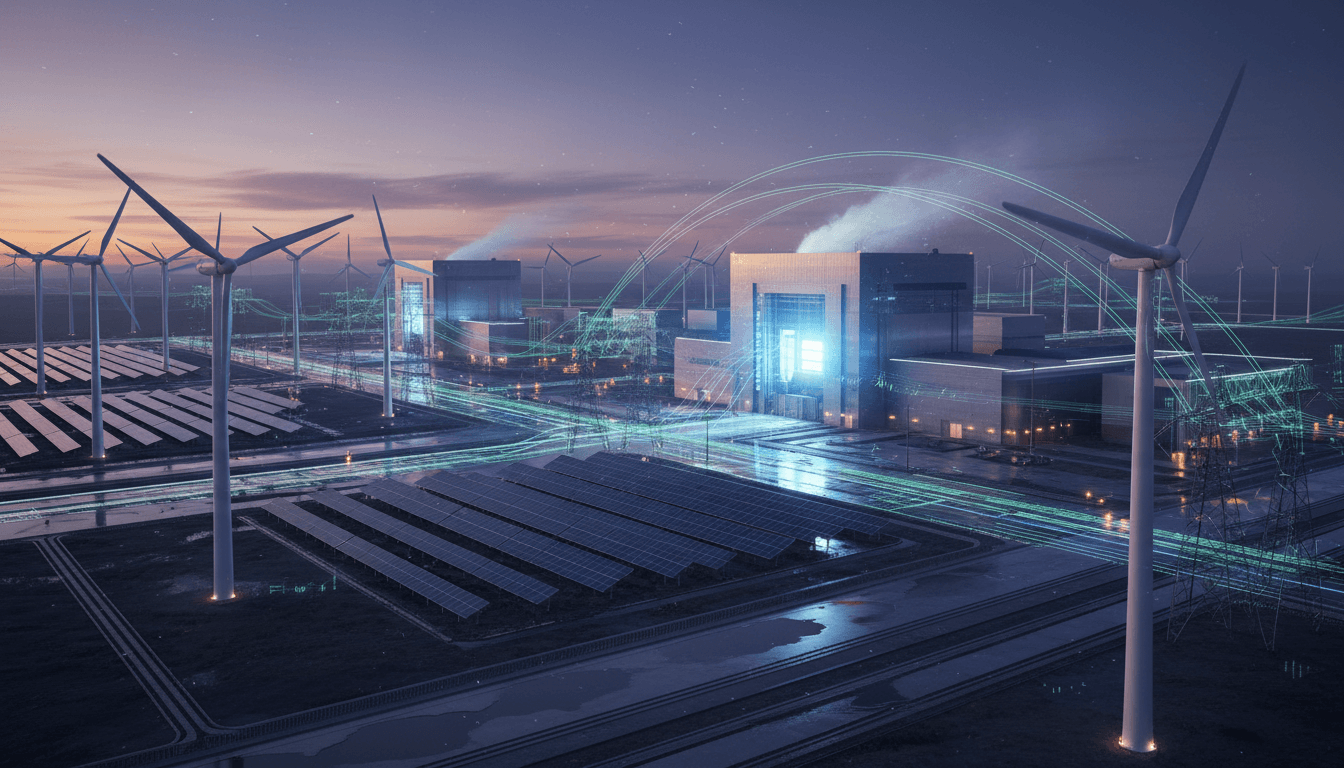
AI and Clean Power Are Rewiring Green Steel in 2026
Steel is a $1.5 trillion market producing about 1.8 billion metric tons a year, and it’s responsible for roughly 8% of global greenhouse gas emissions. Those numbers matter in any climate conversation—but they matter even more if you work in energy and utilities, because the path to near-zero emissions steel runs straight through the power system.
2026 is shaping up to be a telling year. The first commercial volumes of near-zero emissions steel are expected to reach customers from Northern Sweden, where Stegra plans to produce and sell green steel at scale. That milestone is exciting, but here’s the reality most people miss: green steel isn’t just a metallurgy problem. It’s an electricity, hydrogen, and operations problem. And the glue that holds those pieces together—especially when renewables and modular plants enter the picture—is increasingly AI for industrial energy optimization.
This post is part of our AI in Energy & Utilities series, and it focuses on a practical question energy leaders should be asking right now: What does it take to run near-zero emissions steel reliably and profitably—and where does AI actually help?
Why green steel is becoming an energy-and-utilities priority
Answer: Green steel scales only when clean electricity and clean molecules (hydrogen) scale—so utilities are no longer “adjacent” to steel decarbonization; they’re central to it.
Traditional steelmaking is dominated by integrated blast furnace-basic oxygen furnace (BF-BOF) sites. They account for about 70% of global crude steel production and typically emit around two tons of CO₂ per ton of steel. They also create meaningful local pollution burdens—air, water, and soil impacts that hit neighboring communities.
The emerging low-carbon routes—electric arc furnaces (EAFs), direct reduced iron (DRI), and hydrogen-based DRI—move the emissions bottleneck from coal to energy supply:
- EAFs shift the question to grid cleanliness and reliability: How green is the electricity feeding the furnace?
- H2-DRI adds a second dependency: Can you secure massive volumes of clean hydrogen at predictable cost?
- Scrap-based secondary steel needs clean firm power to avoid turning “green steel” into “coal-by-wire.”
From an energy & utilities lens, steel is becoming a new kind of strategic customer: high-load, high-value, highly flexible (in the right process designs)—and politically important.
The three technology paths: “make less, make better, make new”
Answer: The steel transition won’t be won by a single breakthrough; it’ll be won by a portfolio that cuts demand, cleans up current assets, and replaces coal-based processes.
Third Derivative and partners often describe the innovation landscape as three buckets. It’s a helpful way for utilities and energy providers to map where they can plug in.
Make less: circularity that changes load and location
Answer: Better recycling and material efficiency reduce primary steel demand—and shift energy demand toward EAF-heavy regions.
Scrap-based steel is already a major decarbonization lever, but scrap markets mature slowly because steel products often last 10–30 years. That means the “scrap boom” arrives later in fast-growing economies, then ramps quickly.
Where AI comes in isn’t flashy, but it’s commercially real:
- AI-enabled scrap sorting using optical sensors improves yield and reduces contamination (copper and tin are frequent headaches). Cleaner scrap enables higher-grade steel output and reduces rework energy.
- Better sorting and recovery also changes the shape of electricity demand: more EAF production concentrated near scrap aggregation centers.
Utilities should pay attention because scrap-driven growth often looks like distributed industrial electrification—multiple EAF sites, not one mega-plant.
Make better: pragmatic upgrades that avoid coal lock-in
Answer: Retrofitting BF-BOF can cut emissions, but it must be low-capex and low-downtime—or it becomes coal lock-in with better PR.
There’s no credible pathway to net-zero blast furnace steelmaking without replacing the core chemistry. So near-term improvements should focus on steps that reduce emissions without extending coal dependency.
The operational constraint is brutal: downtime can cost enormous amounts, and many operators won’t accept long outages for uncertain gains. This is exactly where AI for predictive maintenance and process monitoring becomes more than a buzzword.
A few practical AI applications that fit steel retrofits:
- Anomaly detection on burners, blowers, and gas handling to reduce unplanned shutdowns.
- Combustion optimization where electrified heating is added to legacy equipment.
- Condition-based maintenance on transformers and power electronics supporting partial electrification.
For utilities, these projects are also a load-planning issue: retrofits can increase electricity intensity in bursts (commissioning, ramp-up, new electrified subsystems) even before full process replacement.
Make new: novel production that behaves like a flexible grid asset
Answer: New low-temperature and modular ironmaking can follow renewable availability, which makes it easier to power with high shares of wind and solar.
Novel methods could represent around 30% of steel emissions reduction by 2050. Many of the most interesting approaches share three characteristics:
- Lower-temperature reduction (some designs operate below ~350°C), which makes cycling less punishing.
- Raw material flexibility, tolerating lower-grade ores and reducing dependence on scarce DR-quality pellets.
- Modularity, enabling smaller furnaces closer to renewables, mines, ports, or customers.
This is the “energy & utilities” twist: modular and lower-temperature systems can be scheduled like industrial demand response—if controls are good enough. And good controls are an AI problem.
Where AI actually accelerates near-zero emissions steel
Answer: AI helps green steel in three ways: reducing energy per ton, stabilizing operations with variable power, and improving asset reliability.
Steel operators don’t buy “AI.” They buy throughput, yield, uptime, and predictable cost per ton. The AI story needs to map to those outcomes.
1) Energy optimization: fewer megawatt-hours per ton
Answer: AI-driven setpoint optimization and model-predictive control reduce electricity and hydrogen waste without changing the chemistry.
In DRI and EAF operations, small efficiency gains add up fast. A plant producing millions of tons annually can’t afford sloppy control loops.
High-impact opportunities include:
- EAF charge mix optimization (scrap grades, DRI/HBI blending) to reduce tap-to-tap time and kWh/ton.
- Real-time power quality management to reduce electrode consumption and heat losses.
- Hydrogen consumption optimization in H2-DRI using offgas sensing and closed-loop control.
If you’re a utility, this translates into more predictable demand and fewer harmful transients—good for the grid and good for the customer’s bill.
2) Renewables integration: turning intermittency into a cost advantage
Answer: AI forecasting and scheduling allow certain “make new” processes to run harder when renewable power is cheapest.
A persistent blocker for low-emissions steel is that EAFs and other high-temperature processes want stable energy, while wind and solar are variable. Two things make the situation better:
- Some novel reduction methods operate at lower temperatures and can ramp more gracefully.
- Storage (batteries, thermal storage, hydrogen storage) creates controllable buffers.
AI ties it together by coordinating:
- Day-ahead and intra-day renewable forecasting
- Production scheduling (when to ramp, when to idle, when to batch)
- Storage dispatch (battery vs thermal vs hydrogen)
- Constraint management (grid limits, equipment limits, product quality)
The stance I’ll take: green steel won’t scale on fixed baseload assumptions. The winners will design plants that can “price-follow” clean electricity. AI is what makes that operationally safe.
3) Predictive maintenance: uptime is the hidden climate lever
Answer: Every unplanned outage increases emissions and costs because restarts waste energy and force dirtier fallback options.
New steelmaking routes are capital intensive and still earning trust with lenders and offtakers. Reliability is finance.
AI-enabled predictive maintenance supports bankability by:
- Reducing forced outages on critical systems (compressors, rectifiers, transformers, electrolyzers)
- Catching degradation early (refractory wear, electrode behavior, vibration signatures)
- Improving spare parts strategy and maintenance windows
Utilities also benefit when industrial customers reduce fault events and sudden load drops.
The energy system bottlenecks: clean firm power, hydrogen, and ore quality
Answer: The biggest near-term constraints aren’t enthusiasm or pilot projects—they’re clean firm power, affordable hydrogen, and DR-grade feedstocks.
The steel decarbonization conversation often gets stuck on “hydrogen yes/no,” but operational reality is a three-variable equation:
Clean firm power for EAF-heavy pathways
EAFs can be low-emissions, but only if electricity is clean and dependable. Variable renewables alone usually aren’t enough without storage or firming.
For utilities, the opportunity is to productize this:
- 24/7 clean power contracts (or contract structures that transparently price hourly emissions)
- Hybrid supply portfolios (wind/solar + storage + firm low-carbon generation)
- Grid upgrade roadmaps co-developed with industrial customers
Hydrogen at scale for H2-DRI
Hydrogen-DRI is the only commercially validated net-zero route for primary steelmaking today when hydrogen is renewably produced. But hydrogen cost and availability remain the make-or-break factors.
AI can reduce hydrogen cost indirectly by:
- Optimizing electrolyzer operation against real-time power prices
- Predicting stack degradation to avoid efficiency drops
- Coordinating hydrogen storage with production schedules
DR-pellets and the ore beneficiation gap
DRI growth also depends on high-quality pellets. Some major ore regions struggle to produce DR-grade feedstock economically.
This is an under-discussed AI application area: AI-driven orebody modeling, beneficiation process control, and pellet plant energy optimization can increase DR-pellet supply while reducing upstream emissions.
What energy and utility leaders should do in 2026
Answer: Treat green steel as a grid planning and digital operations program, not a niche industrial decarbonization project.
If you’re responsible for generation planning, large customer strategy, or grid modernization, here are concrete moves that create leverage fast:
-
Build a “green industrial load” playbook
- Interconnection timelines, substation needs, power quality requirements, ramp rates.
- Standard technical templates reduce project friction for both sides.
-
Offer an AI-ready energy data layer
- Submetering, high-frequency telemetry, emissions-intensity signals by hour.
- If customers can’t measure it, they can’t control it.
-
Co-design flexible supply contracts
- Reward customers for shifting load to low-cost, low-carbon hours.
- Create incentives for storage and controllable processes.
-
Partner on predictive maintenance for shared infrastructure
- Transformers, harmonic filters, industrial microgrids, onsite storage.
- Joint reliability programs reduce failures that hurt both utility and plant.
-
Prioritize pilots in growth markets
- Steel demand is expected to rise sharply in Southeast Asia, India, and Africa.
- Modular furnaces plus distributed renewables can localize production and reduce imports—if energy infrastructure and digital controls mature together.
A useful rule: If a green steel project can’t explain its power strategy hour-by-hour, it’s not finance-ready.
The bottom line for “AI in Energy & Utilities”
Green steel is becoming a proving ground for the next era of industrial electrification: high-load customers that want clean power, clean fuels, and operational reliability—at commodity margins.
Utilities and energy providers that bring AI-enabled monitoring, forecasting, and optimization into these projects will be more than electricity sellers. They’ll be long-term partners in production uptime, cost stability, and emissions performance.
If 2026 is the year near-zero emissions steel shows up in commercial volumes, the next question is unavoidable: Will your grid—and your digital stack—be ready to run heavy industry on clean energy without sacrificing reliability?