AI helps insurers handle utility wildfire liability claims faster and more defensibly—improving intake, timelines, reserving, and dispute reduction.
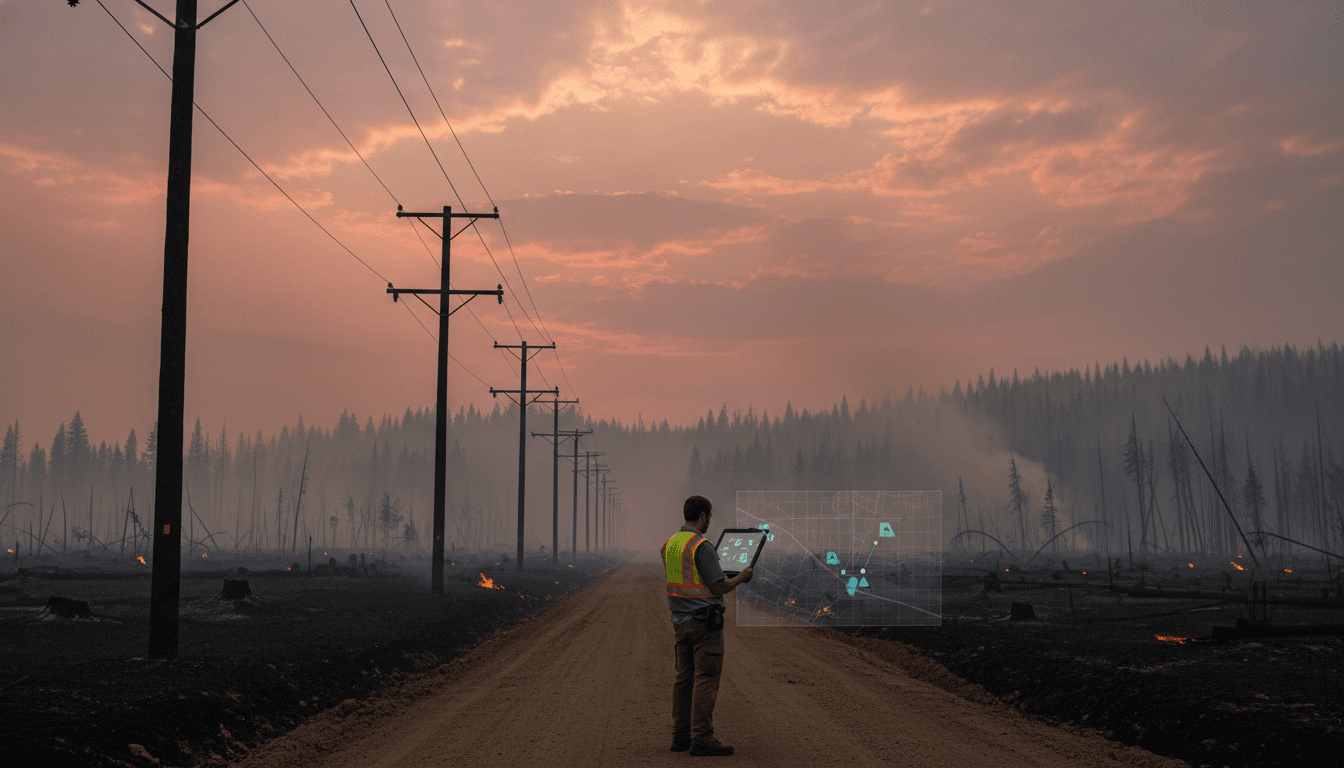
AI for Utility Wildfire Liability Claims: What Changes
A single ignition can trigger years of litigation, billions in losses, and a claims backlog that swallows entire teams. That’s why the Texas Attorney General’s December 2025 lawsuit against Xcel Energy over the Smokehouse Creek wildfire matters far beyond one utility and one fire.
The complaint alleges “blatant negligence,” cites aging infrastructure and missed warnings, and even adds consumer protection and trespass claims. Xcel disputes negligence but has acknowledged its infrastructure was likely involved and says it’s already paid $361 million from a victim fund tied to an expedited claims process. The fire itself is described as having caused more than $1 billion in damage and three fatalities.
For insurers, reinsurers, and risk leaders in energy and utilities, this case is a live demonstration of the new operating reality: wildfire risk is now a core liability and claims problem, not a seasonal edge case. And it’s exactly the kind of high-stakes, data-heavy scenario where AI in insurance can reduce disputes, speed resolution, and improve loss outcomes—if you implement it with discipline.
Why utility wildfire lawsuits are getting sharper (and more expensive)
Wildfire litigation against utilities is expanding in scope because plaintiffs and regulators have learned where the leverage is: maintenance records, warning signals, and the gap between public safety statements and operational reality.
In the Texas filing, the allegations aren’t limited to “a line sparked a fire.” They extend to:
- Claims that the utility ignored warnings about needed repairs and updates
- Alleged misrepresentations about safety and reliability (consumer protection angle)
- A trespass theory tied to fire spreading onto state property
- A request for remedies that include system-wide replacement of utility poles and public wildfire risk warnings
- An attempt to block the utility from passing wildfire costs to consumers through rate increases
Here’s the practical takeaway: the legal battlefield is becoming multi-front—tort liability, consumer protection, regulatory compliance, and cost recovery. That complexity increases both the value of good evidence and the cost of bad data.
From an insurance perspective, that means three things change immediately:
- Causation becomes forensic. “Probably involved” is not the same as legally liable.
- Claim severity inflates. Litigation strategy often amplifies the tail.
- Claims velocity matters. Delays increase adjustment expense and can harden positions.
AI doesn’t “solve” those forces. But it can make the process more accurate and faster, which is often what keeps a tough situation from becoming an unmanageable one.
What AI can do in utility wildfire claims that spreadsheets can’t
Utility wildfire claims are messy because they mix physical damage, business interruption, injuries, public entity losses, and overlapping policies (property, general liability, excess, reinsurance). AI helps when a problem has too many documents, too many timelines, and too many stakeholders.
AI-supported claims intake: turning chaos into structure in hours
After a major fire, the first failure mode is simple: intake fragmentation. Claims arrive via portals, emails, scanned PDFs, call center notes, adjuster photos, contractor invoices, and attorney letters.
Modern claims AI (document AI + workflow automation) can:
- Extract entities and values (insured, address, policy number, loss date, invoice totals)
- Classify claim types (dwelling, commercial property, ALE, BI, smoke damage)
- Detect missing fields and trigger outreach automatically
- Route claims to the right team based on complexity
That sounds basic until you’re staring at thousands of time-sensitive files while regulators, courts, and the media are watching.
Opinionated take: most carriers still treat catastrophe intake like a volume problem. It’s a data integrity problem first. If you don’t standardize inputs early, everything downstream—reserving, subrogation, litigation strategy—gets noisier and more expensive.
Timeline reconstruction: the heart of liability disputes
Utility wildfire liability usually hinges on a timeline:
- Weather and red-flag conditions
- Asset health (pole age, conductor wear, vegetation clearance)
- SCADA/outage logs and relay events
- 911 calls and first reports
- Fire spread modeling and ignition points
AI can help reconstruct a timeline by aligning structured and unstructured sources:
- NLP over work orders, inspection notes, and incident reports
- Pattern detection across outage logs and sensor anomalies
- Geospatial correlation between asset locations and ignition coordinates
This is where AI for liability assessment becomes real value. Not “predicting negligence,” but finding corroborating evidence faster and flagging inconsistencies early.
A snippet-worthy rule I use when evaluating these programs: If you can’t defend the timeline, you can’t defend the reserve.
Faster, more defensible reserving for long-tail wildfire losses
Wildfire liability and mass tort dynamics create reserve whiplash. Early estimates are wrong, late corrections are painful, and neither makes underwriting or reinsurance partners happy.
AI-assisted reserving can improve defensibility by:
- Clustering claims with similar damage patterns and settlement behavior
- Updating severity projections as new evidence arrives (invoices, scope changes, legal posture)
- Separating “repairable smoke” from “total loss / rebuild” trajectories
This isn’t about handing reserve authority to a model. It’s about giving claim leaders a probabilistic view that’s updated weekly instead of quarterly.
Underwriting and risk pricing: wildfire exposure is now an engineering problem
In the “AI in Energy & Utilities” series, we often talk about grid optimization and predictive maintenance. Here’s the uncomfortable truth: insurance pricing is increasingly downstream of utility engineering decisions.
The Texas lawsuit centers on allegations of aging infrastructure and ignored warnings. Whether those allegations are proven or not, the market signal is loud: condition, inspection cadence, and mitigation controls are underwriting variables.
What insurers should ask utilities for (and why AI makes it practical)
Underwriters have traditionally relied on high-level questionnaires and occasional engineering reports. For wildfire-exposed service territories, that’s no longer enough.
A stronger risk submission—supported by AI-powered asset analytics—includes:
- Asset inventory with age, material, and condition scores
- Vegetation management evidence (cycles, exceptions, completed work)
- Predictive maintenance outputs (probability-of-failure by circuit segment)
- Public safety power shutoff (PSPS) policies and decision logs
- Incident response playbooks and drill history
AI helps because it can turn raw operational systems into underwriting-ready evidence. The key is not the model; it’s the audit trail.
The feedback loop: claims data should change underwriting in the same season
Most companies get this wrong: they treat underwriting and claims as separate universes.
For utility wildfire risk, the loop should be tight:
- Claims identifies recurring drivers (equipment type, circuit, terrain, wind thresholds)
- Data science validates drivers across losses and near-misses
- Underwriting updates pricing, retentions, and coverage terms
- Risk engineering pushes mitigation requirements back to the insured
When that loop runs annually, you’re always behind. When it runs quarterly—or after each major event—you’re managing an active risk.
Automating dispute reduction: where AI saves real money
The biggest savings in wildfire claims aren’t “seconds per claim.” They’re fewer escalations, fewer surprises, and fewer avoidable lawsuits.
Subrogation and recovery: AI can surface opportunities early
Wildfire losses often involve multiple potential contributors: other utilities, contractors, equipment vendors, landowners, or even overlapping events.
AI can assist by:
- Flagging claims with indicators of third-party involvement
- Extracting contract clauses and indemnity terms from vendor agreements
- Building recovery packets with supporting documents already organized
The earlier you identify recovery candidates, the more leverage you keep.
Fraud and inflated loss detection without treating everyone like a suspect
After catastrophic events, inflated invoices and opportunistic contractor behavior rise. The trick is controlling leakage without creating bad customer experiences.
Pattern-based anomaly detection can identify:
- Duplicate invoices across claimants
- Unusual unit pricing for debris removal or smoke remediation
- Claims filed outside plausible exposure zones
The right posture is “trust, but verify with data.” Models should guide human review, not become an automated accusation engine.
A practical AI implementation plan for wildfire-exposed carriers
If you’re trying to turn “AI in claims processing” into something operational before the next fire season, prioritize these steps.
Step 1: Standardize the wildfire claim data model
Start with the minimum fields that make everything else work:
- Precise geocoding (lat/long) and confidence score
- Structure type, occupancy, and construction details
- Cause indicators (utility suspected/confirmed, lightning, unknown)
- Loss components (smoke, fire, water, debris, BI)
- Litigation posture and attorney involvement flags
If you can’t query your book by location and loss component, you’re operating blind.
Step 2: Build a “single timeline view” for every complex claim
Create a template that pulls:
- Adjuster notes + document extractions
- Photo metadata
- Contractor and invoice events
- External incident references (internal incident IDs, agency reports when available)
This is the workbench that reduces disputes because everyone is working from the same chronology.
Step 3: Put humans where they matter most
AI should absorb the repetitive tasks, so experts can focus on judgment calls:
- Causation arguments
- Settlement strategy
- Customer communication during hardship
- Regulatory and public-entity coordination
When AI is used to replace expertise, outcomes get worse. When it’s used to amplify expertise, cycle time drops and quality rises.
One-liner to keep teams aligned: If the model can’t explain its evidence trail, it doesn’t belong in a wildfire liability decision.
What this Texas-Xcel case signals for 2026 planning
The lawsuit’s remedies—like pole replacement demands and restrictions on passing costs to consumers—underscore a broader trend: wildfire risk is becoming a balance-sheet and governance issue, not only an operational one.
For insurers, this shifts the conversation with utility clients from “Do you have a plan?” to “Can you prove the plan is working?” AI is how many utilities will produce that proof at scale: inspection analytics, predictive maintenance, and auditable decision logs.
For claims organizations, the 2026 edge won’t come from another dashboard. It’ll come from building a repeatable system that can handle a complex wildfire event without drowning in intake noise, document sprawl, and timeline disputes.
If you’re evaluating AI for utility wildfire liability claims—intake automation, geospatial triage, reserving support, or subrogation analytics—I’ve found one approach consistently works: start with a narrow pilot on real catastrophe files, measure cycle time and dispute rates, then expand. The organizations that wait for a perfect enterprise rollout tend to meet the next event with the same old tools.
Wildfires aren’t slowing down. The question is whether your claims and underwriting operations will still be arguing over messy timelines—or will be making faster, defensible decisions backed by better evidence.