Emergency coal orders expose planning gaps. Learn how AI forecasting, predictive maintenance, and flexibility orchestration reduce reliability risk during retirements.
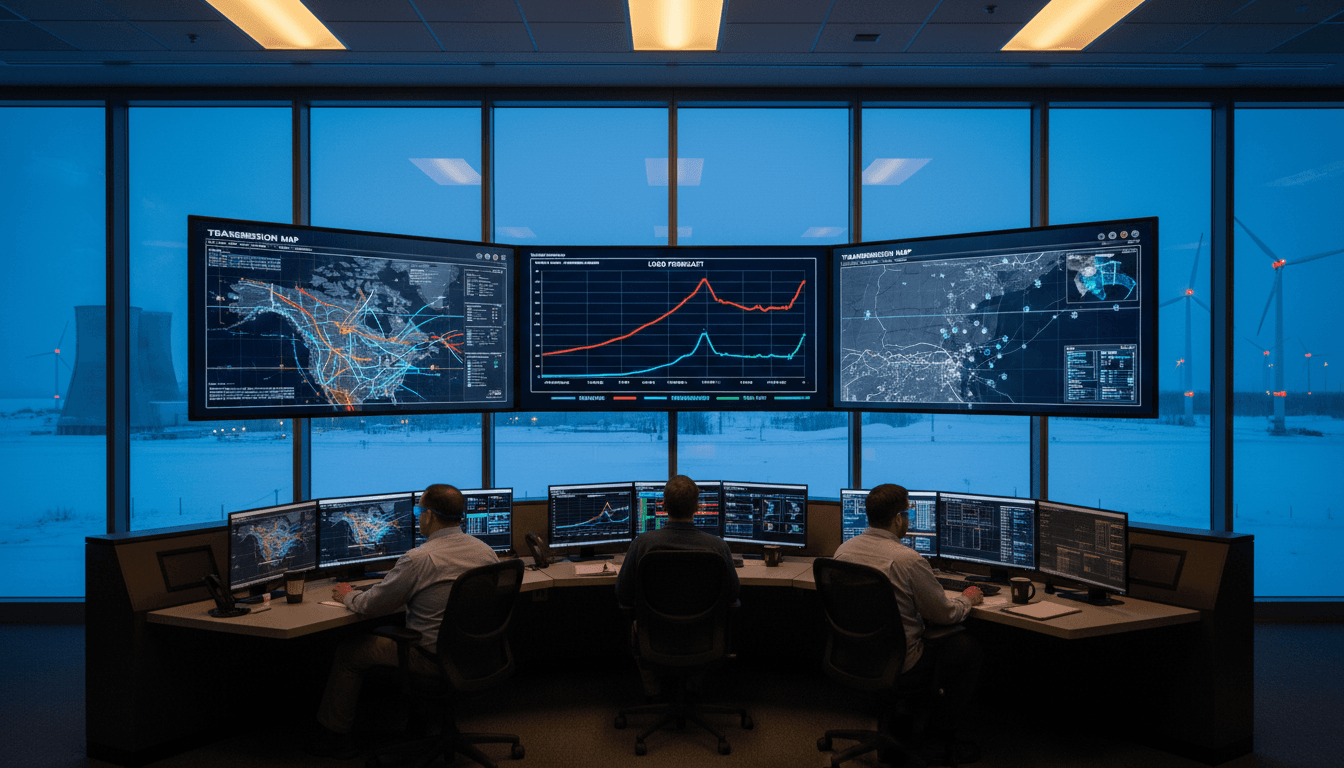
AI Grid Reliability Plans That Avoid Emergency Coal Orders
A 90-day federal order is keeping Washington State’s last coal-fired unit running into March 2026. That’s not a victory lap for coal. It’s a flashing warning light for everyone working in power: when reliability planning, operational visibility, and replacement resources don’t line up, regulators reach for emergency authority.
The part that should make utility leaders uneasy isn’t the politics—it’s the operational pattern. Load is rising (data centers and AI are a big driver), weather volatility is getting sharper, and retirements are happening on fixed calendars. When those forces collide, the system doesn’t politely “transition.” It improvises. And improvisation is expensive.
Here’s the stance I’ll take: emergency keep-online orders are often a symptom of an analytics gap. Not “we need more dashboards” analytics—a gap in forecasting, system risk quantification, maintenance readiness, and the ability to prove reliability with evidence fast. This is exactly where AI in energy and utilities earns its keep.
What the Centralia order really signals about grid risk
Answer first: The Centralia order signals that decision-makers don’t trust the region’s near-term reliability story enough to let a large thermal unit exit on schedule.
The U.S. Department of Energy directed TransAlta to keep the 730-MW Centralia Unit 2 online under Federal Power Act Section 202(c), citing elevated winter risk in the WECC Northwest and the potential for curtailments affecting critical services. The order is time-bound (90 days), but it lands during the most sensitive period of the year: late December through March, when cold snaps can spike electric heating load and constrain regional transfers.
Whether you agree with the “energy emergency” claim or not, the pattern is consistent across recent interventions: retirements that were administratively approved still get re-litigated under reliability optics. That’s a big deal for:
- Utilities that assumed retirement schedules were settled
- IPP owners trying to plan fuel, staffing, and conversion projects
- Grid operators trying to maintain credibility with a transparent planning process
- Large new loads (data centers) that need confidence in firm capacity
The hidden cost: emergency operations are high-friction operations
Keeping a coal unit online past a planned retirement isn’t like leaving the lights on. It can mean reassembling a workforce plan, extending vendor contracts, managing coal supply, and absorbing additional maintenance risk from equipment that was headed toward shutdown.
The article notes one concrete example of the cost curve: Consumers Energy reported about $80 million in compliance costs through the end of September for an earlier emergency order at the J.H. Campbell plant, with broader figures cited in filings for the same period. Even when market revenues offset part of it, this is not “free reliability.” It’s reliability purchased at premium pricing, with uncertainty around who pays and how.
Why emergency coal orders are a forecasting and visibility problem
Answer first: If you can’t quantify reliability risk quickly and credibly, someone else will make the call for you—often using blunt tools.
Most reliability arguments fail in the same place: they can’t answer these questions with numbers everyone trusts.
- What’s the probability of shortfall during extreme weather windows?
- Which constraints drive the shortfall—generation availability, fuel, transmission, or balancing limitations?
- What’s the least-cost portfolio to cover that risk (and how fast can it be deployed)?
Traditional planning cycles aren’t built for today’s tempo. Load shapes are changing faster than annual forecasts can keep up with, especially with data centers that can add step-changes in demand. Meanwhile, variable renewables increase the value of accurate net load prediction and fast operational response.
This is where AI-powered grid optimization becomes practical rather than abstract:
- Short-term probabilistic load forecasting that captures temperature sensitivity, electrification trends, and large-load behavior
- Renewable forecasting that tightens confidence intervals (not just point forecasts)
- Constraint-aware risk scoring that connects load, generation availability, and transmission limits into one operational picture
When those pieces are missing, the system defaults to “keep the big unit online.” It’s understandable. It’s also avoidable.
Where AI helps most during coal retirements (and what to implement first)
Answer first: The fastest ROI comes from AI that improves near-term reliability decisions—forecasting, maintenance readiness, and operational coordination.
Utilities often jump straight to “AI for everything.” Don’t. Start where it reduces the likelihood of emergency measures.
1) AI-driven demand forecasting that’s built for step-change load
Data center-driven growth isn’t just “more load.” It’s different load: high load factor, sometimes flexible, often clustered, and occasionally tied to on-site backup generation behavior.
A useful AI demand forecasting stack typically includes:
- Feeder/substation-level forecasts (not only system-wide)
- Weather ensembles for probabilistic peaks
- Large-load onboarding models that treat new interconnections as scenario trees (best case / expected / worst case ramp)
- Anomaly detection to flag when real load is diverging from planned trajectories
Operationally, this allows planners to stop arguing in generalities (“we’re at risk”) and start managing specifics (“risk is concentrated in these hours under these temperature bands”).
2) Predictive maintenance to keep the remaining fleet truly dependable
Here’s a hard truth: retirements increase the operational burden on what’s left. A smaller dispatchable fleet means each forced outage hurts more.
AI-driven predictive maintenance reduces the probability of being cornered into emergency operations by:
- Predicting boiler/HRSG tube leak risk, rotating equipment degradation, and transformer issues
- Prioritizing work using risk-to-reliability scoring, not just condition scoring
- Detecting sensor drift and instrumentation problems that quietly degrade control performance
This is especially relevant when units are running harder to cover for system needs—exactly the moment when forced outage rates can climb.
3) AI dispatch and flexibility orchestration (batteries, demand response, VPPs)
If you want to retire coal without reliability drama, flexibility has to be dispatchable in practice, not just in filings.
AI can coordinate:
- Battery scheduling against price and reliability constraints
- Demand response with customer performance scoring and event targeting
- Virtual power plant (VPP) aggregation with real-time telemetry validation
The biggest miss I see is treating these as “programs” instead of operational resources. AI helps turn flexibility into something operators can trust at 2 a.m. during a cold snap.
4) Real-time grid situational awareness that connects dots fast
Emergency orders thrive in ambiguity. Strong situational awareness kills ambiguity.
Modern AI-enabled control room support can fuse:
- SCADA/EMS signals
- Unit availability and start-time confidence
- Transmission constraints and remedial action schemes
- Weather impact models
And it can output something decision-makers can act on: “If Unit X retires now, loss-of-load risk increases by Y% during these 12 peak-risk hours unless Z MW of flexibility is committed.” That’s the kind of sentence that prevents panic policy.
A pragmatic transition playbook utilities can use in 2026 planning
Answer first: The best way to avoid emergency extensions is to pre-negotiate reliability proof—data, models, and operating procedures—before retirement dates.
If you’re planning coal closures (or major repowers), treat the next 12–18 months as a reliability evidence campaign. Here’s a practical checklist.
Build a “retirement readiness” reliability case
Create a retirement package that can withstand scrutiny from regulators, grid operators, and intervenors:
- Probabilistic resource adequacy results (not a single reserve margin)
- Extreme weather stress tests (multi-day cold snaps, not one peak hour)
- Transmission deliverability review under outages
- Operating reserve and ramping analysis with renewable forecast error bands
AI doesn’t replace planning engineers here—it makes the results more accurate and faster to update as conditions change.
Convert flexibility into operator-trusted resources
If batteries or demand response are part of the replacement story, prove they’re dispatchable:
- Telemetry coverage and performance validation
- Event fatigue management and customer segmentation
- Control room procedures that specify when and how flexibility is called
Align incentives so emergency costs don’t become your default hedge
The article highlights a core tension: once an emergency order is issued, cost recovery mechanisms can shift rapidly. That uncertainty pushes organizations toward conservative decisions (keep plants online “just in case”).
A better approach is to:
- Define reliability services contracts (capacity, ancillary services, fast start)
- Use performance-based payments tied to delivery during stress events
- Maintain a clear measurement and verification framework
AI helps here by providing verifiable performance tracking—critical when stakeholders are arguing about who delivered what.
What energy leaders should do next (and what to ask vendors)
Answer first: Focus on AI capabilities that produce defensible reliability decisions—not generic “insights.”
If you’re leading grid modernization, resource planning, or operations, ask these questions internally and to partners:
- Forecasting: Do we produce probabilistic peaks and net load distributions, or only point forecasts?
- Extreme weather: Can we run multi-day stress scenarios weekly during winter, not annually?
- Asset readiness: Which 10 assets create the most reliability risk if they fail, and what’s their predicted failure probability this season?
- Flexibility: Can we dispatch batteries/DR/VPPs with confirmation inside 5–15 minutes, with performance scoring afterward?
- Governance: When forecasts and real-time conditions disagree, who has authority to act, and what’s the playbook?
If you can answer those cleanly, your organization is far less likely to be surprised by a late-stage emergency intervention.
The bigger story: AI is becoming a reliability requirement
Emergency keep-online orders for coal units are often framed as ideology. Operationally, they reflect something simpler: the grid is being asked to change faster than its decision systems.
In the AI in Energy & Utilities series, we keep coming back to the same idea: reliability is a data problem before it becomes a steel-and-concrete problem. Better forecasting, predictive maintenance, and flexibility orchestration won’t eliminate every risk—but they reduce the odds that the only remaining option is to extend aging thermal units at the last minute.
If your organization is retiring coal—or adding major new load in the next 24 months—this is the moment to invest in AI-powered grid optimization that produces evidence, not vibes. The next winter reliability debate will be won by whoever can quantify risk fastest and propose the cheapest, most credible mitigation.
When the next retirement date approaches, will your team have a reliability story backed by numbers everyone can audit—or will you be waiting to see what emergency order lands on your desk?