AI for grid optimization is turning 2025 climate bright spots into scalable wins—batteries, renewables, and firm clean power that keep up with growth.
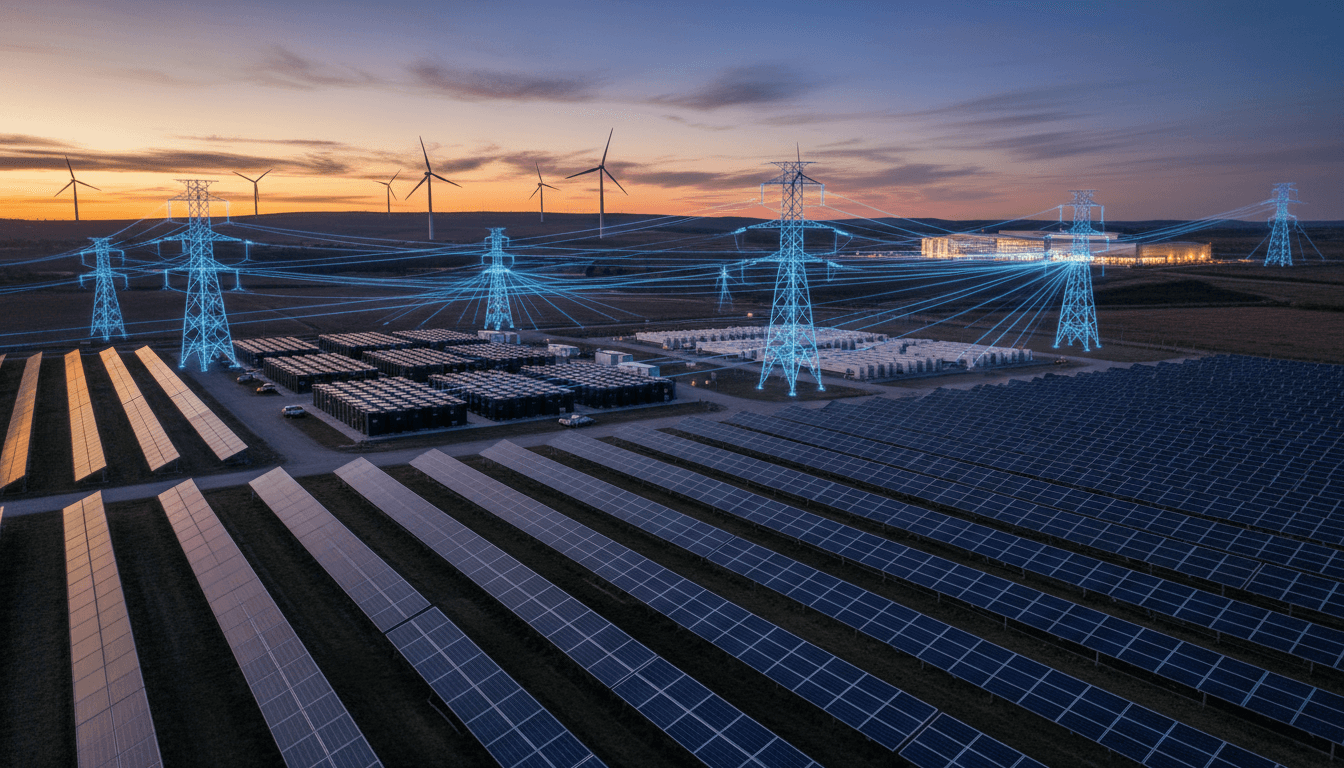
AI and Clean Energy: 2025’s Bright Spots for the Grid
China held its carbon dioxide emissions flat for 18 months while its economy kept growing. In the US, grid-scale battery storage blew past 35 gigawatts of capacity a decade earlier than the industry expected, then hit 40 gigawatts shortly after. And the AI boom—yes, the one pushing data center electricity demand up 22% this year—is also pulling serious money toward geothermal and nuclear.
Most climate stories still feel like triage. But 2025 produced a few signals that matter for anyone in energy and utilities, especially if you’re building or buying AI for grid optimization, demand forecasting, predictive maintenance, or renewable energy integration. The common thread isn’t just “more clean tech.” It’s that we’re finally getting the operating system for a cleaner grid: software, automation, and analytics that make hardware scale.
This post is part of our AI in Energy & Utilities series, and I’m going to take a clear stance: the next phase of decarbonization in the US won’t be won by panels and turbines alone—it’ll be won by how well we run them. AI is becoming the difference between “we installed it” and “it actually performs.”
Emissions can flatten while economies grow—and software helps
The clearest bright spot of 2025 is the evidence that economic growth and emissions don’t have to rise together. China’s CO₂ emissions have been flat or falling for 18 months, even with the economy on track to grow about 5% and electricity demand rising.
That’s not magic. It’s the math of deployment at scale: China added about 240 GW of solar and 61 GW of wind in just the first nine months of 2025. When you add that much zero-carbon generation, the grid’s marginal power starts shifting away from coal and gas.
What this means for US energy leaders
US utilities don’t need to copy China’s political system to learn the lesson: scale changes what’s possible, and operational excellence determines whether that scale turns into emissions reductions.
Here’s where AI fits into decoupling growth from emissions:
- Renewable forecasting: Better short-term forecasts reduce the need to keep fossil plants idling “just in case.”
- Unit commitment and dispatch optimization: AI-assisted decision support can lower costs and emissions by choosing the cleanest reliable mix hour by hour.
- Interconnection planning: Queue backlogs and upgrade planning are increasingly a data problem; AI can prioritize projects with the fastest reliability and emissions impact.
- Grid congestion management: Predictive models can spot where curtailment is likely and trigger corrective actions earlier.
A blunt truth: renewables don’t fail because the sun sets. They fail when the grid can’t plan and respond fast enough. That’s an AI problem as much as an infrastructure problem.
“Decoupling” isn’t a slogan—it’s an operating model
Decoupling is often framed like a national policy outcome. For operators, it’s more practical: Can you add load growth (EVs, electrified heating, data centers) without adding emissions at the same rate?
The companies that pull this off tend to do three things consistently:
- Treat forecasting as a profit center, not a reporting requirement.
- Invest in grid optimization and automation that turns forecasts into actions.
- Build a culture where operations teams trust model outputs—but also know when to override them.
Grid-scale batteries hit 40 GW—and AI decides how valuable they are
Battery storage is no longer “emerging.” It’s here, and it’s moving fast. The US passed the industry’s old goal of 35 GW by 2035—ten years early—and then reached 40 GW a couple months later.
What’s driving this? Economics, mostly. Battery pack prices fell again in 2025, and packs used for grid storage dropped even faster—45% lower than last year.
That cost curve is great news, but it creates a new challenge: as batteries become common, the easy value gets competed away. If every developer is doing basic arbitrage (charge when cheap, discharge when expensive), margins compress.
The real battery advantage: control, not capacity
Batteries win because they’re controllable. The value stack is broader than “shift solar to evening.” And the more batteries you have, the more you need software to prevent them from stepping on each other.
AI helps operators and asset owners capture value in at least four ways:
- Price and congestion forecasting: Predict LMP spikes and local constraints to decide where and when to discharge.
- Degradation-aware dispatch: Optimize cycling to maximize lifetime value, not just today’s revenue.
- Reliability services: Frequency response and fast reserves require millisecond decisions—automation is the point.
- Portfolio orchestration: A fleet of batteries behaves differently than a single site; AI coordinates them like a virtual power plant.
California and Texas offered a preview in 2025: batteries are already helping meet evening peaks and reducing the need to run natural gas plants. The takeaway for utilities is straightforward: storage changes system operations, and system operations need better intelligence.
Practical checklist: what to ask before you buy “AI for storage”
If you’re evaluating vendors or building in-house, I’ve found these questions separate real systems from glossy demos:
- Does the model optimize for profit, emissions, or reliability—and can you switch objectives?
- How does it handle rare events (heat waves, storms, plant outages), not just normal days?
- Can it explain decisions in operator language (constraints, forecasts, confidence)?
- Is it integrated into dispatch workflows, or does it live in a separate dashboard no one opens?
AI is raising electricity demand—and accelerating investment in firm clean power
The AI boom is straining the grid. Utilities supplied 22% more electricity to US data centers in 2025, and demand is projected to more than double by 2030. That’s real load growth, arriving fast.
The uncomfortable near-term reality is that some of that load will be served by fossil generation, including new natural gas. But 2025 also produced a second-order effect that’s surprisingly positive: AI is pulling capital toward next-generation energy that can run 24/7.
Big tech companies have explicit emissions goals. They can’t meet them with purchase agreements alone if the grid mix gets dirtier. So they’re hunting for firm clean power—resources that provide steady output.
In 2025, we saw high-profile momentum:
- A deal for up to 150 MW of geothermal power for data center load.
- Efforts to support the reopening of a previously shuttered nuclear facility.
Why firm clean power matters for AI—and for everyone else
Wind and solar are essential, but they’re variable. Batteries help, but multi-day gaps and seasonal mismatches remain hard. Firm clean power (advanced geothermal, nuclear, long-duration storage, potentially clean hydrogen) is what keeps the grid dependable when renewables underperform.
Here’s the connection to AI in energy & utilities that gets overlooked: AI isn’t only a load problem. It’s also an enabler for firm clean resources.
- Geothermal exploration and operations: Machine learning can interpret subsurface data faster and reduce drilling risk.
- Nuclear maintenance and inspections: Computer vision and predictive maintenance reduce downtime and improve safety margins.
- Grid planning: Scenario modeling for high-load futures (AI, EVs, electrification) is fundamentally an analytics problem.
If you run a utility, this is the strategic opportunity: treat data centers as a forcing function to modernize planning, interconnection, and operations—then reuse those capabilities everywhere.
We’re on a 2.6°C path—progress is real, but it’s stalled
There’s a “good news, bad news” snapshot that frames 2025 well: the world is now on track for about 2.6°C warming by 2100. That’s still dangerous. But it’s also about one full degree better than the 3.6°C trajectory projected a decade ago.
That improvement didn’t happen because people suddenly became virtuous. It happened because countries passed mandates and subsidies, industries scaled production of solar, wind, batteries, and EVs, and costs dropped.
The bad news is that projections have been largely stuck for four years. The next tranche of progress is harder. It’s less about introducing new tech and more about getting systems to perform: permitting, interconnection, transmission, utility modernization, and industrial heat.
Where AI actually helps (and where it doesn’t)
AI won’t fix politics. It won’t single-handedly permit transmission lines or solve supply chains.
But AI can make decarbonization cheaper and faster by reducing operational waste:
- Demand forecasting that reduces reserve margins and avoids unnecessary fossil peakers
- Predictive maintenance that prevents failures, cuts truck rolls, and extends asset life
- Outage prediction and targeted vegetation management that improves reliability
- DER orchestration (solar + storage + EVs) that turns “behind-the-meter chaos” into grid assets
A sentence worth remembering: A cleaner grid is a more software-defined grid.
What utilities and energy teams should do in Q1 2026
If you’re reading this during end-of-year planning (or while trying to get one last budget request approved), focus on moves that compound.
1) Treat forecasting as infrastructure
Utilities often buy forecasting tools the way they buy compliance software. That’s a mistake. Forecasting is upstream of everything: dispatch, reliability, cost, emissions.
Actionable next steps:
- Set accuracy targets (day-ahead, hour-ahead, 5-minute) tied to operational KPIs
- Create a feedback loop between operators and data science teams
- Benchmark forecasts during extreme events, not just average days
2) Put storage under one optimization brain
If batteries are managed site-by-site, value leaks. If they’re managed as a coordinated fleet, they start behaving like a flexible power plant.
Actionable next steps:
- Centralize dispatch logic across storage assets
- Add degradation models into dispatch decisions
- Define when the objective is reliability vs market revenue vs emissions
3) Build an “AI load playbook” with data centers
Data centers are arriving whether the grid is ready or not. Your advantage comes from planning ahead.
Actionable next steps:
- Require granular load profiles (ramp rates, backup generation behavior)
- Model feeder/substation impacts with scenario planning
- Offer flexibility programs (demand response, on-site storage dispatch agreements)
The utilities that win the next five years will be the ones that can say, “Yes, you can connect—and here’s how we’ll keep it clean and reliable.”
The next bright spot will be operational
2025’s climate bright spots weren’t just feel-good stories. They were proof points: emissions can flatten even during growth, batteries can scale quickly, and the AI boom is pushing investment toward firm clean power.
For the US energy sector, the opportunity is clear. AI for grid optimization, demand forecasting, and predictive maintenance is becoming a core capability, not a side project. The grid is getting more complex, and complexity punishes organizations that rely on manual processes and outdated models.
If 2025 taught anything, it’s that momentum exists—but it needs direction. When you look at your 2026 roadmap, what would change if you treated AI as the layer that makes renewables, storage, and firm clean power perform at their best?