Argentina’s AI push shows why clean power is now core to AI growth. Lessons for U.S. utilities on data centers, grid planning, and digital services.
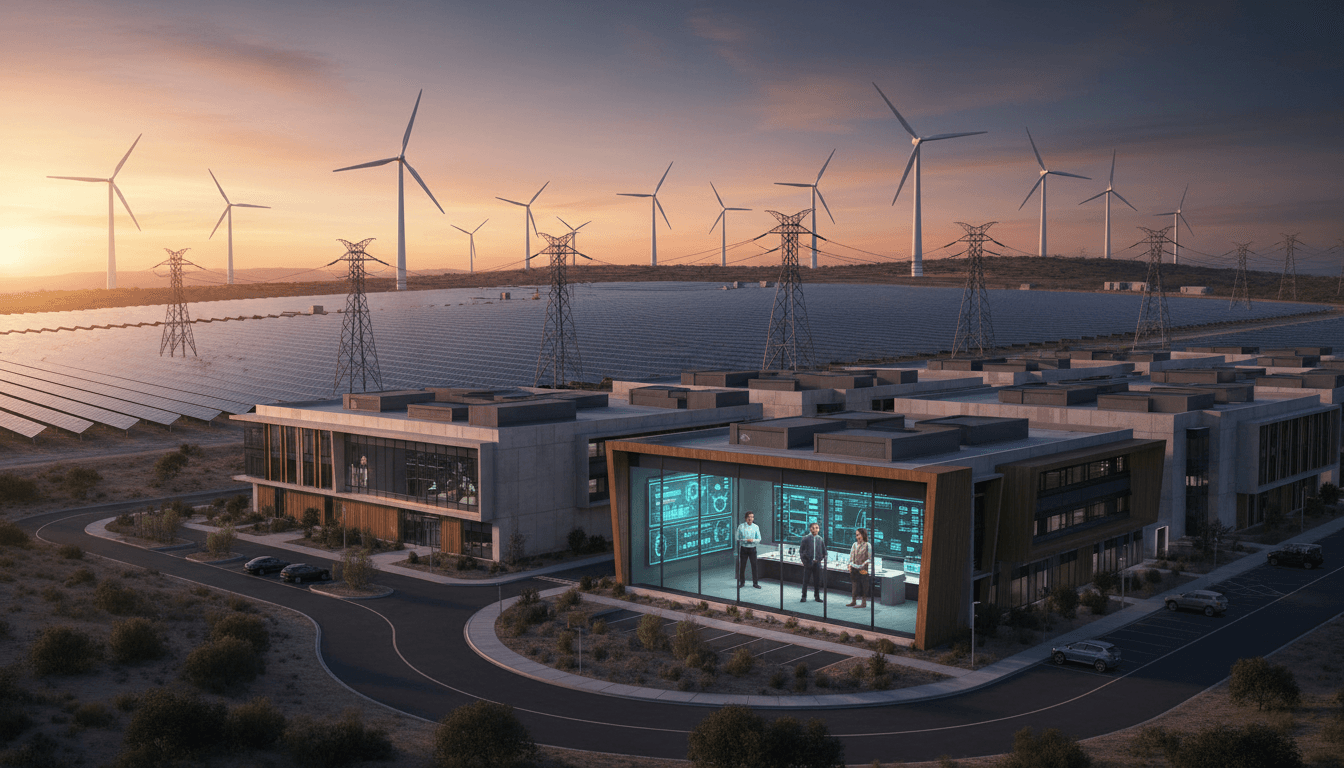
AI Data Centers on Clean Power: Lessons from Argentina
A lot of AI talk focuses on models, apps, and chatbots. The less glamorous truth is that AI’s growth is constrained by infrastructure: data centers, grid capacity, and reliable clean power. That’s why a recent development out of Argentina caught my attention—because it’s really a story about energy and utilities, not just software.
In October 2025, OpenAI and Sur Energy signed a Letter of Intent to explore a large-scale data center project in Argentina—positioned as a potential “Stargate” project for Latin America, powered by secure, efficient, sustainable energy. Meanwhile, OpenAI reported that ChatGPT usage in Argentina has more than tripled year-over-year, with the highest adoption among 18–34-year-olds. Those two facts together tell you something important: demand-side AI adoption is already here, and supply-side AI infrastructure is racing to catch up.
For U.S. energy, utilities, and digital service leaders, Argentina is a useful case study. It shows how U.S.-led AI platforms shape global markets—and how clean-energy-backed compute is becoming the new competitive advantage.
Argentina’s AI momentum is real—and it’s measurable
Argentina isn’t “starting to think about AI.” It’s already using it at scale. OpenAI’s update notes that millions of Argentinians use ChatGPT weekly, and adoption has more than tripled in the past year, especially among young adults.
Here’s the part many companies miss: consumer adoption isn’t just a fun metric. It becomes an enterprise forcing function.
When your customers and employees already rely on AI tools, they bring expectations into every interaction:
- Faster customer communication (shorter response times, fewer handoffs)
- Self-serve digital services (better portals, better search, better forms)
- More personalization without the creepy factor
- Better internal productivity (summaries, drafting, analysis, automation)
That dynamic is familiar in the U.S. too. The difference is that Argentina’s story compresses the timeline: rapid usage growth plus an explicit push to build the energy-and-compute backbone locally.
Why “AI in Energy & Utilities” is now a data center story
AI in energy & utilities used to mean a narrow set of use cases: demand forecasting, predictive maintenance, grid optimization. Those still matter. But the next chapter is bigger:
Utilities aren’t just using AI—they’re powering it.
If Argentina becomes a regional compute hub, the limiting factor won’t be “how many developers can fine-tune prompts.” It’ll be:
- How fast energy infrastructure can deliver firm power
- How efficiently data centers can convert electricity into compute
- How well operators can manage reliability, security, and sustainability
This is why the Sur Energy angle matters. The LOI describes Sur Energy as the energy and infrastructure developer, with a plan to ensure the data center ecosystem is powered by secure, efficient, and sustainable sources.
For readers following this series, that’s the through-line: modern grid strategy increasingly includes compute load strategy.
The new load profile: high, flat, and unforgiving
Traditional utility planning is comfortable with loads that fluctuate—seasonally, daily, even hourly. AI data centers create a different kind of demand:
- High utilization (often 24/7)
- Rapid step changes (capacity can jump when a new cluster comes online)
- Tight uptime requirements (compute downtime is expensive)
That combination reshapes how utilities think about interconnection queues, transmission upgrades, and resource adequacy.
Clean-energy-backed compute is becoming the “location strategy” for AI
The Argentina proposal explicitly frames the project as powered by clean energy. That isn’t just branding. It’s economics and risk management.
Data centers care about:
- Cost per delivered MWh (all-in, including congestion and curtailment risk)
- Grid reliability (frequency events, outages, maintenance windows)
- Permitting certainty (time-to-power can kill a project)
- Energy attribute strategy (how they claim and measure sustainability)
Countries (and U.S. states) that can offer clean power plus fast infrastructure execution will attract disproportionate investment.
I’ve found that many teams still treat “data center energy” like a procurement problem—sign a PPA and move on. In practice, the hard part is operational: aligning generation, transmission, storage, and backup so that compute can run predictably.
What utilities can learn from this kind of project
Even if you’re not building a mega data center, the same playbook applies to electrification and renewables integration:
- Load forecasting needs scenario planning, not a single curve. AI growth is lumpy.
- Grid optimization must account for flexibility, including demand response and storage.
- Predictive maintenance becomes more valuable when uptime requirements tighten.
- Renewable energy integration benefits from AI, because variability management is a data problem.
In other words: AI raises demand for electricity, and also improves the tools utilities use to meet that demand.
Government adoption is the quiet multiplier (and it maps to U.S. realities)
OpenAI also mentions discussions with the Argentinian government to drive AI adoption within government operations, as part of its “OpenAI for Countries” initiative.
That matters for a simple reason: government is a top-3 services platform in most countries, alongside banking and telecom. When government workflows improve, the whole business environment speeds up.
Practical examples of what AI can do inside public agencies (without requiring sci-fi systems):
- Draft and standardize citizen communications across programs
- Summarize long case files for faster review
- Triage inbound requests to the right department
- Translate and simplify language for accessibility
- Build internal knowledge search so employees can find policies fast
U.S. leaders should pay attention because the pattern is the same domestically. Digital services in the United States—benefits administration, permitting, customer service at municipal utilities—are under pressure to do more with the same staffing levels.
AI-assisted service delivery is increasingly a baseline expectation, and energy/utility agencies are often where the most “paper-heavy” processes still live.
A practical blueprint for U.S. energy and digital service teams
Argentina’s announcement is a headline, but the operational lessons are what generate leads and real outcomes. Here’s a blueprint I’d recommend to U.S. utilities, energy providers, and SaaS teams serving them.
1) Start with “compute-ready power,” not just megawatts
The target isn’t “add capacity.” It’s deliverable capacity.
A data center (or any high-uptime digital service) needs clarity on:
- Interconnection timeline and constraints
- Congestion and curtailment risks
- Onsite backup strategy (and emissions implications)
- Storage and demand response options
If you sell energy services, productize this as a single offering: power + reliability + reporting.
2) Use AI where utilities actually bleed time
Forget the flashy demos. The best early wins are unglamorous:
- Demand forecasting with better weather, calendar, and DER inputs
- Predictive maintenance for transformers, breakers, and substation assets
- Outage response: faster classification, crew routing, customer updates
- Customer communication automation: billing explanations, outage ETAs, program eligibility
These are high-volume workflows where small accuracy improvements pay back quickly.
3) Treat sustainability as an engineering constraint
If a project claims “clean-energy-powered AI,” the credibility comes from operations:
- Matching load with generation profiles
- Using storage to reduce fossil peaker reliance
- Reporting energy attributes consistently
- Optimizing PUE and cooling strategy
The stance I’ll take: if you can’t measure it, you can’t sell it—and buyers are getting stricter.
4) Build a governance model before you scale
Government and utilities are regulated for good reasons. AI systems must be managed like critical infrastructure:
- Data handling and retention rules
- Human-in-the-loop decisions for high-impact actions
- Audit logs and model monitoring
- Clear vendor responsibilities
This is where U.S. SaaS providers can differentiate: not just “we added AI,” but “we can operate AI safely in regulated environments.”
What this signals for the U.S. AI market in 2026
Argentina’s push is a reminder that the U.S. isn’t the only market that matters—but U.S.-based AI innovation still sets the tempo globally. When American AI platforms expand internationally, they create two immediate downstream effects that bounce back to U.S. businesses:
- More global demand for U.S.-built AI tooling, APIs, and enterprise services
- More pressure on energy and utilities to support compute growth responsibly
If you’re selling into energy & utilities, this is a strong moment to reposition. AI isn’t just a software feature; it’s part of the energy transition and the digital services transition at the same time.
The forward-looking question I’m watching: which regions will pair clean power, fast permitting, and AI-ready grid planning well enough to become the next compute hubs? Argentina is trying to answer that. U.S. states and utilities should, too.