Spain’s $5.3B helicopter buy is also an AI integration moment. See where AI boosts mission planning, ISR, readiness, and cyber resilience.
Spain just approved a €4.5 billion ($5.3B) order for 100 Airbus helicopters—and the most consequential part of this decision might not be the airframes.
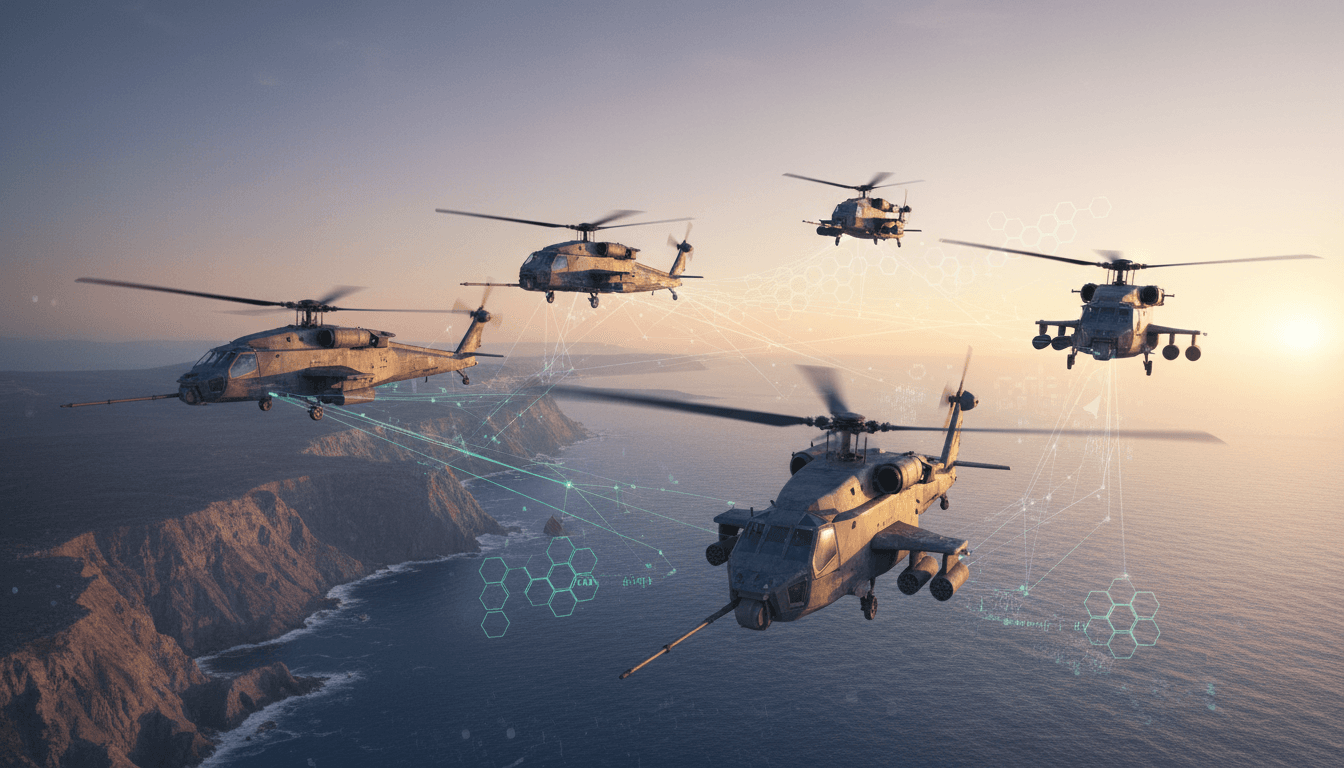
The real advantage (or missed opportunity) will come from what Spain chooses to build on top of those platforms: AI-enabled mission systems, fleet analytics, and secure data pipelines that turn helicopters into networked sensors and decision nodes. In an era where Europe is pushing harder on defense readiness and “strategic autonomy,” a helicopter modernization plan that treats AI as a bolt-on will age badly—and fast.
This post is part of our AI in Defense & National Security series. I’ll break down what Spain is buying, why it matters operationally, and where AI can deliver practical gains in mission planning, ISR, training, maintenance, and cybersecurity—without hand-wavy promises.
What Spain actually bought—and why this procurement is different
Spain’s Directorate General for Armament and Material (DGAM) has agreed to purchase 100 Airbus helicopters across four contracts, with deliveries beginning in 2027.
The package includes:
- 50 H145M (Army) for training and light attack roles
- 31 NH90 across the services (Army 13, Air & Space Force 12, Navy 6) with deliveries starting 2031
- 13 H135 (12 Air & Space Force, 1 Navy) beginning 2027 for pilot training and light utility/observation
- 6 H175M (Air & Space Force) beginning 2028 for governmental missions, replacing aging Super Puma variants—also notable as Spain becomes the first customer of the militarized H175
Answer first: This procurement is different because it’s not a single-fleet refresh—it’s a fleet architecture decision spanning training, transport, special operations, and government missions for decades.
That variety is exactly where AI can help—or where complexity can quietly overwhelm readiness. Four platforms, multiple services, staggered delivery timelines, different mission sets, different avionics baselines. If Spain doesn’t standardize data, interfaces, and security up front, it risks paying a “complexity tax” every year in training, sustainment, and integration.
The AI upside: turning a helicopter fleet into a coordinated system
Answer first: AI creates value when it reduces decision time, increases mission success rates, and improves availability—not when it adds another dashboard.
Helicopters sit at a useful intersection: they’re close enough to the fight to matter, but often disconnected enough that onboard decision support and edge processing can make a real difference. Spain’s fleet mix gives it multiple entry points.
AI-enabled mission planning and real-time re-tasking
The most practical near-term use case is AI-assisted mission planning that can absorb weather, threat updates, fuel states, maintenance status, and route constraints—then propose plans that are feasible right now.
What that looks like in real operations:
- Route optimization under constraints: terrain masking vs. fuel burn vs. known threat areas
- Dynamic tasking: re-assigning airframes mid-cycle when one aircraft goes down for maintenance
- Multi-asset coordination: helicopters coordinating with UAVs, maritime sensors, and ground units
A fleet of 100 helicopters amplifies the payoff because planning friction grows nonlinearly with fleet size. You don’t need science fiction autonomy to see benefits—you need better allocation and faster replanning.
AI for ISR: less video fatigue, more actionable cues
Spain’s helicopters will support observation, special operations, tactical transport, and government missions—meaning they’ll generate plenty of sensor data.
Answer first: AI’s best ISR contribution is not “perfect detection.” It’s triage—flagging what deserves a human’s attention.
AI-enabled computer vision can:
- Detect and track objects of interest (vehicles, vessels, heat signatures)
- Prioritize clips and frames for review
- Correlate onboard observations with external sources (maritime AIS anomalies, radar tracks, prior sightings)
That last point matters for national security: if sensor feeds remain stove-piped by service or mission type, Spain won’t get full value from a diversified fleet. The goal should be cross-mission situational awareness, not “each helicopter is its own island.”
Autonomy (carefully scoped) for navigation and safety
People tend to jump straight to “autonomous helicopters.” That’s not where Spain should start.
Answer first: The safer, higher-ROI path is bounded autonomy—AI that assists pilots under defined conditions and improves survivability.
Examples of realistic, fieldable autonomy features:
- Degraded visual environment assistance (dust, smoke, sea spray) using fused sensors
- Obstacle and wire detection cues
- Automated hover/landing assistance in constrained zones
- Emergency route suggestions when systems degrade or threats shift
These capabilities matter most for special operations and low-altitude flight profiles, where pilots are already managing high workload.
Procurement lesson: buying airframes is easy—buying data rights isn’t
Spain’s order stretches into the 2030s, including NH90 deliveries starting in 2031. That’s a long runway for capability growth—if the program protects future integration options.
Answer first: The make-or-break decision for AI integration is whether Spain secures interfaces, data access, and upgrade pathways from day one.
Here’s what typically goes wrong in military aviation AI programs:
- AI models need data, but flight and mission data is locked behind proprietary formats
- Sustainment vendors treat health/usage monitoring as a premium add-on rather than a baseline
- New sensors can’t be fused because integration requires expensive, slow avionics rework
If Spain wants its helicopter plan to support strategic autonomy, it should push for:
- Common data standards across platforms (so H145M training data can inform fleet-wide readiness patterns)
- Government purpose rights for key datasets (maintenance, faults, usage, mission system logs)
- Modular open systems approaches where possible (to avoid single-vendor bottlenecks)
A simple way to say it: AI doesn’t scale on PDF reports. It scales on accessible, well-labeled data.
Where AI pays off fastest: readiness, training, and maintenance
Defense leaders often chase the most glamorous AI use cases first. For helicopters, the fastest wins are usually in availability.
Answer first: If AI adds even a few percentage points of mission-capable rates across 100 aircraft, the operational impact is immediate.
Predictive maintenance and smarter spares
Helicopters are maintenance-intensive. The H175M portion of the buy explicitly replaces aging fleets, which hints at a familiar problem: older aircraft become hard to sustain.
AI can help by:
- Predicting component failure based on vibration signatures, temperature anomalies, and usage patterns
- Recommending maintenance actions that prevent cascading failures
- Optimizing spares positioning across bases based on demand forecasts
The important nuance: predictive maintenance only works if the organization trusts it. That means:
- Clear thresholds (what triggers maintenance)
- Explainable recommendations (why the model flagged an issue)
- Feedback loops (did the prediction prove correct?)
AI-enhanced pilot training—especially across multiple platforms
Spain is buying H135s and H145Ms specifically tied to training and light roles. That’s a huge opening to modernize training pipelines.
Practical AI applications in training:
- Adaptive training plans that respond to student performance (not just hours logged)
- Debrief automation that tags key events: unstable approaches, threat reactions, comms errors
- Synthetic data generation to expand scenarios for rare but critical events
Training is also where standardization pays off. If Spain’s services train differently, or store training outcomes in incompatible systems, it’ll lose the ability to compare performance and reduce mishaps across the joint force.
The risk nobody wants to own: cybersecurity and mission data integrity
A helicopter fleet that’s more connected and more software-defined is also more exposed.
Answer first: AI increases the attack surface unless cybersecurity is designed as a mission requirement—not an IT requirement.
Three concrete security priorities for Spain’s future fleet:
1) Protect mission data at rest and in transit
Helicopters will generate and carry sensitive mission data: routes, imagery, communications metadata, electronic signatures. If that data leaks, tactics become predictable.
Minimum expectations:
- Strong encryption for storage and transfer
- Key management that works in contested environments
- Secure export workflows from aircraft to ground systems
2) Secure the AI lifecycle (models are assets)
AI systems introduce new failure modes:
- Model poisoning through compromised training data
- Adversarial inputs that degrade detection performance
- “Shadow updates” where a model changes without proper validation
Spain should treat models like mission software: versioned, tested, signed, and auditable.
3) Build for degraded comms
A lot of “AI + networking” concepts assume stable connectivity. Helicopter operations often don’t have that luxury.
This is why edge AI matters: you want key functions to continue when links are jammed, intermittent, or denied.
A connected fleet is useful. A fleet that can still fight when disconnected is credible.
What leaders should ask before the first delivery in 2027
Spain has time—barely—to set itself up for success before deliveries begin.
Answer first: The right questions now are about architecture, governance, and ownership of data—not just which sensor is better.
Here’s a procurement and program checklist that I’ve found separates “AI-ready” fleets from frustration:
- What’s our helicopter data strategy? Who owns it, where does it live, and how is it labeled?
- Which missions require onboard AI at the edge? Don’t assume cloud connectivity.
- What’s our minimum open-interface requirement? Especially for mission systems and health monitoring.
- How will we validate AI performance over time? Models drift; environments change.
- How do we measure success? Examples: mission planning time reduced, false alarms lowered, aircraft availability improved.
If those questions aren’t answered, AI integration becomes a series of one-off pilots that never scale.
Spain’s helicopter plan can be a template—or a cautionary tale
Spain’s €4.5B helicopter plan is a serious investment in capability and industrial capacity, including expansion at Albacete and plans for training and customization centers. The strategic question is whether Spain uses this buying power to build an AI-enabled aviation ecosystem—or just a bigger inventory.
The best outcome is straightforward: a fleet where mission planning is faster, ISR is more actionable, training is more adaptive, and maintenance is more predictive, all while protecting mission data and resisting cyber compromise.
If you’re working on aviation modernization, this is the moment to get specific about requirements: what data you need, what interfaces must be open, what AI functions belong on the aircraft, and how you’ll defend the software supply chain. The helicopters will arrive either way.
Where do you want Spain’s advantage to come from in 2030—airframes alone, or the AI and data backbone that makes them smarter every year?