PacFleet’s push for speed makes AI a warfighting requirement. Here’s how AI-enabled command and control, rapid prototyping, and right-to-repair drive readiness.
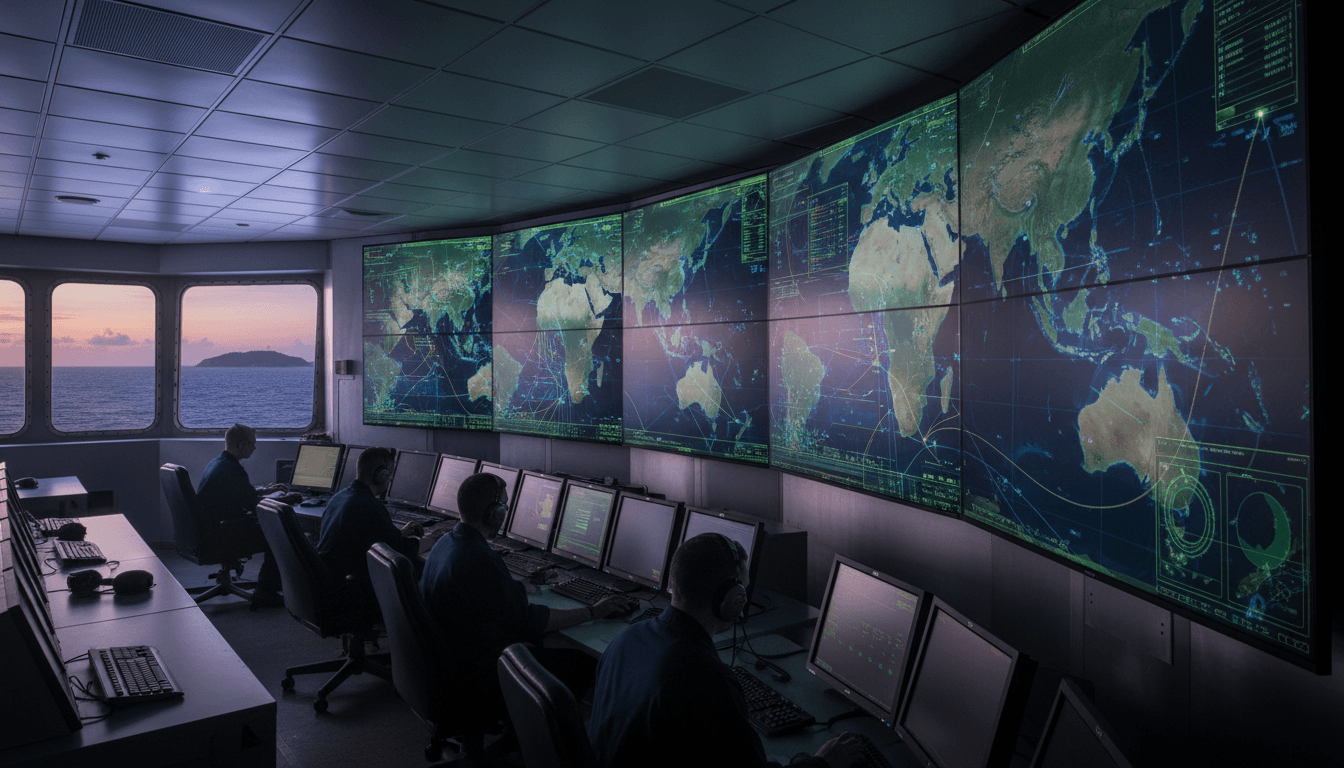
PacFleet’s AI Push: Faster Decisions, Readier Fleets
Speed is now a combat requirement, not a nice-to-have. When Adm. Steve Koehler describes Pacific Fleet “building the airplane while we fly it,” he’s not offering a metaphor for innovation theater—he’s laying out an operating reality for the Indo-Pacific: capabilities, training, and concepts of operation have to mature in parallel, under pressure, and often inside an adversary’s weapons engagement zone.
For anyone working in AI in defense & national security, this is the signal worth paying attention to. PacFleet isn’t just asking for more tech. It’s asking for faster operational learning cycles—where data turns into decisions, decisions turn into action, and action generates new data fast enough to stay ahead.
What follows is a practical interpretation of what PacFleet’s posture means for AI integration, rapid acquisition, and the less-discussed requirement that makes all of it real: the right to repair and reconfigure systems at sea, without waiting for a contractor.
Why PacFleet’s urgency changes the AI conversation
PacFleet’s push is fundamentally about operating inside the weapons engagement zone—a place where ships, aircraft, and unmanned systems can’t assume uncontested comms, unlimited logistics, or time to “phone home.” In that environment, AI only matters if it survives three constraints: latency, resilience, and operator trust.
Here’s the key shift: the Navy isn’t treating AI as a back-office analytics tool anymore. Koehler’s intent—enhance command and control, accelerate maneuver-to-fires, and compress decision timelines—puts AI squarely into warfighting workflows.
A simple way to say it:
If your AI can’t help a watch team decide faster under degraded conditions, it’s not a warfighting capability—it’s a dashboard.
That stance forces programs to move from “model performance” to “mission performance.” Accuracy scores are useful, but PacFleet will care more about metrics like:
- Time-to-decision (from detection to recommended action)
- Time-to-effects (from decision to fires/maneuver)
- Operator workload (how much cognitive load AI removes—or adds)
- Graceful degradation (what happens when comms or sensors drop)
AI for new operating concepts: turning rehearsal into learning
PacFleet’s approach pairs experimentation with rehearsal—meaning exercises are not just validation events. They’re learning engines for new concepts of operation.
AI fits here in a very specific way: it can capture, structure, and replay what happened in complex multi-domain events, then turn it into repeatable improvements.
Where AI helps most in concept development
AI contributes the most when it’s applied to friction points that humans struggle to manage at speed:
- Sensor-to-shooter correlation: fusing tracks and signals across platforms while managing uncertainty.
- Course-of-action generation: producing viable options under time pressure, not just a single “best” answer.
- Resource allocation under constraints: fuel, weapons, unmanned endurance, bandwidth, maintenance windows.
- After-action learning: extracting patterns from exercise data to update tactics and training.
In practice, the best-performing teams treat AI as a staff multiplier that suggests and prioritizes, while humans retain authority. That’s how you build trust without turning the watchfloor into a debate club.
A useful mental model: “AI as the fastest junior staff officer”
I’ve found that AI adoption goes sideways when leaders expect it to be an oracle. A better framing is: AI can be the fastest junior staff officer you’ve ever had—pulling data, surfacing anomalies, generating options—while the commander remains responsible for judgment.
That framing also reduces a common acquisition trap: demanding that AI be “fully autonomous” to be useful. For PacFleet’s near-term needs, decision advantage matters more than autonomy.
Rapid acquisition needs AI-driven prototyping—or it stalls
PacFleet is explicit about rapid acquisition: get capabilities into sailors’ hands quickly, then iterate. The problem is that traditional defense development cycles struggle to produce reliable iteration because test data, approval gates, and integration timelines move too slowly.
AI can compress the build-test-learn loop, but only if it’s used as part of a closed feedback system.
What “AI-driven prototyping” should look like in Navy programs
A workable model is a three-lane pipeline:
- Lane 1: Digital prototyping (simulation-first)
- Use high-fidelity wargaming, synthetic data, and digital twins to explore options before metal is cut.
- Lane 2: Operational trials (limited scope, high frequency)
- Deploy to exercises with strict measurement: what changed in timeline, survivability, workload, and outcomes?
- Lane 3: Fleet scaling (standardization and sustainment)
- Mature the winning patterns into repeatable kits, training, and maintenance plans.
Most organizations skip Lane 2 or run it as a demo. PacFleet’s language suggests they want Lane 2 as the default posture.
Metrics that keep “rapid” from becoming “reckless”
Speed without measurement becomes noise. Programs should pre-commit to a small set of operational metrics, such as:
- Decision-cycle reduction (minutes or seconds saved in key kill-chain steps)
- False alarm rate in contested environments (not lab conditions)
- Uptime under denied comms (edge compute performance)
- Reconfiguration time (how long to adapt an unmanned system mid-mission)
Those metrics are also procurement-friendly: they translate into requirements and acceptance criteria.
“Right to repair” is the missing prerequisite for AI at sea
Koehler’s sharpest point may not be AI—it’s authority. He argues sailors need the confidence and permission to install new parts, reconfigure unmanned systems, and own readiness without waiting for contractors.
This matters for AI because modern systems aren’t static. AI-enabled platforms often require:
- Model updates and configuration changes
- Sensor calibration adjustments
- Software patches for vulnerabilities
- Payload swaps for unmanned systems
If only a vendor can touch the system, then adaptation slows to the pace of contract vehicles and travel schedules. In the Indo-Pacific, that’s operationally unacceptable.
What “right to repair” means in AI-enabled systems
For AI-enabled maritime platforms, “right to repair” should include:
- Access to diagnostics: logs, health data, and fault trees that aren’t locked behind proprietary tools.
- Modular software: the ability to update components without re-certifying the entire stack every time.
- Configuration authority: trained sailors can adjust mission parameters and payload behavior within safe bounds.
- Secure update paths: patching without turning the ship into an easy cyber target.
Here’s the tradeoff leaders have to face: restricting access may reduce short-term risk, but it increases long-term operational vulnerability because you can’t adapt quickly when the adversary changes tactics.
AI in command and control: faster isn’t always better
PacFleet’s aim—faster decisions than the adversary—is exactly right. But it comes with a warning label: AI can accelerate the wrong decision just as efficiently as the right one.
The fix isn’t to slow down. It’s to build decision quality controls that work at speed.
Guardrails that make AI usable on the watchfloor
AI in command and control needs built-in friction where it counts:
- Uncertainty display: show confidence ranges and missing data, not just a crisp recommendation.
- Provenance: operators should see why a recommendation surfaced (signals, tracks, priors).
- Human veto and escalation: clear authority for overriding AI, plus criteria for when to elevate.
- Training under failure modes: drills where AI is wrong, spoofed, or degraded—so teams learn behavior, not blind trust.
A rule of thumb: if an AI recommendation can’t be explained quickly enough to be used under time pressure, it won’t be trusted—or worse, it’ll be trusted blindly.
People also ask: “Can AI operate when comms are denied?”
Yes—if the system is designed for it. That typically means:
- Edge AI running locally on the platform
- Local data caches for mission-relevant models and maps
- Fallback behaviors when inputs degrade
- Cyber-hardened update processes that don’t depend on constant connectivity
PacFleet’s environment demands this approach. Cloud-only AI is a non-starter for many contested scenarios.
What defense industry teams should do differently in 2026
PacFleet’s message is friendly to industry—partner with the military, combine strengths—but it’s also a warning: if your product demands contractor dependence, long integration cycles, or fragile connectivity, it will lose to simpler systems that sailors can adapt.
Here are practical moves that align with what PacFleet is signaling:
- Design for reconfiguration by sailors
- Treat operator-driven configuration as a requirement, not an exception.
- Ship with measurement, not just features
- Build instrumentation that captures decision-cycle impact and operational outcomes.
- Prioritize interoperability over elegance
- A system that integrates quickly beats a perfect system that integrates slowly.
- Bake in cyber resilience from day one
- AI pipelines are attack surfaces. Assume adversarial manipulation, not benign data.
- Plan sustainment like it’s part of the weapon
- Spares, patches, and training are operational capability, not afterthoughts.
If you’re trying to generate leads in this space, the strongest offer isn’t “we have an AI model.” It’s “we can help you shorten the operational learning cycle without increasing risk.”
Where this fits in the “AI in Defense & National Security” series
This PacFleet moment connects a theme that shows up across the defense enterprise: AI is most valuable when it’s tied to operating concepts, not isolated tech pilots. Surveillance, intelligence analysis, autonomous systems, cybersecurity, and mission planning all converge at the same place—the decision.
PacFleet’s posture makes the next step obvious: build AI that is resilient enough for contested operations, measurable enough for rapid acquisition, and configurable enough that sailors can adapt it in the fight.
If you’re building, buying, or integrating AI for national security, the question to keep on the table is simple: what’s your plan for speed and control when the environment is hostile and time is scarce?