Oil sanctions still work—if enforcement keeps up. Here’s how AI monitoring improves tracking, targeting, and outcomes in 2026.
AI Monitoring: Do Oil Sanctions Still Work in 2026?
Brent crude jumped about 6% in a single day after the U.S. sanctioned Russia’s two oil heavyweights—Rosneft and Lukoil—in October 2025. That price spike wasn’t just a market story. It was a signal intelligence problem hiding in plain sight: if sanctions are supposed to pressure Moscow, why did the market move in a way that can temporarily cushion the blow?
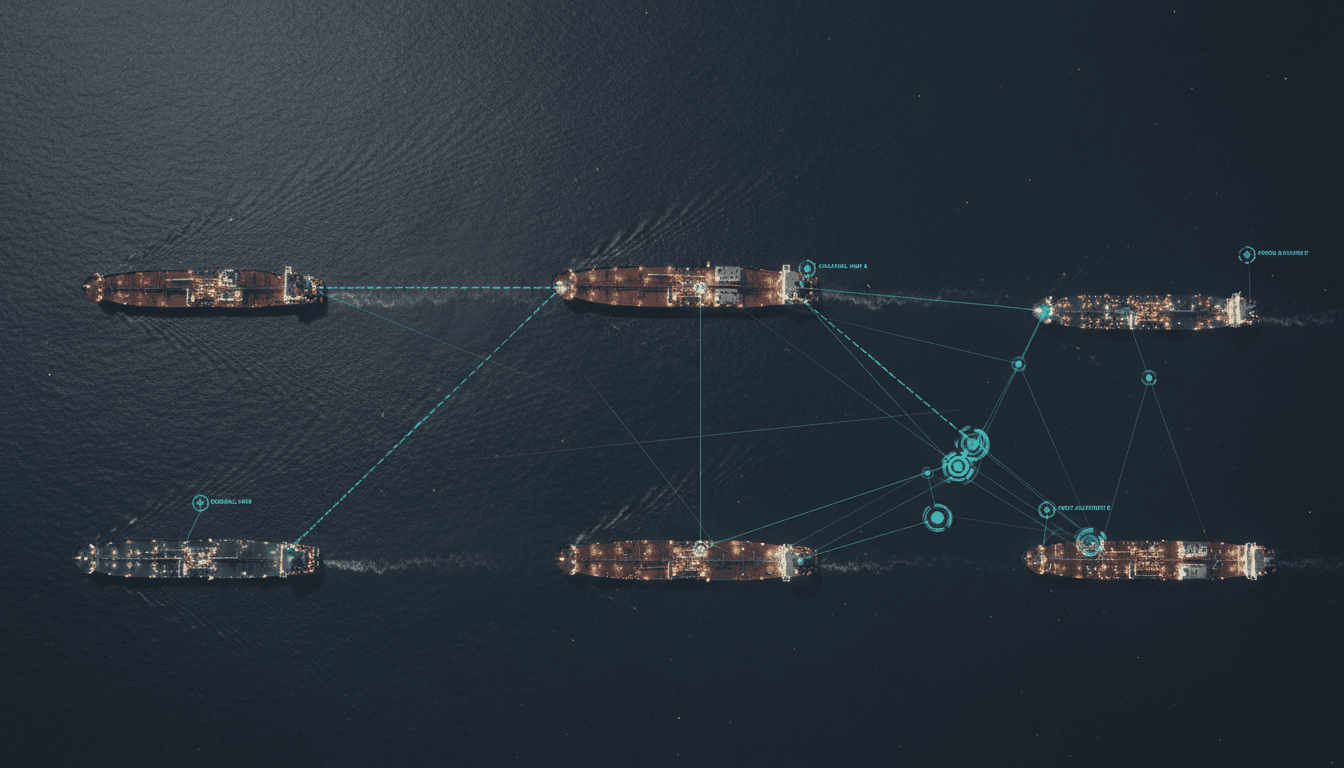
Here’s my take: oil sanctions still work—but only when enforcement is treated like an intelligence campaign, not a press release. In 2026, that means AI has shifted from “nice-to-have analytics” to the practical backbone of sanctions monitoring: tracking ships, flagging shell companies, mapping trade reroutes, and identifying the financial plumbing that keeps oil moving.
This post is part of our AI in Defense & National Security series, and it focuses on a specific question national security teams are wrestling with right now: Can AI make oil sanctions measurably more effective in a world of shadow fleets, non-dollar settlement, and rapid rerouting?
Why oil sanctions are harder now—and still worth using
Oil sanctions work best when the target depends on export revenue and can’t easily reroute volumes. That simple idea hasn’t changed. What’s changed is the operating environment: more buyers outside the West, more alternative payment channels, and an industrial-scale evasion ecosystem.
Russia is the clearest stress test. Oil and gas still fund roughly 25–30% of Russia’s federal budget (recent years), and Rosneft/Lukoil represent a huge portion of export capacity. Hitting them is structurally meaningful.
But sanctions don’t “work” just because they’re painful. They work when they change behavior—or, if that’s unrealistic, when they constrain capability (for example: degrading procurement, increasing the cost of war, shrinking fiscal space, and limiting access to high-end services).
A useful, blunt framing for 2026:
- Coercion goal: Force a policy shift (hardest).
- Constraint goal: Reduce revenue, raise friction, degrade war capacity (more achievable).
For Russia, many analysts argue Ukraine is a vital national interest, which makes quick coercion unlikely. That doesn’t mean sanctions are pointless. It means you should judge them like a sustained campaign: Are we steadily reducing net revenue and increasing operational risk?
The real bottleneck is enforcement—and AI is built for bottlenecks
The limiting factor in oil sanctions is detection plus follow-through. Detection means you can see what’s happening in shipping, trade documentation, and payments. Follow-through means you can act—freeze assets, deny port services, penalize facilitators, and discourage banks and traders through credible risk.
This is exactly where AI fits national security workflows.
What “sanctions enforcement” looks like in practice
Oil sanctions don’t fail because the law is unclear. They fail because evasion scales faster than human analysis. Modern evasion typically includes:
- Shadow fleets (older tankers, opaque ownership, frequent renaming/re-flagging)
- AIS manipulation (going “dark,” spoofing, suspicious loitering)
- Ship-to-ship transfers to obscure origin
- Blended cargoes and documentation laundering
- Cut-outs (brokers and trading houses designed to absorb legal risk)
- Non-dollar settlement and alternative banking corridors
A sanctions program that can’t map those patterns quickly becomes symbolic.
Where AI helps: from “watchlists” to behavior-based targeting
AI is strongest when the signal is weak and the data is messy. Oil sanctions generate exactly that kind of environment: partial visibility, noisy shipping data, and adversaries actively trying to confuse you.
In 2026, the most useful AI patterns in sanctions monitoring are:
-
Anomaly detection on shipping behavior
- Unusual route deviations
- AIS gaps near known transfer zones
- “Floating storage” patterns that correlate with sanctions deadlines
-
Entity resolution and network analysis
- Linking ships, shell companies, insurers, port agents, and beneficial owners
- Detecting “phoenix companies” that reappear under new names
-
Trade and pricing analytics
- Spotting underpricing/overpricing patterns used for value transfer
- Mapping discount spreads (like the reported $20 Urals discount vs Brent in late 2025) to infer distress and rerouting
-
Document intelligence
- Extracting inconsistencies across bills of lading, certificates of origin, and customs filings
- Flagging suspicious template reuse (common in forged paperwork)
-
Risk scoring for enforcement prioritization
- Ranking which facilitators (traders, shipping managers, payment nodes) will create the most disruption if hit with secondary sanctions
The payoff is speed and focus. Instead of trying to police “everything,” agencies can target the few nodes that keep a shadow market functioning.
What success looks like: measurable signals that sanctions are biting
If oil sanctions are working, you can see it in operational indicators before you see it in diplomacy. That’s not theory—it’s how commodity systems behave.
Here are sanctions effectiveness indicators that matter for defense and intelligence teams, and how AI supports each.
1) Exports that don’t just reroute—they stall
The key question isn’t “Did volumes drop this week?” It’s “Are exports becoming unreliable?”
Signals include:
- More cargoes sitting offshore longer than usual
- Higher frequency of failed deliveries or reassignments
- Increased ship-to-ship activity (a sign of laundering pressure)
AI helps by building baselines and flagging deviations automatically, especially across thousands of vessel movements.
2) Rising transaction friction in finance and insurance
Sanctions often bite hardest when major banks and insurers decide the risk isn’t worth it.
Signals include:
- Sudden changes in insurer/flag patterns
- Concentration into a smaller set of high-risk service providers
- Increased use of small regional banks and layered intermediaries
Network analytics can identify “choke points” where a small set of enablers is doing disproportionate work.
3) Discounts widen, but don’t get offset by price spikes
A crude discount (like Urals trading materially below Brent) suggests coercive pressure—unless global prices spike enough to compensate.
That’s why enforcement needs market awareness. AI-enabled scenario models can estimate:
- Whether supply disruption raises prices enough to protect the target’s revenue
- How much spare capacity elsewhere can cushion the shock
Oil markets are more shock-absorbent than many people assume, but sanctions that accidentally trigger a sustained price surge can undercut their own purpose.
Lessons from Iran, Venezuela, and Russia—through an AI lens
History shows that sanctions outcomes are driven by adaptability and coalition strength. AI doesn’t change that. It changes how quickly you can detect adaptation and close the gaps.
Iran: big short-term effect, long-term evasion learning
Iran’s oil exports fell from about 2.5 million barrels/day to under 500,000 at peak pressure in the 2010s, demonstrating what coordinated enforcement can do. Over time, exports recovered to roughly 1.5–2.0 million barrels/day through workarounds.
AI lesson: models must adapt as the adversary adapts. Static rules get gamed. Behavior-based detection improves longevity.
Venezuela: pressure without political change
Sanctions hammered PDVSA, but the regime largely survived by shifting costs internally and relying on alternative channels.
AI lesson: economic pain isn’t the same as political leverage. If the policy goal is regime change or sweeping concessions, you’re probably setting the program up to “fail” by its own definition.
Russia: scale, resilience, and buyer diversity
Russia entered the sanctions era with large reserves, a capable state apparatus, and major customers in China and India. That buyer diversity is the core reason oil sanctions struggle to force rapid strategic reversal.
AI lesson: focus on enforcement scalability and coalition alignment. If enforcement is uneven, AI will mostly help you observe leakage—not stop it.
The 2026 playbook: how to design “AI-ready” oil sanctions
If you want oil sanctions to work in 2026, write them for how oil actually moves. That means designing the program around data, incentives, and operational targeting.
1) Define success as capability constraint, not instant capitulation
A realistic sanctions goal might be:
- Keeping net oil revenue below a defined threshold
- Raising shipping/insurance costs by a target percent
- Increasing delivery failure rates
- Reducing access to specialized upstream services
Those goals are measurable—and AI can track them weekly.
2) Treat secondary sanctions as a precision tool
Secondary sanctions change behavior when they’re credible and targeted.
AI improves targeting by:
- Identifying which intermediaries are truly central
- Distinguishing “incidental” exposure from systematic facilitation
- Prioritizing actions that create maximum disruption with minimal blowback
3) Build a shared data layer with allies (and standardize it)
Oil sanctions lose power when Europe, Asia, and other partners operate with mismatched rules and different visibility.
A practical approach is to standardize:
- Vessel and entity identifiers
- Event taxonomies (AIS dark periods, transfer zones, suspicious port calls)
- Evidence packages suitable for legal and regulatory action
AI systems are only as good as the governance around them.
4) Assume adversarial deception—and engineer for it
Sanctions monitoring is an adversarial environment. Teams should plan for:
- Spoofing and synthetic documentation
- Shell-company churn
- Data poisoning attempts (feeding bad signals into open systems)
This is where defense-grade AI practices matter: provenance tracking, human-in-the-loop review, red teaming, and auditable decision logs.
Sanctions enforcement is intelligence work with receipts. If you can’t explain why an entity was flagged, you can’t sustain enforcement.
“People also ask” (because your stakeholders will)
Do oil sanctions still work if countries can buy in yuan or rupees?
Yes, but the mechanism shifts. Instead of relying on dollar choke points alone, enforcement targets shipping services, insurance, access to ports, and the facilitator network. AI helps map those networks.
Why not just sanction more ships?
Because whack-a-mole doesn’t scale. The better approach is to identify the operators, managers, brokers, and financial nodes that make the fleet usable. AI is well-suited to finding those hidden relationships.
Can AI predict whether sanctions will succeed?
AI can estimate probabilities and leading indicators (export disruption, discount widening, intermediary churn). It can’t substitute for the political reality that some targets will absorb pain to avoid conceding vital interests.
Where this goes next for AI in defense and national security
Oil sanctions still matter because oil still funds war. The problem is execution: modern evasion is a distributed network problem, and network problems punish slow analysis.
If you’re building national security capabilities in 2026, AI-enabled sanctions monitoring sits in the same category as cyber defense and ISR fusion: it’s not optional infrastructure anymore. It’s how you keep policy connected to reality.
If you’re evaluating your own sanctions enforcement posture—data feeds, analytics workflow, investigative tooling, and legal evidentiary pipelines—now’s the right time to modernize it. The next sanctions package won’t be defeated by clever geopolitics. It’ll be defeated by better data operations on the other side.
What would change your mind: a diplomatic concession, or a dashboard showing Russia’s oil network is actually shrinking week over week?