AI can’t write a trustworthy National Security Strategy, but it can stress-test assumptions, expose contradictions, and improve oversight. See how to apply it in 90 days.
AI-Proofing the National Security Strategy Debate
A retired Air Force brigadier general calling a new National Security Strategy “1930s foreign policy” isn’t normal Washington noise. It’s a warning flare about strategic drift—when a strategy document reads confident, but the assumptions underneath it don’t match the world it’s supposed to describe.
That’s why Rep. Don Bacon’s criticism of the Trump administration’s newly released National Security Strategy—and his sharp assessment of Defense Secretary Pete Hegseth’s impact on alliances—matters beyond partisan headlines. Strategy is where budgets, force structure, posture, and alliance commitments get justified. When the strategy is off, everything downstream gets expensive.
Here’s the better question for defense and national security professionals: How do we make strategy harder to fool ourselves with? The answer isn’t “let AI write the National Security Strategy.” It’s using AI to stress-test strategy: check assumptions, surface contradictions, and quantify second-order effects across theaters, industrial capacity, readiness, and alliance dynamics.
What Bacon’s critique really signals: an assumptions problem
Bacon’s argument—made in a Breaking Defense interview at the Reagan National Defense Forum—lands on three pressure points: a “1930s” posture toward alliances, skepticism that a one-year $150B plus-up is enough, and concern that current leadership is harming US standing.
Those claims can be debated. What shouldn’t be debated is the underlying issue: modern defense strategy fails when it treats assumptions as background décor instead of testable inputs.
A National Security Strategy is ultimately a chain of assumptions:
- Threat assumptions: Which actors matter most (near-peer competitors vs. regional threats), and on what timelines?
- Alliance assumptions: Who will show up, with what capabilities, and under what domestic political constraints?
- Industrial assumptions: What can be produced, repaired, and replenished—at surge pace—over 12, 24, 60 months?
- Technology assumptions: What will work reliably in contested environments (EW, cyber, PNT denial), not just in demos?
- Fiscal assumptions: What Congress will actually fund, and what tradeoffs will be tolerated.
When Bacon calls the strategy a throwback, he’s implying the assumptions are outdated—especially around European security and NATO. When he says $150B over a year isn’t enough, he’s pointing at a mismatch between stated objectives and resource reality.
This matters because strategy isn’t judged by tone. It’s judged by whether it produces decisions that survive contact with events.
Strategy debates are increasingly about speed, not just direction
One reason today’s strategy fights feel sharper is that timelines have compressed. The world doesn’t give the US a decade to correct course.
- Munitions consumption rates in real conflicts expose replenishment gaps quickly.
- Gray-zone coercion and cyber campaigns unfold continuously.
- Space and network dependencies create fast failure modes.
If your strategy depends on slow adaptation, it’s already late.
AI’s most practical role: objective strategy evaluation, not slogan generation
AI in defense & national security gets framed as autonomy, drones, and cyber. But the most immediate value in 2026 planning cycles is less flashy: AI-enabled strategic foresight and policy evaluation.
Used correctly, AI can function like an always-on “red team” for strategy—scanning the full text of strategy documents, posture statements, budget exhibits, wargame outputs, intelligence summaries, and open-source reporting to identify where the story doesn’t add up.
Here are four concrete ways AI supports strategy evaluation.
1) Assumption mapping: turning vague statements into explicit inputs
Strategy documents often bury assumptions in phrases like “working with allies,” “deterring aggression,” or “maintaining overmatch.” AI can help extract and structure these into an assumption map:
- Who are the assumed partners?
- What basing and access are assumed?
- What readiness levels are assumed?
- What munitions stockpiles are assumed?
From there, analysts can tag each assumption with:
- Confidence level (high/medium/low)
- Evidence basis (intel, diplomatic commitments, historical precedent)
- Sensitivity (what breaks if it’s wrong?)
This is where oversight becomes real. Congress can’t evaluate a strategy if it can’t see the assumptions it depends on.
2) Consistency checks: finding contradictions across documents and budgets
A common failure mode is rhetorical alignment with practical misalignment. For example:
- The strategy emphasizes one theater, but procurement and posture changes lag.
- The strategy argues for surge production, but contracts and supplier capacity don’t support it.
- The strategy leans on allies, but foreign military financing, interoperability investments, or combined training don’t match.
AI can compare claims across:
- Strategy text
- Budget narratives
- Program plans
- Readiness reports
- Acquisition timelines
Then it flags mismatches as “audit-ready questions” for staffers, Pentagon leadership, and combatant commands.
3) Scenario expansion: generating “adjacent futures” strategy didn’t consider
Human teams tend to focus on the scenario they already expect. AI can help broaden the set of plausible futures by proposing adjacent scenarios that stress the plan:
- A simultaneous crisis in Europe and the Indo-Pacific
- A major cyber disruption to logistics systems during deployment
- A rapid munitions depletion curve that outpaces industrial surge
- A coalition split where only part of NATO participates
The value isn’t that AI predicts the future. It’s that it forces decision-makers to confront uncomfortable branches early—when changes are cheap.
4) Strategic risk dashboards: quantifying “how wrong can we afford to be?”
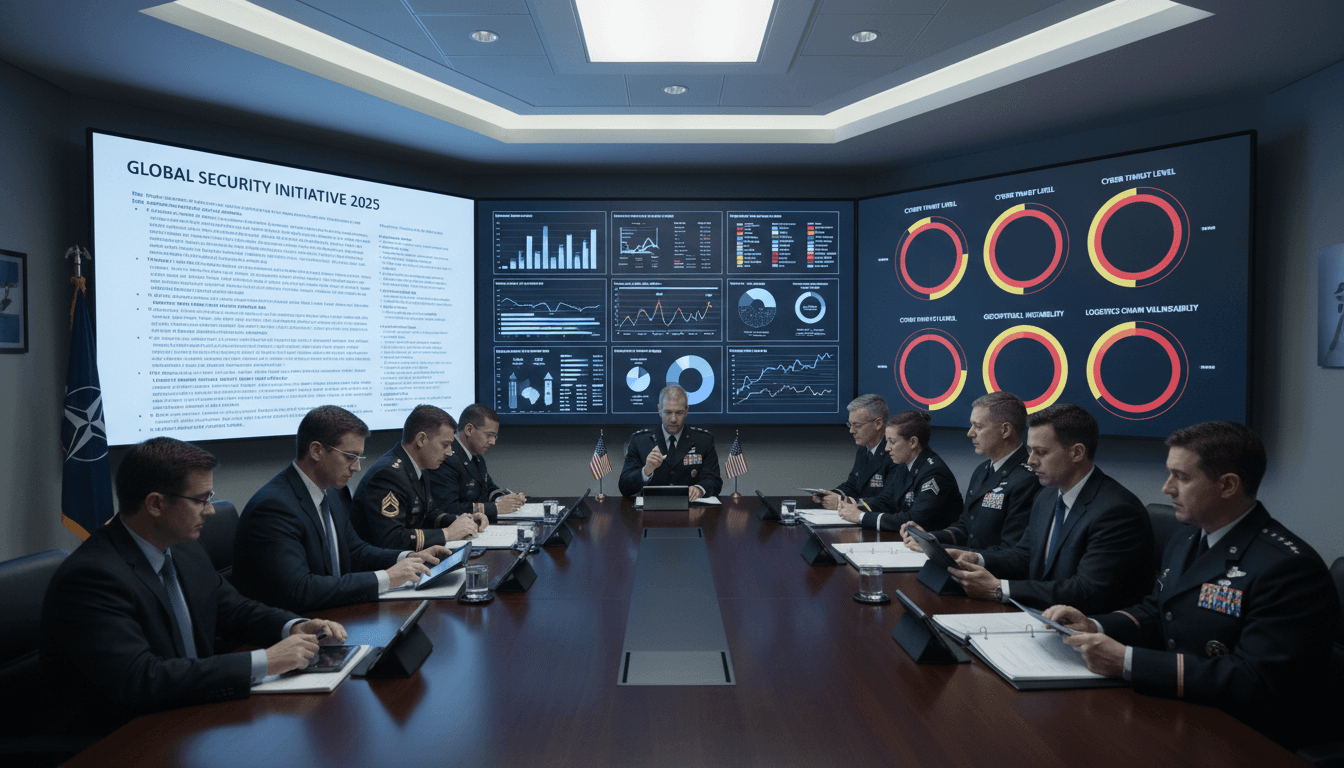
Leaders love bold language; they need brutal math. AI can help integrate disparate data into risk dashboards that show:
- Stockpile sufficiency under different consumption rates
- Time-to-replace for key munitions and platforms
- Dependency concentration (single suppliers, single regions)
- Readiness tradeoffs (training hours vs. maintenance backlogs)
- Alliance capacity contributions (air defense, ISR, logistics)
When a member of Congress says “one-year plus-up isn’t enough,” AI-enabled dashboards can translate that into: which objectives become unachievable, and when.
Leadership, alliances, and the “trust layer” AI can’t replace
Bacon’s critique also targets Defense Secretary Hegseth’s tenure as damaging to alliances and US standing. You don’t need to agree with Bacon to recognize the operational truth: alliances run on trust, and trust is measurable in behavior.
AI can help track indicators of alliance health—joint exercises, interoperability investments, procurement alignment, intelligence-sharing cadence—but it cannot substitute for credible commitments.
Here’s the hard stance: If a strategy assumes allies will do more while signaling they matter less, it’s self-defeating.
What AI can do for alliance management
AI is useful when it supports, rather than replaces, diplomacy and combined planning:
- Interoperability gap detection: spotting where data standards, comms, and targeting workflows diverge across partners
- Exercise analytics: learning from after-action reports to identify recurring friction points (logistics handoffs, airspace coordination, rules of engagement)
- Burden-sharing transparency: quantifying contributions across domains so debates are less vibes-based
That last point matters politically. Voters can support alliances while still demanding accountability. AI helps show what allies actually contribute and where the US is still carrying the load.
The budgeting trap: why one-time plus-ups don’t fix strategic mismatch
Bacon’s warning about a one-year $150B defense increase reflects a familiar pattern: leaders try to buy their way out of structural problems with short-term spending spikes.
A one-time infusion can help readiness and inventories—if executed well. But it doesn’t automatically solve the deeper constraints that strategy depends on:
- Production capacity takes years to build.
- Workforce pipelines (engineering, shipyard trades, cleared cyber talent) don’t surge on command.
- Test and evaluation bottlenecks delay fielding.
- Software and data infrastructure can’t be modernized by decree.
AI can improve how money turns into capability by tightening the feedback loops:
- Identify programs where spend won’t translate into deployable capability within strategic timelines
- Spot fragile supply chains before they break
- Predict maintenance delays using historical patterns and parts availability
If your organization is serious about AI in defense planning, this is the boring-but-profitable place to start: decision advantage inside the budget cycle.
A practical model: “Strategy-to-Portfolio Traceability”
This is the discipline many organizations lack. The idea is simple: every strategic objective should map to measurable portfolio decisions.
AI can help create and maintain traceability:
- Extract strategic objectives from the National Security Strategy
- Link objectives to capability areas (air defense, long-range fires, cyber defense, space resilience)
- Map capabilities to programs and lines of effort
- Track whether budgets, schedules, and performance metrics actually support the objective
When the traceability breaks, the strategy is either aspirational—or dishonest.
A 90-day playbook to bring AI into strategy oversight (without chaos)
If you work in defense policy, congressional oversight, or national security planning, you don’t need a moonshot to get value fast. You need a disciplined pilot.
Here’s what works in a 90-day cycle.
Step 1: Pick one mission thread, not “the whole strategy”
Choose a bounded question such as:
- Munitions replenishment sufficiency for a defined conflict duration
- Theater posture and access constraints
- Cyber resilience of deployment and logistics workflows
Step 2: Build an assumption registry
Create a structured list of assumptions with owners and review cadence. AI helps extract and organize; humans decide what counts.
Step 3: Run an AI-enabled red-team sprint
Use models to generate failure modes, contradictions, and “what has to be true” statements. Then require human analysts to validate or reject each one.
Step 4: Publish a one-page risk dashboard
Make it usable for decision-makers:
- Top 10 assumptions by sensitivity
- Top 5 portfolio mismatches
- Leading indicators to watch in the next quarter
This is how AI becomes governance, not a science project.
People also ask: can AI reduce politics in national security strategy?
AI won’t remove politics from strategy, and it shouldn’t. Strategy reflects national priorities, values, and acceptable risk.
What AI can do is reduce unforced errors:
- It makes assumptions explicit.
- It pressures contradictions into the open.
- It shortens the time between “we said this” and “our data shows that.”
Politics decides ends. AI helps test means.
Where this leaves the National Security Strategy debate
Bacon’s criticism, whether you agree with it or not, points to a reality many defense organizations quietly feel: strategy documents are often less rigorous than the systems they govern.
The fix isn’t a new set of slogans about strength or restraint. It’s building a repeatable capability for AI-driven strategic foresight, objective evaluation, and oversight—so the next strategy can survive contact with budgets, alliances, and operational constraints.
If you’re building or buying AI for defense planning, aim it at the part of the process that causes the most downstream damage: unclear assumptions and untested tradeoffs. That’s where decision advantage becomes real.
What would change in your organization if every major strategic claim had to come with an assumption map, a risk dashboard, and a portfolio trace—before it reached the final draft?